
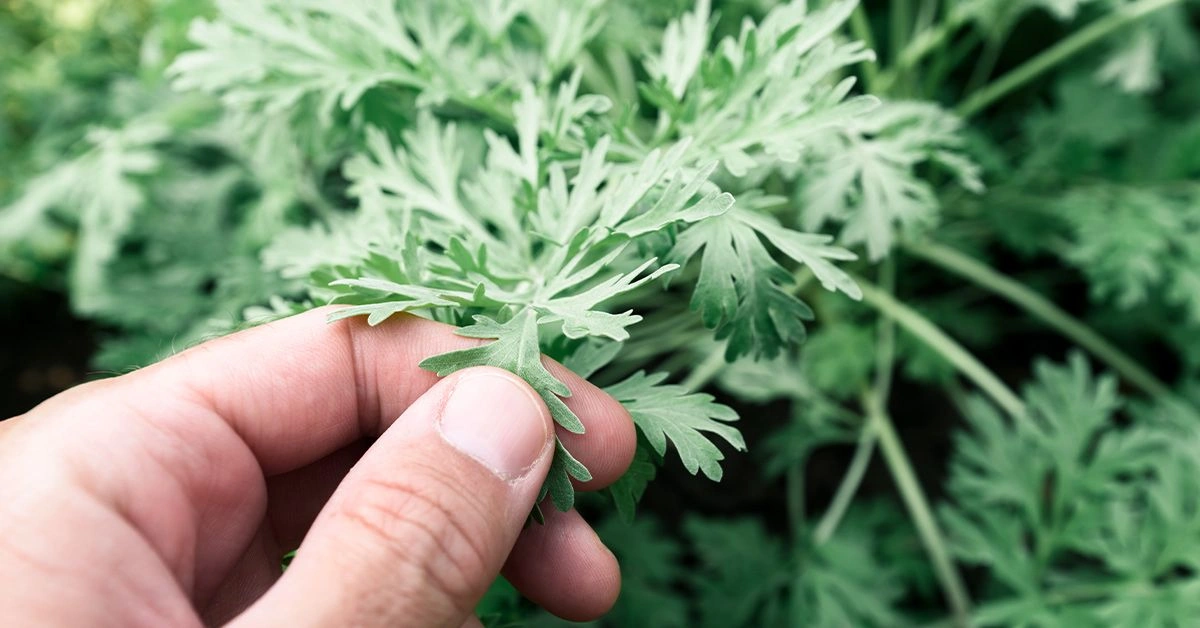
Wormwood is a pungent herb renowned for its role in absinthe. The plant’s most famous chemical component is thujone, which can offer certain advantages but may be dangerous in excess.
Wormwood (Artemisia absinthium) is an herb celebrated for its distinctive aroma, earthy flavor, and claimed health benefits (1).

Native to Europe, it thrives in a variety of climates, including regions of Asia, Africa, South America, and the United States.
The plant features velvety white or greenish-silver stems, yellow-green leaves, and bulbous blooms that range from bright to pale yellow. Throughout centuries, all parts of the plant have been employed in traditional medicine (1).
Its notoriety grew from its use in absinthe, a French liqueur that captivated many 19th-century artists, including Dutch painter Vincent van Gogh — and was alleged to cause a variety of adverse effects (2).
Historically viewed as a hallucinogen and possible toxin, wormwood was prohibited in the United States for nearly a century, from 1912 to 2007. It is now legally sold in the United States (2, 3).
This article offers a thorough examination of wormwood, outlining its benefits, usages, recommended dosages, and potential drawbacks.
Compounds and chemical properties
Wormwood is commonly consumed as an extract or infusion. Its essential oil is derived from the plant’s stems and leaves, whereas an extract or tincture may utilize the entire plant (4).
These preparations are calorie-free and devoid of vitamins or minerals but contain a multitude of plant constituents, the most well-known being thujone (4, 5, 6, 7).
This compound exists in two stereoisomeric forms — alpha- and beta-thujone — with alpha-thujone being the more toxic variant. It is also the primary active constituent in wormwood (4).
Thujone is believed to excite the brain by inhibiting gamma-aminobutyric acid (GABA), a neurotransmitter that helps calm the central nervous system.
While this constituent may confer several benefits, ingesting thujone in excess can be poisonous and has been linked to seizures and even death (4).
Summary: Wormwood’s standout plant constituent is thujone, which offers some advantages but can be toxic in large amounts.
Benefits and uses of wormwood
Beyond its role in absinthe and other spirits, wormwood finds applications in non-Western medical traditions, including Traditional Chinese Medicine.
Although absinthe has a reputation for inducing hallucinations, insomnia, and convulsions, wormwood itself is not regarded as a hallucinogen (8).
Even though the drink’s high alcohol and thujone content may contribute to these effects, formal studies have not confirmed this. Therefore, its historical associations with these mental and physical symptoms are not fully understood (8).
Potentially analgesic
Wormwood has long been explored for its pain-relieving and anti-inflammatory properties (4, 9, 10).
For instance, this herb might help ease osteoarthritis, a painful condition stemming from joint inflammation.
In a 4-week trial involving 90 adults with knee osteoarthritis, applying a 3% wormwood topical preparation three times daily appeared to improve pain and physical function. However, it did not reduce stiffness (10).
It’s important to note that the plant itself should never be applied directly to the skin, as its concentrated compounds can cause painful burns (11).
At present, there is not enough evidence to determine whether wormwood teas or extracts also alleviate pain.
May combat parasitic infections
Wormwood has been utilized to treat intestinal worms dating back to ancient Egypt. This antiparasitic property is attributed to thujone (4, 7).
Nevertheless, evidence for this particular use remains mostly anecdotal.
Animal and lab studies indicate the herb may combat tapeworms and other parasites — though such findings may not extrapolate to humans (12, 13).
Thus, more robust human research is warranted.
Antioxidant capabilities
Besides thujone, another notable component of wormwood is chamazulene. It serves as an antioxidant and is most abundant in the essential oils of the plant before flowering (14).
Antioxidants like chamazulene may help counter oxidative stress in the body, which is linked to cancer, heart disease, Alzheimer’s disease, and other conditions (14, 15, 16, 17).
Nonetheless, more research on this compound’s properties is needed.
May fight inflammation
Artemisinin, another plant compound found in wormwood, may help fight inflammation in your body. Prolonged inflammation is associated with several chronic diseases (18).
Artemisinin is thought to inhibit cytokines, which are proteins secreted by your immune system that promote inflammation (18).
Studies suggest that wormwood may help relieve Crohn’s disease, which is characterized by inflammation of the lining of the digestive tract. Its symptoms may include diarrhea, fatigue, abdominal cramps, and other digestive issues.
In one study in 40 adults with this condition, those taking a 500-mg wormwood supplement 3 times daily had fewer symptoms and a reduced need for steroids after 8 weeks, compared with those in a placebo group (19, 20).
Keep in mind that further research is needed.
Summary: Wormwood has been associated with many benefits, such as alleviating pain and inflammation and fighting oxidative stress and parasitic infections. However, more scientific research is necessary.
Dosage and safety information
Due to a lack of research, no specific dosage guidelines for wormwood exist.
At the same time, various governmental institutions have placed restrictions on wormwood products, as its compounds can produce toxic effects.
For instance, the European Union (EU) limits foods prepared with wormwood to 0.23 mg of thujone per pound (0.5 mg/kg), while the threshold for alcoholic beverages like absinthe is 16 mg per pound (35 mg/kg) (3, 21).
In the United States, the Food and Drug Administration (FDA) restricts any commercial product containing thujone to 10 parts per million (ppm) or less. This amount is considered negligible and thus safe for most populations (3, 21, 22).
Keep in mind that wormwood tea and extracts aren’t regulated by the FDA. Thus, they don’t fall under these regulations and harbor significantly more thujone.
If you’re unsure how much to take, it’s best to speak to your medical provider.
Precautions and possible side effects
Vulnerable populations and people with certain conditions may want to avoid wormwood. These conditions include:
- Pregnancy.You shouldn’t take wormwood if you’re pregnant, as it may cause miscarriage (23).
- Breastfeeding and early childhood.Women who are breastfeeding and children should avoid this herb due to a lack of safety information.
- Epilepsy.Thujone stimulates the brain and has been known to cause seizures. Wormwood may also decrease the effectiveness of common anti-seizure medications, such as gabapentin and primidone (4, 24).
- Heart disease.Taking this herb with the heart disease medication warfarin may cause intestinal bleeding (25).
- Kidney problems. Wormwood is toxic to the kidneys and may increase your risk of kidney failure (26, 27).
- Certain allergies.If you’re allergic to members of the Asteraceae family, such as ragweed and marigolds, you may also react to wormwood, which is in the same botanical family (1).
High doses of wormwood may result in digestive upset, kidney failure, nausea, vomiting, and seizures. However, you’re unlikely to experience these side effects if you’re taking it in small doses, such as those found in tea (26, 27).
Very large amounts of this herb and other thujone-containing products can be fatal, though its lethal dose in humans has not been established (28).
Furthermore, it can cause burns if applied directly to your skin. If using it topically, be sure to only use it as an ointment or lotion (29).
Finally, you shouldn’t take any form of wormwood regularly for over 4 weeks. This duration is considered long term, and the herb’s long-term safety and side effects are unknown.
Summary: You should avoid wormwood if you’re pregnant, breastfeeding, or taking certain medications. Additionally, people with epilepsy and kidney problems shouldn’t take it. Its long-term safety is unknown.
Wormwood formulations
Wormwood stems, leaves, and flowers are usually dried for brewing into a tea. Plus, the herb can sometimes be found in supplement form and herbal blends.
For application on the skin, it’s extracted into an essential oil and diluted into lotions or ointments.
You can purchase dried wormwood — as well as capsules, extracts, and tinctures made from it — online.
Keep in mind that these products aren’t regulated by the FDA, so you should look for third-party verification on the label. This means that the supplement has been tested and is free of contaminants and hidden ingredients.
Trusted testing laboratories include NSF International, ConsumerLab.com, and USP.
You may also purchase the plant or its seeds to grow in your garden.
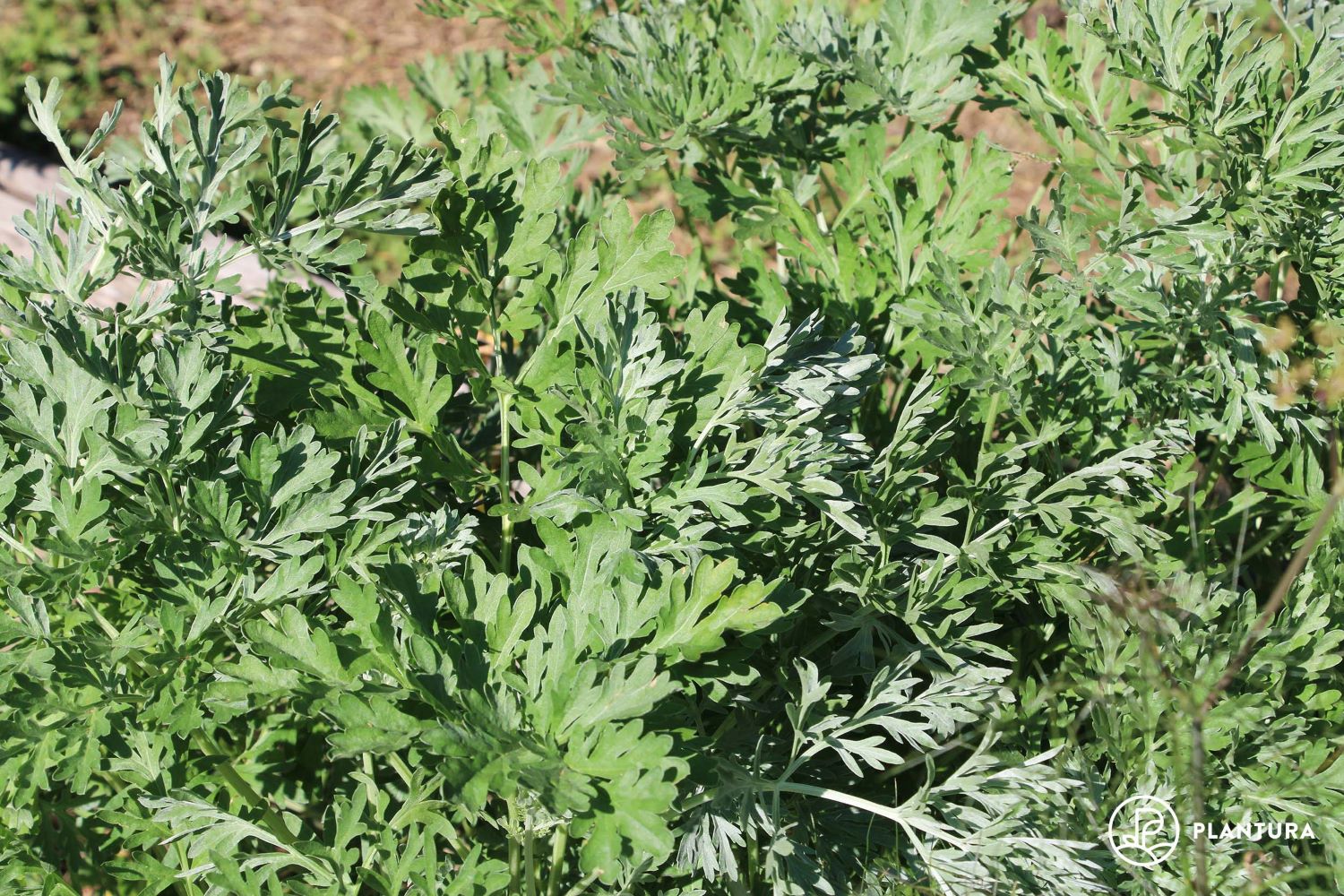
Summary: Wormwood is available in various forms, such as herbal tea, tincture, extract, ointment, and lotion.
The bottom line
Wormwood is a bitter herb known for being an ingredient in absinthe.
While it isn’t hallucinogenic, its plant compound thujone can be toxic and even fatal in large amounts.
All the same, wormwood may offer numerous benefits when taken in moderation. These include fighting inflammation and parasitic infections, as well as relieving pain.
People who have epilepsy or are pregnant, breastfeeding, or taking certain medications should avoid wormwood.
As with any supplement, you should speak to your healthcare provider before using wormwood, especially because its long-term effects and specific dosage guidelines are not known.




















Leave a Reply
You must be logged in to post a comment.