
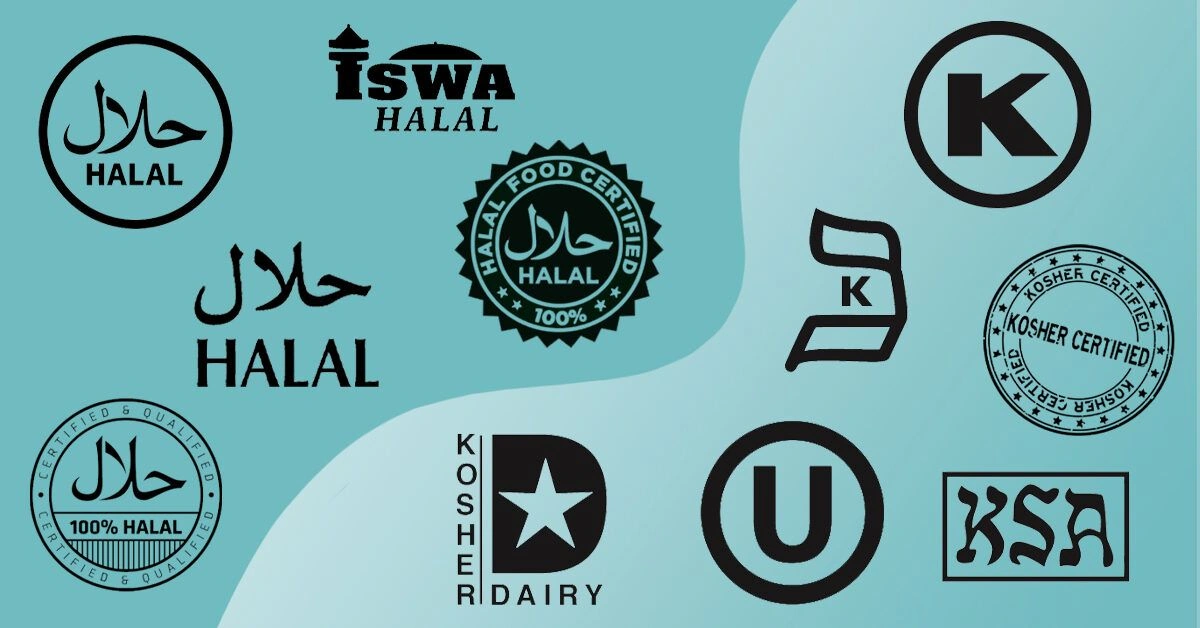
Kosher and halal eating patterns are two widely observed dietary systems grounded in Jewish and Islamic religious laws, respectively. Each prescribes precise rules about which foods are allowed and which are forbidden based on spiritual teachings.
This piece examines the main parallels and distinctions between halal and kosher dietary practices, highlighting where they overlap and how they diverge.
Fundamentals of each regimen
The word kosher refers to foods prepared according to long-established Jewish dietary regulations.
These laws prohibit certain food combinations and permit only specific animal products to be consumed (1).
Conversely, halal denotes foods that are allowable under Islamic law as set out in the Quran, Islam’s sacred text.
Halal standards impose particular requirements for how livestock is raised, slaughtered, and processed before it is eaten (2).
Some products carry kosher or halal certification, indicating they comply with the respective dietary rules.
Summary: Kosher foods follow traditional Jewish dietary rules. Halal foods are those permitted by Islamic law as outlined in the Quran.
Kosher rules limit food pairings
In a kosher framework, foods are divided into three groups: meat (fleishig), dairy (milchig), and pareve, which describes items containing neither meat nor dairy.
According to kosher law, meat items cannot be eaten in the same meal as dairy items (3).
Additionally, utensils and cookware used for meat must be kept separate from those used for dairy meals.
Halal practices, by contrast, do not prescribe restrictions on mixing food types.
Summary: Under kosher rules, meat and dairy cannot be combined at the same meal. Halal guidelines do not impose rules about combining foods.
Both prohibit certain foods
There are foods disallowed in both halal and kosher systems.
Halal rules forbid items containing blood, alcohol or products prepared with alcohol, and certain animals such as pork, most reptiles, birds of prey, and carnivorous species (2).
Likewise, kosher law bars meat from animals such as pigs, horses, rabbits, kangaroos, camels, and squirrels.
Fish that have fins and scales are acceptable in both diets, while predatory or scavenging birds like hawks and eagles are prohibited.
Also, the sciatic nerve and adjacent blood vessels must be removed in kosher practice. Because of the difficulty and expense of eliminating these parts, certain hindquarter cuts from cattle—like sirloin and rump roast—are uncommon in the US kosher market (4).
Summary: Halal forbids alcohol, pork, blood-containing foods, and meat from particular animals. Kosher also excludes pork, shellfish, and specific animals and anatomical parts.
Both govern how animals are slaughtered
Halal and kosher practices each prescribe how animals should be slaughtered before the meat is considered permissible.
For meat to be kosher, it must be slaughtered by a shochet, an individual trained to perform slaughter in line with Jewish law.
Kosher meat is also soaked to ensure that remaining blood is removed before cooking (5).
Under halal rules, animals must be healthy when slaughtered and killed by a particular cut that severs the jugular vein.
At the moment of slaughter, the name of Allah must be pronounced for the meat to qualify as halal (2, 6).
Because the slaughter methods share similarities, kosher-certified meat is sometimes accepted as halal in certain contexts.
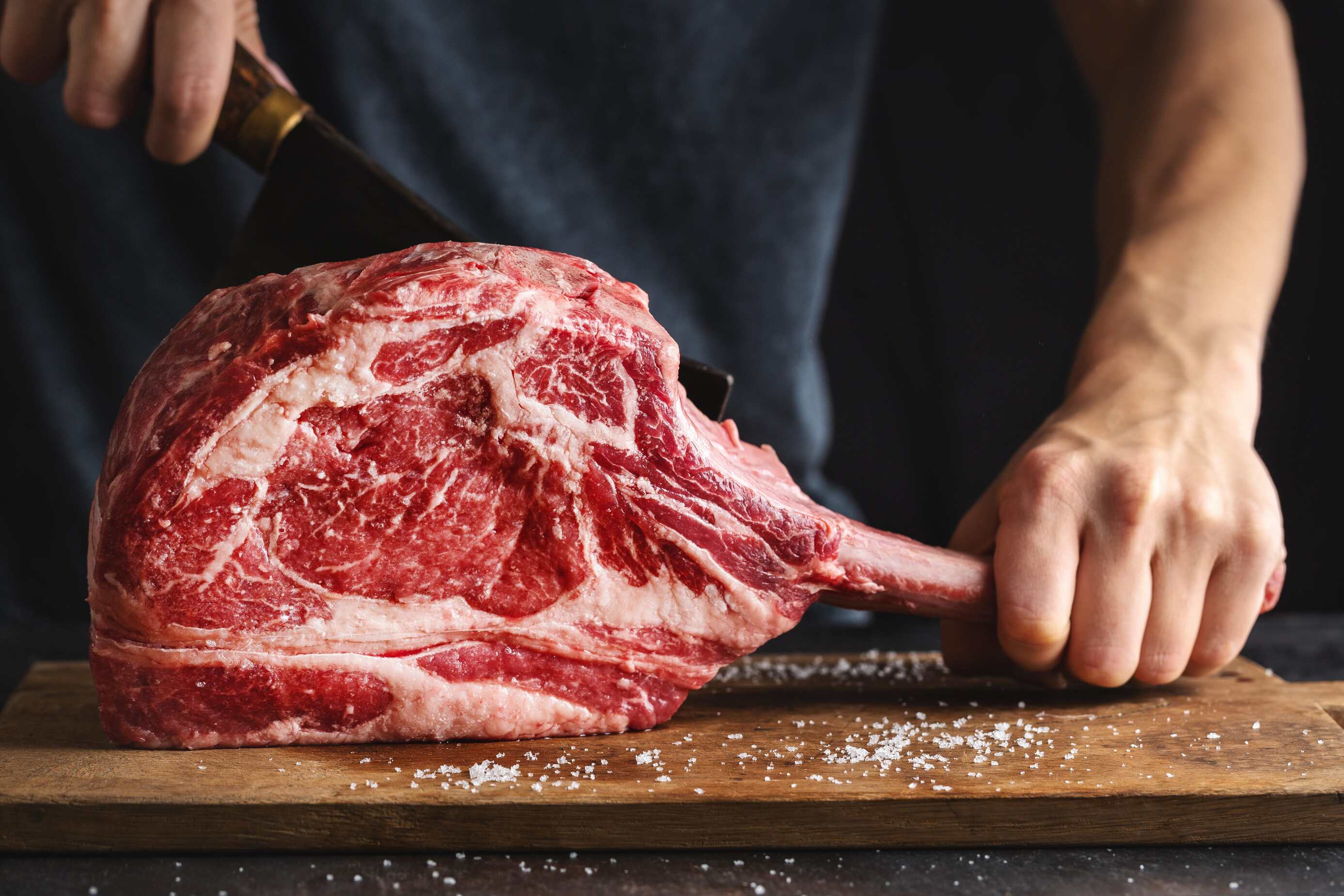
Summary: Kosher meat requires a shochet and soaking to remove blood. Halal meat must be healthy at slaughter, cut in a specified manner, and accompanied by invoking Allah’s name.
The takeaway
Kosher and halal dietary systems impose detailed rules about what foods are permissible according to Jewish and Islamic laws, respectively.
Both establish regulations for animal slaughter and restrict particular kinds of meat.
However, halal standards additionally forbid items like alcohol and blood-containing foods, whereas kosher law enforces specific rules about combining meat and dairy.





















Leave a Reply
You must be logged in to post a comment.