
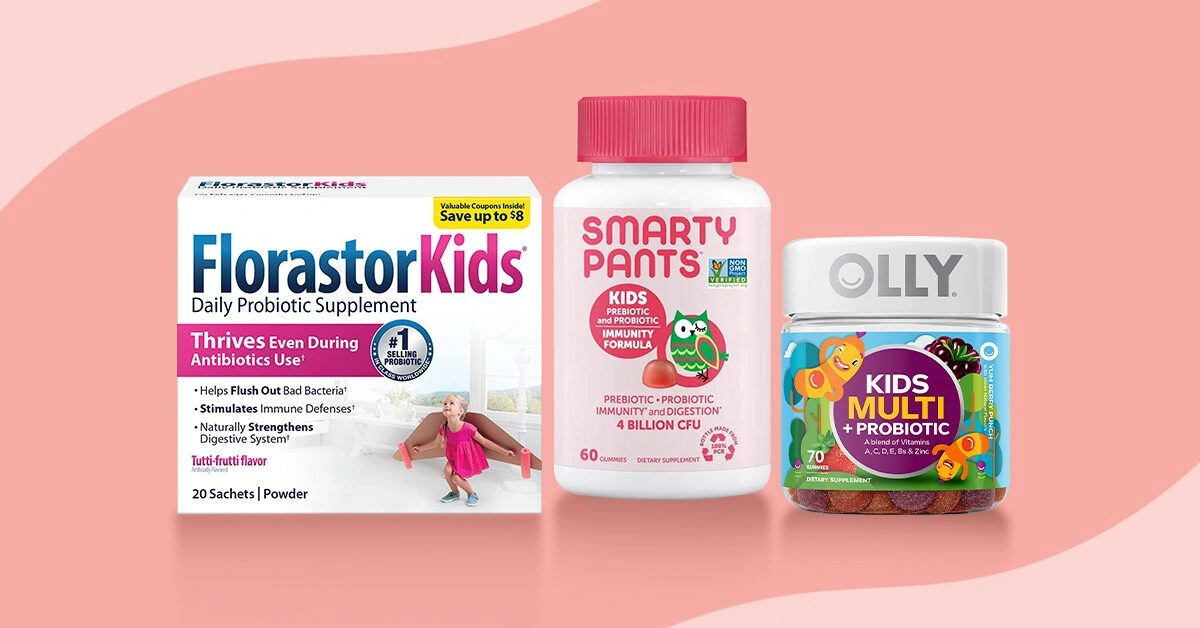
Whether you’re aiming to support a robust immune system or increase beneficial gut microbes, these child-friendly probiotics are worth a look.
Although probiotics are frequently discussed for adults, research indicates they can also help children (1).
Similar to their effects in grown-ups, probiotic supplements can assist a child’s digestive and immune systems and may address specific issues like constipation or reflux (2, 3, 4).
Which probiotic is best for your child depends largely on their individual needs.
If you’re thinking about probiotics for your child, consult their pediatrician first.
Once you’ve determined probiotics are appropriate, consider these seven choices.
A quick look at the best probiotics for kids
- Best refrigerated probiotic for kids:NOW BerryDophilus Kids
- Best chewable probiotic for kids:Renew Life Kids Ultimate Flora Probiotic
- Best probiotic gummies for kids:SmartyPants Kids Probiotic and Prebiotic Immunity Formula, OLLY Kids Multi + Probiotic
- Best probiotic powder for kids:Culturelle Kids Packets Daily Probiotic Supplement
- Best probiotic supplements for infants:Garden of Life RAW Probiotics Kids, Florastor Kids Daily Probiotic
How we selected these products
Products featured here were chosen using the following standards:
- Kid-appropriate formulations. Each supplement is intended for children and contains strains that may offer child-specific benefits.
- Quality ingredients.Selections use high-quality components and avoid artificial additives, fillers, and unnecessary preservatives.
- Testing for purity and potency.Choices are tested during manufacturing and, ideally, by independent third parties to confirm purity and potency.
- Reasonable dosing.Products offer servings that fall roughly between 500 million and 5 billion colony-forming units (CFUs), so you can pick a dose appropriate for your child.
- Value.We included supplements across price points that deliver solid value.
Additionally, every brand on this list meets HealthEH’s standards for integrity and wellness. Each item:
- stays within allowable health claims and labeling practices as per FDA guidance
- is produced in facilities following current good manufacturing practices
- comes from medically credible companies that follow ethical and legal industry norms
- is backed by objective trust measures, such as third-party lab validation when available
About price
Price ranges are shown using dollar signs ($–$$$). One sign indicates budget-friendly, while three signs denote a higher price.
Typical prices fall between $0.22 and $1.00 per serving, or roughly $12.99–$30.99 per bottle, though costs vary by retailer.
Pricing guide:
- $ = under $0.50 per serving
- $$ = $0.50–$0.90 per serving
- $$$ = over $0.91 per serving
Remember that dosing frequency (1–3 times daily depending on age and medical guidance) affects overall cost; a product with fewer daily doses could be cheaper despite a higher per-count price.
HealthEH’s top picks for kids
Best refrigerated probiotic for kids
NOW BerryDophilus Kids

- Form: chewable tablets
- Price range: $
- Age range: ages 2 and up
- CFU count: 2 billion
- Key strains:Lactobacillus acidophilus, Bifidobacterium lactis, Lactobacillus plantarum, Lactobacillus casei, Lactobacillus rhamnosus, Lactobacillus paracasei, Bifidobacterium breve, Streptococcus thermophilus, Lactobacillus salivarius, Bifidobacterium longum
Created for toddlers and older, BerryDophilus chewables contain 10 strains aimed at supporting digestion and immune defense.
To preserve effectiveness, store these chewables in the refrigerator.
The fun animal shapes and natural berry flavor appeal to kids. Coloring comes from beet powder rather than artificial dyes.
Although there’s no added sugar, these tablets contain xylitol, so keep them away from pets—especially dogs (5).
Pros
- economical
- chewable format that kids often like
- made in facilities with third-party certifications
Cons
- needs refrigeration, which may be inconvenient
- not verified by an independent third-party lab for purity and potency
- contains xylitol, harmful to dogs
Best chewable probiotic for kids
Renew Life Kids Ultimate Flora Probiotic

- Form: chewable tablets
- Price range: $
- Age range: ages 2 and up
- CFU count: 3 billion
- Key strains:Bacillus coagulans, Lactobacillus acidophilus, Bifidobacterium lactis, Bifidobacterium breve, Lactobacillus salivarius, Lactobacillus plantarum
Containing 3 billion CFUs and six probiotic strains, this berry-flavored option aims to ease occasional digestive upsets and bolster immune health.
Renew Life’s formula is free from sugar, dairy, and gluten, with no artificial flavors, colors, or sweeteners.
It’s shelf-stable, so refrigeration isn’t necessary.
The manufacturer reports repeated in-house testing during production for quality, though it doesn’t cite third-party lab verification.
Pros
- doesn’t require refrigeration
- cost-effective
- gluten-free
- no added sugar
Cons
- no third-party purity/potency testing reported
- some users dislike the flavor
- some comments that tablets are tough to chew
Best probiotic gummies for kids
SmartyPants Kids Probiotic and Prebiotic Immunity Formula

- Form: gummies
- Price range: $$
- Age range: ages 3 and up
- CFU count: 4 billion
- Key strains:Bacillus subtilis, Bacillus coagulans
These strawberry-flavored gummies are formulated without artificial sweeteners and aim to support everyday immune health.
They include prebiotics plus two probiotic strains, including Bacillus coagulans, which has evidence suggesting benefits for immunity and digestion (6).
Each lot undergoes third-party testing for safety, strength, and purity, and the product is free from common allergens.
Appropriate for ages 3 and up, these gummies are taken twice daily with food.
Pros
- shelf-stable
- verified by third-party testing
- no artificial sweeteners
Cons
- contains added sugar
- some complaints about taste and odor
- higher price
OLLY Kids Multi + Probiotic

- Form: gummies
- Price range: $
- Age range: 2 years and up
- CFU count: 500 million
- Key strain:Bacillus coagulans
These berry gummies offer an easy way to add probiotics alongside a range of essential vitamins and minerals.
Free from gluten, artificial sweeteners, and preservatives, the formula aims to support healthy gut balance in children ages 2 and older.
OLLY supplies a certificate of analysis for its products and uses third-party testing to confirm quality and safety.
Pros
- third-party testing available
- made without artificial ingredients
- shelf-stable
Cons
- lower CFU than many competitors
- single-strain formula
- contains a small amount of added sugar
Best probiotic powder for kids
Culturelle Kids Packets Daily Probiotic Supplement

- Form: single-serve packets
- Price range: $$
- Age range: 4 years and up
- CFU count: 5 billion
- Key strain:Lactobacillus rhamnosus GG
These single-serve packets are intended to support digestion and immune health for young children.
They provide 5 billion CFUs of Lactobacillus rhamnosus GG, a strain with evidence supporting its use for childhood diarrhea (7).
Mix a packet into cold food or drink once daily. The formula is free from gluten, dairy, lactose, milk, added colors, preservatives, yeast, and soy.
Culturelle products are made in an NSF-certified facility, indicating independent manufacturing standards.
Pros
- shelf-stable convenience
- free of many common allergens
- made in a third-party certified facility
Cons
- higher cost
- some users dislike the flavor
- single-strain formulation
Enjoy 20% off with code “guthealth”.
Best probiotic supplements for infants
Garden of Life RAW Probiotics Kids

- Form: powder
- Price range: $$
- Age range: 3 months and up
- CFU count: 5 billion
- Key strains:Lactobacillus gasseri, Lactobacillus plantarum, Bifidobacterium lactis, Lactobacillus casei, Lactobacillus acidophilus
This powder has a mild banana taste and is formulated to foster healthy gut bacteria growth in young children.
Garden of Life RAW Probiotics Kids contains 5 billion live cells, a blend of 23 raw organic fruits and vegetables, plus prebiotic inulin.
Introduce gradually—start with a quarter teaspoon (0.5 g) and work up to a full serving as tolerated.
It is third-party tested and carries certifications for gluten-free, vegan, and organic standards.
Pros
- third-party tested
- certified gluten-free
- certified vegan
- certified organic
- includes raw fruit and vegetable blend
Cons
- pricey
- needs refrigeration
- some reports of clumping
Florastor Kids Daily Probiotic

- Form: single-serve packets
- Price range: $$$
- Age range: 2 months and up
- CFU count: 5 billion
- Key strain:Saccharomyces boulardii
Florastor Kids aims to help maintain a healthy gut ecosystem in infants and toddlers.
Although the label doesn’t show CFU numbers, the brand indicates the product delivers about 5 billion CFUs.
Produced in third-party certified facilities under strict quality standards, each packet can be stirred into cold water, juice, or soft foods like applesauce twice daily.
Note: do not refrigerate this probiotic.
Pros
- made in third-party certified facilities
- suitable for infants from 2 months old
- shelf-stable
Cons
- contains artificial flavor
- single-strain
- high cost
Comparison of the best probiotics for kids
Below is a closer comparison of these options and how they stack up.
How to pick the right probiotic for your child
Key considerations when choosing a probiotic for children include:
- CFU amount.Recommended dosages vary with age and health needs, but studies suggest ranges from 10 million to 10 billion CFUs may be effective (1).
- Specific strains.Certain strains target particular concerns. Pick a formula geared toward the health outcomes you want to address.
- Delivery form.Probiotics come as gummies, powders, or chewables. Gummies are convenient for older kids, while powders may be better for infants. Keep gummy products out of a child’s reach to avoid accidental overconsumption.
- Dietary restrictions.If your child has allergies or intolerances, choose a product that fits their dietary needs.
- Budget.Probiotic prices vary widely, so factor cost into your decision.
Always use probiotics under the guidance of a healthcare professional. Discuss supplementation with your child’s pediatrician before starting.
Potential risks and side effects of giving kids probiotics
When used as directed, probiotics are generally safe and well tolerated in children (8).
However, they may not be appropriate for every child—particularly premature infants or children with weakened immune systems or critical illnesses (9).
Some children may experience digestive symptoms such as gas or bloating when taking probiotics (10).
Different strains can have different effects, and each child’s needs are unique. For that reason, consult your child’s pediatrician about whether probiotics and which strains could be helpful.
Frequently asked questions
Should you give your child probiotics?
Probiotics might help some children by supporting the gut microbiome, but they aren’t necessary for everyone and may cause unwanted effects for certain kids.
Talk with your child’s pediatrician before introducing probiotic supplements.
Are gummy probiotics appropriate for kids?
Gummy probiotics are palatable and easy to take, which makes them a practical option for many children.
Still, check with your pediatrician to see if a gummy format suits your child’s needs. Because gummies resemble candy, store them securely to prevent overeating (11, 12).
What benefits can probiotics offer?
In adults, probiotics have been linked to several potential health benefits, including immune support, improved digestion, skin condition support, and balancing gut bacteria (13, 14).
In children, research has suggested probiotics may help with diarrhea, gastroenteritis, atopic eczema, and colic, though more rigorous studies are needed (9).
The bottom line
Probiotics can offer many of the same potential benefits for children as for adults, such as encouraging healthy gut bacteria and supporting immunity.
Before adding a probiotic to your child’s routine, speak with their pediatrician to determine whether supplementation is appropriate and which product may be best. For more on related skin and immune interactions, you might also read about probiotics for psoriasis.





















Leave a Reply
You must be logged in to post a comment.