
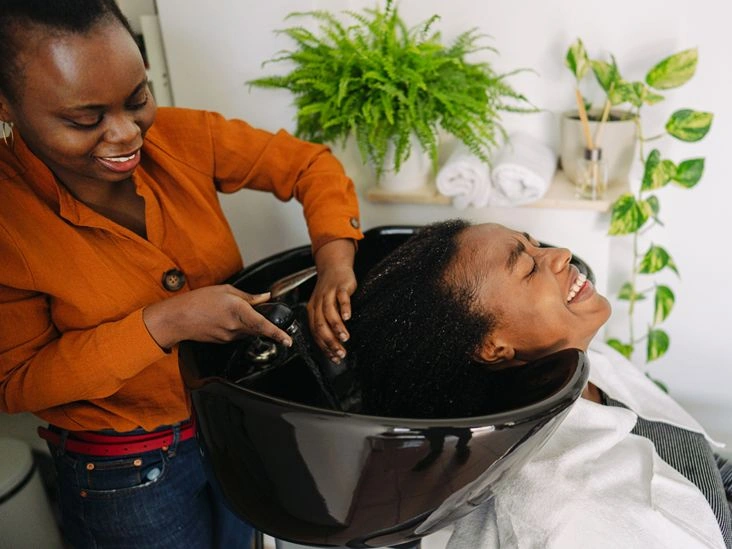
Co-washing refers to cleansing your hair and scalp using conditioner rather than shampoo. It can be particularly helpful for hair that is dry, curly, or tightly coiled.
But what exactly does co-washing involve? Why has it grown in popularity? And should you consider adding it to your hair-care routine?
If the phrase “co-washing” is new to you, it might>Co-washing refers to cleansing your hair and scalp using conditioner rather than shampoo. It can be particularly helpful for hair that is dry, curly, or tightly coiled.
But what exactly does co-washing involve? Why has it grown in popularity? And should you consider adding it to your hair-care routine?
If the phrase “co-washing” is new to you, it might sound like something unrelated — but it’s simply a different approach to washing your hair.
The practice of co-washing has gained traction, especially among people with curly and coily textures.
Rachael Corson, LLB Hons., MSc, co-founding managing director of Afrocenchix, explains that co-washing is “a technique for deep hydration rather than a cleansing method, as conditioners usually contain ingredients that moisturize instead of cleanse.”
How we wash our hair can shift over the years, but one constant remains: having clean, healthy hair feels great and has been important to humans for millennia.
“People have been washing their bodies and hair since our hunter-gatherer days,” Corson says, “with some early soaps made from animal ash, cedarwood, wool, and hyssop.”
Beauty choices — whether a skin-care routine, wash frequency, or cosmetic products — are personal.
That’s why we consult a variety of writers, educators, and experts to provide guidance on topics ranging from product application techniques to the best sheet masks for specific needs.
We only endorse products we truly believe in, so when you see a link to a product or brand, know that our team has researched it carefully.

What is it?
Co-washing means washing your hair exclusively with conditioner. It’s also called conditioner-only washing or “no poo” (no shampoo). If you have coily, mixed-texture, curly, or very dry hair, co-washing could be a beneficial addition to your regimen.
Keep in mind that co-washing isn’t merely skipping shampoo and using conditioner the same way; it involves applying conditioner to your scalp instead of shampooing.
Co-wash vs. shampoo
Many shampoos contain sulfates, which are potent detergents that provide a thorough clean. But sulfates can strip away natural oils and moisture, leaving hair drier and more prone to breakage.
Reducing shampoo frequency by swapping in co-washing may help your hair retain its natural moisture, potentially supporting healthier growth.
That said, there are caveats — a balanced approach combining both methods may be best.
“Many people notice softer hair after co-washing, but these ‘benefits’ can be temporary, and continuous use can cause hair and scalp problems,” Corson warns.
Because of this, Corson and Afrocenchix suggest using a gentle sulfate-free shampoo every 7 to 10 days.
“If you enjoy how your hair feels after co-washing, consider alternating between co-washing and shampooing so your scalp still gets cleansed,” she advises.
Corson notes that shampooing removes residue that co-washing can miss, including:
- sweat
- dead skin cells
- sebum
- hair styling products
- dirt
- dust
- environmental pollutants
How to do it
If you want to try co-washing, begin by selecting an appropriate conditioner. No matter your hair type, avoid conditioners containing silicones — they can cause buildup that dulls your hair.
Ideally, co-wash on the same schedule you normally wash your hair. If your scalp is oily, daily washing might be necessary. Otherwise, once a week may suffice.
:max_bytes(150000):strip_icc()/the-best-cleansing-conditioners-tout-ef4e2e658ccd4640b5dc7c5a0c0a8419.jpg)
Which ingredients are good to look for?
- Emollients — like shea butter, oils, and wheat germ — which soften, smooth, and tame frizz.
- Proteins — such as wheat, wheat germ, and soy proteins — which coat and protect the hair shaft.
- Humectants — like honey, panthenol, and vegetable glycerin — which attract water and help retain moisture.
- Moisturizers — including amino acids and aloe vera — which add softness and shine.
Instructions
- Wet your hair thoroughly.
- Work conditioner into your entire scalp, massaging as you would with shampoo.
- Rinse the conditioner out completely — spend about twice as long rinsing as you did applying.
- Apply your regular conditioner or a leave-in as desired.
“Always rinse products out after each treatment to avoid buildup from the washing process itself,” Corson says.
For curly hair
If your hair is curly or coarse, you might leave the conditioner on a bit longer — just be sure to rinse well.
For 4C hair
Type 4 hair is tightly coiled or zigzag in pattern and can be coarse and prone to dryness and undefined curls. In such cases, replacing daily shampoo with a co-wash might help. A richer co-wash suits highly porous hair — like color-treated, chemically processed, or very dry type 4 hair.
For wavy hair
If your waves are finer, opt for a lightweight co-wash that contains fewer oils so it doesn’t weigh hair down.
For fine hair
Finding the right conditioner for fine hair can be tricky. A lightweight formula won’t strip natural oils, while a richer formula restores moisture without flattening strands. Seek a co-wash that balances these needs.
Products
Try the following products to enhance your co-wash routine.
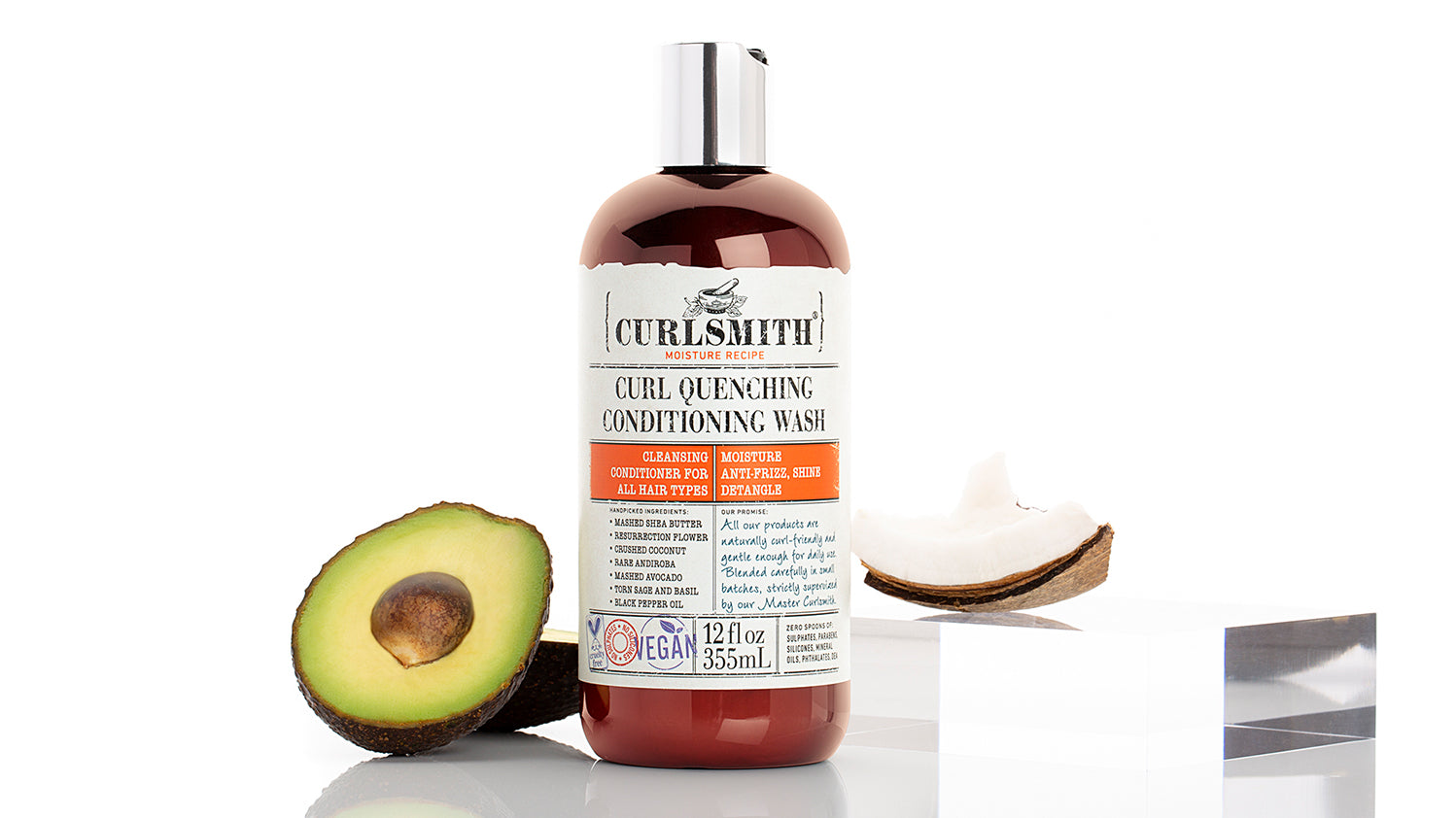
Afrocenchix Swirl Silicone-Free Conditioner
This silicone-free natural conditioner is formulated for coily and curly hair and contains aloe vera and avocado to nourish and refresh. It’s 97% natural, paraben-free, and vegan. Pair it with their sulfate-free shampoo Swish when you need a cleanse.
Pantene Gold Series Deep Hydrating Co-Wash
Many co-washes suit curly hair, but this conditioner was formulated for curly and coily textures and highlights argan oil as a key ingredient. It’s gentle yet effective at delivering hydration.
Shea Moisture Curl Moisture Co-Wash
This co-wash smells pleasant and helps keep curls detangled and frizz under control.
Live Clean Apple Cider Ultra Light Conditioner
This conditioner uses apple cider vinegar and is made to gently condition while restoring moisture and shine and reducing product buildup.
Lush Avocado Co-Wash
If you’re hesitant about fully committing, this bar may be a gentle introduction. It’s approximately four-fifths conditioner and one-fifth shampoo, with ingredients like avocado, cupuaçu butter, and olive oil.
Lush Happy Happy Joy Joy
This light yet creamy conditioner is praised across hair types. It uses almond milk for protein, glycerin to retain moisture, jojoba oil for silky strands, and a natural floral-citrus scent that leaves hair smelling great.
When not to do it
Co-washing can be transformative for many, but people with waves or very fine curls may find regular co-washing leads to buildup.
Corson emphasizes washing with a gentle, sulfate-free shampoo every 7 to 10 days. “This applies even when your hair is in a protective style. It prevents scalp buildup, removes excess sebum, and clears away dirt and dust.”
Left unchecked, scalp buildup can contribute to several problems, including:
- Contact dermatitis. Because conditioners are meant to be rinsed off, prolonged contact without proper rinsing can irritate the skin and cause contact dermatitis.
- Reduced product effectiveness. Buildup layers on the hair cuticle, blocking other products from working properly, wasting both time and money.
- Itchy scalp. An irritated scalp can become itchy and flaky. “You might confuse this with dandruff, but it’s more likely related to inadequate scalp cleansing,” Corson explains.
The bottom line
Co-washing can significantly improve your hair’s condition for many people. Replacing some shampoo sessions with co-washing products could be the key to softer, healthier hair.
Be selective about the conditioner you choose, since different hair types respond uniquely. And remember, adopting a co-wash routine doesn’t mean you should stop shampooing entirely.
Try co-washing consistently for several weeks or even months. Your hair may look oilier at first — this transition period is common. Over time you’ll discover the right frequency and product that suit your hair best.
















Leave a Reply
You must be logged in to post a comment.