
Chiggers, sometimes referred to as red bugs, are tiny mites that can bite humans and trigger significant itching, redness, and skin discoloration. In most cases, symptoms clear up on their own without long-term effects. However, several treatment options are available to help calm irritation and relieve discomfort.
If you’re researching seasonal risks or reviewing a What states have chiggers in the winter map, understanding how these mites behave, what their bites look like, and how to treat them can help you better protect your skin. Below, we explore chigger bites in detail, including identification, symptom management, and prevention strategies.
What are chigger bites?
Chiggers are microscopic mites belonging to the Trombiculid family that thrive in wooded areas, tall grasses, and brush. In their larval stage, they can attach to human skin and cause irritation through their bite. Contrary to common belief, chiggers do not burrow into the skin.
Once they mature into adults, chiggers are no longer parasitic to humans. The larval stage is the only phase in which they pose a problem.
According to the American Osteopathic College of Dermatology (ACOD), chigger larvae measure approximately 1/120 and 1/150 inches in diameter, making them extremely difficult to see with the naked eye.
They typically target areas of exposed skin or regions where clothing fits snugly and allows access to the skin’s surface.
These larvae feed on skin cells and release a digestive enzyme that causes intense itching and inflammation. The resulting condition is known as trombiculiasis.
Where do chiggers bite?
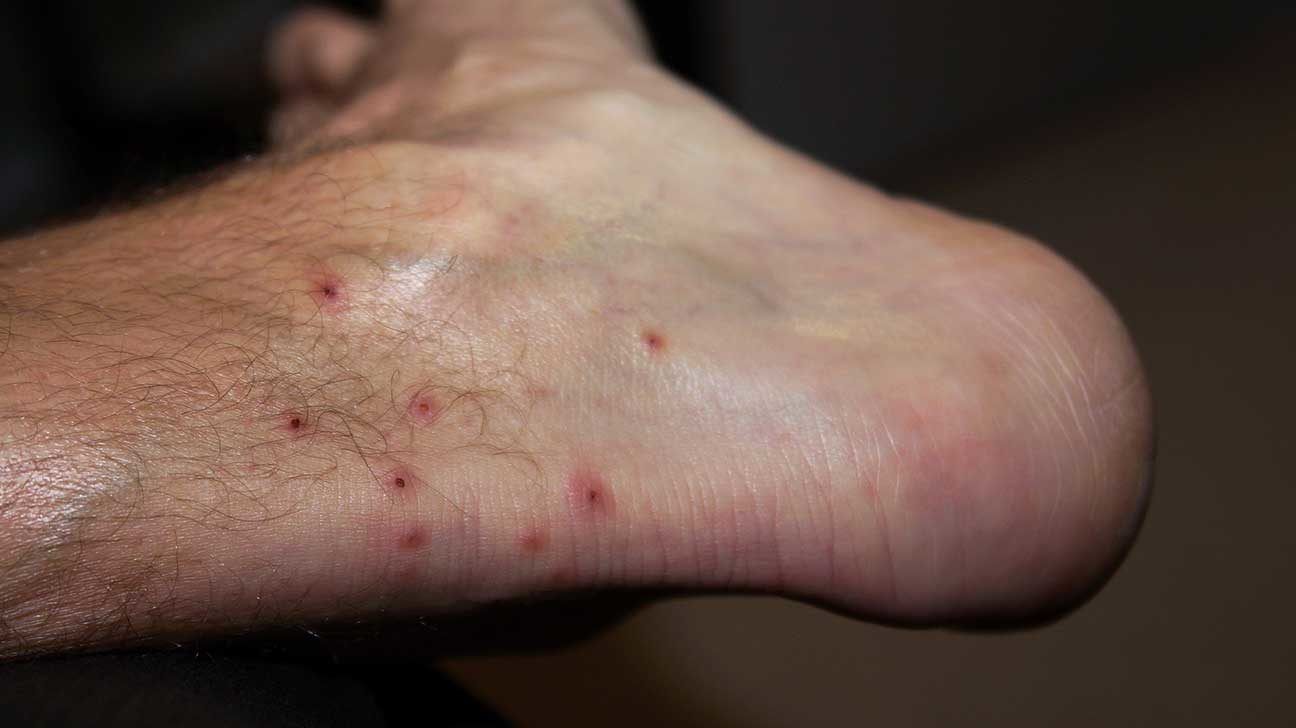
Chiggers commonly cling to clothing before migrating to the skin. They frequently appear on the:
- lower legs
- ankles
- behind the knees
- armpits
- waistline
- groin
These locations are especially vulnerable because tight-fitting clothing creates ideal conditions for larvae to attach and feed.
Symptoms of chigger bites
Bites from chigger mites may lead to:
- intense itching and irritation
- skin discoloration
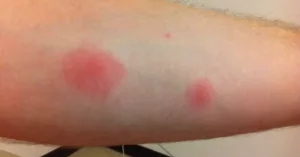
- clusters of small, red, spot-like bumps
You typically won’t notice when a chigger attaches to your skin, and the bite itself is usually painless at first. Symptoms often develop within a few hours.
The hallmark symptom is severe itching accompanied by raised bumps that can resemble welts, blisters, pimples, or hives. The itching may become more pronounced at night or when the area is warm.
Chigger bites are most common in areas where clothing fits tightly against the skin, such as the ankles, waist, armpits, crotch, or behind the knees.
Complications
The potential for disease transmission from chigger bites remains an area of ongoing research. In rare instances, chigger bites can transmit scrub typhus. Without prompt treatment, scrub typhus may lead to multiple organ failure and can be life-threatening.
Although other disease transmission is theoretically possible, conclusive evidence remains limited.
How do you get chigger bites?
In the Northern Hemisphere, chigger bites are typically seasonal. Larval mites are most active between June and September, making trombiculiasis more common in summer and early fall. In tropical climates, however, chigger mites may feed throughout the year.
If you are reviewing a What states have chiggers in the winter map, it’s important to note that warmer southern states may still report activity during mild winters. For a detailed regional breakdown, see What states have chiggers in the winter, including climate-related risk factors. Those specifically concerned about southern exposure patterns can explore What states have chiggers in the winter in texas for more localized information.
You’re most likely to encounter chiggers in overgrown grassy fields, forested areas, parks, and damp soil near lakes or streams.
Chigger vs. bed bug vs. flea vs. mosquito bites
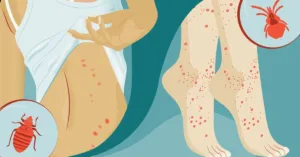
Chigger bites can often be differentiated from other insect or arthropod bites based on their appearance and location.
Bed bug bites usually appear in a line or zigzag pattern of raised red bumps. In contrast, chigger bites tend to cluster around areas where tight clothing contacts the skin and may appear either flat or raised.
Flea bites can look similar to chigger bites and may follow comparable distribution patterns. However, chigger bites frequently develop a firm, scab-like center.
Mosquito bites are generally larger, isolated bumps that occur singly rather than in dense clusters.
How are chigger bites treated?
Treatment focuses primarily on relieving symptoms such as itching and swelling while the skin heals.
The following measures may help reduce discomfort and inflammation:
- applying cold compresses
- using over-the-counter anti-itch products like hydrocortisone cream or calamine lotion
- taking oral antihistamines
For more severe reactions, a healthcare professional may recommend:
- corticosteroid injections if significant inflammation occurs, although this is rare
- doxycycline if scrub typhus develops as a complication
Avoid scratching whenever possible, as breaking the skin can increase the risk of secondary bacterial infection.
How long do chigger bites last?
Chigger bites can take up to 2 weeks to fully resolve.
If you believe you’ve been exposed, wash your skin promptly with soap and water and launder your clothing in hot water to eliminate any remaining mites.
During the healing period, minimize scratching and apply an antiseptic to any open or irritated areas to help protect the skin barrier.
How can I reduce my risk of getting chigger bites?
Because chiggers are extremely small and difficult to detect in natural environments, prevention strategies focus on minimizing exposure.
Avoid common chigger habitats
Chigger activity peaks in spring, summer, and fall. When spending time in wooded or grassy areas, avoid brushing against tall vegetation. Stick to the center of trails rather than walking along edges with dense plant growth.
Chiggers inhabit tall grasses, weeds, berry patches, forest undergrowth, and damp areas near water sources. They are particularly active during warm afternoons.
Clothing
Wear long-sleeved shirts and long pants, tucking pant legs into socks or shoes to create a barrier. Apply insect or tick repellent around shoe tops, shirt collars, cuffs, and waistbands. Shower promptly after returning indoors and wash clothing in hot water to remove any lingering mites.
When to see a doctor
Consult a healthcare professional if your chigger bites have not improved after 2 weeks, if swelling worsens, or if you develop symptoms consistent with scrub typhus, including:
- a dark scab-like area at the bite site
- fever
- chills
- headache
- body aches and muscle pain
- mental confusion
- enlarged lymph nodes
- rash
Summary
Chigger bites can lead to intensely itchy, inflamed bumps on the skin. These larval mites are common in grassy and wooded regions and are often too small to notice.
In most cases, symptoms resolve on their own. Antihistamines, cold compresses, and topical anti-itch treatments can provide relief while your skin heals.
If symptoms persist beyond 2 weeks or worsen, schedule an evaluation with a qualified healthcare professional to rule out complications and ensure appropriate treatment.















Leave a Reply
You must be logged in to post a comment.