

Key takeaways
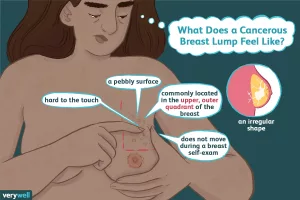
- In people with female anatomy, cancerous breast lumps are most frequently identified in the upper outer portion of the breast, the area closest to the armpit.
- Breast lumps can differ in texture and cause. The majority are noncancerous and linked to conditions such as fibrocystic changes, cysts, or fibroadenomas, but any new lump should be evaluated by a healthcare professional.
- Routine breast self-exams help you become familiar with the usual look and feel of your breasts, supporting earlier recognition of possible abnormalities.
Discovering a lump in your breast can feel alarming. However, it’s reassuring to know that most breast lumps are not cancerous.
In fact, around 80% of breast biopsies are benign, meaning no breast cancer is present.
For individuals who are diagnosed with breast cancer, the primary tumor is most often found in the upper outer quadrant of the breast. Still, breast cancer may begin anywhere breast tissue exists.
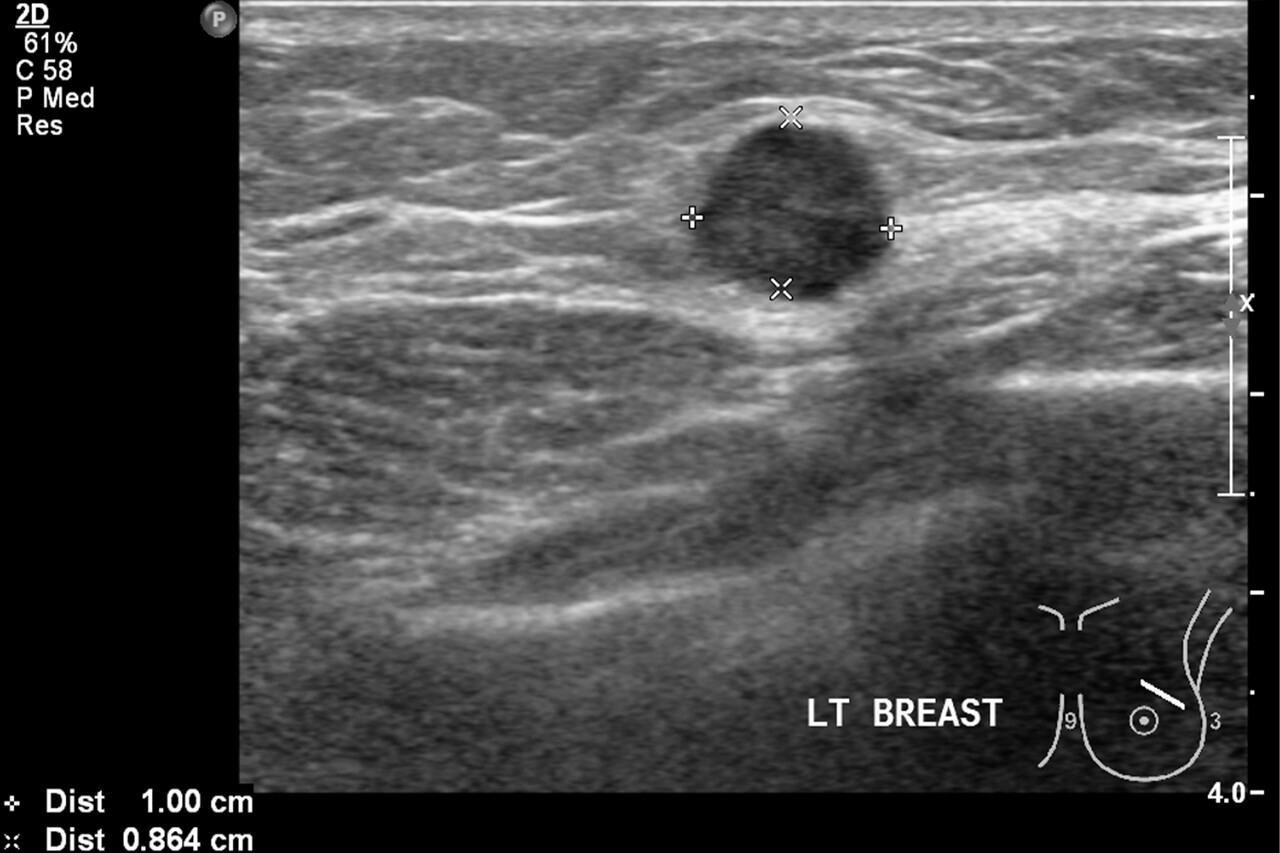
If you’ve been searching for Pictures of breast cancer lumps on ultrasound, understanding where these lumps commonly form and how they appear on imaging can provide helpful context. You can also review Pictures of breast cancer lumps to better understand visual differences between benign and malignant findings.

Continue reading to learn where breast cancer lumps are usually located, how they may feel, and what steps to take if you notice one.
Where are breast cancer lumps most often located?
According to a 2023 review, consistent research findings show that the upper outer quadrant of the breast is the most frequent site of breast cancer development. This area is the section nearest the armpit.
It can be useful to picture each breast as a clock face with the nipple positioned at the center. When looking at your right breast, the upper outer quadrant falls between 9:00 and 12:00. When looking at your left breast, it spans from 12:00 to 3:00.
Learn more about breast cancer and related breast changes to stay informed about your health.
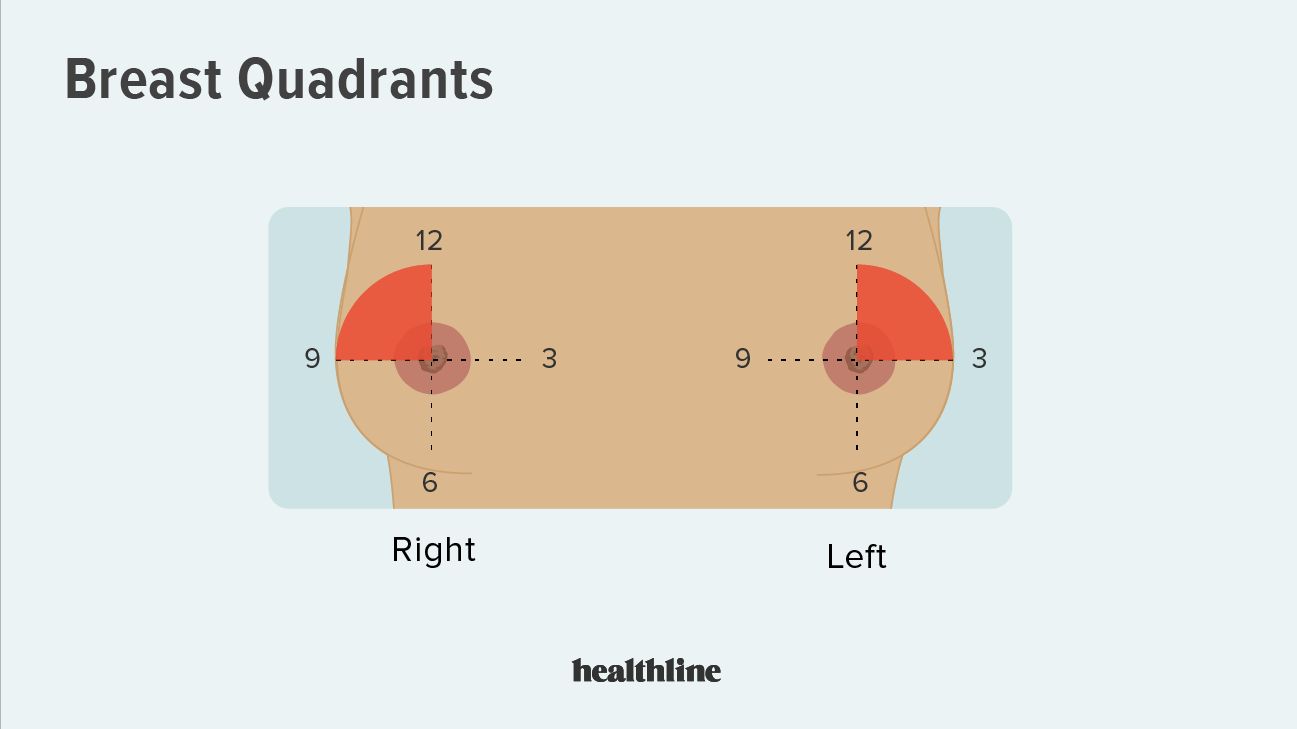
The exact reason this quadrant accounts for more breast cancer lumps is not fully understood, though it contains a higher concentration of glandular tissue.
A 2019 study reviewed data from individuals diagnosed with female breast cancer between 2010 and 2013.
Researchers observed that tumors located toward the outer edges of the breast (including the upper outer quadrant) were associated with more favorable outcomes compared with tumors situated near the nipple.
People with male anatomy typically have a smaller amount of breast tissue, primarily beneath or around the nipple. Consequently, male breast cancer lumps are more often found close to the nipple and may be accompanied by bloody nipple discharge.
Although the upper outer quadrant and the nipple are common sites, breast cancer can originate in any area containing breast tissue, including tissue that extends into the armpit.
What are the different kinds of breast lumps?
Fibrocystic changes
At times, fibrous breast tissue, mammary glands, and ducts may respond strongly to hormonal fluctuations that occur during ovulation.
These lumps often become larger and more tender in the days before your menstrual period. This pattern can continue throughout your reproductive years and typically eases after menopause as hormone levels stabilize.
Cysts
Cysts are sacs filled with fluid that can develop under the skin anywhere on the body, including the breast. In breast cysts, fluid accumulates within the lobules.
They are commonly found in the upper outer quadrant or along the central margins near the nipple. Most breast cysts are benign and may not require treatment unless they cause discomfort or grow in size.
According to the American Cancer Society (ACS), simple cysts that contain only fluid do not raise your risk of developing breast cancer.
Fibroadenomas
Fibroadenomas are typically painless, although mild tenderness can occur before menstruation. These lumps are often mobile, meaning they shift slightly when you apply gentle pressure with your fingers.
Fibroadenomas are benign and do not increase your likelihood of breast cancer.
Papillomas
Papillomas are small, wart-like growths that form within the lining of the mammary ducts near the nipple. They may lead to clear or bloody nipple discharge.
There are two categories: papilloma with atypia and papilloma without atypia.
Papillomas without atypia generally do not pose significant concern. However, papillomas with atypia can elevate the risk of breast cancer and are typically removed as a precaution.
Malignant tumors
Malignant (cancerous) tumors are less common than benign breast conditions but are important to identify promptly.
Unlike benign lumps, malignant tumors tend to grow over time if not treated. Cancer cells may also spread to nearby lymph nodes or other parts of the body. Early detection through clinical exams, mammography, and imaging such as ultrasound significantly improves outcomes. Reviewing Pictures of breast cancer lumps on ultrasound can help you understand how suspicious masses may appear during diagnostic testing. For more detailed visual references, you can explore Graphic pictures of breast cancer.
What does a breast cancer lump feel like?
Breast cancer lumps often have certain features that distinguish them from noncancerous lumps.
That said, these characteristics are general guidelines. It’s not possible to diagnose a lump on your own, and even healthcare professionals usually require imaging or biopsy for confirmation.
Signs that a breast lump may be cancerous include:
- It’s painless.
- It feels firm or hard.
- It has an uneven or bumpy surface.
- It has irregular borders.
- You cannot easily move it with your fingers.
- It continues to grow or change.
Having one or more of these traits does not automatically mean you have breast cancer.
Breast cancer lumps can sometimes feel soft, movable, or even tender. They may develop anywhere on the breast, chest wall, or in the armpit region.
Cancerous lumps tend to present similarly in people with female breast cancer and those with male breast cancer.
While a distinct lump is the most recognized symptom, breast cancer may also appear as an area of thickened tissue or skin rather than a clearly defined mass.
Certain forms, such as inflammatory breast cancer, may not produce a lump at all but instead cause redness, swelling, warmth, or skin changes.
This is why any new lump or unusual change in the breast or underarm should be assessed by a healthcare professional. Diagnostic imaging, including mammography and ultrasound, plays a central role in evaluating suspicious findings.
What does a noncancerous breast lump feel like?
Among people with female anatomy, noncancerous breast conditions are far more common than breast cancer.
Many benign breast disorders can cause a noticeable lump.
Features suggesting a breast lump may not be cancerous include:
- It’s tender or painful.
- It feels soft or rubbery.
- It’s smooth and well-defined.
- You can move it easily with your fingertips.
- It decreases in size over time.
What to do if you feel a lump
Noticing a breast lump can be stressful, even when you understand that most are benign. Because breast cancer is more treatable before it spreads, obtaining a timely evaluation is essential.
- Consult a healthcare professional: Schedule an appointment with a healthcare professional, such as a gynecologist if you have one. If you do not have a regular doctor, contact a local clinic or medical office and explain that you’ve found a breast lump and require a clinical exam.
- Understand that a physical exam may not be enough: Your doctor may recommend additional testing, such as a mammogram, an ultrasound, or an MRI. These tests are standard diagnostic tools and do not automatically indicate cancer.
- Stay as calm as possible: Keep in mind that the odds favor a benign diagnosis. Seeking evaluation promptly is a proactive and responsible step.
- Follow up for results: Reach out to the clinic to obtain your test results, clarify their meaning, and discuss next steps.
- Advocate for your health: If you experience delays or feel your concerns are not fully addressed, consider seeking a second opinion.
In addition to clinical exams, becoming familiar with your own baseline breast texture and appearance can help you detect changes sooner. Regular self-awareness combined with recommended screening schedules provides the best chance for early detection.
Outlook
The majority of breast lumps are caused by conditions other than breast cancer. Even when breast cancer is diagnosed, cases identified at a localized stage are highly treatable.
Based on data collected between 2015 and 2011, localized female breast cancer has an overall 5-year relative survival rate of 91.7%.
This statistic indicates that individuals with localized female breast cancer are nearly as likely to live at least 5 more years as those without female breast cancer.
Routine screening, awareness of family history, and prompt medical evaluation of new symptoms all contribute to improved outcomes.
The bottom line
For people with female anatomy, breast cancer lumps most often develop in the upper outer quadrant of the breast. For people with male anatomy, they are typically located near the nipple.
You can improve the likelihood of detecting breast cancer early by understanding how your breasts normally look and feel. Performing regular self-exams—particularly if you have an elevated breast cancer risk—can help you notice changes more quickly.
If you identify a lump or observe any new or unusual breast changes, contact a doctor promptly.
During your visit, discuss recommended screening intervals, your individual risk factors, and warning signs to monitor moving forward. Early action and informed awareness remain key components of breast health.

















Leave a Reply
You must be logged in to post a comment.