

Corn is a nutritious whole grain that delivers fiber, essential vitamins, minerals, and powerful antioxidants. When reviewing the Yellow Corn Nutritional Value per 100g, it becomes clear that this staple food can support eye, digestive, and overall health. However, highly refined corn-based items, such as tortilla chips and corn syrup, typically provide fewer health advantages.
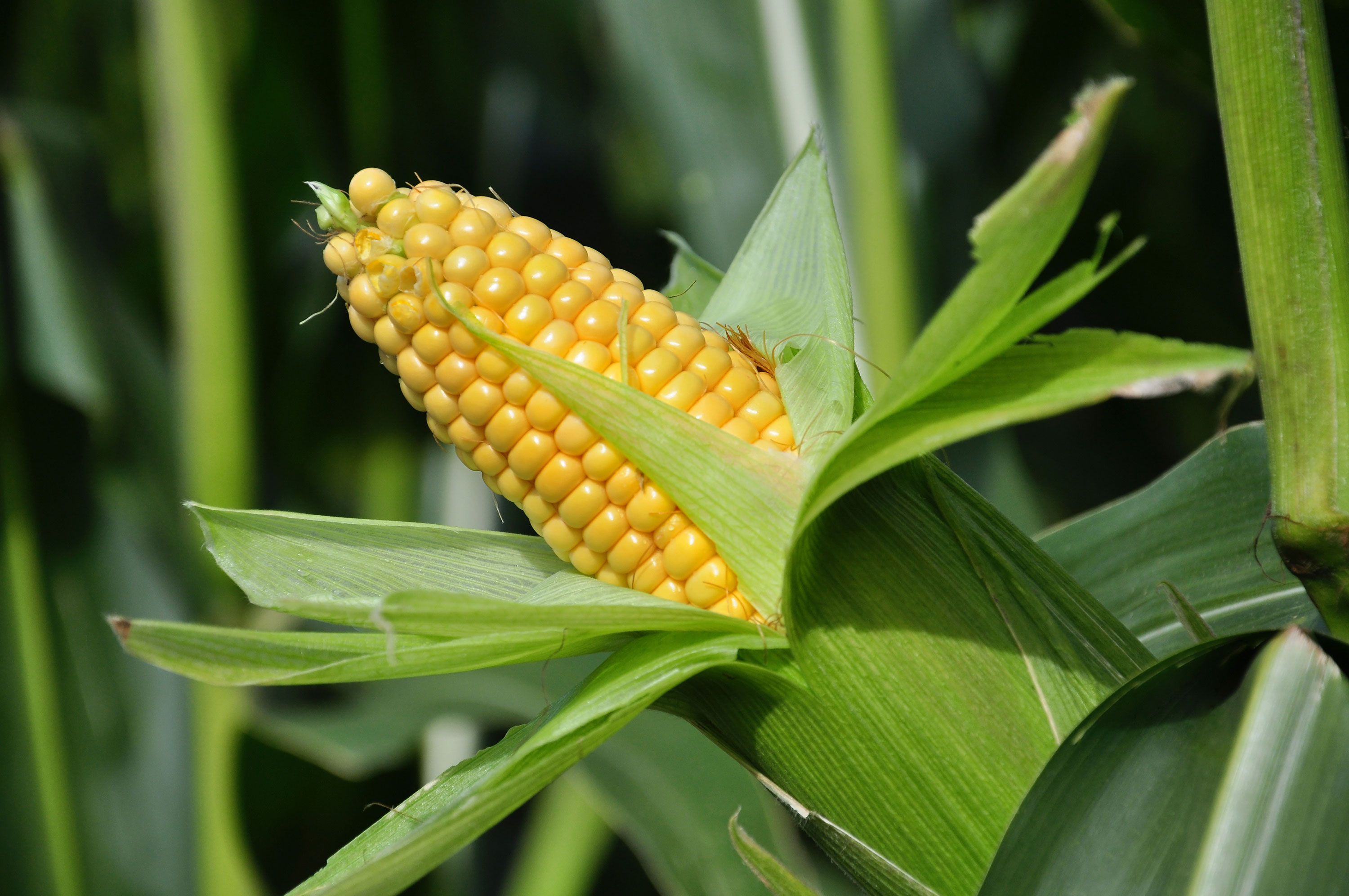
Commonly referred to as maize (Zea mays), corn ranks among the most widely cultivated cereal grains globally. Originating in Central America, it is now grown in numerous varieties across the world.
Sweet corn and popcorn are popular whole-food options, while refined derivatives are frequently used in processed foods.
These include tortillas, tortilla chips, polenta, cornmeal, corn flour, corn syrup, and corn oil.
Whole grain corn retains more nutrients because it contains the bran and germ, making it naturally rich in dietary fiber, antioxidants, and micronutrients.
Although yellow is the most recognized variety, corn also appears in red, orange, purple, blue, white, and black forms — each with its own unique phytonutrient profile.
This comprehensive guide explores everything you need to know about corn, including its nutritional composition, health benefits, and possible drawbacks.
Nutrition facts
Understanding the Yellow Corn Nutritional Value per 100g helps clarify how this grain fits into a balanced diet. Below are the nutrition facts for 3.5 ounces (100 grams) of boiled yellow corn:
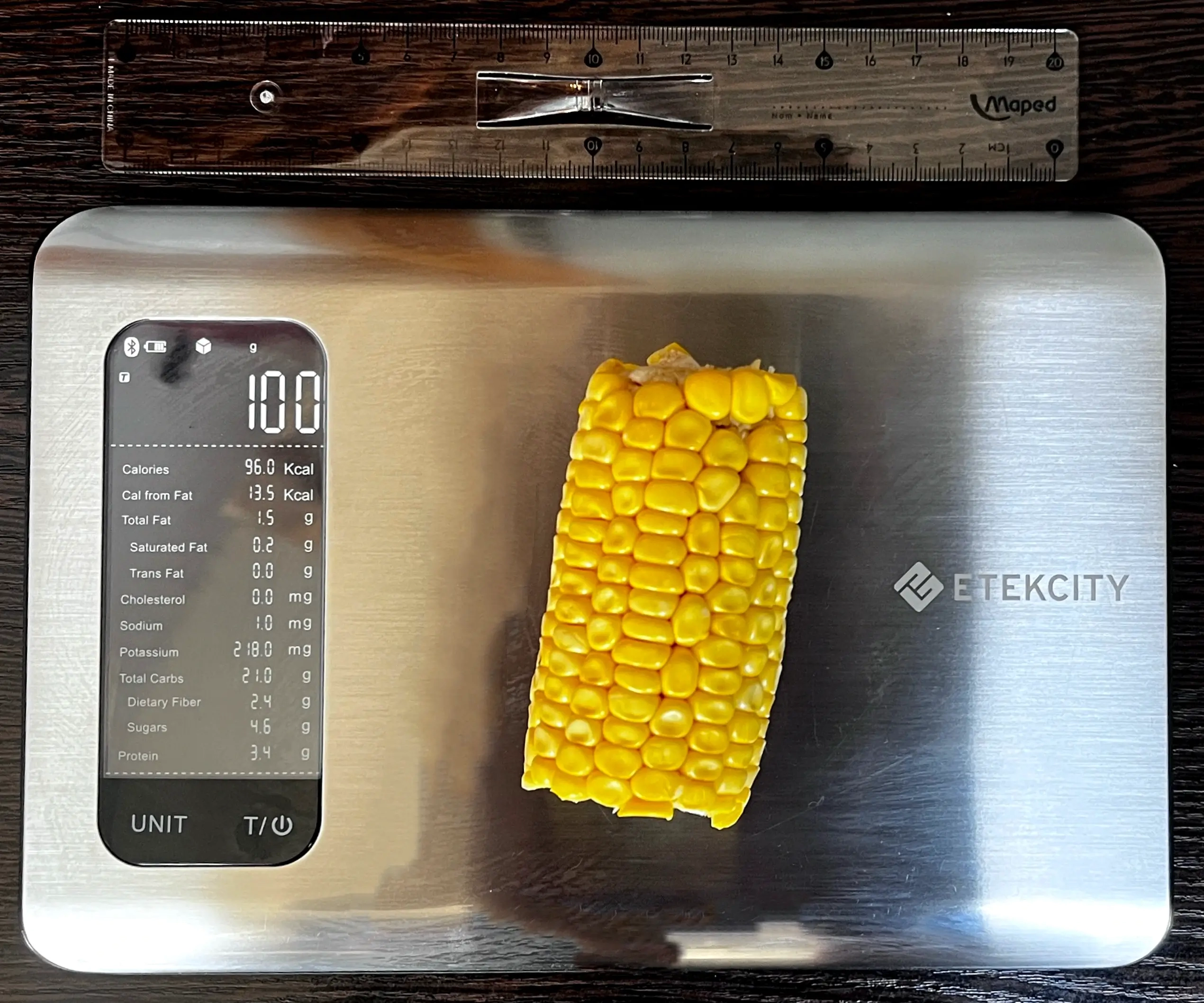
- Calories:96
- Water:73%
- Protein:3.4 grams
- Carbs:21 grams
- Sugar:4.5 grams
- Fiber:2.4 grams
- Fat:1.5 grams
For a broader breakdown of corn’s nutrient profile, you can also review Corn Nutritional Value per 100g to compare variations and preparation methods.
Carbs
Like other cereal grains, corn primarily consists of carbohydrates.
Starch represents its dominant carbohydrate, making up approximately 75% of its dry weight. It also contains modest amounts of natural sugars.
Sweet corn, sometimes called sugar corn, is a lower-starch variety with a higher sugar concentration, most of which is sucrose.
Despite its sweetness, sweet corn is not classified as a high-glycemic food. It ranks low or medium on the glycemic index (GI).
The GI measures how rapidly carbohydrates elevate blood glucose levels. Foods with high GI values may trigger sharp blood sugar spikes, whereas corn’s moderate ranking makes it a steadier energy source when eaten in whole form.
Fiber
Corn provides a moderate quantity of dietary fiber, which supports digestive health and gut function.
For instance, 3 cups of movie theater popcorn contain around 3.5 grams of fiber — about 13% of the Daily Value (DV).
The primary fibers found in corn are insoluble types such as hemicellulose, cellulose, and lignin, which promote bowel regularity and may help prevent constipation.
Protein
Corn contains modest amounts of protein.
Depending on the specific variety, protein levels range from 3% to 10%.
The predominant proteins in corn are called zeins, which account for 40–50% of its total protein content.
However, zeins are considered low-quality proteins because they lack certain essential amino acids.
Beyond nutrition, zeins have numerous industrial applications, including use in adhesives, inks, and pill coatings. To better understand protein content, see Corn protein per 100g for a detailed analysis.
Corn oil
The fat content of corn ranges from 2% to 5%, making whole corn naturally low in fat.
However, corn germ — a by-product of the milling process — is rich in fat and used to produce corn oil, a common culinary oil.
Refined corn oil is primarily composed of linoleic acid, a polyunsaturated fatty acid, with smaller amounts of monounsaturated and saturated fats.
It also provides vitamin E and notable levels of phytosterols, compounds that may help lower cholesterol levels and enhance shelf stability.
Vitamins and minerals
Corn can supply meaningful amounts of several vitamins and minerals, although the exact levels vary depending on the variety.
Generally, popcorn is particularly rich in minerals, while sweet corn tends to provide higher concentrations of certain vitamins.
Popcorn
This widely enjoyed snack contains important nutrients, including:
- Manganese. A vital trace element found abundantly in whole grains, legumes, fruits, and vegetables. Its absorption from corn may be limited due to phytic acid content.
- Phosphorus. Present in both popcorn and sweet corn, phosphorus supports tissue growth and maintenance.
- Magnesium. Low levels of this essential mineral may increase the risk of chronic diseases such as heart disease.
- Zinc. This trace mineral performs numerous biological functions, though its absorption may be reduced by phytic acid.
- Copper. An antioxidant trace element often lacking in the Western diet. It is an important factor in reducing the progression of age-related macular degeneration (AMD).
Sweet corn
Sweet corn provides several essential vitamins:
- Pantothenic acid. Also known as vitamin B5, it is found in nearly all foods, making deficiency uncommon.
- Folate. Also called vitamin B9 or folic acid, folate is crucial during pregnancy for proper fetal development.
- Vitamin B6. A group of related vitamins, most commonly pyridoxine, involved in numerous bodily processes.
- Niacin. Also referred to as vitamin B3, niacin in corn is not easily absorbed unless treated with an alkaline solution like limewater (calcium hydroxide), which makes it more bioavailable.
- Potassium. An essential mineral that supports blood pressure regulation and heart health.
Other plant compounds
Corn contains various bioactive plant compounds that contribute to its antioxidant capacity.
In fact, corn contains higher levels of antioxidants than many other common cereal grains:
- Ferulic acid. One of the primary polyphenol antioxidants in corn.
- Anthocyanins. Antioxidant pigments responsible for the vibrant colors of red, blue, and purple corn.
- Zeaxanthin. A carotenoid named after Zea mays, associated with improved eye health.
- Lutein. A key carotenoid that helps shield the eyes from oxidative stress caused by blue light.
- Phytic acid. An antioxidant that may impair mineral absorption but also offers potential health benefits.
Popcorn
Popcorn is a distinct corn variety that expands and pops when heated.
As moisture inside the kernel converts to steam, internal pressure builds until the kernel bursts.
It remains one of the most commonly consumed whole grain snacks in the United States.
Whole grains may offer multiple health benefits, including a lower risk of heart disease and type 2 diabetes.
However, regular popcorn intake has been linked to increased heart disease risk in some studies, likely due to added salt, butter, or high-calorie oils.
Air-popping popcorn can help reduce added fats and improve its nutritional profile.
Health benefits
Consuming whole grain corn regularly may provide several health advantages.
Eye health
Macular degeneration and cataracts are among the world’smost common visual disorders and leading causes of blindness.
Nutrition plays a meaningful role in prevention.
Lutein and zeaxanthin — the main carotenoids in yellow corn — accumulate in the retina and protect against blue light–induced oxidative damage.
Higher blood concentrations of these carotenoids are strongly associated with reduced risk of macular degeneration and cataracts.
Observational studies suggest protective effects, although not all studies show consistent results.
Prevention of diverticular disease
Diverticular disease (diverticulosis) involves the formation of pouches in the colon wall, leading to symptoms like cramping, bloating, gas, and occasionally bleeding or infection.
Contrary to older beliefs, popcorn and other fiber-rich foods do not appear to increase risk.
An 18-year study of 47,228 men found that higher popcorn consumption was associated with a 28% lower risk of developing diverticular disease.
Potential downsides
Corn is widely regarded as safe, but certain considerations remain important.
Antinutrients in corn
Whole grain corn contains phytic acid (phytate), which can reduce absorption of minerals like iron and zinc when consumed in the same meal.
For individuals with balanced diets, this is rarely problematic. However, in regions where grains and legumes dominate the diet, it may pose concerns.
Soaking, sprouting, or fermenting corn can lower phytic acid content.
Importantly, phytic acid also has potential health benefits, including antioxidant properties.
Mycotoxins
Certain grains and legumes are vulnerable to fungal contamination.
These fungi produce toxins known as mycotoxins, which pose serious health risks.
The primary mycotoxins in corn include fumonisins, aflatoxins, and trichothecenes.
Fumonisins are particularly concerning and have been associated with adverse health effects in populations relying heavily on corn.
High intake of contaminated corn has been linked to increased cancer risk and neural tube defects.
In April 2004, 125 people in Kenya died from aflatoxin poisoning due to improperly stored corn.
A 2023 study found drought conditions significantly increase fungal contamination risk in corn crops.
Preventive strategies include proper drying, safe storage, and fungicide use. In developed countries, food safety regulations strictly monitor mycotoxin levels.
The bottom line
Corn remains one of the most frequently consumed cereal grains worldwide.
Based on the Yellow Corn Nutritional Value per 100g, it offers dietary fiber, antioxidant carotenoids like lutein and zeaxanthin, and a range of vitamins and minerals.
When eaten in whole forms such as sweet corn or air-popped popcorn, it can be a nutritious component of a balanced diet. Moderation and mindful preparation methods help maximize benefits while minimizing potential risks.




















Leave a Reply
You must be logged in to post a comment.