
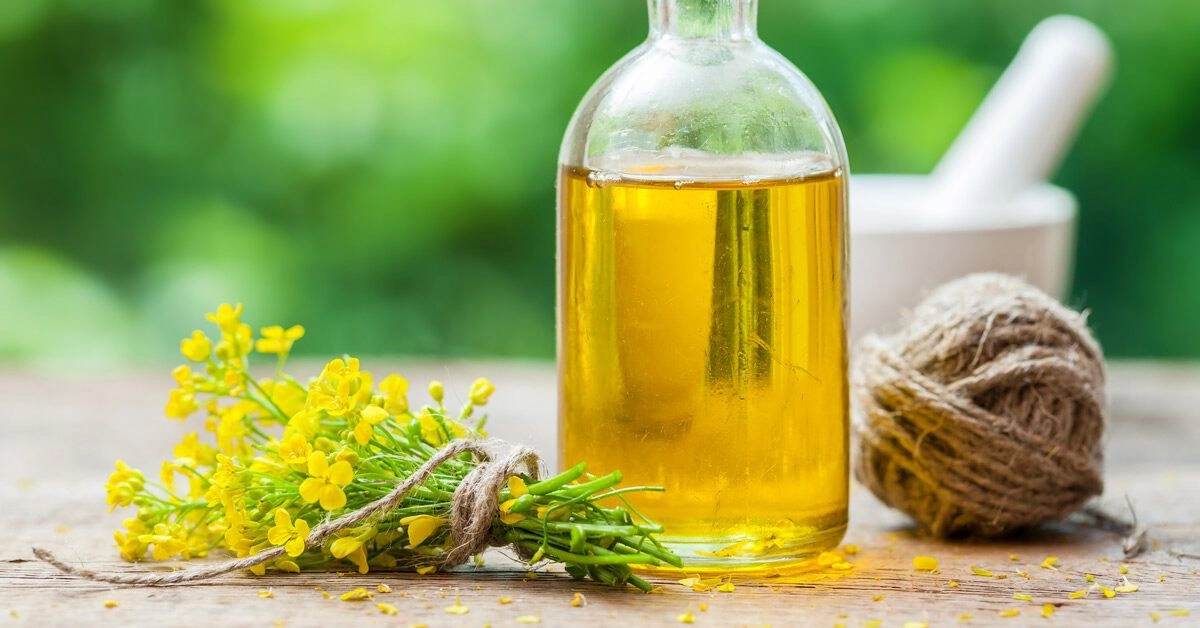
Canola oil is a plant-derived oil present in a wide range of packaged and restaurant foods. In recent years, many individuals have removed it from their diets because of concerns about how it’s processed and its potential health effects.
At the same time, others continue to use it regularly and question whether avoiding it is truly necessary.
This comprehensive guide explains whether canola oil is beneficial or detrimental to your health, while also touching on how it compares with options like Cold pressed rapeseed oil and other minimally processed cooking oils.

What is canola oil?
Canola (Brassica napus L.) is an oilseed crop developed in Canada through selective crossbreeding of the rapeseed plant. The term “canola” is derived from “Canada” and “ola,” meaning oil.
Since its introduction, plant scientists have cultivated multiple varieties aimed at enhancing seed quality and boosting oil yield, leading to a significant rise in canola oil production worldwide.
Today, most canola crops are genetically modified (GMO) to enhance oil characteristics and improve resistance to herbicides (1, 2). In fact, more than 90% of canola grown in the United States is genetically engineered for herbicide tolerance, according to a 2011 study (3).
Canola plants are processed to produce canola oil and canola meal, the latter of which is commonly used in animal feed. Beyond food applications, canola oil may also serve as a diesel alternative and as a component in products made with plasticizers, including tires.
How is it made?
The production of canola oil involves several industrial stages.
According to the Canola Council of Canada, the process typically includes the following steps (4):
- Seed cleaning. Seeds are separated and purified to remove debris such as stems and soil.
- Seed conditioning and flaking: Seeds are warmed to approximately 95℉ (35℃), then flattened using roller mills to break the cell walls.
- Seed cooking. The flakes are heated in steam cookers for 15–20 minutes at 176–221℉ (80°–105°C).
- Pressing. The cooked flakes are mechanically pressed to extract 50–60% of the oil.
- Solvent extraction. Remaining oil is removed using hexane, a chemical solvent.
- Desolventizing. Residual hexane is eliminated by reheating the material to 203–239℉ (95–115°C) with steam.
- Oil refining. The extracted oil undergoes refining steps such as steam distillation, phosphoric acid treatment, and filtration through acid-activated clays.
When canola oil is used to make margarine or shortening, it may undergo hydrogenation. This process introduces hydrogen molecules into the oil, altering its chemical structure so it becomes solid at room temperature and has a longer shelf life.
Hydrogenation creates trans fats. Most trans fats consumed today come from partially hydrogenated oils, though small amounts occur naturally in dairy and meat (5, 6). “Industrial” trans fats are harmful and strongly associated with heart disease, leading many countries — including the United States in 2018 — to ban them in foods.

There is insufficient evidence to confirm whether naturally occurring trans fats pose the same level of risk (6, 7).
SummaryCanola oil is a vegetable oil derived from the canola plant. Its processing involves synthetic chemicals and multiple refining steps to extract and purify the oil.
Nutrient content
Like Cold pressed rapeseed oil, canola oil provides fat-soluble vitamins, particularly vitamins E and K. One tablespoon (15 ml) supplies (8):
- Calories: 124
- Vitamin E: 16% of the DV
- Vitamin K: 8% of the DV
Aside from these nutrients, it contains no meaningful amounts of vitamins or minerals.
Fatty acid composition
Canola oil is frequently described as a healthier oil option due to its relatively low saturated fat content.
Its fatty acid profile is as follows (9):
- Saturated fat: 7%
- Monounsaturated fat: 64%
- Polyunsaturated fat: 28%
The polyunsaturated portion includes linoleic acid (an omega-6 fatty acid) and alpha-linolenic acid (ALA), a plant-based omega-3 fatty acid.
Canola oil generally contains about twice as much omega-6 as omega-3, a proportion some researchers consider favorable (10).
Many individuals, especially those on plant-based diets, rely on ALA sources to support levels of DHA and EPA, omega-3 fats essential for cardiovascular and brain health. However, conversion of ALA into DHA and EPA is inefficient in the human body (11).
Even so, ALA itself may help reduce total cholesterol, LDL cholesterol, triglycerides, and blood pressure, factors linked to cardiovascular disease risk (11, 12).
It’s worth noting that high-heat processing and frying can degrade polyunsaturated fats like ALA, potentially diminishing these benefits.
SummaryCanola oil supplies vitamins E and K and contains roughly twice as much omega-6 as omega-3 fatty acids. High-temperature cooking may reduce some of its beneficial omega-3 content.
Potential downsides
Canada remains the largest exporter of canola oil, with much of its supply going to the United States (13).
As canola oil has become a dominant fat in ultra-processed foods, questions have emerged regarding its long-term health implications.
Major source of omega-6 fats
Omega-6 fats, like omega-3 fats, are essential for health. However, modern Western diets tend to be disproportionately high in omega-6 and low in omega-3, contributing to a pro-inflammatory imbalance.
Although a 1:1 ratio is considered optimal, the average Western intake may reach 20:1 (14).
This imbalance has been associated with conditions such as Alzheimer’s disease, obesity, and heart disease (15, 16, 17, 18).
While canola oil itself has an omega-6 to omega-3 ratio of about 2:1 (10), its widespread use in processed foods makes it a major contributor to overall omega-6 intake (19).
To improve balance, many experts recommend emphasizing whole-food omega-3 sources like fatty fish and limiting heavily processed items. For additional discussion on concerns about rapeseed-derived oils, see Why is rapeseed oil bad for you.
Mostly GMO
GMO foods are genetically modified to add or remove specific traits (20). Crops like corn and canola are often engineered for herbicide resistance.
Although regulatory agencies have deemed GMO foods safe, concerns remain regarding environmental impact, food safety, and long-term public health (21).
Over 90% of canola grown in North America is genetically engineered (3). While GMO foods have been consumed for decades without confirmed direct safety hazards, some individuals prefer non-GMO or organic alternatives.
Highly refined
Commercial canola oil production involves high temperatures and chemical treatments.
It is categorized as a refined, bleached, and deodorized (RBD) oil, similar to soy, corn, and palm oils. Refining can reduce levels of essential fatty acids, antioxidants, and vitamins (24, 25, 26).
Although all industrial plant oils undergo some processing unless labeled cold pressed, expeller pressed, or extra virgin, those concerned about refining may opt for organic or cold-pressed versions. Keep in mind that less refined oils typically have lower smoke points and are not ideal for high-heat cooking. If you’re curious why this oil appears so frequently in packaged products, you may find it helpful to read Why is rapeseed oil in everything.
SummaryMost canola oil on store shelves is highly refined and derived from GMO crops. It is also a common source of omega-6 fats in ultra-processed foods.
Can it harm health?
Canola oil is among the most widely consumed oils globally, yet long-term human studies on its health effects remain limited.
Some research suggests potential benefits. A 2021 independent study found that canola oil improved lipid profile and insulin sensitivity in women with PCOS (27).
Other evidence indicates it may reduce cardiometabolic risk factors, slow heart disease progression, and modestly support weight reduction (29, 30, 31).
However, some animal studies raise concerns about inflammation, oxidative stress, memory, and blood pressure (32, 33, 34).
Human data on heart health are mixed. Some studies show improvements in LDL cholesterol, while others suggest olive oil may be more effective at lowering inflammatory markers such as interleukine-6 (36, 37).
Overall, more large-scale, high-quality trials are needed to clarify canola oil’s long-term effects on cardiovascular and metabolic health.
SummaryResearch findings are inconsistent. Some data suggest canola oil may improve cholesterol markers, while other studies raise concerns about inflammation and memory.
Alternative cooking oils
Given the mixed evidence, some people prefer other oils with stronger research backing.
For high-heat cooking, consider:
- Olive oil. Rich in polyphenol antioxidants with anti-inflammatory properties (40).
- Avocado oil. Heat-stable and high in carotenoid and polyphenol antioxidants (41).
- Coconut oil. Suitable for high temperatures but should be used in moderation due to its saturated fat content (42).

For cold applications like salad dressings:
- Flaxseed oil. May help lower blood pressure and inflammation (43).
- Walnut oil. Associated with improved blood sugar and cholesterol levels (44, 45).
- Hempseed oil. Nutritious and flavorful for salads (46).
SummarySeveral alternatives — including olive, avocado, coconut, flaxseed, walnut, and hempseed oils — can replace canola oil depending on cooking method.
The bottom line
Canola oil is a commonly used seed oil in home kitchens and commercial food production.
Scientific findings are mixed. Some evidence points to potential benefits, particularly regarding cholesterol levels, while other research — especially from animal models — raises concerns about inflammation and cognitive effects.
Until more robust long-term studies are available, you may consider emphasizing minimally processed oils with strong evidence of cardiovascular benefits, such as olive oil or Cold pressed rapeseed oil, while maintaining an overall balanced, whole-food dietary pattern.






















Leave a Reply
You must be logged in to post a comment.