

Rapeseed oil is rich in beneficial fats and has become a staple in modern food production. Culinary rapeseed oil must be clearly separated from industrial rapeseed oil, which is not intended for human consumption. Its popularity stems from its low cost, neutral taste, and broad range of culinary applications.
The rapeseed plant typically flowers during the summer months and is well known for its bright golden-yellow blossoms that cover fields.
A member of the cabbage family, it is botanically related to turnip and mustard.
The oil extracted from its seeds — referred to as rapeseed oil or canola oil — is widely utilized in cooking, baking, and large-scale food manufacturing. This widespread use often prompts people to ask, “Why is rapeseed oil in everything?”
This article examines the nutritional profile, advantages, and possible drawbacks of rapeseed oil to help clarify why it appears in so many packaged and restaurant foods.

Production and uses
Canada ranks as the leading producer of rapeseed oil, followed closely by Germany. The term “canola” actually originates from the words “Canada” and “oil” (1).

Initially, culinary rapeseed oil was created through traditional crossbreeding methods. Today, however, most varieties sold in the United States are genetically modified (GM) to enhance resistance to pests. As a result, these products are categorized as genetically modified organisms (GMOs).
Rapeseed oil vs. canola oil
It’s essential to differentiate between the two primary forms of rapeseed oil: industrial and culinary. The edible variety is commonly called canola (1).
Industrial rapeseed oil is applied in the automotive and chemical sectors, whereas the culinary form is used in food preparation. The distinction lies mainly in their genetic composition and their levels of erucic acid, which can be harmful in large quantities (1).
To qualify as canola oil, the product must contain no more than 2% erucic acid and comply with internationally regulated standards. Otherwise, it is labeled simply as “rapeseed oil.” In grocery stores, the majority of options available are canola oil (1).
SummaryRapeseed oil serves both industrial and culinary roles. To be marketed as canola oil, it must meet strict standards for erucic acid content. The name “canola” reflects Canada’s position as the top producer.
Nutrition
Rapeseed oil is composed entirely of fat, containing no protein or carbohydrates. It provides a significant amount of heart-healthy fats and fat-soluble vitamins.
One tablespoon (15 ml) of canola oil supplies (2):
- Calories:124
- Total fat: 14 grams
- Saturated fat: 1 gram
- Monounsaturated fat: 9 grams
- Polyunsaturated fat: 4 grams
- Vitamin E: 16% of the Daily Value (DV)
- Vitamin K:8% of the DV
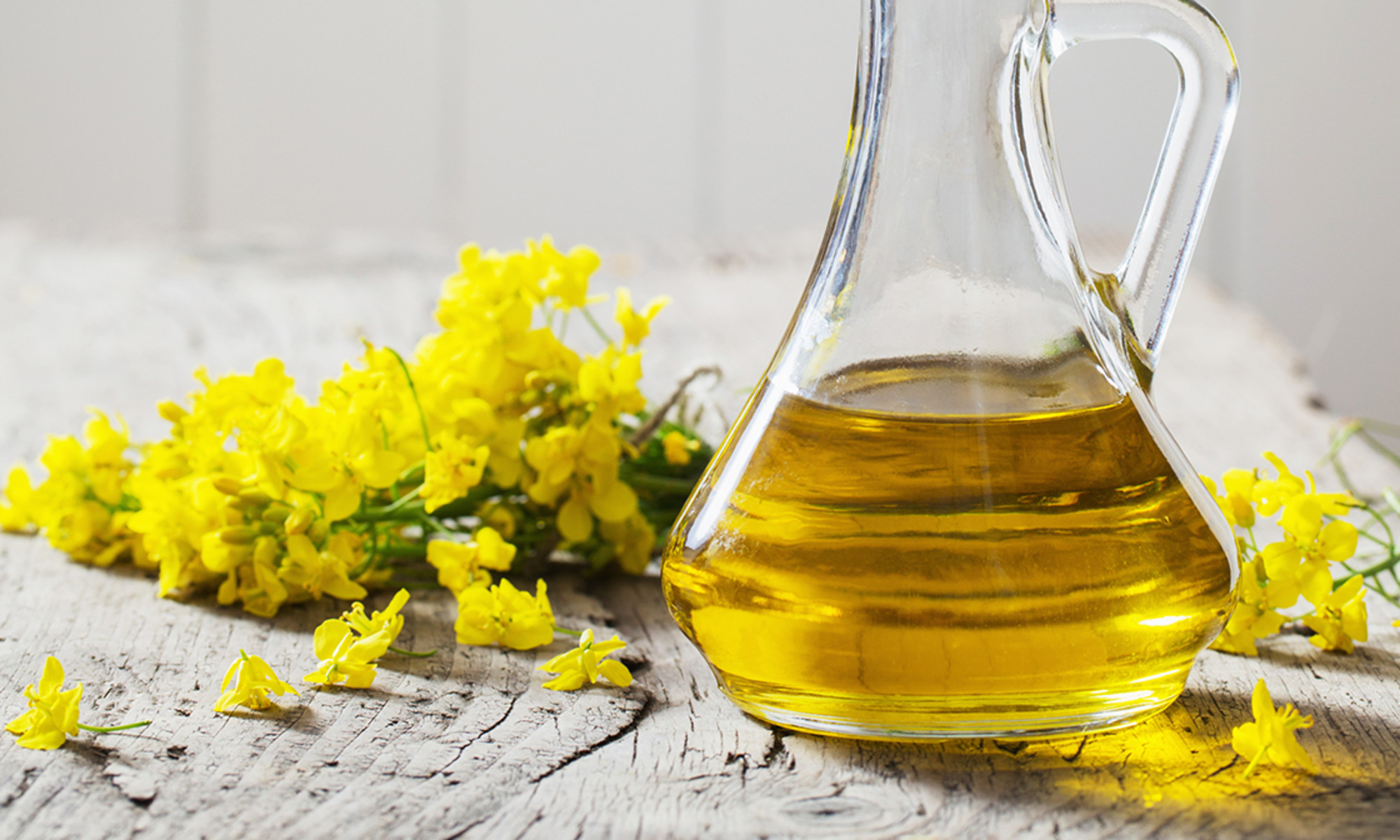
It is an excellent source of vitamin E, a powerful antioxidant that supports skin integrity and eye health (3, 4).
Additionally, rapeseed oil is naturally low in saturated fat and rich in unsaturated fats, a combination associated with improved cardiovascular health (1, 5).
It is particularly notable for its alpha-linolenic acid (ALA) content, an omega-3 fatty acid. ALA is an essential fat that the body partially converts into eicosapentaenoic acid (EPA) and docosahexaenoic acid (DHA). Diets higher in these fats are linked to cardiovascular benefits (6).
Rapeseed oil also contains omega-6 fatty acids, which are important for overall health when consumed in balanced amounts. However, many diets provide an excess of omega-6 fats, potentially contributing to inflammation (7).
With an omega-3 to omega-6 ratio of approximately 1:2, rapeseed oil offers what is generally regarded as a favorable balance. Experts often suggest a ratio of 1:4 or lower for optimal health, positioning rapeseed oil as a reasonable choice (7).
Evidence regarding its effect on blood cholesterol has shown mixed outcomes. Still, a recent review found that consistent canola oil consumption reduced LDL (bad) and total cholesterol levels, potentially lowering the risk of heart disease (8).
SummaryRapeseed oil is rich in unsaturated fats and vitamins E and K. Its balanced omega-3 to omega-6 profile may support cardiovascular health.
Benefits
Despite ongoing debate, rapeseed oil is associated with several practical advantages, which partly explains why rapeseed oil is in everything from packaged snacks to restaurant meals.
High-heat cooking temperature
Rapeseed oil has a relatively high smoke point of about 400ºF (204ºC), meaning it can withstand high cooking temperatures before beginning to smoke. When oils exceed their smoke point, fat molecules degrade and may form harmful compounds (9).
The smoke point is influenced by how refined an oil is. Highly refined oils generally have higher smoke points. Because rapeseed oil undergoes extensive refining to remove impurities and free fatty acids, it tolerates heat better than many less refined oils, including olive oil (10, 11).
Oil stability also matters. Oils with higher monounsaturated or saturated fat content tend to be more stable under heat than those high in polyunsaturated fatty acids. Since rapeseed oil contains about 28% PUFA, it remains relatively stable, making it suitable for sautéing, roasting, baking, and deep-frying.
It’s flavorless and versatile
Rapeseed oil has a neutral taste, which allows it to blend seamlessly into a wide range of recipes.
It performs well in salad dressings, marinades, and baked goods and can be used for pan-frying or deep-frying without altering the flavor profile of the finished dish.
Affordable
Because of its large-scale global production, rapeseed oil is widely available and budget-friendly (12).
In many regions, a gallon (4 liters) costs significantly less than the same quantity of olive oil.
Premium oils like extra virgin olive oil command higher prices due to more delicate extraction processes and shorter shelf lives (12).
SummaryRapeseed oil is economical, neutral in flavor, and heat-stable, making it a flexible and cost-effective option for home cooks and food manufacturers.
Downsides
Although rapeseed oil offers several advantages, some concerns remain regarding its production and health implications.
If you’ve wondered, “Why is rapeseed oil in everything, and is it healthy?” understanding these potential drawbacks can provide important context.
Genetically modified
The majority of rapeseed oil sold in U.S. supermarkets and used in processed foods is genetically modified (GM).
By altering the plant’s genes to improve pest resistance, farmers can increase crop yields and reduce losses, ultimately lowering production costs (13).
While this efficiency benefits manufacturers and consumers financially, some individuals express concerns about GM foods and possible links to allergies, antibiotic resistance, or cancer (13, 14).
Current research indicates that GM foods approved for sale are safe to consume and are not associated with adverse health outcomes. However, because the technology is relatively recent, continued long-term studies are warranted (13, 14).
If you prefer to avoid GM ingredients, look for rapeseed oil labeled organic by the USDA or marked GMO-free.
Highly processed
Most commercially available rapeseed oil is heavily refined. During processing, a chemical solvent called hexane is used to extract the oil. It is then subjected to water filtration to remove free fatty acids, gums, and unwanted pigments (15).
Although this refining process is considered safe, it may reduce levels of vitamin E and free fatty acids, potentially diminishing some nutritional value. Refined oils may also contain higher proportions of omega-6 fats, and excessive intake of these fats could promote inflammation (15, 16).
For those seeking a less processed alternative, Cold pressed rapeseed oil retains more of its natural nutrients due to minimal processing. However, it can be harder to find in standard grocery stores and is often available online (15).
If you are concerned about inflammatory effects or long-term health implications, you may also want to explore discussions such as Why is rapeseed oil bad for you to better understand differing perspectives.
SummaryIn the United States, most rapeseed oil is genetically modified and highly refined. While current evidence supports the safety of GM foods, some individuals prefer to avoid them. Refining may also reduce certain nutrients.
The bottom line
Rapeseed oil is used extensively worldwide and is commonly found in processed foods, salad dressings, baked goods, and fried items. Its affordability, neutral flavor, and cooking stability largely explain why rapeseed oil is in everything.
Nutritionally, it provides unsaturated fats and important vitamins such as vitamin E and vitamin K. However, it is typically highly refined, which may influence its overall nutritional profile.
When feasible, opting for cold-pressed or minimally refined varieties can help preserve more of the oil’s original nutrients and health-promoting properties.





















Leave a Reply
You must be logged in to post a comment.