
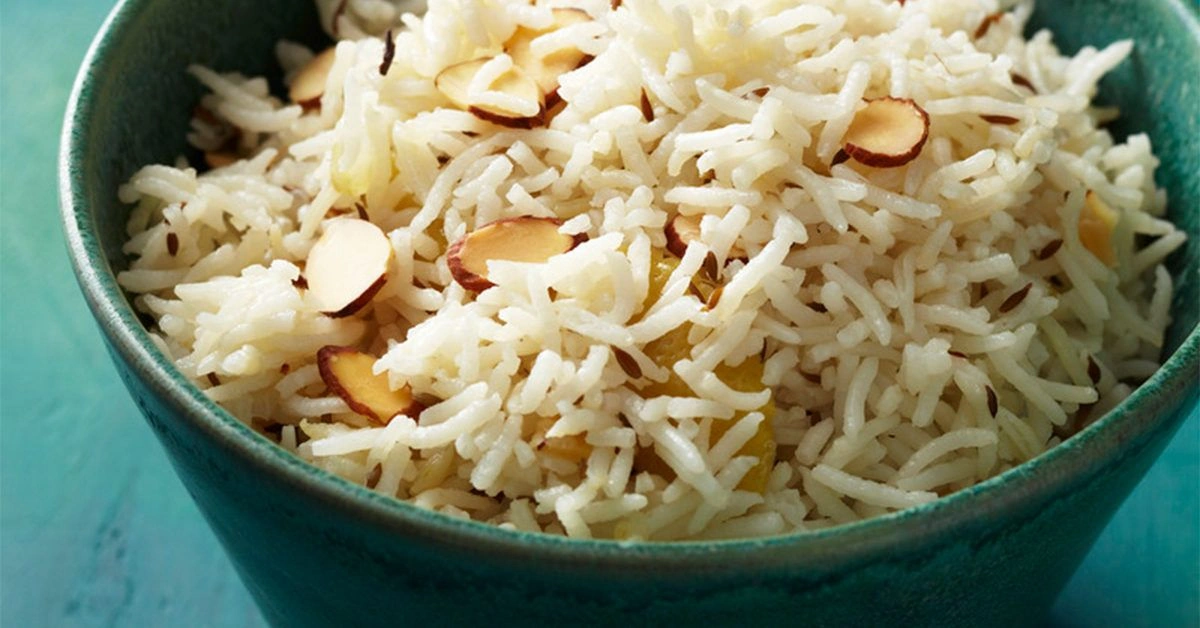
One cup of basmati rice has slightly more than 200 calories. It’s often a preferable option to regular white rice, which is a refined cereal grain.
Basmati is a rice variety commonly used in Indian and South Asian cooking.
Available as both white and brown versions, it’s prized for its mildly nutty flavor and distinctive fragrance.
You might still be curious whether this long-grain rice is a nutritious choice and how it stacks up against other rice varieties.
This piece examines basmati rice closely, reviewing its nutrient profile, possible health perks, and any drawbacks.
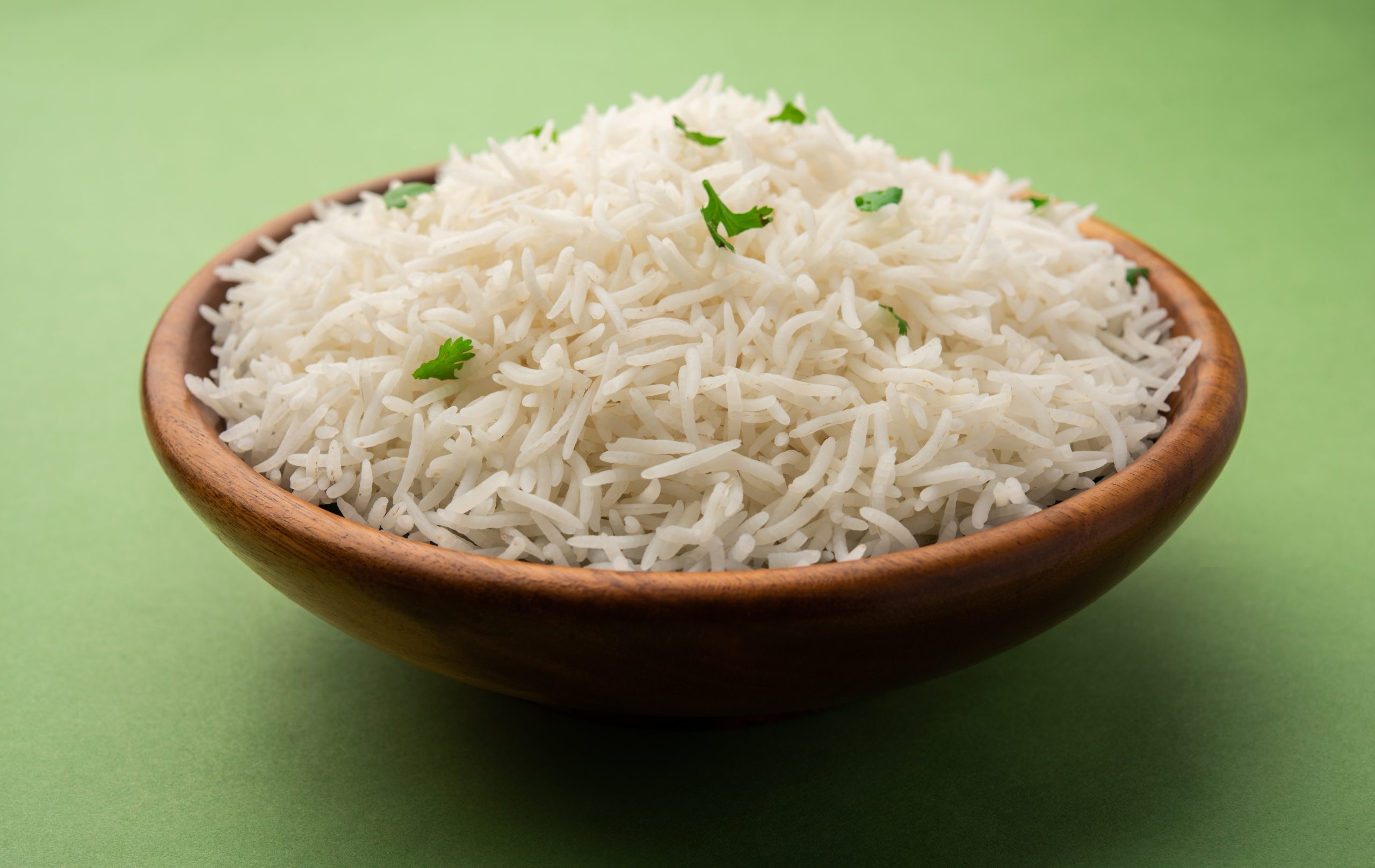
Nutrition facts
While exact values depend on the specific basmati variety, a typical serving is relatively high in carbohydrates and calories and contains micronutrients such as folate, thiamine, and selenium.
One cup (163 grams) of cooked white basmati rice contains (1):
- Calories:210
- Protein: 4.4 grams
- Fat: 0.5 grams
- Carbs:45.6 grams
- Fiber:0.7 grams
- Sodium:399 mg
- Folate:24% of the Daily Value (DV)
- Thiamine:22% of the DV
- Selenium:22% of the DV
- Niacin:15% of the DV
- Copper:12% of the DV
- Iron:11% of the DV
- Vitamin B6:9% of the DV
- Zinc: 7% of the DV
- Phosphorus:6% of the DV
- Magnesium: 5% of the DV
By comparison, brown basmati rice contains slightly more calories, carbohydrates, and fiber. It also delivers higher amounts of magnesium, vitamin E, zinc, potassium, and phosphorus (2).
Summary: Basmati rice is generally rich in carbohydrates and supplies micronutrients like thiamine, folate, and selenium.
Potential health benefits
Basmati rice may offer several health advantages.
Lower arsenic levels
Compared with some other rice types, basmati tends to have lower arsenic, a toxic element that can negatively affect health and may raise the risk of diabetes, cardiovascular disease, and certain cancers (3).
Rice can concentrate arsenic more than many other grains, which is a concern for people who consume rice frequently (4).
However, research indicates that basmati rice sourced from California, India, or Pakistan often shows some of the lowest arsenic concentrations compared with other varieties (5).
It’s also worth noting that brown rice types usually contain more arsenic than white rice because arsenic accumulates in the fibrous outer bran layer.
Often fortified
White basmati rice is frequently fortified, meaning certain nutrients are reintroduced during processing to enhance its nutritional value.
This can make it easier to satisfy requirements for specific vitamins and minerals.
Specifically, rice and similar grains are commonly fortified with iron and B vitamins such as folic acid, thiamine, and niacin (6).
Some varieties are whole grains
Brown basmati is classified as a whole grain, which means it retains all three parts of the kernel — the germ, bran, and endosperm.
Whole grains are linked to numerous health benefits. For example, a meta-analysis of 45 studies connected whole-grain consumption with reduced risk of heart disease, cancer, and premature death (7).
Another review tied habitual whole-grain intake, including brown rice, to a decreased risk of type 2 diabetes (8).
Additionally, an 8-week trial in 80 participants showed that swapping refined grains for whole grains lowered inflammatory markers (9).
Summary: Basmati tends to be lower in arsenic than many rice types and is often fortified with key vitamins and minerals. Brown basmati qualifies as a whole grain.
Potential downsides
Unlike brown basmati, white basmati is a refined grain, meaning processing removes many valuable nutrients.
Some research suggests diets higher in refined grains can impair blood sugar control and may be linked to greater risk of type 2 diabetes (10, 11).
Furthermore, a study of over 10,000 individuals associated dietary patterns that included white rice with increased obesity risk (12).
Also, research in 26,006 people linked white rice consumption to a higher likelihood of metabolic syndrome, a cluster of conditions that elevate risk for heart disease, stroke, and type 2 diabetes (13).
These outcomes may be explained by white rice’s higher carbohydrate content and lower fiber concentration compared with brown rice.
Therefore, while white basmati can be part of a balanced diet in moderation, brown basmati is usually the healthier overall choice.
Summary: Refined grains such as white basmati are linked with greater risks of type 2 diabetes, obesity, and metabolic syndrome, so they’re best consumed in moderation.
Basmati vs. other types of rice
In nutrient terms, basmati rice is comparable to other brown or white rice varieties.
Although tiny differences may exist in calorie, carbohydrate, protein, and fiber content among rice types, these variations generally aren’t significant.
That said, basmati normally contains less arsenic, which could make it a preferable option if rice is a dietary staple (5).
As a long-grain rice, it’s longer and thinner than short-grain kinds.
Its nutty, floral aroma and light, fluffy texture suit many Asian and Indian dishes. It’s especially well-suited for rice puddings, pilafs, and as an accompaniment to main courses.
For those curious about healthier rice choices more broadly, check out healthiest rice for additional information.
Summary: Basmati is nutritionally similar to other rice types but generally contains less arsenic. Its unique flavor, scent, and texture make it a fine option for Asian cuisine.
The bottom line
Basmati is a fragrant, long-grain rice that tends to have lower arsenic than many other rice varieties. It’s sometimes fortified with important vitamins and minerals.
It’s sold in both white and brown forms.
When feasible, choose brown basmati, since refined grains like white rice are linked with several adverse health effects.
Shop for brown basmati rice online.





















Leave a Reply
You must be logged in to post a comment.