
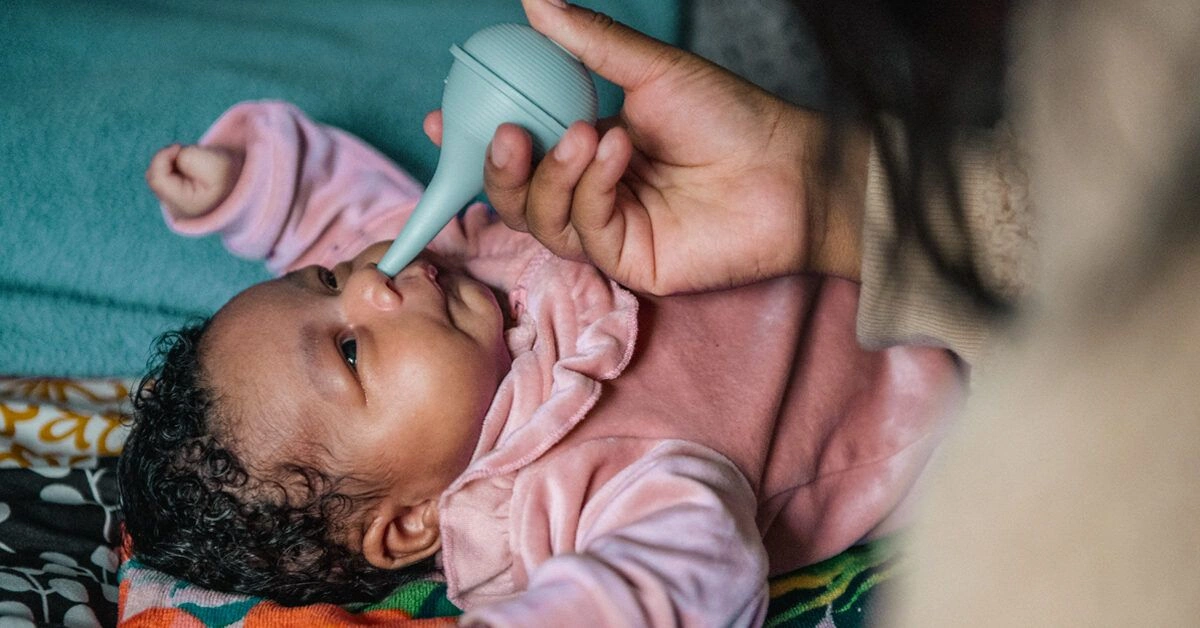
Simple home approaches such as warm baths, saline drops, and keeping the air clean can ease a baby’s congestion. Still, contact your pediatrician if the infant develops other signs like a fever.

Hearing those sniffles and snuffles from your little one may not be a medical emergency the first time, but it can certainly feel alarming.
It’s especially puzzling when your baby sounds stuffed up yet you don’t spot any boogers or discharge in their nostrils — making the issue seem unsolvable.
So what’s happening, and how can you help?
Why does a baby sound congested even when there’s no visible mucus?
Many healthy infants can seem congested simply because their bodies are tiny, including their miniature nasal passages. Like their small fingers and toes, their nostrils and airways are very narrow.
It doesn’t take much for these narrow passages to be affected by slight dryness or a small amount of clear mucus. Often this is just a normal phase of growth and development.
However, several factors can influence how much congestion they experience. Knowing these can help you try home measures to ease the sniffles — or recognize when to contact a doctor.
Factors that may increase the likelihood of congestion include:
- Premature infants. Babies born early have even tinier airways than full-term newborns, which can make noisy breathing more common.
- Air irritants. Tobacco smoke, cooking fumes, strong fragrances, aromatherapy diffusers, or vapors from cleaning products, paint, or varnish can irritate the nasal lining.
- Dry indoor air. Low humidity can dry and irritate nasal passages. This often happens with home heating or in dry climates.
- Seasonal changes. When temperatures fall and humidity drops, your baby may be more likely to sound congested.
Could it be an illness?
Not all congestion is simply part of a baby’s developing nasal passages. Sometimes congestion stems from infections and can extend into the chest.
Examples of illnesses that can cause congestion include:
- the common cold
- influenza (flu)
- respiratory syncytial virus (RSV)
Congestion that affects breathing or reaches the lungs may indicate a more serious problem like:
- bronchiolitis
- pneumonia
- asthma
- cystic fibrosis (often detected on newborn screening)
What signs appear when a baby is congested?
Several clues can suggest your baby’s nasal passages are congested. Watch for:
- sniffing and snuffling sounds
- a slightly blocked or runny nose
- noisy breathing
- snoring during sleep
- a little trouble feeding
- a light cough
With these mild symptoms you can usually stay calm. But check for other warning signs like fever or vomiting that would prompt a call to the pediatrician.
Seek immediate medical attention if you notice any of the following:
- sniffling progresses to labored breathing
- wheezing that sounds like breathing is an effort
- nostrils widening and narrowing with each breath
- the chest pulling in with each inhalation
If any of these signs are present, call your doctor right away.
What should you do if your baby sounds congested but there’s no mucus?
There are times your infant may sound congested while you can’t find much mucus. Start by checking for other illness indicators.
- Is your baby running a fever?
- Does the baby seem unusually lethargic?
- Are wet diapers frequent enough?
- Is the baby refusing to breastfeed or bottle-feed?
- Is congestion disrupting their sleep?
If you spot any of these issues, consult your pediatrician to plan appropriate care.
Conversely, if your baby is generally happy, feeding, sleeping, and producing enough diapers, you may simply wait for the congestion to clear. Overdoing interventions (for example, repeated use of a nasal suction bulb) can irritate the nasal lining further.
If you need to soothe a fussy congested infant, try some gentle home remedies below.
Home measures to relieve congestion
Even if you don’t see mucus at the nostrils, it can accumulate farther back in the nose or throat since babies spend a lot of time lying on their backs, causing the sniffling you hear.
These home strategies may help ease congestion:
- Warm baths. A soothing bath in warm water can help loosen congestion.
- Saline drops. A few saline drops in each nostril may thin and loosen mucus. You may be lucky enough to have your baby sneeze it out on their own.
- Nasal bulb or aspirator. If your baby isn’t sneezing to clear their nose, you can mechanically remove excess mucus with a bulb syringe or nasal aspirator.
- Cool-mist humidifier. A humidifier helps prevent dry air from aggravating nasal passages.
- Positioning. Hold or carry your baby, or use a baby swing while they’re awake so they spend less time flat on their back. Don’t place objects in the crib to prop them up, as this raises the risk of SIDS.
- Facial massage. Gently stroke the nasal bridge, forehead, temples, and cheekbones with your thumb to encourage drainage.
- Clean air. Reduce dust, allergens, and pollutants in your home. Fresh air and clean surfaces minimize exposure to irritants. Open windows and tidy up as needed.
Although some suggest using vapor rub, research indicates it’s not an ideal option for infants and should be avoided for babies.
Likewise, avoid over-the-counter cold medicines for little ones — stick with the home measures above or ask your doctor about other options.
Bottom line
Most often, a stuffy-sounding baby is simply experiencing a normal stage of growth and their congestion will resolve as they mature.
If you’re worried, talk with your child’s pediatrician to decide whether further care is necessary.






















Leave a Reply
You must be logged in to post a comment.