
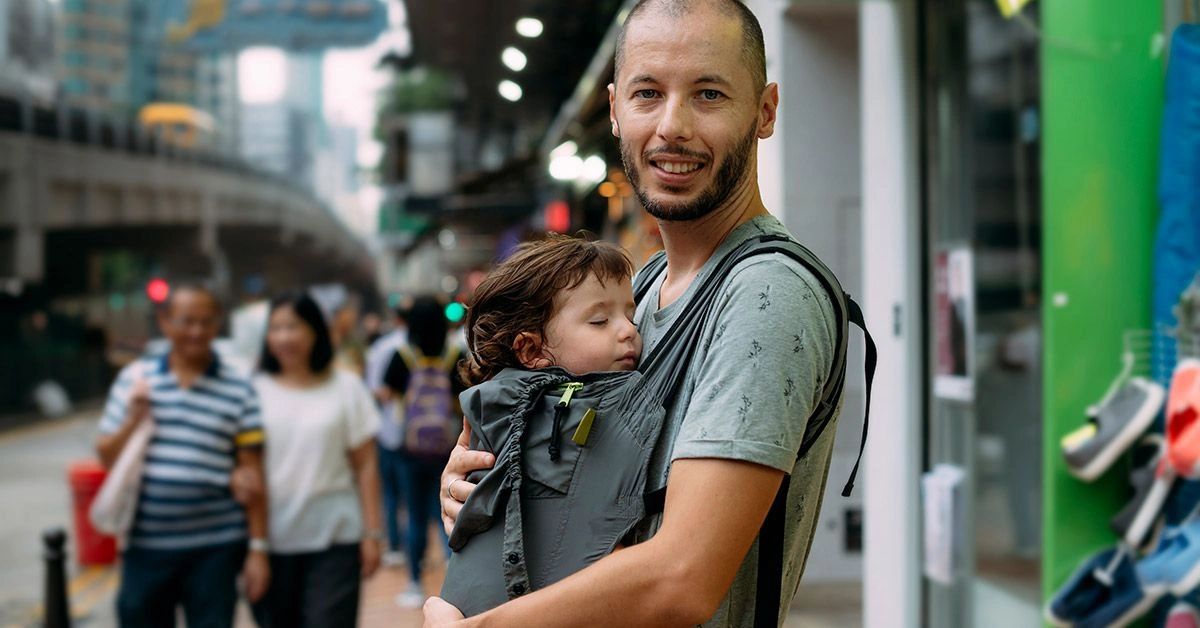
Have you spotted caregivers around town sporting a range of brightly colored and patterned baby carriers? If so, you’ve likely noticed many different styles — from backpack-like carriers to long wraps.
So what’s all the fuss about? Advocates claim that keeping baby close can support everything from physical health to emotional wellbeing.
Beyond that, wearing your baby can make life in the fourth trimester and beyond considerably easier as you learn to move through the world with a little one attached. In fact, communities worldwide have used baby-wearing methods for centuries, possibly millennia. And with a well-fitting carrier, it doesn’t have to strain your back.
Keep reading to learn how to wear your baby safely, the advantages and precautions of baby wearing, and what to consider when picking a carrier.
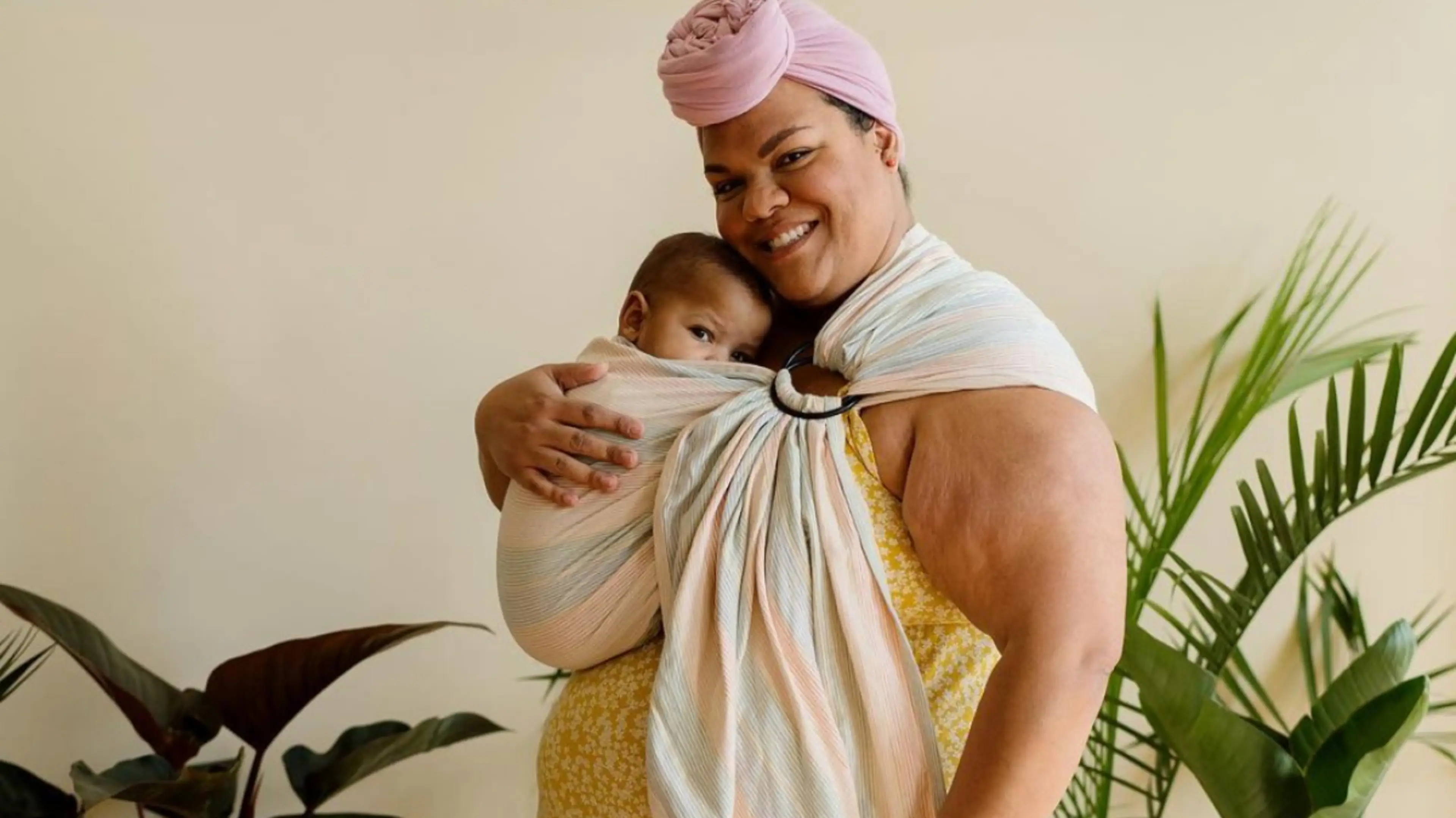
What are the benefits of baby wearing?
Ask a parent who wears their child and you might get a long list of perks. But how much of that is supported by research?
Although studies remain limited, a growing body of evidence and parental experience suggest baby wearing can benefit both infant and caregiver.
Reduces crying
Finding ways to soothe a crying infant is one of parenting’s tougher tasks. While wearing your baby won’t stop every cry, many parents report less fussing and crying when their infant is carried close.
Scientists noted this effect as far back as 1986. In a randomized controlled trial, infants who were carried experienced less crying and fussing than those who were not.
Carrying infants for about three hours daily was associated with up to a 51 percent drop in evening crying and fussiness.
That study was fairly small and focused on carrying rather than structured wearing, so broader research with diverse participants is needed to clarify how baby wearing affects crying.
Still, if you’re seeking low-risk ways to calm a young infant, giving baby wearing a try could be worthwhile and may bring other benefits.
Promotes health
There’s increasing evidence about the advantages of skin-to-skin contact, particularly for premature infants (those born before 37 weeks), while in hospital settings.
Preterm infants may gain similar benefits from a wearing approach known as kangaroo care.
Research indicates that holding a baby close, especially with carriers designed for skin-to-skin contact, can help stabilize an infant’s heart rate, temperature, and breathing when they’re in neonatal intensive care.
Further studies are needed to fully define these relationships, but some experts encourage more kangaroo care for hospitalized preemies. It’s less clear whether these results transfer to infants at home.
Assists with breastfeeding
While there’s some suggestion that baby wearing could support breastfeeding, robust research is still lacking.
Nonetheless, many breastfeeding parents find it possible to nurse with the infant in a carrier, which can make feeding on the go or feeding on demand easier.
Frequent nursing helps preserve or boost breastmilk supply.
Enhances connection
Bonding with a young, nonverbal baby can sometimes feel tricky. The simple act of being held close can, however, foster that connection.
Wearing your baby may help cultivate this bond and often makes it simpler to start recognizing your baby’s signals with greater confidence.
For instance, you’ll likely pick up on certain motions or sounds that indicate if your infant is sleepy, hungry, or needs a diaper change. This attunement can also develop in others who frequently wear the baby.
Improved parent-infant attachment may have effects that extend into adolescence and early adulthood. That said, baby wearing is not the only path to a lasting bond, nor does it guarantee long-term outcomes — it’s one early approach to strengthening connection.
If you decide not to wear your baby, there are many alternative bonding activities, such as infant massage.
Eases everyday life
Another practical advantage of baby wearing is hands-free convenience on days when your infant only settles when held.
Wearing a carrier can free both hands so you can tackle chores, read to an older sibling, or take a stroll downtown. The possibilities are numerous — though you might want to avoid activities like deep frying or skateboarding while wearing baby.
Is it safe?
As with most infant practices, there’s a correct and incorrect way to wear your baby. The line between safe and unsafe can be subtle. Because baby-wearing equipment can contribute to increased injury risk and hospital visits among children under 1 year, selecting the right size and using the carrier appropriately is crucial.
Most safety guidance focuses on maintaining a clear airway and adequate head, neck, and back support.
Become familiar with the baby-wearing safety mnemonic T.I.C.K.S.:
- T: Tight. Baby should be held upright and snugly enough that they’re secure against the wearer’s body. This lowers the risk of slips or falls.
- I: In view at all times. You should be able to see your baby’s face so you can check breathing and monitor their comfort.
- C: Close enough to kiss. You should be able to tilt your head down and kiss the top of your baby’s head easily; if not, raise them in the carrier.
- K: Keep chin off chest. Make sure there’s about a two-finger gap under your baby’s chin. An upright position with a slightly curved spine and knees in a squat reduces chin-to-chest positioning.
- S: Supported back. Your baby should be secure without the carrier being over-tight across their back. Aim for no gap between your baby and you, but still enough room to slide a hand between them and the carrier.
Also ensure the carrier is comfortable for you. Poorly fitted carriers can cause back pain or other soreness, especially with prolonged use.
Baby wearing may not be suitable for all parents or infants depending on medical factors. If you have doubts, consult your pediatrician or primary care provider. Always follow the manufacturer’s instructions for your specific carrier, including weight limits.
Types of baby carriers
The market offers many carrier styles. Your choice will depend on several factors, such as:
- your child’s age and size
- your body type
- budget
- personal preference
Try before you buy
Some baby-wearing groups or local retailers run lending libraries of carriers and can teach you how to use different models.
If you don’t have access to such resources nearby, consider borrowing a carrier from a friend or family member to test comfort and fit before purchasing.
Soft wrap
This is a long length of fabric, often made from a cotton-Lycra or cotton-Spandex blend, and sometimes called a “stretchy wrap.”
You wear a soft wrap by wrapping the fabric around your torso and placing your infant inside. Because of its stretch, it’s better suited to younger infants.
There’s a learning curve to tying wraps correctly; baby-wearing groups or online tutorials can be helpful.
Practice with a small pillow or doll before trying it with your infant.
Popular soft wrap carriers
- Moby Wrap Classic ($)
- Boba Wrap ($)
- LILLEbaby Dragonfly ($$)
Woven wrap
Like a soft wrap, a woven wrap is a long strip of fabric you wrap around your body. They come in various lengths to accommodate different wearers and carrying styles.
Woven wraps are made from stiffer, more structured fabric, which often makes them better for carrying larger infants or toddlers.
Many find woven wraps comfortable, though mastering the tying technique can take time.
Popular woven wraps
- Rainbow Woven Wrap ($)
- Chimparoo Woven Wrap ($$)
- DIDYMOS Wrap ($$$)
Ring sling
A ring sling is worn over one shoulder and crafted from durable woven fabric.
Once donned, you open the fabric to form a pouch near your abdomen, set the baby in, and pull the fabric through the rings to tighten and secure.
Ring slings are portable and quick to use, but the single-shoulder weight distribution may become uncomfortable with heavier infants or extended wear.
Popular ring sling carriers
Meh dai
Pronounced “may tie,” the meh dai has roots in Asia and consists of a fabric panel with two waist ties and two shoulder ties. The straps are often wide and padded for comfort.
Meh dai carriers can be worn on the front, hip, or back, and are adjustable enough for newborns through toddlers and multiple caregivers.
They can work for older babies, but many find meh dais less comfortable once infants weigh over about 20 pounds.
Popular mei dai carriers
- Infantino Sash Wrap ($)
- The Turtle Mei Tai ($$)
- DIDYMOS Meh Dai ($$$$)
Soft structured carrier
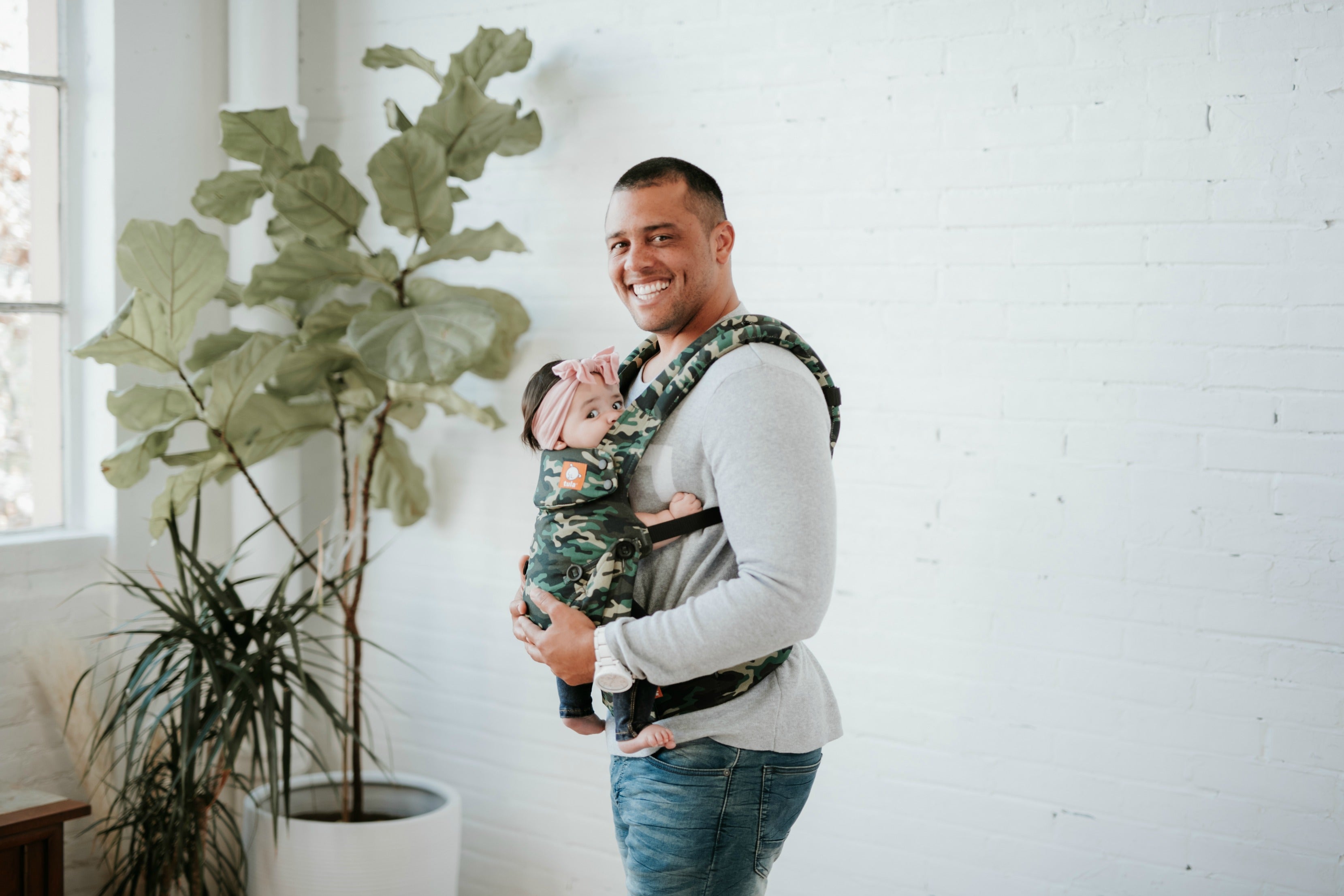
These user-friendly carriers have straps, buckles, and padding to achieve an adjustable fit for a range of ages — from infant to toddler and beyond.
Some brands make specific models for infants and for toddlers to accommodate different heights and weights (many handle up to 60 pounds).
Soft structured carriers are typically worn on the front, and many models also support hip and back carries.
Very young infants may require a newborn insert to fit properly in some soft structured carriers.
Popular soft structured carriers
- Tula Toddler ($)
- LILLEbaby 360 ($$)
- Ergo 360 ($$)
How to baby wear
Your carrier’s instructions will vary by style, so read the manufacturer’s directions before use.
Consider contacting a local baby-wearing group for classes or one-on-one help to learn the safest techniques for you and your infant.
Tips
For newborns
- Newborns can typically be worn immediately if there are no medical issues and the infant weighs around 8 pounds or more.
- A stretchy wrap may feel most comfortable at this stage. If using a soft structured carrier, think about a newborn insert for a better fit.
- Until about 4 months old, always make sure you can see your baby’s face while they’re in the carrier.
For seeing the world
As infants become more alert, they may want to face outward. For this, use a stretchy or woven wrap and tie a front-facing carry.
Some soft structured carriers are also designed for front-facing carries, such as the Ergo 360.
For when they’re a little older
Older infants and toddlers may be ready to ride on your back.
- Begin by fastening your soft structured carrier and placing the child on your hip with their legs straddling your abdomen.
- Slowly move the carrier to your back while holding both straps firmly and guiding the child with your other hand.
- Then put both straps over your shoulders, secure the buckles, and adjust for comfort.
How to baby wear with twins
Expecting twins? You can wear them both.
A straightforward option is purchasing two soft structured carriers and wearing one infant on the front and the other on your back. This approach may not be suitable for very young babies.
There are also online guides that demonstrate how to wrap a long woven wrap for twins. Having a partner or friend assist you the first few times is a good idea.
Takeaway
Baby wearing is more than a fad. It lets you keep your infant close while giving you the practicality of hands-free movement, and may offer several benefits for both baby and caregiver.




















Leave a Reply
You must be logged in to post a comment.