What’s Causing This Bump on My Gums?

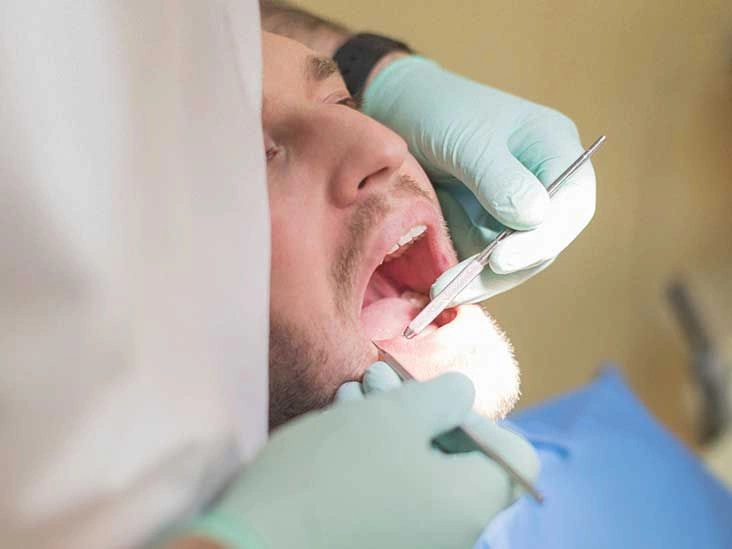
A raised area on the gum can signal a cyst, a canker sore, or an underlying infection. Gum bumps are usually not dangerous, but you should contact a dentist or physician if the lesion is very painful, doesn’t get better, or if you have concerns.

Many people notice gum discomfort or irritation at some point. Often, accumulation of plaque and bacteria is responsible for gum soreness and irritation. This buildup may also lead to gum redness and bleeding. But what should you make of a bump on the gums?
Although finding a new lump on your body can be worrying, a bump on the gums is rarely an immediate emergency. Below are seven common causes and guidance to help you tell when a bump on the gums could indicate a more serious issue.
1. Cyst
A cyst is a small sac filled with air, fluid, or other soft material. Dental cysts can develop on the gums around teeth.
Most dental cysts form near the roots of nonvital or impacted teeth. They usually grow slowly and often remain asymptomatic unless they become infected. When infection occurs, you may notice localized pain and swelling at the site of the bump.
If a cyst enlarges significantly, it can exert pressure on adjacent teeth and eventually weaken the jawbone. Many dental cysts are removed through a straightforward surgical procedure.
2. Abscess
A gum abscess, known as a periodontal abscess, is a localized pocket of pus caused by bacterial infection. The abscess may present as a soft, warm bump and is frequently very painful.
Typical symptoms include:
- intense, throbbing pain that starts suddenly and worsens
- pain on one side that radiates to the ear, jaw, or neck
- increased pain when lying down
- redness and swelling of the gums or face
If you suspect a periodontal abscess, see a dentist promptly. They can eliminate the source of infection and drain the pus. Depending on the severity, treatment may include tooth extraction or root canal therapy.
3. Canker sore
Canker sores are small ulcers that can form near the base of the gums. They are distinct from cold sores, which are viral. While canker sores aren’t dangerous, they can be painful, particularly inside the mouth.
Signs of canker sores include:
- white or yellow centers surrounded by a red edge
- flat or slightly raised lesions
- marked tenderness
- discomfort when eating or drinking
Most canker sores resolve without treatment within one to two weeks. Meanwhile, over-the-counter topical analgesics can help ease pain.
Optum Now is operated by RVO Health. By clicking on this link, we may receive a commission. Learn more.
4. Fibroma
An oral fibroma is one of the more common causes of benign, tumorlike gum lumps. Fibromas are noncancerous growths that develop on irritated or injured gum tissue. When they appear on the gums, they’re often caused by irritation from dentures or other dental appliances.
They can also be found:
- inside the cheeks
- beneath dentures
- at the sides of the tongue
- on the inner lips
Fibromas are typically painless. They normally feel firm, smooth, and dome-shaped, though sometimes they resemble small, hanging skin tags. Their color may be lighter or darker than the surrounding gum tissue.
Usually, fibromas don’t require treatment. If one becomes large or bothersome, a clinician can surgically excise it.
5. Pyogenic granuloma
A pyogenic granuloma in the mouth is a red, fleshy bump that can form on the gums. It often looks like a swollen, blood-filled nodule that bleeds easily. The exact cause is unclear, but minor trauma and irritation are thought to contribute.
Hormonal shifts—such as those during pregnancy—may increase the likelihood of developing these lesions.
Pyogenic granulomas tend to be:
- soft to the touch
- usually painless
- deep red or purple in color
Treatment typically entails surgical removal of the lesion.
6. Mandibular torus
A mandibular torus (plural: tori) is a bony protuberance in the upper or lower jaw. These benign bony outgrowths are relatively common, although the cause is not well understood.
Mandibular tori may appear singly or in clusters and can occur on one or both sides of the jaw.
They most often form:
- on the inner surface of the lower jaw
- along the sides of the tongue
- below or above the teeth
Tori grow slowly and can take several shapes. They usually feel hard and smooth and rarely need treatment.
7. Oral cancer
Oral cancer, sometimes called mouth cancer, can affect any part of the oral cavity, including the gums.
A malignant lesion on the gums may appear as a small growth, lump, or area of thickened tissue.
Additional warning signs of oral cancer include:
- a sore that fails to heal
- white or red patches on the gums
- a bleeding sore
- tongue or jaw pain
- loose teeth
- discomfort when chewing or swallowing
- difficulty chewing or swallowing
- persistent sore throat
If you’re concerned a bump could be cancerous, follow up with your doctor to have it evaluated and to begin treatment early if needed.
Your clinician may perform a gum biopsy, taking a small tissue sample from the bump to look for cancer cells. If cancer is detected, your care team will recommend a treatment plan that may include surgery, radiation, chemotherapy, or a combination.
When to see your doctor
In most cases, a bump on the gums is not serious. Still, contact your physician or dentist right away if, along with a gum bump, you notice any of the following:
- fever
- throbbing or severe pain
- a bad taste in your mouth or foul-smelling breath
- a sore that won’t heal
- a sore that’s worsening
- a lump that persists for more than a few weeks
- red or white patches in your mouth or on your lips
- a bleeding sore or lump
For related issues, you may also find helpful information about a bump on roof of mouth, a cut on gums, or sore gums.
Frequently Asked Questions
Common causes include dental cysts, periodontal abscesses, canker sores, fibromas, pyogenic granulomas, mandibular tori, and, less commonly, oral cancer.
See a dentist promptly if the bump is very painful, bleeds, produces pus or foul smell, doesn’t heal within a few weeks, or is accompanied by fever or spreading swelling.
While most gum bumps are benign, persistent lumps, sores that won’t heal, red or white patches, unexplained bleeding, or loose teeth should be evaluated to rule out oral cancer.
Treatment varies: abscesses often require drainage and antibiotics plus dental care like root canal or extraction, while cysts may be monitored or surgically removed if problematic.
Mild issues like canker sores may improve with saltwater rinses, topical analgesics, and good oral hygiene, but persistent, painful, or worsening bumps need professional assessment.






Related Posts

What Are the Effects of Thumb Sucking on the Teeth and Mouth?
Aug 11, 2026 • 6 min read
How Long Will I Have to Sit in the Dentist Chair During a Root Canal?
Aug 19, 2026 • 4 min read
Debunking the Myth of Tooth Worms and Other Cavity Causes
Aug 4, 2026 • 13 min read
Everything You Need to Know About Fever Blister Remedies, Causes, and More
Sep 6, 2026 • 34 min read
Veneers vs. Lumineers: What’s the Difference?
Sep 11, 2026 • 19 min read