

Studies to date indicate that C60 supplements appear to be safe for humans and animals overall. However, product quality differs across brands, and investigations into its various proposed health benefits remain preliminary.
To many, fullerenes — distinctive carbon structures with potential uses ranging from physics to biology — might sound a bit like science fiction.
Interest in the health-related properties of fullerenes, especially the molecule carbon 60 (C60), has grown in recent years.
We’ve teamed up with C60 Power to share information about this uncommon compound, which some people use as a dietary supplement.
Below, you’ll find a summary of what current research says about C60 and its possible health impacts.
What is C60?
C60 is the most prevalent fullerene, consisting of 60 carbon atoms arranged into a hollow, soccer ball–like structure.
Because of the particular way these atoms bond, C60 can react with environmental free radicals, giving it notable antioxidant capabilities.
Dietary antioxidants found in foods such as fruits and vegetables may help lower oxidative stress in the body, according to the National Center for Complementary and Integrative Health.
Oxidative stress is implicated in aging and in numerous health issues, including:
- neurodegenerative disorders like Alzheimer’s and Parkinson’s
- cancer
- cardiovascular disease
- diabetes
Because of its antioxidant action, some individuals take C60 as a supplement, and it’s also incorporated into some anti-aging topical products.
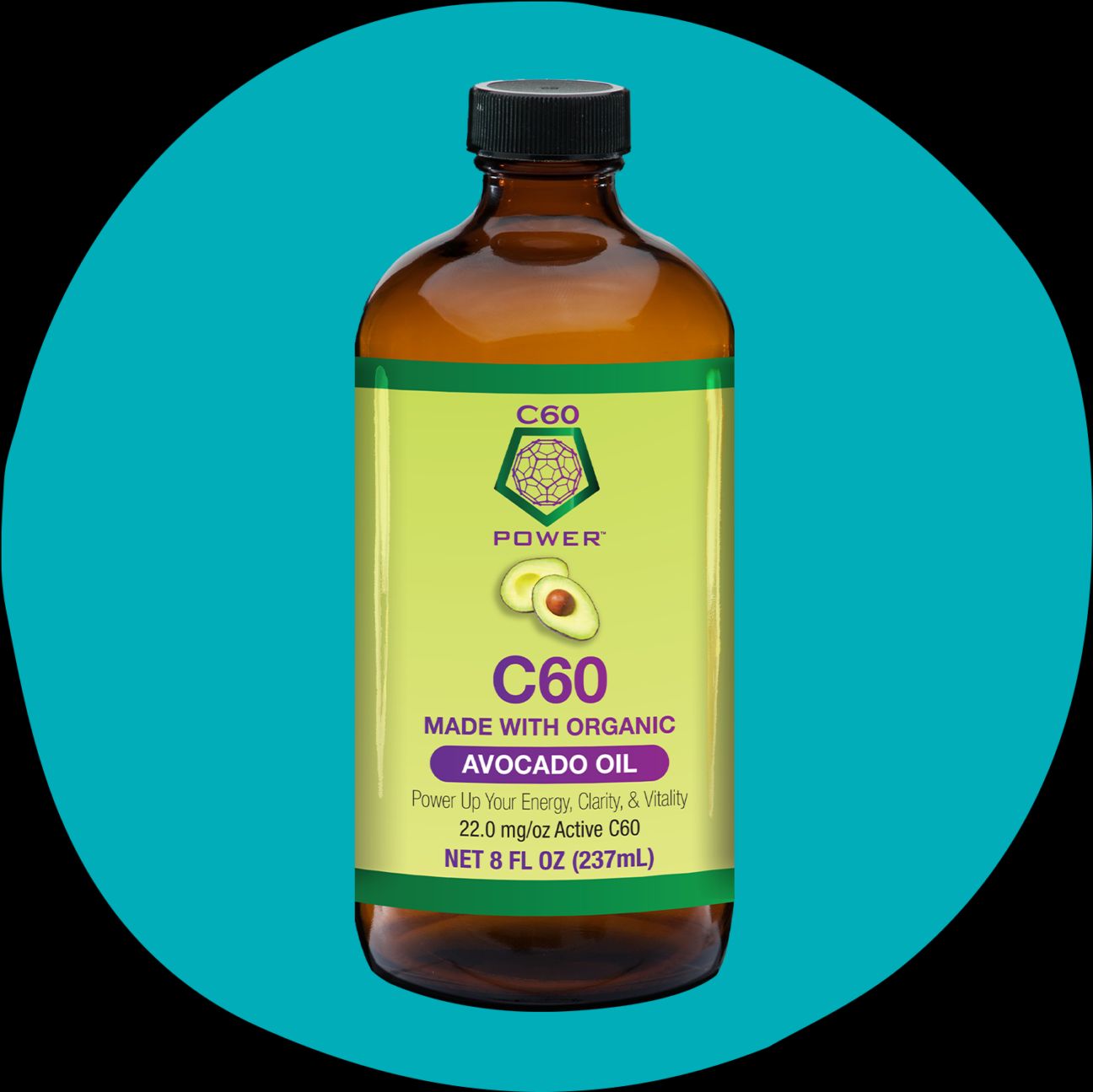
C60 Power’s C60 avocado oil provides 25.6 milligrams of active C60 per ounce.
Research on C60 and health
Although C60 was first isolated decades ago, investigation into its effects on human health is still emerging.
The bulk of studies have been conducted in cells or animal models; only a limited number of trials have involved humans.
The table below outlines the current C60 research across seven health areas. Each area is graded based on how many studies reported an effect and whether those studies involved humans or animals:
- +: one or more animal studies showed an effect
- ++: one or more human studies showed an effect
- +/-: multiple studies with inconsistent results
| Field/Condition | Grade | Notable Studies | ||||||||||||||||||||||||
| Skin care | ++ | A 2010 randomized, placebo-controlled trial evaluated a C60-containing cream in 23 Japanese women and its effects on wrinkles and skin texture. A small 2011 study assessed a C60-containing face gel for acne. Mouse studies have also investigated C60 formulations for their ability to shield against UV radiation and to encourage hair growth when applied topically. | ||||||||||||||||||||||||
| Inflammatory conditions | + | A 2019 paper investigated a C60 derivative’s effects on joint injury and inflammation in rats with arthritis. A 2016 study looked at a C60 compound’s ability to modulate inflammation in a mouse model of eczema. | ||||||||||||||||||||||||
| Cognitive function | + | Rat models of amyloidosis and Alzheimer’s have been used to study C60 delivered into the brain and its effects on learning and memory and overall cognitive performance. | ||||||||||||||||||||||||
| Cancer, cancer treatment effects | + | Research has evaluated C60 derivatives for impacts on tumor growth, metastasis, and survival in mice and rats. A 2020 study tested whether C60 protects against lung injury in mice given the chemotherapy agent bleomycin. | ||||||||||||||||||||||||
| Muscle fatigue | + | A 2017 study examined C60’s effects on muscle fatigue and stamina in rats. | ||||||||||||||||||||||||
| Aging | +/- | Studies in 2012 and in 2020 probed whether C60 influences rat lifespan. A 2021 mouse study reported no acute toxicity overall but noted formation of toxic byproducts when exposed to ambient light. | ||||||||||||||||||||||||
| Diabetes | +/- | Rat models of diabetes have been used to assess whether C60 prevents neuronal and C60 Power to share information about this uncommon compound, which some people use as a dietary supplement. Below, you’ll find a summary of what current research says about C60 and its possible health impacts. ADVERTISEMENT
What is C60?C60 is the most prevalent fullerene, consisting of 60 carbon atoms arranged into a hollow, soccer ball–like structure. Because of the particular way these atoms bond, C60 can react with environmental free radicals, giving it notable antioxidant capabilities. Dietary antioxidants found in foods such as fruits and vegetables may help lower oxidative stress in the body, according to the National Center for Complementary and Integrative Health. Oxidative stress is implicated in aging and in numerous health issues, including:
Because of its antioxidant action, some individuals take C60 as a supplement, and it’s also incorporated into some anti-aging topical products. C60 Power’s C60 avocado oil provides 25.6 milligrams of active C60 per ounce. Research on C60 and healthAlthough C60 was first isolated decades ago, investigation into its effects on human health is still emerging. The bulk of studies have been conducted in cells or animal models; only a limited number of trials have involved humans. The table below outlines the current C60 research across seven health areas. Each area is graded based on how many studies reported an effect and whether those studies involved humans or animals:
ADVERTISEMENT
Side effectsThe preponderance of evidence suggests C60 is not toxic to humans, though additional study is necessary. A 2016 review reported that adverse skin reactions to C60 are uncommon in both human and animal research. A 2012 experiment found various doses of C60 in corn oil were not harmful to rats. Another 2012 study reported that C60 in olive oil did not show toxicity in rats. The 2021 mouse study noted overall lack of acute toxicity but observed that C60 can form toxic compounds when exposed to normal light; it also did not extend lifespan. More human trials are needed. Keep in mind that C60 supplement purity and concentration may vary by manufacturer and even between batches. The Food and Drug Administration (FDA) does not oversee dietary supplements for safety, efficacy, or label accuracy in the same way it does pharmaceuticals. One investigation evaluated C60 products from several online sellers and found marked differences in appearance, purity, concentration, and activity. If you decide to buy C60 supplements, choose products verified by independent third-party testers such as NSF, Banned Substances Control Group (BSCG), USP, or ConsumerLab. DosageThere isn’t enough solid clinical evidence to establish an effective human dosage of C60. Doses used in animal research vary widely. In rodent experiments, oral C60 doses—typically delivered in olive oil—generally range from about 0.4 to 5 milligrams per kilogram (mg/kg) of body weight. Topical effects in human and animal studies have been reported with C60 concentrations from under 0.0005 percent up to 0.05 percent. ADVERTISEMENT
The takeawayAlthough decades of research indicate C60 is largely safe for humans and animals, investigations into the many possible health benefits of C60 supplements remain in early stages. Research has assessed the molecule across several conditions, with the most advanced work focusing on skin-related applications. As with any supplement, talk with your healthcare provider before using C60. Frequently Asked QuestionsWhat is Carbon 60 (C60)?Are Carbon 60 supplements safe?What health effects does C60 have?Can C60 cause side effects?What is the recommended C60 dosage?Disclaimer: This article is for informational purposes only and is not intended as medical advice. Please consult a healthcare professional for any health concerns. Related PostADVERTISEMENT Related tags for: Latest News |























Leave a Reply
You must be logged in to post a comment.