

The Food and Drug Administration (FDA) has authorized hCG injections for certain medical indications. In individuals assigned female at birth (FAABs), they can be used to manage infertility. In those assigned male at birth (MAABs), they treat particular forms of hypogonadism.
Human chorionic gonadotropin (hCG) is frequently dubbed “the pregnancy hormone” because of its central role in supporting pregnancy.
Pregnancy tests detect hCG levels in blood or urine to determine whether someone is pregnant.
Continue reading to find out how hCG is applied in MAABs.
What is hCG prescribed for in men?
There are several circumstances in which a clinician may prescribe hCG for a man.
Treating hypogonadism
For men, hCG is prescribed to address hypogonadism symptoms like low testosterone and infertility. hCG can stimulate the body to raise testosterone and sperm production, which can help alleviate infertility.
Addressing testosterone deficiency
hCG injections are occasionally used as a substitute for testosterone therapies in MAABs who have testosterone deficiency.
Testosterone deficiency is typically defined as blood testosterone under 300 nanograms per deciliter (ng/dL) along with clinical symptoms such as:
- fatigue
- stress
- low libido
- depressed mood
Per the American Urological Association, hCG is suitable for MAABs with testosterone deficiency who wish to preserve fertility.
Standard testosterone treatments raise circulating hormone levels but can cause testicular atrophy, alter sexual function, and lead to infertility.
hCG may help increase:
- testicular volume
- testosterone concentrations
- fertility
Some clinicians find that combining testosterone therapy with hCG can relieve symptoms of testosterone deficiency while reducing some of the adverse effects associated with testosterone alone.
Enhancing sexual function
hCG can also improve sexual performance in MAABs who don’t get adequate benefit from testosterone therapy alone.
Counteracting steroid side effects
Bodybuilders using anabolic steroids like testosterone sometimes administer hCG to prevent or reverse steroid-induced effects such as testicular shrinkage and impaired fertility.
How does hCG raise testosterone?
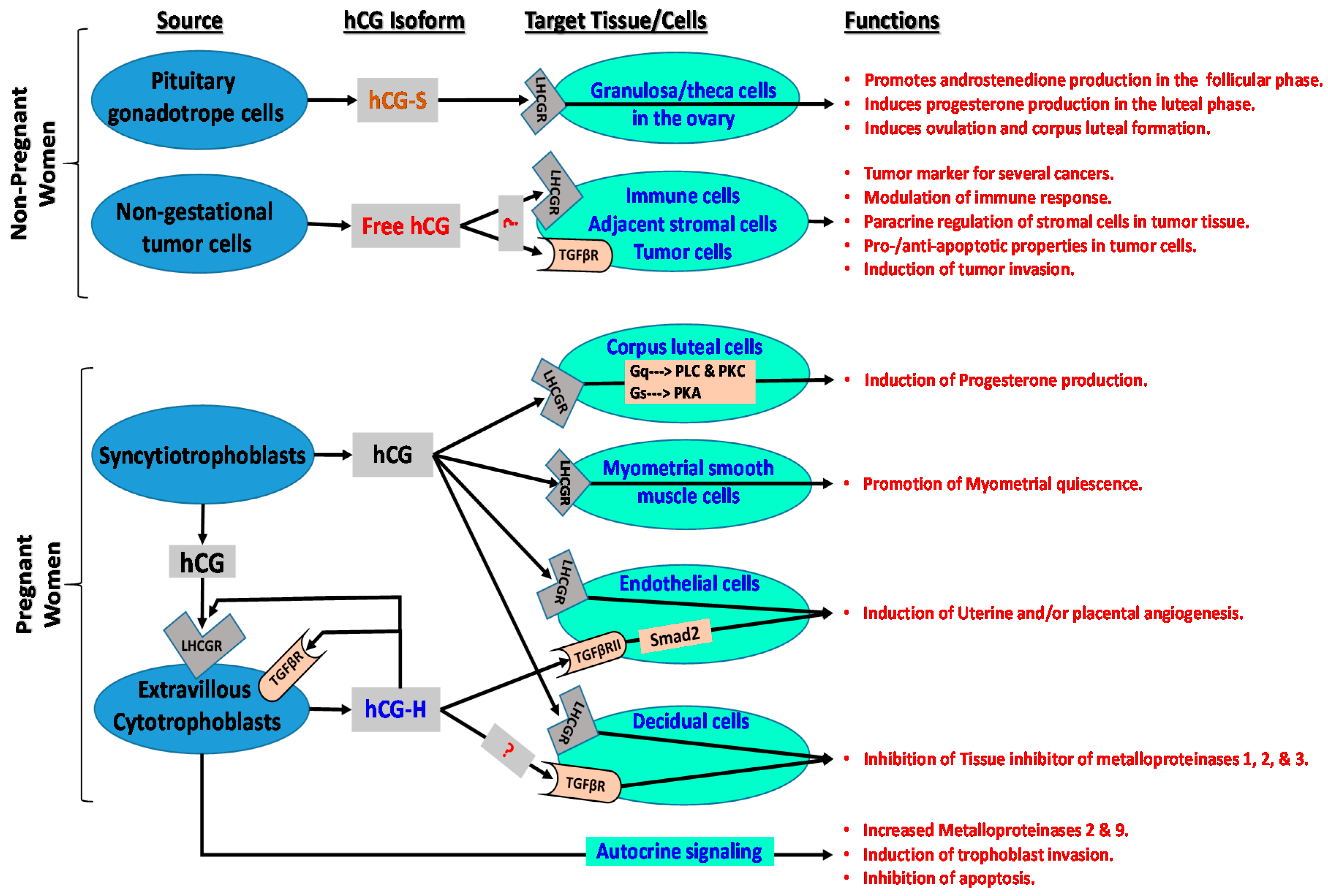
In males, hCG mimics luteinizing hormone (LH). LH activates Leydig cells in the testes, prompting testosterone synthesis.
LH also supports sperm production in the seminiferous tubules of the testes.
By stimulating the testes to make testosterone and sperm, hCG often leads to increased testicular size over time.
What does the evidence show?
Recent clinical studies have examined hCG use in people assigned male at birth with low testosterone.
A 2018 study found that hCG, whether used alone or with testosterone, can help MAABs with hypogonadism maintain fertility and restore sperm production.
A small 2019 study reported hCG was safe and effective for MAABs who have hypogonadal symptoms despite testosterone levels above 300 ng/dL (levels generally considered normal).
A 2021 study indicates hCG can be an effective substitute for exogenous testosterone in men who want to keep fertility.
A 2022 study of 31 men with hypogonadal symptoms but baseline testosterone above 300 ng/dL showed that hCG monotherapy produced subjective improvements in libido (80% of participants), energy (79%), and erectile dysfunction (86%).
This suggests that hCG might help men with symptoms who do not fulfill strict biochemical thresholds for testosterone therapy.
A 2024 review highlights that for hypogonadal men desiring fertility preservation, hCG and other gonadotropins represent the most dependable options compared with testosterone replacement, whereas other approaches remain experimental or constrained by safety and feasibility concerns.
What side effects can males experience from hCG?
For MAABs, common side effects of hCG injections include:
- gynecomastia (development of breast tissue in males)
- pain, redness, or swelling at the injection site
- abdominal pain
- nausea
- vomiting
Rarely, hCG can be associated with blood clots. Allergic reactions, from mild rashes to severe anaphylaxis, have also been reported but are uncommon.
Is hCG effective for weight loss?
hCG is sometimes promoted for weight loss. Various over-the-counter (OTC) homeopathic hCG products claim to aid slimming.
However, the FDA has warned that it has not approved hCG for weight reduction. OTC items that assert they contain hCG are not legally permitted.
The FDA also states there is no convincing evidence that hCG promotes weight loss.
These products are typically coupled with an “hCG diet,” which involves taking hCG while consuming a very low-calorie diet of about 500 calories per day.
While such a severe calorie restriction can cause weight loss, there’s no proof that adding hCG provides any benefit.
Moreover, extremely low-calorie diets may be hazardous for many people. Potential complications of such regimes include:
- gallstones
- electrolyte disturbances
- cardiac arrhythmias
Is hCG safe for males?
When administered properly under medical supervision, hCG is considered safe.
Nevertheless, it is contraindicated in MAABs with prostate cancer, certain central nervous system malignancies, or uncontrolled thyroid disease.
Discuss any other medical conditions with your clinician before starting hCG.
Additionally, hCG is derived from hamster ovary cells. Individuals with a known allergy to hamster proteins should avoid hCG.
Avoid OTC hCG products since none are FDA-approved; the FDA cautions against using these products or adhering to the hCG diet.
Takeaway
hCG is an FDA-approved medication for defined uses in people assigned both male and female at birth.
In males, it can serve as an alternative to testosterone therapy to raise testosterone levels while preserving fertility.
Some clinicians use hCG in combination with testosterone to help maintain fertility and sexual function.
Although some individuals use hCG for weight loss, there is no reliable evidence supporting that use, and safety concerns make it inadvisable.
If you have concerns about fertility or testosterone treatment, speak with your healthcare provider, and consider reading more about hcg levels miscarriage as part of broader information on hCG-related topics.






















Leave a Reply
You must be logged in to post a comment.