
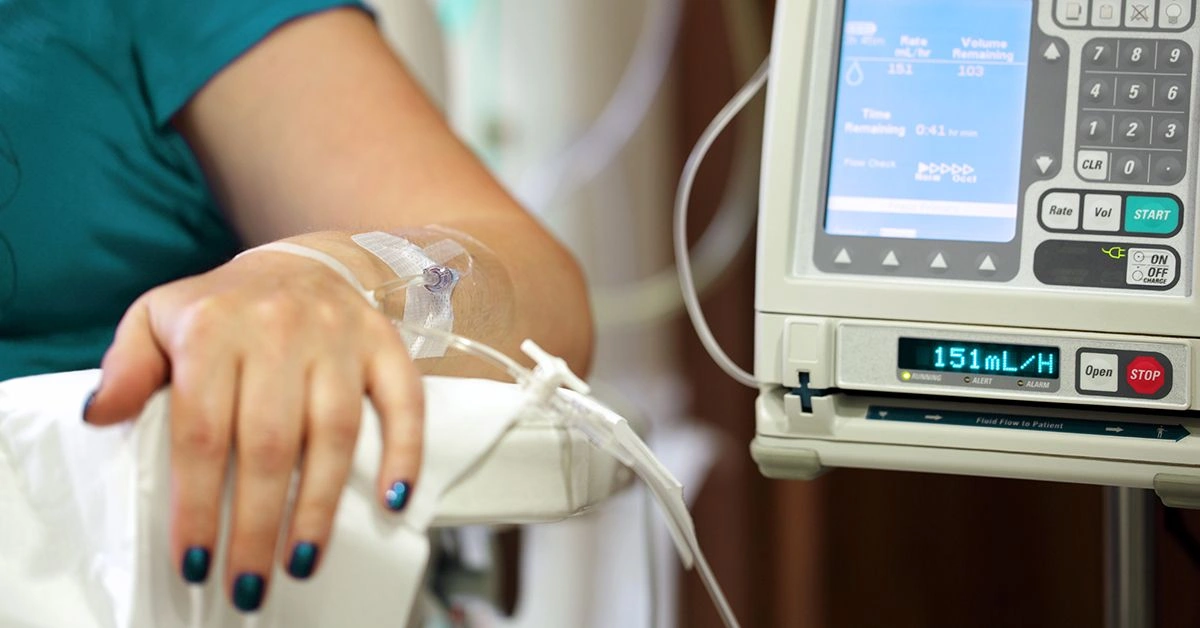
Pumps that administer cancer-fighting medications through IV lines help guarantee you get the correct dose at the intended rate. They’re employed in both home and hospital environments.

Chemotherapy is a widely used cancer treatment that employs potent drugs to target rapidly dividing cancer cells in the body. The most common chemotherapy forms include oral medications and IV infusions.
A chemotherapy pump helps ensure IV delivery of chemo medications is performed safely and accurately.
Learn more about chemotherapy.
What is a chemotherapy pump?
A chemotherapy pump, a subtype of infusion pump, is a device attached to an IV line to deliver chemotherapy medications into your bloodstream in a controlled manner.
Chemotherapy pumps help ensure the proper amount of chemo drugs are administered through IV lines at the correct speed or flow rate.
How does a chemotherapy pump work?
A chemotherapy pump functions by releasing a preset amount of medication at a predetermined pace through an IV line, typically placed in the chest or arm.
The delivery speed for chemotherapy via a pump is chosen to protect your veins and body while making side effect management possible. During the initial treatment, the infusion rate is often slower so your body can adapt and so healthcare staff can assist if you have any reactions.
Chemotherapy is commonly given in a hospital, but if medication needs to be administered over a day or longer, a portable (ambulatory) chemotherapy pump may be used at home.
Hospital
A chemotherapy pump in a hospital is usually battery-operated and fastened to a mobile IV pole. The pole has wheels and a tall upright that supports the bag containing chemotherapy drugs. This setup lets the person receiving the treatment move around during the infusion.
Prior to starting the infusion, a nurse or another clinician will program the pump to the appropriate settings for your session. The medication dose and infusion rate can differ between sessions.
Home
At home, a smaller device is used and can be carried on a belt holster or placed in a bag or backpack. These are called continuous-pressure pumps and do not require batteries. The pumps themselves hold the chemotherapy drugs, which are released gradually, sometimes over a span of 4 or 5 days when needed.

What are the most common types of chemotherapy pumps?
There are two principal varieties of chemotherapy pumps: electronic pumps and continuous-pressure pumps.
Electronic pumps
Most pumps used in hospitals or clinical settings are electronic and connect to IV drip lines. In recent years, many facilities have adopted smart pump systems that combine computer features with electronic medication libraries to lower the risk of dosage and infusion rate mistakes.
A 2023 study indicates that smart pump technology is improving safety and may become available for home use soon.
Continuous-pressure pumps
The smaller continuous-pressure pumps don’t rely on gravity. Instead, they contain a balloon-like reservoir filled with chemotherapy drugs. The ongoing contraction of the reservoir pushes the medication through the IV tubing, which also includes a flow restrictor to ensure the precise amount of drug is delivered.
How long do you usually wear a chemotherapy pump?
You typically won’t need to wear a chemotherapy pump for more than a couple of days per treatment session. In certain situations, you might need it for an extra day or two while receiving radiation therapy in the hospital.
Keep in mind that the specifics of your chemotherapy regimen are highly individualized and depend on the type and stage of your cancer. Your past responses to treatment and how your cancer is reacting to current therapy will also shape future sessions.
What is a chemotherapy pump used to treat?
Essentially any cancer treated with chemotherapy might involve using a chemotherapy pump. A partial list of cancers that may be treated with pumps, according to the American Cancer Society, includes:
- brain cancer
- breast cancer
- colorectal cancer
- endometrial cancer
- Hodgkin’s lymphoma
- leukemia
- liver cancer
- lung cancer
- lymphoma
- multiple myeloma
- ovarian cancer
- pancreatic cancer
- prostate cancer
- sarcoma
What’s the outlook for people who use a chemotherapy pump?
A 2021 study reports that patients using ambulatory home chemotherapy pumps generally experience few issues and complications.
The important thing is to adhere closely to instructions for cleaning and care and to report any problems to your doctor right away. You may need to return to the hospital or clinic for help, or a nurse might need to visit your home to troubleshoot the pump.
Regarding long-term success rates for chemotherapy pumps, it’s hard to calculate because chemotherapy is applied to many cancer types and stages. Still, survival tends to be higher for people who receive chemotherapy compared with those who do not.
A 2021 study found that people with metastatic prostate cancer who received chemotherapy had notably better outcomes than similar patients who did not undergo chemotherapy.
Frequently asked questions
How do you sleep with a chemo infusion pump?
A home chemotherapy pump is compact with a sufficiently long IV line so you can set it on top of the covers or under your pillow while sleeping. You may also place it on a bedside table. The devices are quiet and typically require little maintenance from the user.
How long do you keep a HAI pump in?
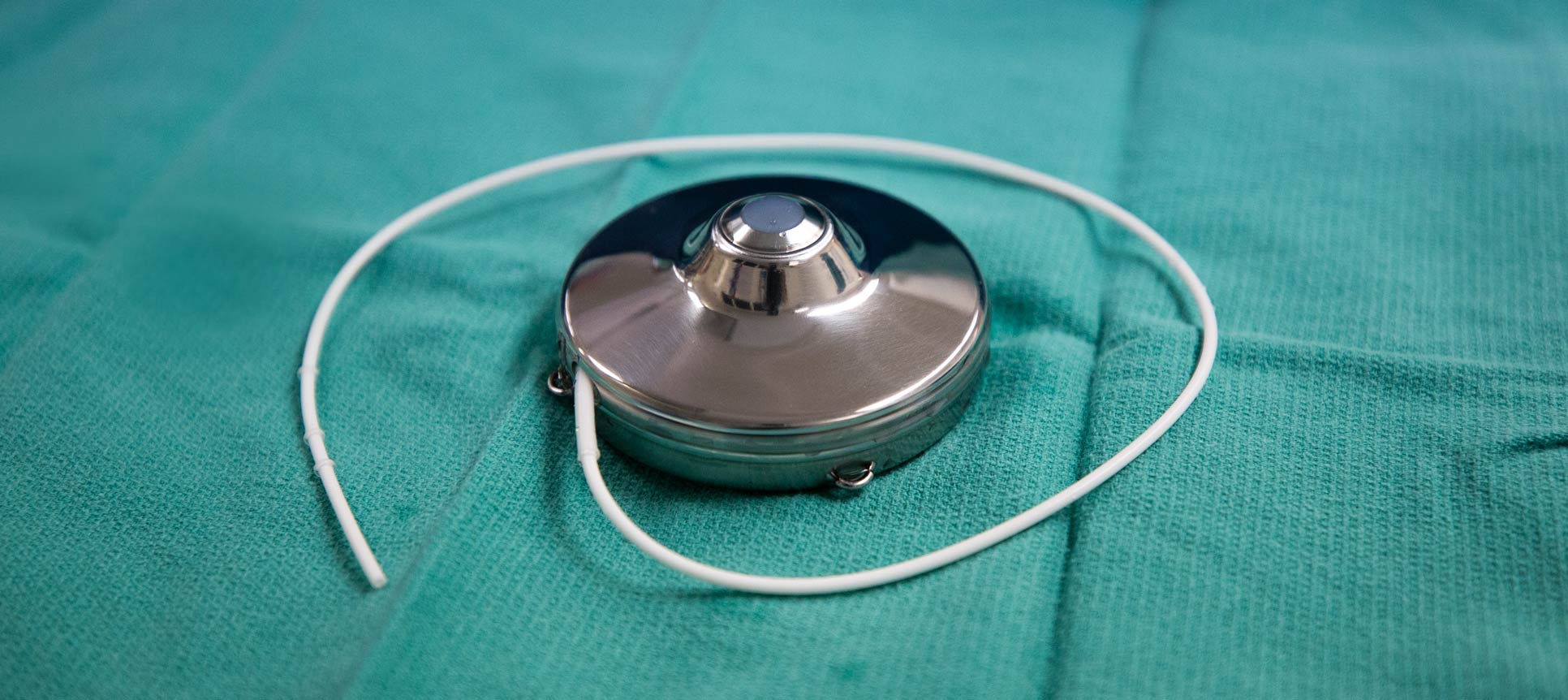
A hepatic artery infusion (HAI) pump is used for liver cancer treatment. It is implanted under the skin near the liver, usually during liver cancer surgery. Each case varies, but you may need the HAI pump for 6 months to a year. The pump is refilled with chemotherapy at each follow-up visit.
Can you shower with a chemo pump?
Because water could potentially damage the pump, it’s best to position the device just outside the shower while you bathe.
Takeaway
A chemotherapy pump is a valuable medical device designed to minimize errors or complications associated with potent cancer treatments. Receiving the correct chemotherapy dose is crucial for killing cancer cells while avoiding excessive side effects.
If you or a loved one are scheduled for chemotherapy and have questions about the equipment or procedures, ask your physician or an oncology nurse. Reducing uncertainty can make this already difficult time a bit easier.




















Leave a Reply
You must be logged in to post a comment.