

Black seed oil is derived from the plant Nigella sativa. It can be applied directly to the skin or taken orally as a dietary supplement.
Nigella sativa (N. sativa) is a small flowering plant native to Southwest Asia, the Middle East, Southern Europe, and Northern Africa (1).

This plant produces fruit that contains tiny black seeds. Often simply called black seed, N. sativa seeds are also known as black cumin, black caraway, nigella, fennel flower, and Roman coriander (2, 3).
Oil extracted from N. sativa seeds has been used in traditional medicine for more than 2,000 years because of its wide range of therapeutic properties.
Research indicates that it may offer numerous health applications, including support for asthma management and assistance with weight loss. It’s also used topically to enhance skin and hair health (1, 2, 4, 5).
At the same time, many people wonder, Does black seed oil damage kidneys? Concerns about kidney safety, potential drug interactions, and appropriate dosing are important to address before starting supplementation. This article explores the evidence-based benefits of black seed oil, along with possible side effects, kidney-related risks, and dosage guidance.

Potential health benefits of black seed oil
In traditional healing systems, black seed oil has been used for a broad spectrum of ailments. Because of this, it has sometimes been labeled a “panacea,” or universal remedy (4, 6).
Although not every claimed use has been conclusively validated, black seed oil and its active compounds have been associated with several measurable health benefits in clinical and laboratory research.
High in antioxidants
Black seed oil contains a significant amount of antioxidants — plant-derived substances that shield cells from oxidative damage caused by unstable molecules known as free radicals (7, 8, 9, 10).
Antioxidants play a critical role in reducing inflammation and defending against chronic diseases such as heart disease, Alzheimer’s disease, and cancer (11).
Notably, black seed oil is rich in thymoquinone, a compound with strong antioxidant and anti-inflammatory properties. Studies suggest thymoquinone may help protect brain function and support the management of several types of cancer (7, 12, 13, 14).
May help in treating asthma
Asthma is a chronic respiratory disorder characterized by inflammation of the airways and tightening of the surrounding muscles, leading to breathing difficulty (15).
Evidence indicates that black seed oil — particularly thymoquinone — may assist in asthma management by decreasing airway inflammation and relaxing bronchial muscles (4, 16, 17).
In one study involving 80 adults with asthma, taking 500 mg of black seed oil capsules twice daily for 4 weeks significantly improved asthma control (16). Many people choose convenient forms such as Black Seed oil capsules for consistent dosing.
Despite encouraging findings, larger and longer-term studies are necessary to determine the sustained safety and effectiveness of black seed oil as an adjunct asthma therapy.
May aid weight loss efforts
Although the precise mechanism remains unclear, research suggests black seed oil may help lower body mass index (BMI) in individuals with obesity, metabolic syndrome, or type 2 diabetes (18, 19, 20).
In an 8-week trial, 90 women ages 25–50 with obesity followed a reduced-calorie diet and received either a placebo or 1 gram of black seed oil per meal (3 grams daily total) (21).
By the end of the study, those taking black seed oil experienced significantly greater reductions in body weight and waist circumference compared with the placebo group. They also showed notable improvements in triglyceride and LDL (bad) cholesterol levels (21).
Even so, further investigation is required to confirm its long-term safety and effectiveness for sustainable weight management.
May lower blood sugar levels
For individuals with diabetes, persistently elevated blood sugar increases the risk of complications such as kidney disease, eye disease, and stroke (22).
Multiple studies in people with type 2 diabetes suggest that 2 grams per day of crushed whole black seeds can significantly decrease fasting blood glucose and hemoglobin A1c (HbA1c), which reflects average blood sugar over 2–3 months (23, 24, 25).
Although many trials used powdered seeds in capsules, black seed oil has also demonstrated blood sugar–lowering effects (25).
In one study of 99 adults with type 2 diabetes, both 1/3 teaspoon (1.5 mL) and 3/5 teaspoon (3 mL) daily for 20 days significantly reduced HbA1c levels compared with placebo (26).
May help lower blood pressure and cholesterol levels
Black seed oil has also been evaluated for its potential to reduce blood pressure and cholesterol.
Elevated blood pressure and high total and LDL (bad) cholesterol are major risk factors for heart disease (27).
Two studies — one in 90 women with obesity and another in 72 adults with type 2 diabetes — found that taking 2–3 grams of black seed oil capsules daily for 8–12 weeks significantly lowered LDL (bad) and total cholesterol levels (21, 28).
Another study in 90 individuals with high cholesterol showed that consuming 2 teaspoons (10 grams) of black seed oil after breakfast for 6 weeks significantly reduced LDL (bad) cholesterol (29).
The oil may also contribute to lower blood pressure. In a study of 70 healthy adults, taking 1/2 teaspoon (2.5 mL) twice daily for 8 weeks significantly reduced blood pressure compared with placebo (30).
While promising, more comprehensive research is needed to establish ideal dosing and long-term cardiovascular benefits.
May protect brain health
Neuroinflammation refers to inflammation of brain tissue and is believed to play a role in conditions such as Alzheimer’s and Parkinson’s disease (13, 31).
Early laboratory and animal studies suggest that thymoquinone may reduce neuroinflammation, potentially offering protection against neurodegenerative diseases (13, 32, 33, 34).
Human data remain limited. However, one study in 40 healthy older adults reported significant improvements in memory, attention, and cognition after taking 500 mg of N. sativa capsules twice daily for 9 weeks (35).
Additional human trials are needed to confirm these neuroprotective effects.
May be good for skin and hair
Beyond internal use, black seed oil is frequently applied topically for various dermatological concerns and hair care.
Due to its antimicrobial and anti-inflammatory properties, research suggests it may assist in managing conditions such as (36, 37, 38):
- acne
- eczema
- general dry skin
- psoriasis
Although it is often promoted for moisturizing hair and reducing dandruff, clinical evidence supporting these claims is lacking.
Other potential benefits
Black seed oil may offer additional therapeutic effects, including:
- Anticancer effects. Laboratory studies show thymoquinone may help regulate the growth and spread of several cancer cell types (39, 40).
- Reduce symptoms of rheumatoid arthritis. Limited research indicates that its anti-inflammatory properties may decrease joint inflammation in people with rheumatoid arthritis (41, 42, 43).
- Male infertility. Preliminary studies suggest black seed oil may improve semen quality in men diagnosed with infertility (44, 45).
- Antifungal. Black seed oil has demonstrated antifungal activity and may help protect against Candida albicans, a yeast linked to candidiasis (46, 47).
Although early findings are encouraging, more robust human studies are required to verify these benefits and determine optimal dosing.
summaryBlack seed oil is rich in antioxidants and may provide multiple health benefits, including support for asthma, certain skin conditions, blood sugar and cholesterol management, weight loss, and brain health protection.
Potential side effects and safety concerns
When used in small culinary amounts, black seed oil is likely safe for most individuals.
However, limited data exist regarding the long-term safety of higher therapeutic doses. Some individuals researching Does black seed oil damage kidneys are particularly concerned about renal safety. For a deeper look at this topic, see Black seed oil side effects kidney.
Short-term use of up to 3 months has not been associated with serious adverse effects. In one study, taking 1 teaspoon (5 mL) daily for 8 weeks led to nausea and bloating in some participants (2, 48).
Black seed oil may interact with medications metabolized by the cytochrome P450 pathway, including warfarin (Coumadin) and beta-blockers such as metoprolol (Lopressor) (49, 50).
There is also concern that excessive intake could affect kidney function. In one case report, a woman with type 2 diabetes developed acute kidney failure after consuming 2–2.5 grams of black seed capsules daily for 6 days (51).
Conversely, other research has not demonstrated harmful effects on kidney health and has even suggested a protective influence on kidney function (2, 52, 53).
If you have existing kidney disease or impaired renal function, consult your healthcare provider before using black seed oil.
Due to insufficient safety data, women who are pregnant or breastfeeding should avoid supplementation, except for small amounts used as a food flavoring.
Overall, more comprehensive human research is needed to clarify long-term safety — particularly regarding high doses and kidney health.
SummaryUsing black seed oil in cooking is likely safe for most people. Because long-term data are limited, the safety of high-dose supplementation remains uncertain.
How to use black seed oil
As a supplement, black seed oil is available in capsule or liquid form. It can also be applied directly to the skin or scalp.
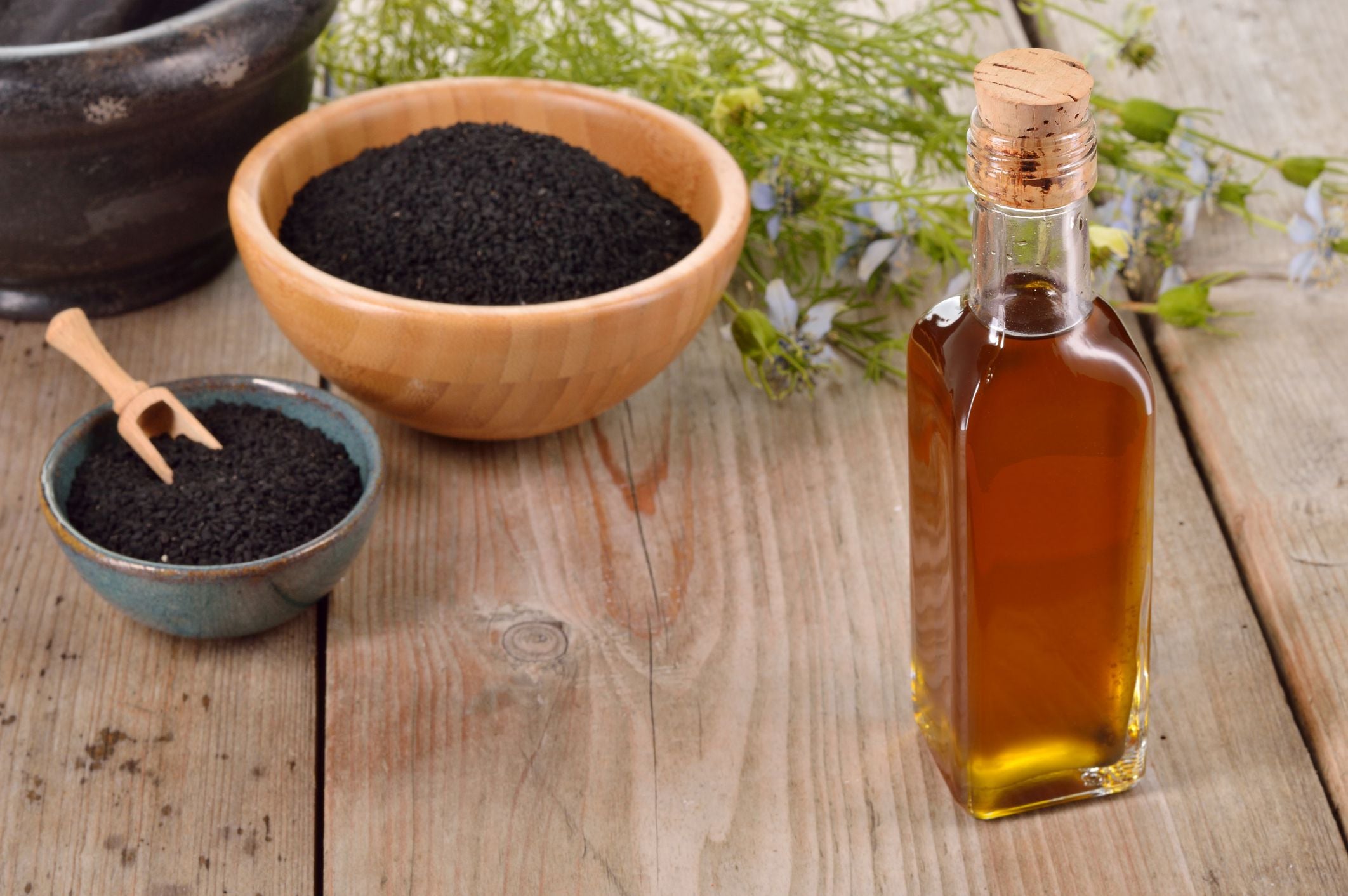
If purchasing liquid black seed oil, choose a high-quality product without unnecessary additives.
Since supplements are not regulated for safety and effectiveness by the Food and Drug Administration (FDA), selecting a reputable brand is essential.
Look for products certified by ConsumerLabs, the U.S. Pharmacopeial Convention, or NSF International, which independently test for quality.
Black seed oil has a bold, slightly bitter, and peppery taste, often compared to cumin or oregano. If taking it as a liquid, mixing it with honey or lemon juice may make it more palatable.
For topical application, gently massage a small amount into the skin.
summaryBlack seed oil may be taken in capsule or liquid form, or applied to the skin. Because of its strong flavor, mixing the liquid with honey or lemon juice may improve taste.
Dosage recommendations
Although black seed oil may provide health benefits, it should not replace prescribed medications.
There is currently no standardized recommended dosage due to limited research. Consulting a healthcare provider before starting supplementation is essential — especially if you are concerned about issues like kidney safety or wondering, Does black seed oil damage kidneys?
Doses studied vary depending on the condition.
For asthma, 1000 mg of black seed oil capsules daily for 4 months has been shown to be safe and effective as an adjunct therapy (16).
For weight loss and blood sugar management, higher doses of 2–3 grams daily for 8–12 weeks have demonstrated effectiveness (19, 21, 23, 24).
Because appropriate dosing depends on individual health status and goals, personalized medical advice is strongly recommended.
summaryThere is no established standard dose of black seed oil. Speak with your healthcare provider to determine the safest and most effective amount for your needs.
The bottom line
Black seed oil is a widely used supplement in complementary and alternative medicine for various health concerns.
Current evidence suggests it may help manage asthma, support weight loss, and reduce blood sugar and cholesterol levels.
The antioxidant and anti-inflammatory properties of thymoquinone may also contribute to brain protection and inhibition of cancer cell growth.
Still, more high-quality human studies are needed to determine long-term safety — particularly for high doses and kidney health.
Before starting black seed oil, consult your healthcare provider to discuss whether it’s appropriate for you and how much to take.






















Leave a Reply
You must be logged in to post a comment.