

What’s the difference between full and partial circumcision?
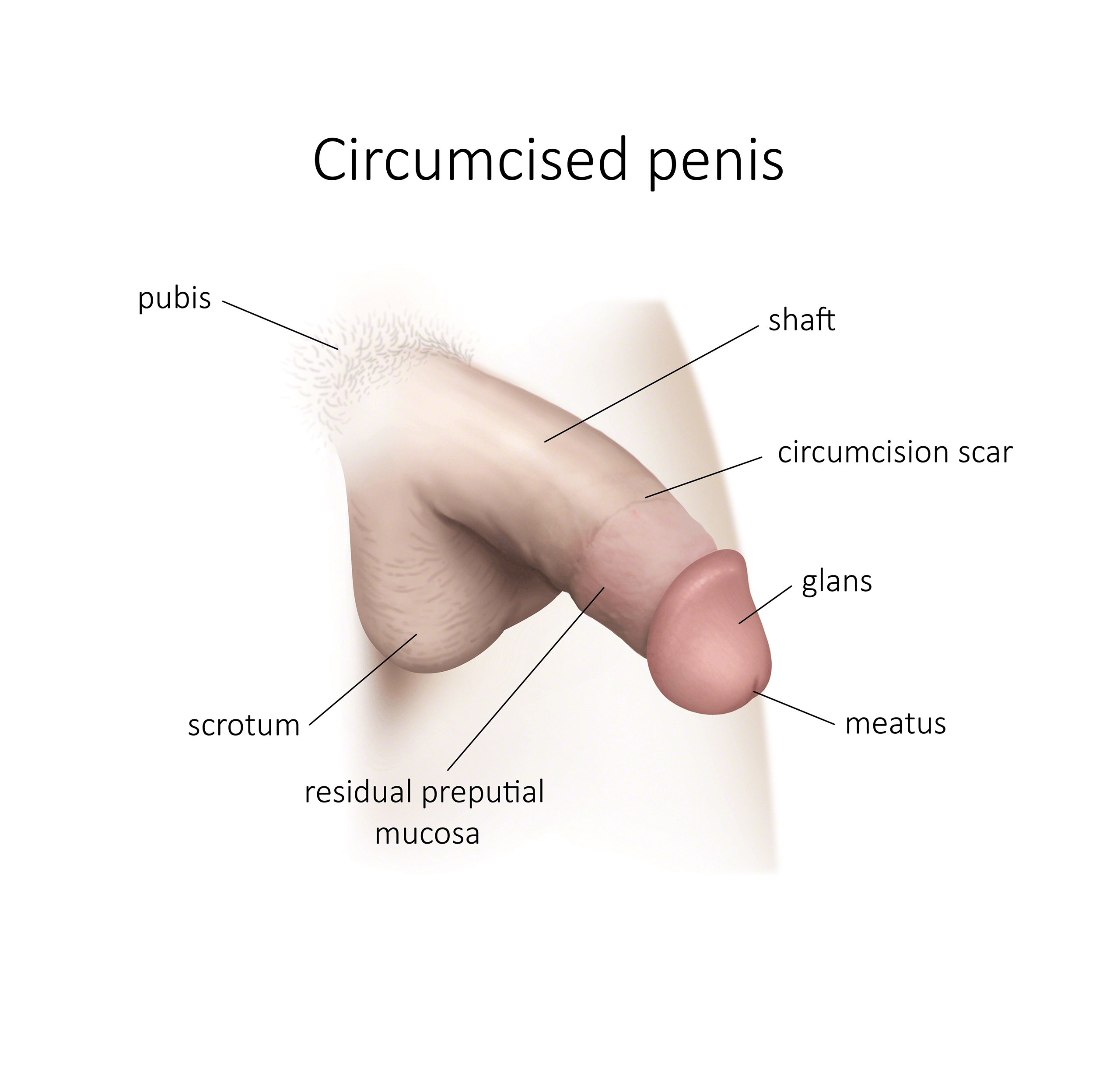
Circumcision is a surgical operation in which the foreskin is removed. The foreskin covers the head (glans) of the penis and is commonly taken off shortly after birth for cultural, religious, or personal reasons. That removal of the entire foreskin is referred to as a full circumcision.
With a partial circumcision, only a portion of the foreskin is excised.
Often the upper section of the foreskin is trimmed away, uncovering the tip of the penis while leaving the lower rim or corona of the glans partially shielded by the remaining foreskin tissue.
What are the benefits of this procedure?
Partial circumcision might be chosen instead of a complete removal for several reasons. You might prefer to preserve some foreskin for cosmetic or personal preferences, or you may be hesitant to have all of it removed, especially if you’ve had it your whole life.
However, partial circumcision isn’t always feasible. If scar tissue has caused the foreskin to adhere or become nonretractable, complete removal may be necessary. Such scarring is often a complication stemming from phimosis, balanitis, or infections beneath the foreskin.
Phimosis treatment
Partial circumcision is sometimes performed to address phimosis in boys or men when conservative treatments, like topical steroid ointments or creams, fail to resolve the problem.
Phimosis occurs when the foreskin cannot be pulled back from the glans. It can feel constrictive, like a tight band around the head of the penis that prevents retraction. Paraphimosis is a related issue in which the foreskin becomes trapped in the retracted position and cannot return to cover the glans.
Phimosis is typical in young boys born with a foreskin, but the foreskin generally becomes retractable over time. By age 7, about 93 percent of boys are able to retract their foreskins.
When the foreskin remains nonretractable as you age, it can complicate urination and make cleaning beneath the foreskin difficult. This can lead to accumulation of smegma — a mix of shed skin cells and oils produced by the penile skin. Smegma buildup can worsen phimosis, causing pain, irritation, and infection. Phimosis may also contribute to balanitis, which is inflammation of the glans.
What are the risks?
There are relatively few risks associated with a partial circumcision. Most people won’t notice a major change in sexual pleasure, though some reduction in sensation is possible.
Potential complications include:
- persistent bleeding
- infection at the surgical site
- significant pain or tenderness of the penis
- stitches that fail to dissolve
- recurrent phimosis or balanitis requiring further removal of foreskin
How is a partial circumcision done?
Your physician may advise fasting for around six hours before the surgery. You may also be asked to stop certain medications, such as blood thinners, at least 24 hours beforehand.
Partial circumcision can be performed with local anesthesia, numbing only the penis and nearby tissue. Alternatively, general anesthesia can be used so you sleep through the procedure.
Once anesthetized and positioned on the operating table, your surgeon will:
- Clean the penis and drape the area with sterile coverings.
- Use a skin-marking pen to outline how much foreskin will be removed. In a full circumcision, the foreskin is removed entirely at its base on the penile shaft.
- Employ a scalpel and other surgical instruments to remove the planned portion of foreskin. In infants, a clamp or bell-shaped device may be used to elevate the foreskin away from the glans.
- Apply thermal cautery or similar methods to control any bleeding after foreskin excision.
- Close the skin with absorbable (dissolvable) sutures.
What’s recovery like from this procedure?
Most patients go home the same day as the operation. Your doctor may recommend an analgesic such as acetaminophen (Tylenol) to manage pain and discomfort.
The penis will be bandaged; the dressing is usually removed after roughly 24 hours. Complete healing typically takes about six weeks for adults. In infants, recovery often occurs within 7 to 10 days.
While recovering, your doctor will likely advise you to:
- Apply petroleum jelly to the surgical area to prevent irritation from contact with underwear or clothing.
- Wash the penis several times daily with warm water once the dressing has been removed.
- Avoid lifting objects heavier than 10 pounds for at least one week.
- Refrain from sexual activity for at least four weeks after surgery.
- Allow the stitches to dissolve or come away naturally; this usually takes two to three weeks.
- Not be alarmed by the initial appearance — full cosmetic healing can take about six weeks.
Contact your physician promptly if you notice any of the following:
- pain that does not improve with prescribed or over-the-counter pain relief
- excessive or ongoing bleeding from the surgical area
- unusual or foul-smelling discharge from the operation site
- swelling that does not subside
- difficulty urinating or inability to urinate
Outlook
Partial circumcision is typically a safe, brief procedure that can relieve several uncomfortable penile conditions. It can also serve as a relatively low-risk option for altering penile appearance if you are unhappy with how your penis looks. If you need more information about related topics like no nipples, your healthcare provider can offer guidance tailored to your situation.


















Leave a Reply
You must be logged in to post a comment.