
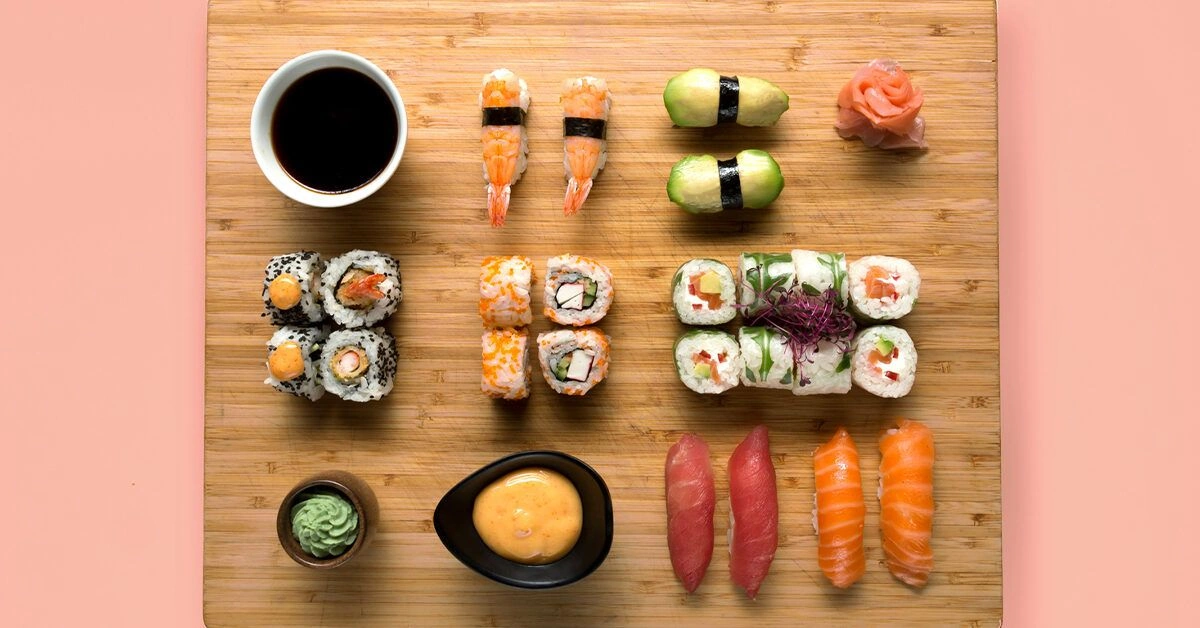
About 2–3 pieces of sushi usually contain between 93 and 190 calories, though the exact caloric value depends on the specific ingredients used.
Sushi is a traditional Japanese meal that has gained widespread popularity in the United States and internationally (1).
It’s frequently presented as a roll that yields 6–8 pieces depending on the style. The dish includes various cooked and raw seafood, vegetables, and rice, often wrapped in dried seaweed called nori.
Although sushi rolls are relatively small and often perceived as a diet-friendly option, they can contain more calories and sodium than expected.
This article reviews calorie counts for popular sushi rolls, sashimi, and nigiri so you can decide which options best align with your health objectives.
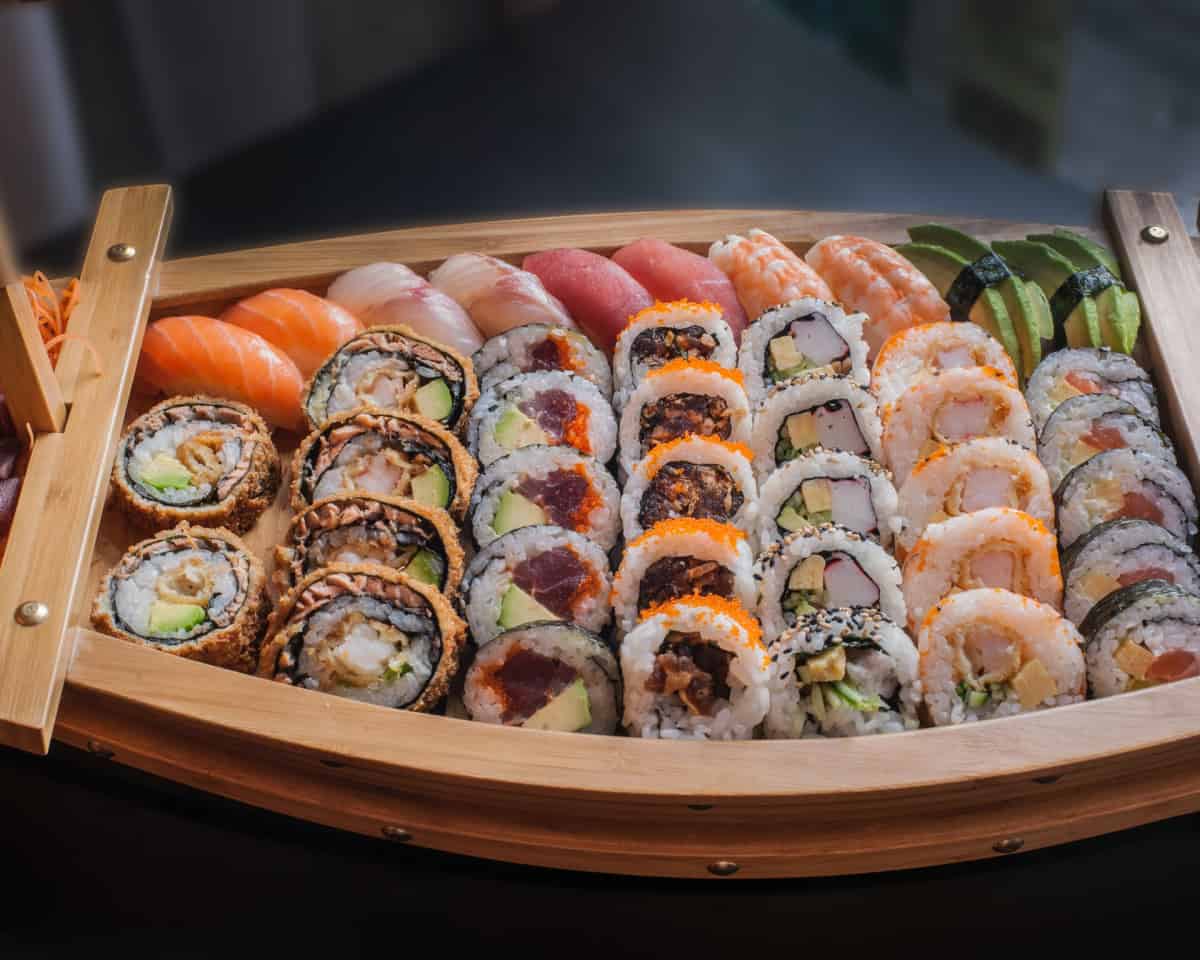
Popular rolls
California rolls
The California roll is a well-known sushi type made with cucumber, avocado, and cooked imitation crab, all wrapped in nori (2).
Imitation crab, or surimi, is produced from a fish called pollock. Because pollock tends to be low in mercury, a California roll can be a safer sushi choice for pregnant people who still want to enjoy sushi (3).
Since imitation crab is precooked, this roll is a good pick for those curious about sushi but hesitant to eat raw fish.
Two to three pieces (100 grams) contain (2):
- Calories: 93
- Protein: 2.9 grams
- Carbs: 18.4 grams
- Fat: 0.7 grams
- Sodium: 428 mg (about 18% of the Daily Value)
Spicy tuna and salmon rolls
These rolls are made with vinegared white rice, avocado, cucumber, sesame seeds, and a chili-based sauce that delivers heat and flavor.
They include either raw tuna or salmon. In Japanese, raw fish is referred to as sashimi.
Two to three pieces (100 grams) of spicy tuna roll contain (4):
- Calories: 175
- Protein: 7.5 grams
- Carbs: 16.7 grams
- Fat: 7.5 grams
- Sodium: 217 mg (around 9% of the DV)
Two to three pieces (100 grams) of spicy salmon roll contain (5):
- Calories: 190
- Protein: 6 grams
- Carbs: 24 grams
- Fat: 6 grams
- Sodium: 330 mg (about 13.6% of the DV)
Shrimp tempura roll
“Tempura” is a Japanese term indicating that an ingredient—seafood, meat, or vegetables—is lightly battered and deep-fried.
For this roll, shrimp are coated in a batter of flour, eggs, and breadcrumbs, then deep-fried and commonly served with a tempura sauce made of soy sauce, sugar, and mirin (a sweet rice wine).
Shrimp tempura is another solid option for people who prefer cooked seafood or enjoy crispy textures.
Two to three pieces (100 grams) of shrimp tempura contain (6):
- Calories: 175
- Protein: 3.7 grams
- Carbs: 28 grams
- Fat: 5.9 grams
- Sodium: 421 mg (around 17% of the DV)

Avocado roll
Although sushi is often associated with raw fish, many variations exist, including vegetarian choices.
The avocado roll is a vegetarian sushi made with avocado, pickled ginger, sesame seeds, and wasabi wrapped in nori (7).
Two to three pieces (100 grams) of avocado roll contain (7):
- Calories: 140
- Protein: 2 grams
- Carbs: 24.8 grams
- Fat: 3.7 grams
- Sodium: 483 mg (about 20% of the DV)
Rainbow roll
The rainbow roll is a more elaborate sushi variety that layers imitation crab with raw seafood such as tuna, salmon, tilapia, or shrimp.
It also includes avocado, cucumber, mayonnaise, and sesame seeds, wrapped in nori and served with wasabi, pickled ginger, and soy sauce.
Two to three pieces (100 grams) of rainbow roll contain (8):
- Calories: 146
- Protein: 7.3 grams
- Carbs: 17 grams
- Fat: 5.7 grams
- Sodium: 301 mg (about 12.5% of the DV)
Philadelphia roll
The Philadelphia roll is another common sushi choice. It typically contains smoked salmon, cream cheese, dill, sesame seeds, pretzel salt, and cucumber (9).
Two to three pieces (100 grams) of Philadelphia roll contain (9):
- Calories: 170
- Protein: 7 grams
- Carbs: 20.5 grams
- Fat: 6.5 grams
- Sodium: 285 mg (around 12% of the DV)
Salmon avocado roll
This roll features raw salmon paired with mashed avocado.
Mashed avocado is rolled together with raw salmon, white rice, sushi vinegar, pickled ginger, sesame seeds, nori, and lettuce (10).
Two to three pieces (100 grams) of salmon avocado roll contain (10):
- Calories: 179
- Protein: 5.8 grams
- Carbs: 30 grams
- Fat: 4.6 grams
- Sodium: 357 mg (about 15% of the DV)
Dragon roll
Dragon rolls come in multiple varieties, including vegetarian versions and those made with eel.
Other components may include imitation crab, tempura shrimp, avocado, cucumber, mayonnaise, and an unagi-style sauce made from soy sauce, sugar, and caramel coloring (11).
There can be a marked difference in ingredients and calories between prepackaged dragon rolls and ones freshly prepared at a restaurant. For the most reliable nutrition data, check restaurant menu nutrition information or product labels.
Generally, 100 grams (2–3 pieces) of prepackaged dragon roll sushi with eel and imitation crab may contain (11):
- Calories: 175
- Protein: 4.8 grams
- Carbs: 20.6 grams
- Fat: 7.9 grams
- Sodium: 397 mg (around 16.5% of the DV)
Cucumber roll
The cucumber roll includes raw tuna, imitation crab, avocado, and radish sprouts in some preparations (12).
It can be accompanied by various sauces, such as spicy chili sauce, gobo (a burdock and soy blend), and ponzu, a citrus-based soy sauce (12).
Two to three pieces (100 grams) of cucumber roll contain (12):
- Calories: 78
- Protein: 4 grams
- Carbs: 5 grams
- Fat: 5 grams
- Sodium: 319 mg (about 13.3% of the DV)
Spider roll
Spider roll is a cooked sushi roll featuring tempura soft-shell crab and spicy mayonnaise rolled with vinegared rice and nori.
Half a spider roll (roughly 100 grams) contains (13):
- Calories: 214
- Protein: 6.5 grams
- Carbs: 16.5 grams
- Fat: 13.5 grams
- Sodium: 373 mg (about 16% of the DV)
Sashimi and nigiri
Sashimi
Sashimi is sushi without rice. It consists of thinly sliced raw fish served with wasabi and soy sauce. The most frequent sashimi choices are raw tuna and raw salmon.
Because sashimi isn’t fried and usually lacks high-fat additions like mayonnaise or cream cheese, it tends to be lower in calories and carbs than many other sushi types.
For example, 100 grams of salmon sashimi contains (14):
- Calories: 127
- Protein: 20.5 grams
- Carbs: 0 grams
- Fat: 4.4 grams
- Sodium: 75 mg (around 3.2% of the DV)
Nigiri
Nigiri is a style of sushi that isn’t rolled. It consists of a thin slice of raw fish placed atop a small mound of rice. Often a dab of wasabi sits between the rice and fish, and pickled ginger may be served on top.
Cooked varieties using shrimp or eel also exist. Like sashimi, nigiri is typically lower in calories than many roll-based options.
One hundred grams (about two pieces) of tuna nigiri contain (15):
- Calories: 117
- Protein: 15 grams
- Carbs: 12 grams
- Fat: 0.4 grams
- Sodium: 26 mg (about 1.1% of the DV)
Ways to make sushi healthier
Traditional Japanese sushi typically uses few ingredients and is generally lower in calories.
However, many Westernized sushi versions include high-fat components and rich sauces that increase calorie content.
Also, no matter which sushi you pick, heavy use of soy sauce raises sodium intake, which can be problematic for people with high blood pressure (16).
Here are practical tips to make your sushi meal healthier:
- Choose alternative grains. Some eateries offer sushi made with brown rice or quinoa instead of white rice, which increases fiber and nutrient density.
- Go rice-free. Sashimi is a rice-free, low-calorie selection. If you don’t mind raw fish, this can be the leanest option.
- Get soy sauce on the side. Soy sauce contains a lot of sodium; keeping it on the side and lightly dipping your pieces avoids overconsumption (16).
- Choose lower-fat items. Tempura preparations and rolls with mayonnaise or cream cheese are higher in calories. Reserve these for occasional treats and favor leaner choices more often.
- Focus on sides. Sushi is typically accompanied by pickled ginger, wasabi, miso soup, and edamame. Use a variety of sides to enjoy flavor and texture rather than relying solely on soy sauce.
- Pick fresh when possible. Freshly prepared sushi often contains fewer additives compared with packaged products, which may include preservatives to extend shelf life.
The bottom line
Sushi is a beloved Japanese dish featuring raw and cooked seafood, vegetables, rice, and seaweed.
While traditional Japanese sushi tends to be simple and lower in calories, many adapted versions include high-fat ingredients that increase caloric content.
Per 100 grams of sushi—usually equivalent to 2–3 pieces—calories typically range from 93 to 190, with vegetarian, rice-free, and non-fried options on the lower end.
Besides monitoring fat and calorie content, pay attention to sodium to keep your daily intake within recommended limits.
Just one thing
Try this today: The next time you order sushi, ask for soy sauce on the side and dip lightly instead of pouring it over your pieces. That small change can lower your sodium intake.





















Leave a Reply
You must be logged in to post a comment.