

Miracle cure or celebrity hype?
From Chelsea Handler’s before-and-after shots to Charlize Theron’s glowing red-carpet look, a common question pops up: Are those images authentic?
Whether it’s vanishing wrinkles or faint traces of treatment, Fraxel laser has become popular, with celebrities praising its rejuvenating effects. The before-and-after photos can be quite persuasive.

Fraxel is based on treating a “fraction” of the skin at a time, explains Dr. David Shafer of Shafer Plastic Surgery & Laser Center in New York City.
Because the procedure leaves surrounding tissue untouched, Shafer says it creates “a matrix of treated skin adjacent to untreated skin, which allows for faster healing with less downtime while still delivering excellent outcomes.”
While it might look like wiping years off your face is just one laser session and a credit card swipe away (prices can range from $500 to $5,000), there are several things you should understand about Fraxel.
How far does Fraxel’s ‘magic’ reach?
According to Dr. Estee Williams, a board-certified dermatologist in New York City, Fraxel-style laser procedures are well suited for people aged roughly 25 to 60 who want to improve and resurface skin texture to:
- soften fine lines
- reduce acne scars (icepick, boxcar, post-acne hyperpigmentation)
- improve traumatic scars (surgical scars, injuries, burns)
- address texture irregularities
- fade age spots and brown sunspots
- even out skin tone
- diminish stretch marks
But there are limits. Not only do different devices exist, each one has its own settings.
These differences can influence results as well as price. Practitioners can also vary settings across areas, effectively offering a patchwork approach to optimize outcomes.
If you have sensitive skin or active conditions like eczema, acne, or moderate-to-severe rosacea, Williams cautions you might not be an ideal candidate for Fraxel-type resurfacing.
People with darker skin tones and more melanin should be wary of aggressive lasers because they can trigger pigmentation problems. However, with patience and gentler lasers, excellent improvements are still possible.
If you want dramatic and rapid improvement, especially for scarring and deep-set wrinkles, be ready to commit to recovery time. A Fraxel session won’t always be a quick lunchtime procedure.
Fraxel’s effect relies on producing micro-injuries in your skin
In short: It intentionally injures your skin, but for a beneficial purpose.
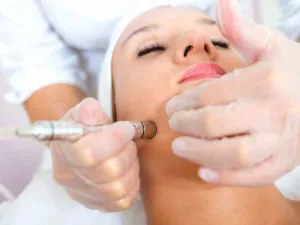
“Fractional” lasers generate micro-injuries arranged in a grid-like pattern because the laser beam is divided into many small beams.
These precise micro-injuries trigger a repair response without widespread tissue damage. Similar to microneedling and dermarolling, Fraxel signals your body to produce fresh collagen in targeted areas.
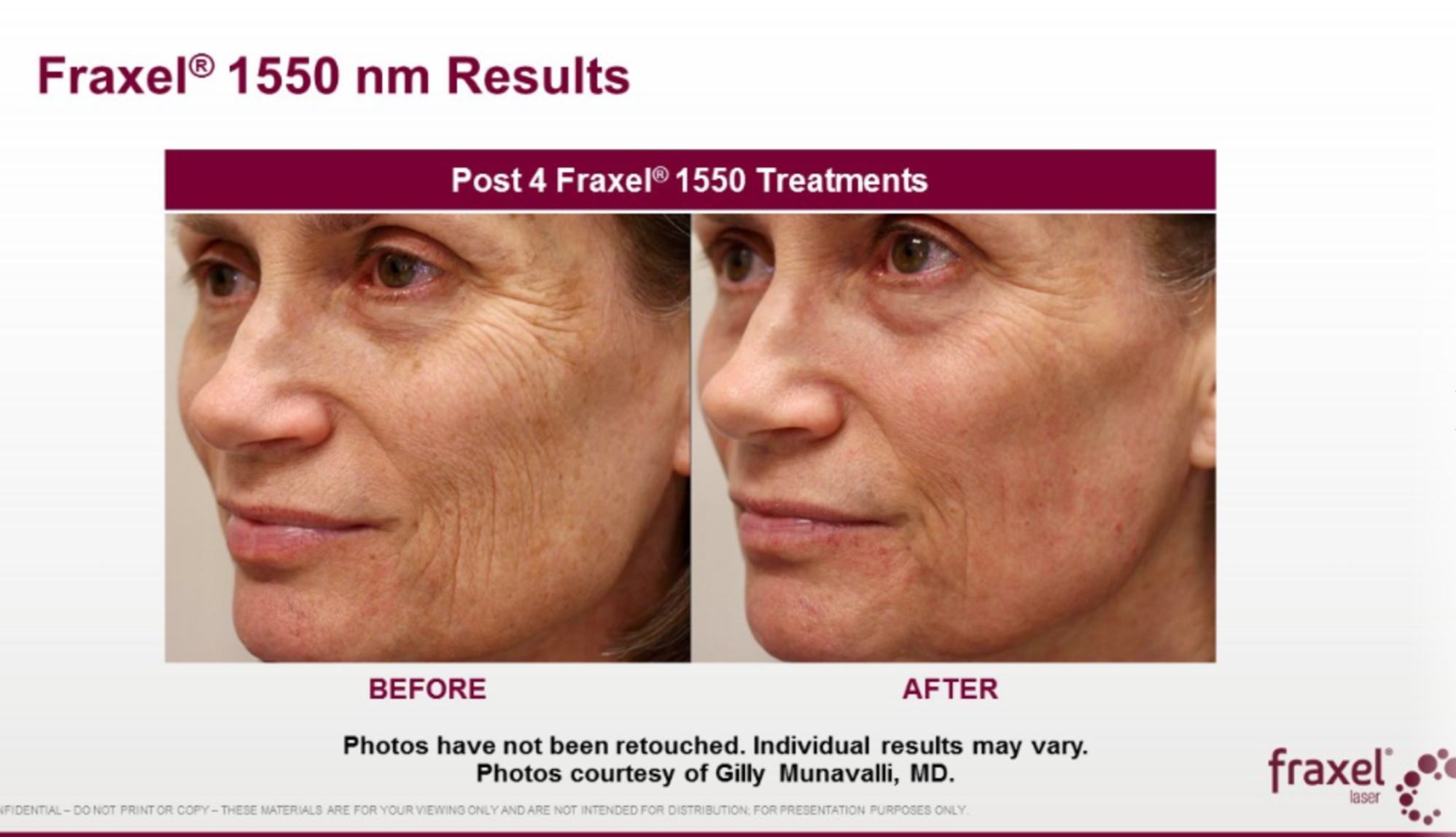
Remember that not all lasers cause the same level of injury or require identical downtime. Dr. Deanne Mraz Robinson, assistant clinical professor of dermatology at Yale New Haven Hospital, explains there are two main categories of fractional resurfacing:
- ablative:more intensive treatment that removes surface tissue and stimulates deeper collagen production, requiring longer recovery and aftercare
- non-ablative:less aggressive option with smaller gains and shorter downtime since it doesn’t strip surface tissue
Is it safe?
While Mraz Robinson affirms Fraxel’s long track record of safety, she emphasizes that your safety depends heavily on your provider — and sometimes on you.
Neglecting or not receiving proper aftercare can lead to worse outcomes than before treatment. This is especially true for ablative resurfacing, which requires time for skin to regrow.
“Often it’s preferable to perform several treatments on lower settings with less downtime and lower risk than fewer treatments on higher, more intense settings that carry greater downtime and risk,” advises Dr. Shafer.
Mraz Robinson adds: “If someone has a history of keloidal or hypertrophic scarring or vitiligo, Fraxel is typically not recommended because it can exacerbate these conditions.” Individuals with darker skin are more prone to keloids (excessive scarring from collagen overproduction).
Fraxel costs range from $500 to $5,000, depending on location
Costs vary by region, the type of treatment, and how many sessions you need. Shafer estimates an average of $500 to $5,000 per treatment. Williams notes the average in NYC is about $1,500.
Don’t expect insurance to cover it unless it’s considered medically necessary. Some of Shafer’s patients “have succeeded in obtaining coverage through their benefits,” but plan to pay out of pocket for most procedures.
Also remember you’ll likely need multiple sessions, and different Fraxel procedures can carry different price tags.
Ask your provider which Fraxel option fits you
There’s a wide spectrum of fractional laser types, from the milder “baby Fraxels” like Clear + Brilliant (favored by celebs such as Drew Barrymore) to the intensive Fraxel Repair, which requires weeks of recovery.
Shafer, Mraz Robinson, and Williams use many fractional technologies with patients, including:
- Clear + Brilliant
- Palomar IKON
- Sublative Fractional RF
- CO2 Fractional
- Pico Way Resolve 3-D Holographic Fractional
- Ulthera
- Fraxel Restore
- Fraxel Dual
- Fraxel Repair
With so many choices, how do you pick? Work with a qualified provider—such as a board-certified dermatologist or plastic surgeon—to select the right fractional laser based on your skin type and downtime tolerance. Communicate your goals and available recovery time so your provider can balance expectations and recommend a treatment that helps you reach your desired result.
You’ll probably need more sessions than you expect
“[A] real issue for the ‘Fraxel’ name across the board is the misconception that one session will finish the job,” says Shafer. Fraxel-type lasers typically treat only 25 to 40 percent of the area each session. “It’s logical that multiple sessions are necessary.”
He stresses setting realistic expectations to avoid unsatisfactory outcomes.
“Some patients come in after prior Fraxel treatments elsewhere and say they’re unhappy,” Shafer explains. “When I ask, they often admit they only had one session.”
Do you have to use only Fraxel-branded devices?
Although Fraxel isn’t the sole laser resurfacing option (non-fractional lasers use a single wide beam), fractional laser technology has become a leading standard for resurfacing, according to Shafer. “[It carries] brand recognition that people associate with quality and results—like Tiffany, Ferrari, and Apple.”
If your preferred clinician doesn’t offer Fraxel, don’t worry: it’s largely a name.
“Fraxel is a brand name, like Kleenex or Botox,” says Mraz Robinson. “[The term] indicates fractional laser resurfacing.”
Even Shafer’s patients often use “Fraxel” generically for various brand-name fractional lasers, but it’s the fractional technique—not the Fraxel label—that really matters.
*With input from Graceanne Svendsen, certified laser technician.













Leave a Reply
You must be logged in to post a comment.