
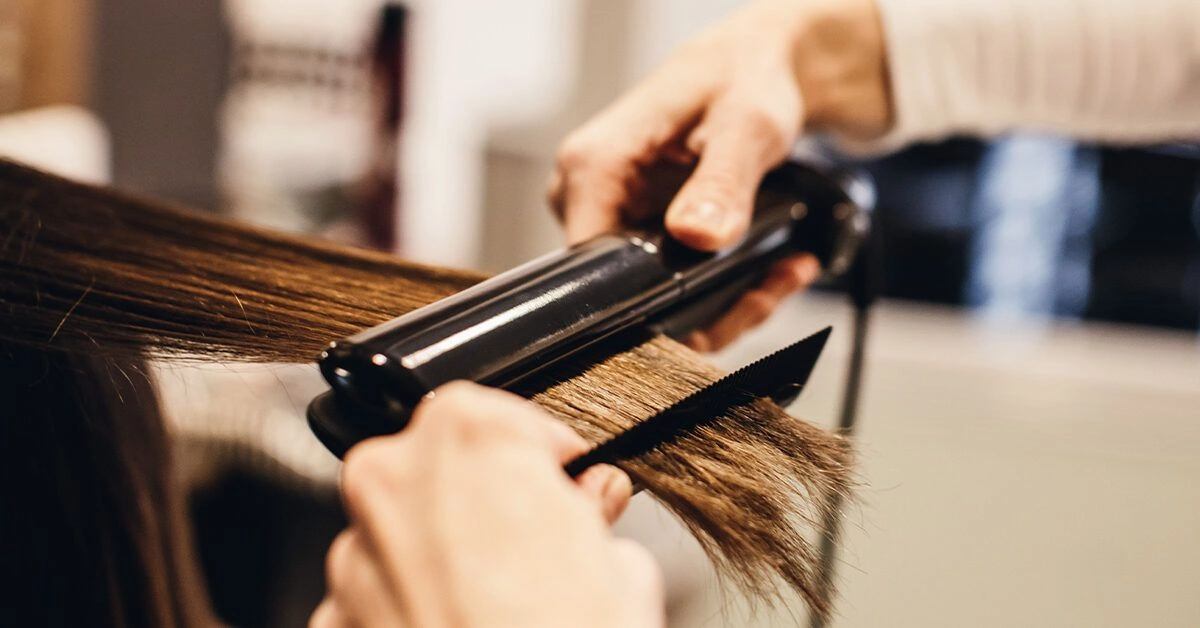
Hair rebonding is a chemical technique designed to alter your hair’s innate texture and produce a sleek, straight appearance. It’s often referred to as chemical straightening.
Typically carried out by a trained cosmetologist in a salon, rebonding involves multiple stages that dismantle the natural bonds inside the hair shaft and then reconstruct them in a new configuration. This structural change transforms the look of your hair.

The price for hair rebonding ranges from about $250 to more than $1,000. The final cost varies based on the salon you choose, whether you select non-toxic products (which tend to cost more), and the length and condition of your hair.
How it works
Hair rebonding straightens hair using potent chemical agents. The whole procedure can take several hours.
In simple terms, water disrupts the hydrogen bonds in the keratin proteins of your hair. A chemical — frequently formaldehyde or a related aldehyde — then crosslinks the hair’s new alignment into a pin-straight formation.
The outcome is hair that appears even straighter and sleeker than naturally straight hair.
The process
- First, the stylist shampoos your hair and lets it air-dry in its natural state. This removes residue and oils and helps the stylist assess your natural texture.
- Next, the hair is divided into sections, similar to prepping for a blowout or color service. Each strand is coated with a cream known as a “relaxant.”
- The relaxant remains on the hair for 30 minutes or longer. Because it alters the hair cuticle at a cellular level, the relaxant phase requires careful monitoring to prevent scalp or hair damage.
- The stylist then applies steam with a specialized hair steaming tool. At this point the hair will appear extremely straight, but the treatment continues.
- The hair is rinsed and blow-dried to prepare it for the next step.
- A keratin lotion is worked through the hair to help set the newly formed bonds. A neutralizer is applied afterward to stabilize those bonds. You’ll leave the keratin and neutralizer in place for roughly 30 minutes.
- The hair is rinsed one final time to remove the products, and the stylist blow-dries it straight into the finished look.
Rebonding is permanent. If you like the result, you won’t need to redo the treatment until new growth at the roots reaches an inch or two.
Chemicals used
Rebonding generally uses formaldehyde or other aldehydes to break apart the hair’s structural bonds.
Some products claim to be free of formaldehyde, but nearly all relaxant formulas release strong gases that act similarly to formaldehyde. Compounds like methylene glycol and methanal exhibit these behaviors.
How it will look
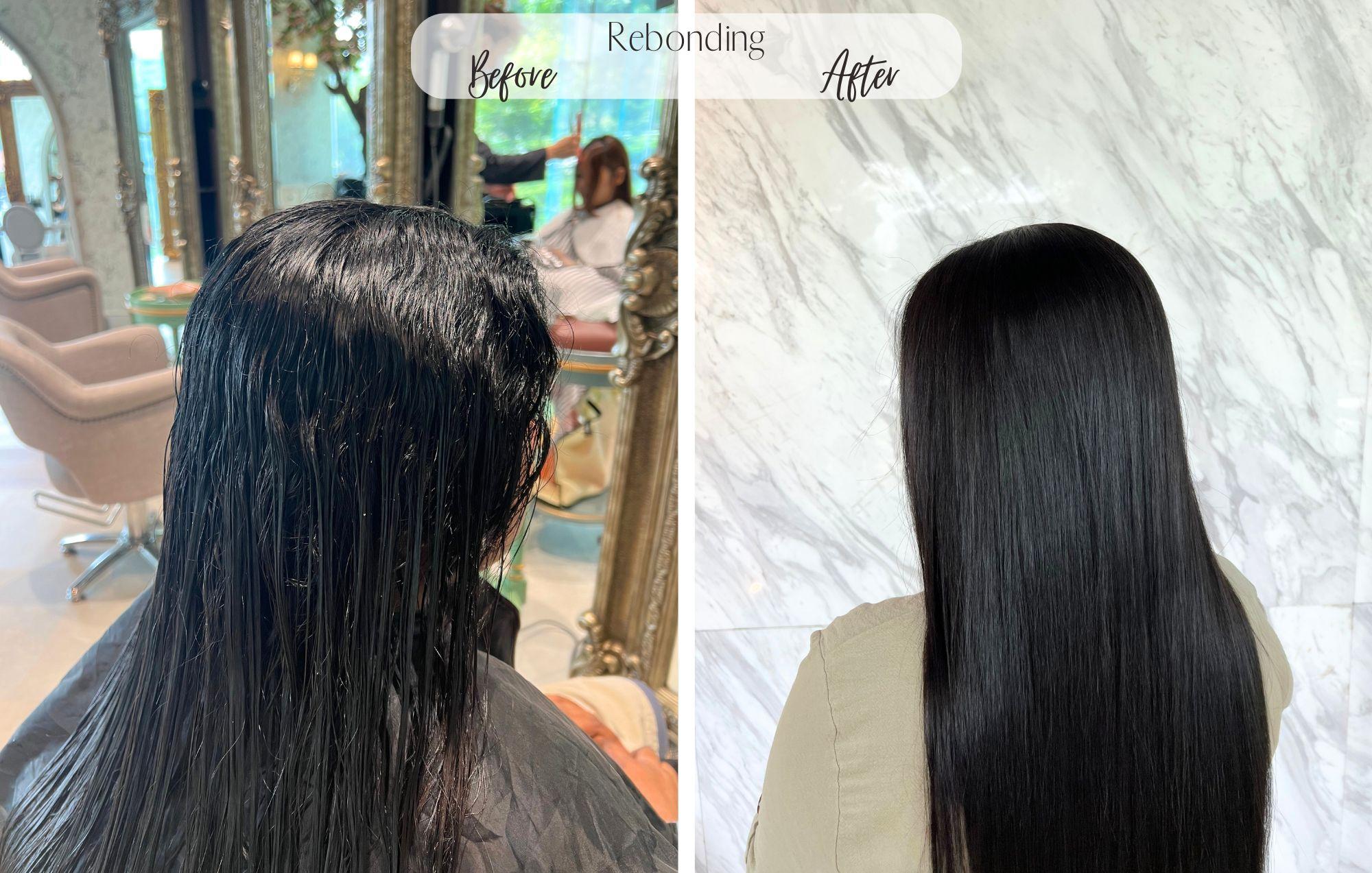
After rebonding, hair typically appears smooth, shiny, and straight. Those prone to frizz may notice a significant reduction in frizz.
However, outcomes aren’t guaranteed. Some people still see traces of their natural texture and feel the procedure wasn’t fully effective.
If your hair is fine, dry, previously color-treated, bleached, or damaged from heat, rebonding might harm your hair without delivering the expected results.
Discuss suitability with your stylist before booking. A responsible professional will likely test a few strands to determine whether your hair can tolerate rebonding.
Potential side effects
Applying strong chemicals to your hair can produce side effects. Breakage, damage, and increased dryness are common after rebonding.
A large 2019 study found that people who chemically straighten their hair every 5 to 8 weeks may face a higher risk of breast cancer. This could be related to chemicals that are associated with hormonal disruption.
If reproductive cancers are prevalent in your family, consider this risk before making rebonding part of your regular beauty routine.
Rebonding vs. smoothing
Rebonding is related to but distinct from other smoothing services like keratin treatments and Brazilian blowouts. Smoothing treatments typically aim to compress the hair cuticle, reducing frizz and adding softness.
Rebonding, by contrast, breaks hydrogen bonds in the hair and then fuses them back together. It usually achieves a straighter result than other methods, but it also carries a higher possibility of hair damage.
Other options
Rebonding isn’t the sole method to obtain straighter hair. Alternatives that avoid harsh chemicals include:
- at-home flat irons
- hair wrapping
- professional blowouts at a salon
- hair rollers
- deep-conditioning and hot oil treatments
The bottom line
Hair rebonding permanently alters your hair’s texture, leaving it exceptionally sleek and often straighter than naturally straight hair.
But it relies on powerful chemicals, and repeated exposure carries potential health risks. Weigh the benefits and risks and consult a qualified stylist before proceeding.










Leave a Reply
You must be logged in to post a comment.