Does Running Make Your Butt Bigger? It Depends

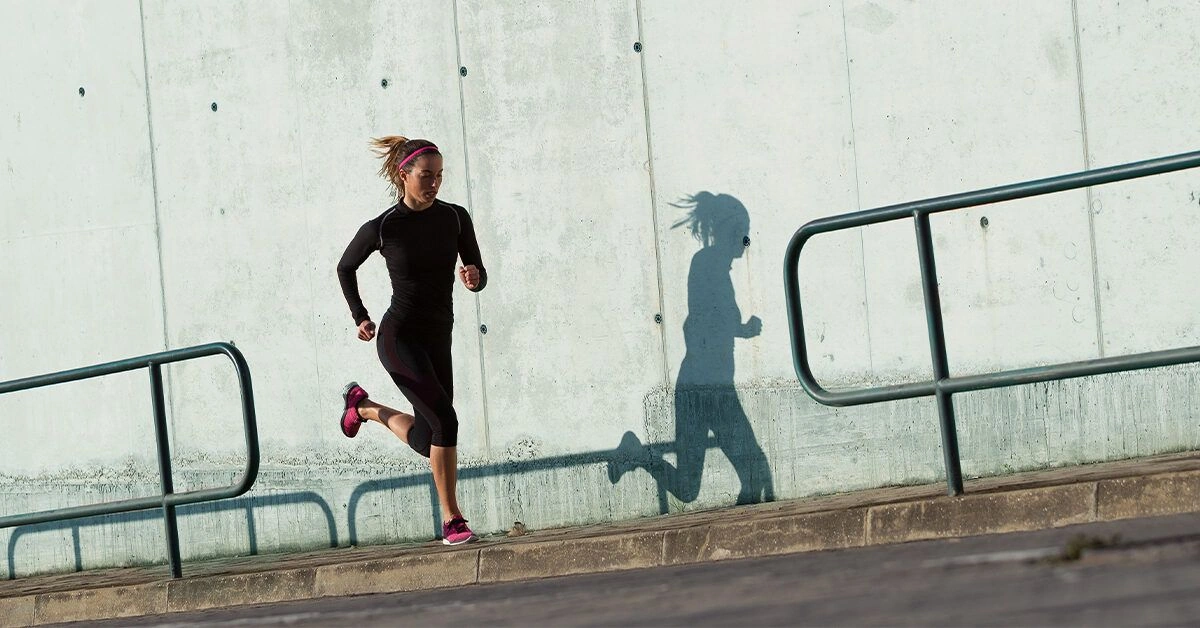
If you’re searching for How to make your butt bigger in a week, you might be considering different workout strategies to enhance your glutes while also improving overall fitness. One simple and accessible option is running.
Heading outdoors for a jog doesn’t just boost cardiovascular endurance — it can also activate and strengthen your glutes, the primary muscles that shape your backside.
That said, you may be asking whether running will actually make your butt bigger. The honest answer is — it depends. The results vary based on the type of running you perform, your intensity, and how you support your training with proper nutrition and strength exercises.
This article breaks down how running contributes to muscle development, calorie expenditure, and fat loss, along with expert-backed strategies to help you sculpt stronger, fuller glutes.

Does running build muscle?
“Running does build muscle, but not in the traditional hypertrophy-focused way most people associate with muscle growth,” explains Todd Buckingham, PhD, an exercise physiologist at Mary Free Bed Sports Rehabilitation Performance Lab.
The key factor lies in muscle fiber types — specifically, type I (slow-twitch) and type II (fast-twitch) muscle fibers (1 ).
Distance runners predominantly rely on type I muscle fibers. These fibers are smaller and highly efficient for endurance-based activities.
“These smaller fibers resist fatigue well but don’t generate a lot of force output, so although you may not appear ‘bulky,’ long-distance running still strengthens type I muscle fibers,” Buckingham explains.
Because type I fibers don’t significantly increase in size, you may not notice dramatic glute growth. However, your glutes can become firmer and stronger over time, even without visible enlargement.
Sprinting, on the other hand, activates type II muscle fibers. These fibers are larger and designed for explosive, high-intensity movements. Due to their size and force-generating capacity, they support speed and power.
When you perform sprint intervals, type II muscle fibers can undergo hypertrophy, leading to measurable increases in muscle size. Since sprinting heavily engages the glutes, this form of running may contribute more directly to a fuller appearance of the buttocks.
Summary Running strengthens the glutes, but muscle growth depends on the type of running. Sprinting stimulates larger type II fibers that are more likely to increase muscle size, while distance running mainly trains smaller type I fibers that improve endurance.
Where does running build muscle?
The gluteus maximus is the largest and most powerful muscle in the human body (2 ).
Your glutes are composed of three primary muscles:
- gluteus maximus
- gluteus medius
- gluteus minimus
After an intense run, it’s common to feel fatigue in your glutes, along with your quadriceps, hamstrings, and calf muscles. Running recruits these lower-body muscle groups to propel you forward.
“The legs are definitely the primary movers during running, but the abdominal muscles and arms are also actively engaged,” says Max Chee, PT, a physical therapist at Providence Saint John’s Health Center’s Performance Therapy Center.
Your core muscles stabilize the torso, while your arms assist with rhythm and coordination. Meanwhile, the glutes generate much of the force needed for forward motion, particularly during uphill runs or sprint intervals.
Summary Running primarily works the lower body — especially the glutes, quadriceps, hamstrings, and calves — while also engaging the core and upper body for balance and coordination.
Does running burn fat?
Yes, running does burn fat, but the process depends on exercise intensity and duration.
Like any physical activity, running requires energy, measured in calories. These calories come from carbohydrates, protein, and fat. Because the body stores a significant amount of energy as fat, it can tap into these reserves during sustained activity.
For fat to be used as fuel, triglycerides must be converted into adenosine triphosphate (ATP), the body’s usable energy source. This metabolic pathway takes time.
Since fat metabolism is slower, the body typically prefers carbohydrates during moderate to high-intensity exercise.
“Carbohydrates are easier to break down and can be used more quickly for energy. If you’re exercising above approximately 50% of your maximum heart rate (HR), you’ll burn a greater percentage of carbohydrates compared to fat,” Buckingham explains.
Because lipolysis progresses gradually, it can take 30 minutes or more at a submaximal intensity before fat becomes the predominant fuel source.
Still, even at higher intensities, fat burning continues — just at a lower percentage relative to carbohydrates. If your goal is reducing overall body fat while pursuing How to make your butt bigger in a week, combining steady-state cardio with strength training can be beneficial.
“If you want to burn a greater percentage of fat, run at a lower intensity. If you want to burn a higher total amount of calories — including fat — run at a higher intensity,” Buckingham adds.
Summary Running supports fat loss by increasing calorie expenditure. Lower-intensity, longer sessions rely more heavily on fat metabolism, while higher-intensity workouts burn more total calories overall.
Do sprinting and long-distance running have the same effects on the body?
If your primary aim is glute development, speed, and power, sprinting may offer greater benefits.
If your focus is cardiovascular endurance — such as completing a half-marathon — long-distance running is more appropriate. However, it may not significantly increase glute size.
Both forms of running improve cardiovascular health, but they stimulate the body differently.
Distance running emphasizes type I muscle fibers, while sprinting heavily recruits type II fibers.
Additionally, sprint training enhances anaerobic capacity, whereas long-distance running improves aerobic capacity (V̇O₂max) to a greater degree.
Summary Sprinting and long-distance running both benefit heart health and lower-body muscles, but sprinting activates larger type II fibers that are more associated with muscle growth.
Best ways to sculpt the glutes and reduce fat
If you’re serious about How to make your butt bigger in a week, running alone may not be enough. A combination of resistance training, targeted glute activation exercises, and strategic nutrition is typically more effective.
For example, pairing sprint workouts with glute-focused strength training can accelerate muscle engagement. Nutrition also plays a critical role. Adequate protein intake and calorie balance support muscle repair and growth. You may also consider reviewing guidance on What food makes your butt bigger and exploring Foods that increase buttocks and hips to complement your training plan.

Chee recommends the following glute-targeted exercises:
- Clamshells: resisted side-lying external hip rotation
- Side-lying hip abduction: side leg lifts
- Quadruped hydrants: hip extension with external rotation
- Squats: performed with or without added resistance
Research shows that step-ups, squats, barbell hip thrusts, and deadlifts produce high levels of gluteus maximus activation, with lateral step-ups generating particularly strong engagement (3 ).
Plyometric exercises such as jump squats, box jumps, and jumping lunges also stimulate type II fibers and can enhance lower-body power.
Keep in mind that spot reduction — losing fat from a specific body area — is not physiologically achievable. Overall fat loss occurs through a sustained calorie deficit.
“Reducing calorie intake below the amount you burn leads to weight loss, but without exercise, some of that weight may come from muscle,” Buckingham notes.
To maintain lean muscle while reducing fat, combine a moderate calorie deficit with resistance training and cardiovascular exercise. This balanced strategy can help you achieve a firmer, more sculpted appearance.
Summary For fuller glutes, combine sprinting, resistance training, and proper nutrition. Exercises like squats, lunges, and step-ups effectively activate the glutes, while overall fat reduction requires a consistent calorie deficit.
The bottom line
Running is a powerful aerobic activity that burns calories, enhances cardiovascular health, and strengthens lower-body muscles.
Long-distance running primarily trains type I muscle fibers, improving endurance but not substantially increasing muscle size. Sprinting activates type II fibers, which are more likely to promote hypertrophy in the glutes.
If your goal is How to make your butt bigger in a week, incorporate sprint intervals, glute-focused strength training, and a supportive diet rich in adequate protein and balanced calories.
A well-rounded routine that blends high-intensity runs, steady-state cardio, and targeted resistance exercises can help you build stronger, more defined glutes while improving overall health and fitness.
Customer Questions
Running can make your butt firmer and stronger, but significant size increase depends on the type. Sprinting may promote glute growth, while long-distance running primarily improves endurance with minimal size change.
Sprinting and high-intensity interval training (HIIT) are best, as they activate type II muscle fibers which are more prone to hypertrophy, potentially increasing glute size more than steady-state distance running.
Running increases overall calorie expenditure, leading to fat loss. Lower-intensity, longer runs use a higher percentage of fat for fuel, while higher-intensity runs burn more total calories, both contributing to reduced body fat.
Running alone, especially distance running, is often insufficient for noticeable glute enlargement. For best results, combine sprinting with targeted glute strength exercises and proper nutrition.
Effective complementary exercises include squats, lunges, hip thrusts, deadlifts, and step-ups. These resistance movements directly target the glute muscles for growth and activation.



Related Posts
Does Tribulus Terrestris Really Work? An Evidence-Based Look
Sep 2, 2026 • 8 min read
Everything You Need to Know About Borage Oil
Aug 9, 2026 • 7 min read
Does Evening Primrose Oil Safely Induce Labor?
Aug 16, 2026 • 31 min read
Folic Acid vs. Folate — What’s the Difference?
Aug 17, 2026 • 13 min read
Health Benefits of Hawthorn Berry
Aug 24, 2026 • 32 min read