

Nuts are a flavorful, portable snack that fits into a wide range of eating patterns — from keto to vegan and everything in between. Although they’re naturally high in fat and calories, research consistently shows they offer remarkable benefits for overall health and weight management. This often leads people to wonder, Is eating too many nuts bad for your heart? While moderation is important, the scientific evidence strongly supports nuts as part of a heart-healthy diet when consumed appropriately.
Below are eight science-backed reasons why adding nuts to your daily routine can support long-term wellness.

What Are Nuts?
Nuts are edible seed kernels commonly used in cooking or enjoyed on their own as a satisfying snack. They’re energy-dense and rich in healthy fats.
Each nut is protected by a tough, inedible outer shell that typically must be cracked open to access the inner kernel.
Today, most varieties are sold pre-shelled and ready to eat, making them convenient for daily consumption.
Some of the most popular nuts include:
- Almonds
- Brazil nuts
- Cashews
- Hazelnuts
- Macadamia nuts
- Pecans
- Pine nuts
- Pistachios
- Walnuts
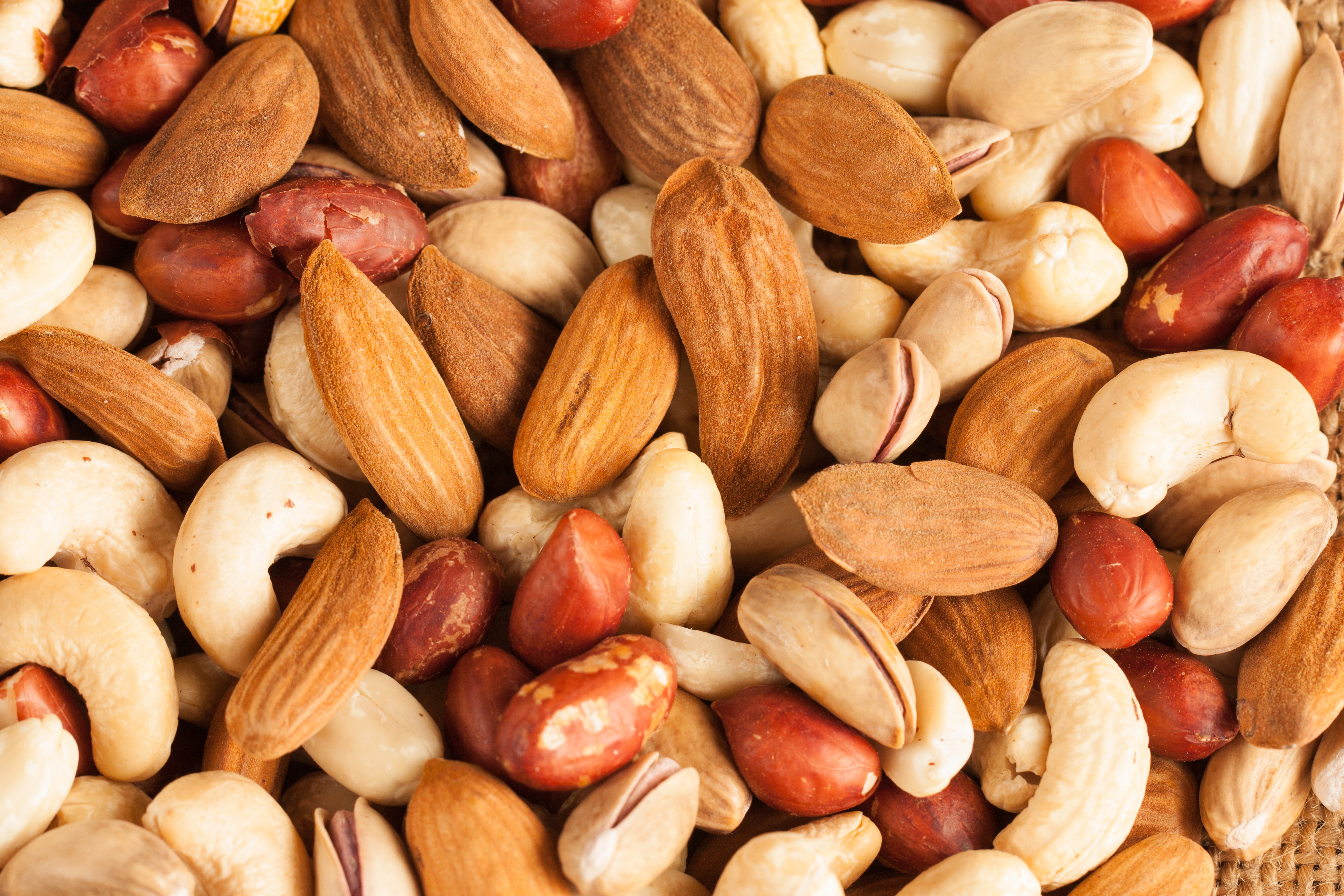
Although peanuts are technically legumes like beans and peas, they’re typically grouped with nuts because of their comparable nutritional profile and culinary use.
SUMMARY Nuts are edible, high-fat seed kernels enclosed in a hard shell. They’re commonly eaten as snacks or incorporated into recipes.
1. A Great Source of Many Nutrients
Nuts are packed with essential nutrients. A one-ounce (28-gram) serving of mixed nuts provides (1):
- Calories: 173
- Protein: 5 grams
- Fat: 16 grams, including 9 grams of monounsaturated fat
- Carbs: 6 grams
- Fiber: 3 grams
- Vitamin E: 12% of the RDI
- Magnesium:16% of the RDI
- Phosphorus: 13% of the RDI
- Copper: 23% of the RDI
- Manganese: 26% of the RDI
- Selenium: 56% of the RDI
Certain nuts stand out for specific nutrients. For example, a single Brazil nut delivers more than 100% of the Reference Daily Intake (RDI) for selenium (2).
The carbohydrate content varies by type. Hazelnuts, macadamia nuts, and Brazil nuts contain fewer than 2 grams of digestible carbs per serving, while cashews contain nearly 8 grams.
Because of their nutrient density and relatively low carb content, nuts are especially suitable for low-carb and Mediterranean-style diets.
SUMMARY Nuts are rich in healthy fats, low in carbohydrates, and provide important nutrients such as vitamin E, magnesium, and selenium.
2. Loaded With Antioxidants
Nuts are rich in antioxidants, including polyphenols.
Antioxidants help counter oxidative stress by neutralizing free radicals — unstable molecules that can damage cells and raise disease risk (3).
One study demonstrated that walnuts possess a stronger ability to combat free radicals than fish (4).
Research also indicates that antioxidants in walnuts and almonds protect delicate cellular fats from oxidation (5, 6, 7).
In a study of 13 participants, consuming walnuts or almonds significantly increased polyphenol levels and reduced oxidative damage compared to a control meal (7).
Another trial found that 2–8 hours after eating whole pecans, individuals experienced a 26–33% reduction in oxidized “bad” LDL cholesterol — a known heart disease risk factor (8).
However, findings in older adults and those with metabolic syndrome are mixed, with some studies showing limited antioxidant improvements (9, 10).
SUMMARY Nuts supply antioxidants such as polyphenols, which may shield cells and “bad” LDL cholesterol from oxidative damage.
3. May Aid Weight Loss
Although nuts are calorie-dense, studies suggest they may actually support weight management.
A major study examining the Mediterranean diet found that participants assigned to eat nuts reduced their waist circumference by an average of 2 inches (5 cm) — more than those assigned olive oil (11).
Almonds, in particular, have repeatedly been shown to encourage weight loss rather than weight gain in controlled research. Some evidence also suggests pistachios may assist with weight reduction (12, 13, 14).
In overweight women, almond consumption led to nearly three times more weight loss and a significantly greater reduction in waist size compared to controls (15).
Interestingly, not all calories in nuts are fully absorbed. A portion of their fat remains trapped within the fibrous structure during digestion (16, 17, 18).
For example, while almonds are labeled as containing 160–170 calories per ounce, the body absorbs only about 129 calories (19).
This evidence helps address concerns like Is eating too many nuts bad for your heart or weight. Portion control matters, but moderate intake appears beneficial rather than harmful. If you’re worried about overdoing it, review common Eating too many nuts side effects to better understand digestive or calorie-related considerations.
SUMMARY Nuts may promote weight loss. The body does not absorb all of their calories, and they increase satiety.
4. May Lower Cholesterol and Triglycerides
Nuts have notable effects on cholesterol and triglyceride levels.
Pistachios have been shown to reduce triglycerides in individuals who are obese or have diabetes.
In a 12-week study in obese adults, pistachio eaters had triglyceride levels nearly 33% lower than the control group (14, 22).
The cholesterol-lowering effects of nuts are likely due to their high levels of monounsaturated and polyunsaturated fatty acids.
Almonds and hazelnuts appear to increase “good” HDL cholesterol while lowering total and “bad” LDL cholesterol (23, 24, 25, 26).
These lipid improvements are a key reason why the answer to Is eating too many nuts bad for your heart is generally no — provided intake is moderate and balanced within total daily calories.
SUMMARY Nuts may reduce total and “bad” LDL cholesterol and triglycerides while increasing “good” HDL cholesterol.
5. Beneficial for Type 2 Diabetes and Metabolic Syndrome
Type 2 diabetes affects hundreds of millions globally.
Metabolic syndrome describes a cluster of risk factors that raise the likelihood of heart disease, stroke, and type 2 diabetes.
Nuts are low in carbohydrates and do not significantly spike blood sugar levels, making them a smart substitute for refined carbohydrates.
Research shows nut consumption may reduce oxidative stress, blood pressure, and other cardiometabolic markers in individuals with diabetes and metabolic syndrome (33, 34, 35, 36, 37).
In a 12-week controlled study, participants with metabolic syndrome who consumed about 1 ounce (25 grams) of pistachios twice daily saw a 9% average reduction in fasting blood sugar (37).
SUMMARY Nuts may improve blood sugar control, blood pressure, and inflammatory markers in people with type 2 diabetes and metabolic syndrome.
6. May Reduce Inflammation
Nuts exhibit strong anti-inflammatory effects.
While inflammation is a normal immune response, chronic inflammation can damage tissues and increase disease risk.
Studies suggest nuts may lower inflammatory markers such as C-reactive protein (CRP) and interleukin 6 (IL-6) (40).
Because chronic inflammation contributes to cardiovascular disease, reducing it through diet further supports the idea that moderate nut consumption benefits heart health.
SUMMARY Nuts may help decrease inflammation, particularly in individuals with chronic health conditions.
7. High in Beneficial Fiber
Fiber delivers numerous health advantages.
Although your body cannot digest fiber, beneficial gut bacteria can ferment it into short-chain fatty acids (SCFAs).
SCFAs enhance gut integrity and may lower the risk of diabetes and obesity (46).
Fiber also increases fullness and reduces calorie absorption. If you’ve ever thought, I ate too many nuts today, the fiber content may explain why you feel satisfied quickly.
SUMMARY Nuts are fiber-rich, promoting fullness, gut health, and reduced calorie absorption.
8. May Reduce Your Risk of Heart Attack and Stroke
Nuts are exceptionally beneficial for cardiovascular health.
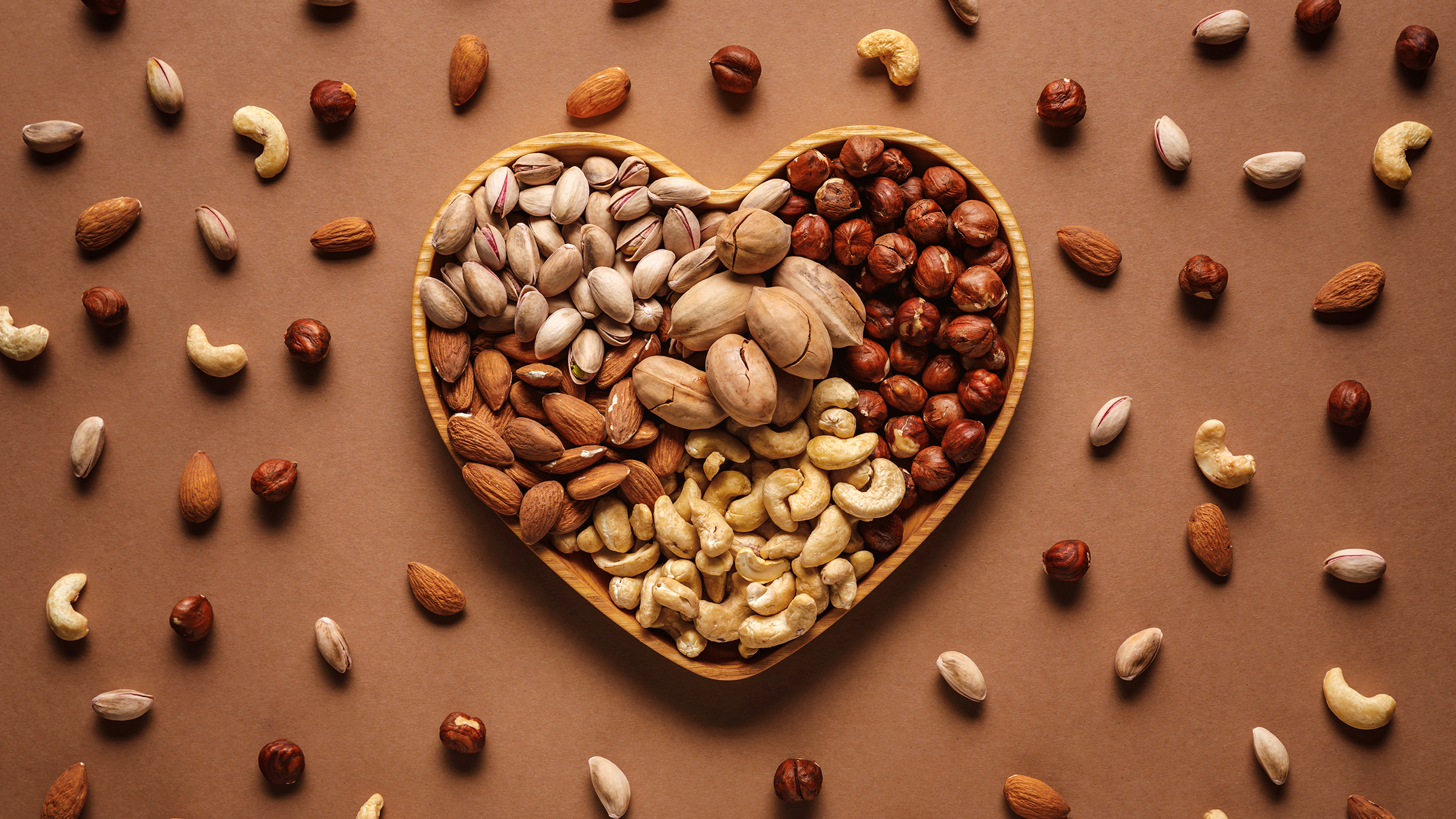
Multiple studies show they lower heart disease and stroke risk by improving cholesterol levels, reducing small dense LDL particles, enhancing artery function, and decreasing inflammation (11, 51).
Small, dense LDL particles are particularly associated with higher heart disease risk (58).
Research within the Mediterranean diet found that nut consumers experienced reductions in small LDL particles and increases in large LDL particles and HDL cholesterol (11).
For most people, the evidence suggests the answer to Is eating too many nuts bad for your heart depends on portion size and overall diet quality — but moderate daily consumption supports heart health rather than harms it.
SUMMARY Nuts may lower heart attack and stroke risk by improving cholesterol profiles, artery function, and inflammatory status.
Delicious, Versatile, and Widely Available
Nuts can be eaten whole, blended into nut butters, or sprinkled over salads, yogurt, and oatmeal.
They’re available salted, unsalted, seasoned, raw, or roasted.
For optimal health, choose raw nuts or roast them at temperatures below 350°F (175°C). Avoid varieties roasted in vegetable or seed oils.
They store well at room temperature, making them convenient for travel and work snacks. For extended freshness, keep them refrigerated or frozen.
SUMMARY Enjoy nuts raw, roasted, or as nut butters. Store at room temperature or refrigerate for longer freshness.
The Bottom Line
Regular nut consumption is associated with improved heart health, better cholesterol and triglyceride levels, enhanced blood sugar control, and reduced inflammation.
Despite being calorie-dense, nuts may also assist with weight management due to their fiber, protein, and incomplete calorie absorption.
In moderation, nuts are a flavorful and nutrient-dense addition to a balanced diet. For most individuals, evidence indicates they support — rather than harm — cardiovascular health when eaten as part of an overall healthy lifestyle.























Leave a Reply
You must be logged in to post a comment.