
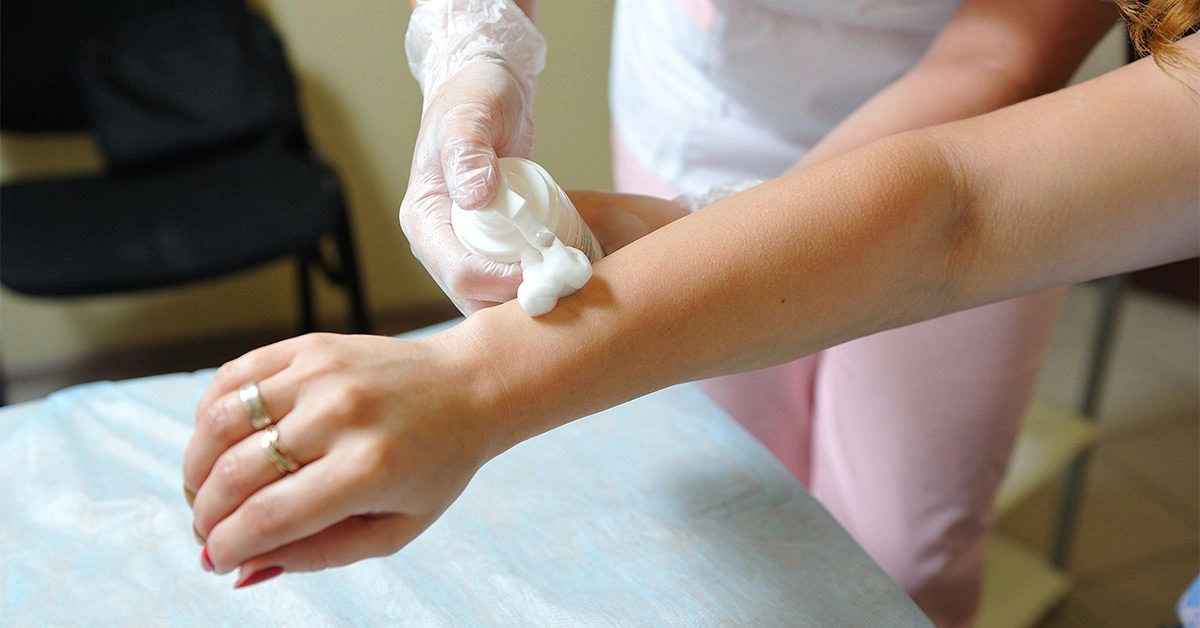
Many people search the question, Is it illegal to put Nair in shampoo, especially after hearing alarming stories or pranks gone wrong. Beyond the legal and ethical concerns, it’s crucial to understand that depilatory creams are powerful chemical products designed specifically to dissolve hair. Misusing them—whether by mixing them into shampoo or applying them improperly—can lead to significant chemical burns and skin damage.
Depilatory creams burn the hair shaft, but they can also injure the skin, particularly if you have sensitive skin or leave the product on too long. Over-the-counter (OTC) treatments are often effective in managing mild chemical burns, but prevention and proper use are essential for safety.
Nair is a depilatory cream formulated for at-home hair removal. Unlike waxing or sugaring, which extract hair from the root, depilatory creams rely on chemical reactions to break down the visible portion of hair. After the hair dissolves, it can be wiped away easily.
:max_bytes(150000):strip_icc()/peo-creams-remove-body-hair-test-nair-shower-cara-milhaven-6-12ce7fcc357942f49113ec58d8eef760.jpeg)
These formulations target only the hair shaft—the part that extends above the skin’s surface—while the root beneath the skin remains intact. Other well-known depilatory hair removal creams include Veet, Sally Hansen Cream Hair Remover Kit, and Olay Smooth Finish Facial Hair Removal Duo.
This article explains why depilatory burns happen, how to treat them safely, and what precautions you should follow when using products like Nair.
Can Nair burn your skin?
Yes, Nair and similar depilatory creams can burn your skin—even when used according to the instructions. The active ingredients in Nair include chemicals such as calcium hydroxide and potassium hydroxide. These substances cause the hair shaft to swell, allowing the formula to penetrate and dissolve the hair structure. However, these same chemicals can irritate or burn the surrounding skin tissue.

Although certain formulations are FDA-approved, all depilatory creams carry prominent warnings because of their strong chemical composition. In some cases, users may experience serious burns, allergic reactions, or prolonged skin irritation.
Symptoms may include immediate burning, redness, skin discoloration, itching, or stinging while the product is on the skin. In other situations, irritation may not become noticeable until several hours or even days later, presenting as rawness, tenderness, or peeling skin.
If you are wondering about scalp use specifically, it’s important to review safety guidance such as Is nair safe for scalp shampoo, since the scalp is particularly sensitive and misuse can increase the risk of chemical injury.
How to treat Nair burns
If you develop a chemical burn from a depilatory product like Nair Hair Removal, prompt care can help minimize discomfort and reduce the risk of complications. Many mild burns can be managed at home with appropriate first aid and OTC products.
Home treatments for depilatory burns
- Flush the chemicals from your skin immediately using cool running water. Ensure that all traces of the product are removed from both your skin and clothing before applying any treatments.
- Because the active ingredients in Nair include an acid component, using a gentle alkaline cleanser may help neutralize residual chemicals on the skin’s surface.
- Applying hydrocortisone cream, a topical steroid, can help reduce inflammation associated with mild chemical burns.
- After cleaning the area, you may apply Neosporin and loosely cover the burn with a sterile bandage or gauze to protect the skin as it heals.
- If stinging persists, placing a cold compress on the affected area may ease the burning sensation and soothe irritated skin.
- An over-the-counter pain reliever can assist in managing discomfort and inflammation.
- Keep the affected area moisturized with petroleum jelly to support skin barrier repair and prevent excessive dryness.
Medical treatments
If your burn does not improve, begins to ooze, or becomes increasingly painful, you should seek medical care promptly. More serious chemical burns may require professional evaluation. Medical treatments for depilatory burns can include:
- antibiotics
- anti-itch medications
- debridement (cleaning or removing dirt and dead tissue)
- intravenous (IV) fluids, which can help with healing
Severe burns may also require ongoing wound care to prevent infection and reduce the risk of scarring.
When to see a doctor
Consult a healthcare professional if your burn appears to worsen instead of improve. If blisters develop and begin to ooze pus or turn yellow, seek medical attention immediately, as these symptoms may indicate a bacterial infection. Increasing redness, swelling, warmth, or fever are also warning signs that require prompt evaluation.
Precautions when using Nair and other depilatories
Nair is intended for use on the legs, the lower half of the face, and the bikini or pubic area (avoiding direct contact with the genital area). If you choose depilatory creams over waxing, shaving, or laser hair removal, following strict safety guidelines can significantly reduce the likelihood of irritation or chemical burns.
- Always perform a patch test on a small section of your leg or arm at least 24 hours before full application.
- If it’s your first time using Nair, leave it on for a shorter period than recommended. Starting with two to three minutes can help you assess your skin’s tolerance.
- Keep a wet, cold washcloth nearby in case you begin to feel burning or excessive tingling.
- Because Nair contains acidic components, an alkaline lotion may help neutralize irritation if mild burning occurs.
- Hydrocortisone and petroleum jelly can be useful for soothing minor skin reactions after rinsing the product off.
Additionally, avoid applying depilatory creams to broken, sunburned, or recently shaved skin, as these conditions increase sensitivity and the risk of chemical injury.
Is Nair safe for your face?
Nair is generally considered safe for use on the lower half of the face, such as the chin, cheeks, or mustache line. However, individuals with sensitive skin may be more prone to irritation and may want to consider alternative facial hair removal methods.
If applying Nair near your mouth, exercise extra caution to prevent accidental ingestion, as the chemicals can be harmful if swallowed. Never apply Nair near your eyes, and avoid using it on your eyebrows to reduce the risk of severe eye injury.
Is Nair safe for the groin?
Nair may be used on the groin or bikini line area on the upper thigh, and certain formulations are specifically labeled for this purpose. However, do not apply Nair to the genitals or anus, as these areas are highly sensitive and more susceptible to chemical burns.
Takeaway
Nair is a widely used depilatory cream designed for at-home removal of unwanted hair from the face, legs, and bikini line. Because depilatory creams rely on strong chemicals to dissolve hair, they carry a risk of chemical burns—even when instructions are followed carefully.
If you experience burning or stinging while using Nair, rinse the product off immediately with cool water. If redness, skin discoloration, or irritation persists, thoroughly cleanse the area and apply a protective healing ointment such as petroleum jelly.
Over-the-counter pain relievers may help reduce inflammation and discomfort. However, if the affected area worsens, develops blisters, turns yellow, or begins to ooze, contact a healthcare provider promptly, as these may be signs of infection or a more serious chemical burn requiring medical treatment.




















Leave a Reply
You must be logged in to post a comment.