
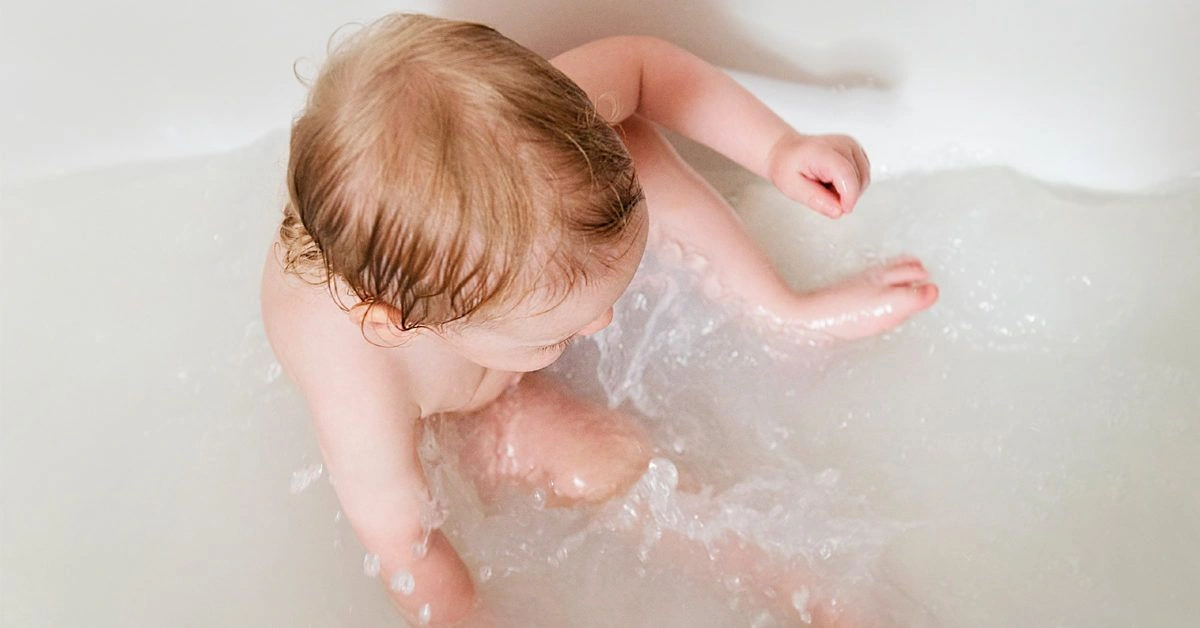
It’s almost impossible to top the aroma of a freshly bathed newborn. But when you treat your little one to a milk bath, you get that delightful new-baby scent plus some added skin and health perks.
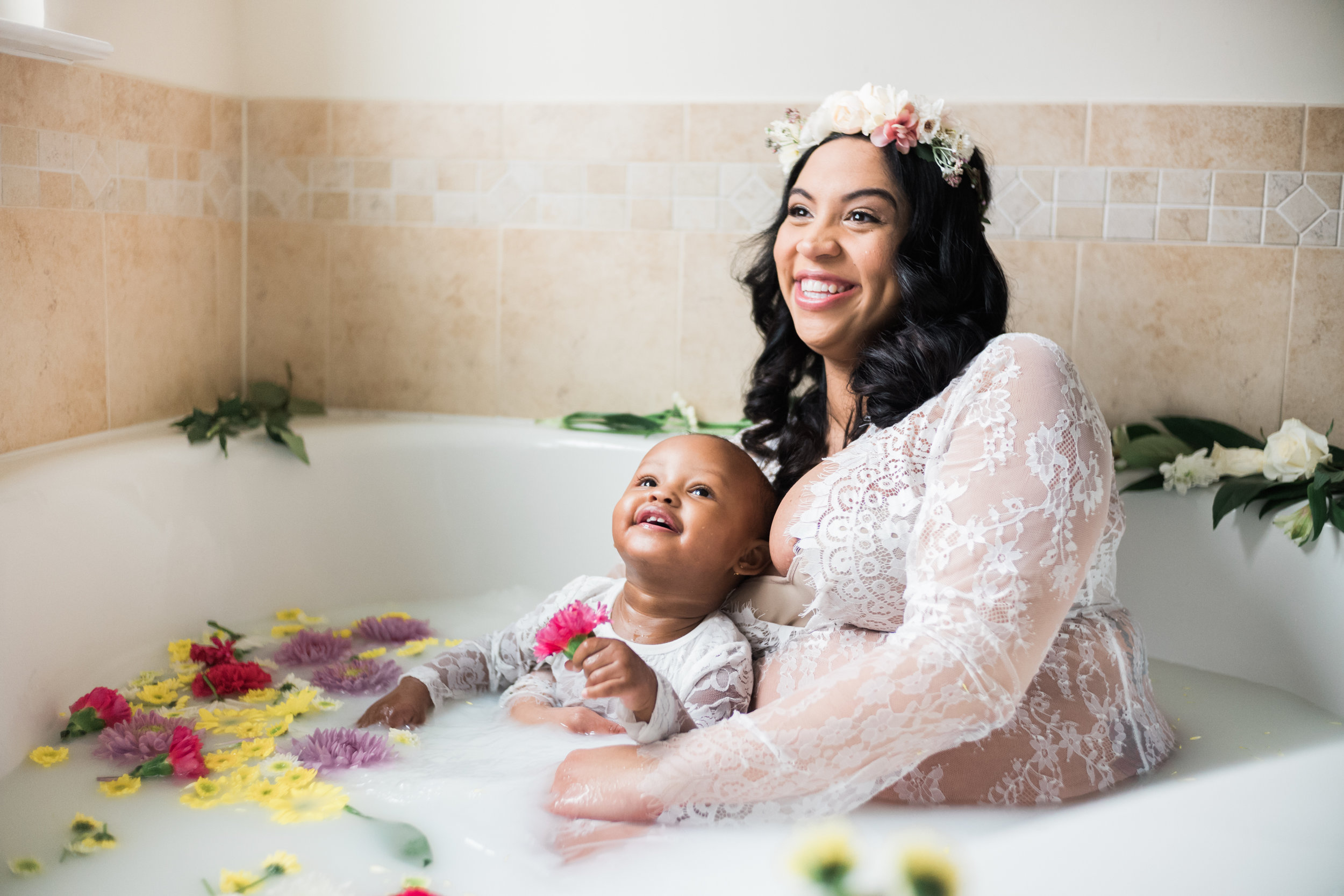
What exactly is a baby milk bath?
So what is a milk bath? There’s no mystery — you simply add breast milk to your baby’s bathwater.
Milk baths can improve skin concerns because breast milk is loaded with compounds that nourish, shield, and repair both internally and externally. Cleopatra may have been onto something when she soaked in milk.
What are the advantages of a breast milk bath?
We often hear about breast milk’s role in supporting infants’ immune development. Yet the restorative qualities of the hundreds to thousands of nutrients, lipids, and vitamins in breast milk also benefit a baby’s skin.
Human milk contains roughly 0.8–0.9% protein, 3–5% fat, 6.9–7.2% carbohydrates, plus a mix of vitamins, minerals, and active bio-compounds. Here’s a brief look at some key players in breast milk:
- immunoglobulin A (IgA), an antibody that targets infections
- palmitic acid, an excellent hydrator
- lauric acid, which moisturizes and has antibacterial effects
- oleic acid, which hydrates skin and combats aging signs
- vaccenic acid, which protects and nourishes skin
- linoleic acid, which can fade spots and reduce inflammation
That’s the cast — but what can these components actually do?
Eczema
A 2015 study found that breast milk performed comparably to 1% hydrocortisone for treating mild to moderate eczema. Say goodbye to dry, flaky patches.
Baby acne
Lauric acid’s antibacterial action may help with infant acne, which can be triggered by hormones passed through the placenta. Lauric acid should sound familiar — it’s also present in coconut oil and many skincare products.
Diaper rash
Diaper dermatitis is a frequent issue, affecting between 7% and 35% of infants. A 2013 study showed that using breast milk on diaper rash was as effective as applying 1% hydrocortisone ointment. Mom wins again.
Cuts and insect bites
IgA contributes antibacterial antibodies that can soothe minor cuts and insect bites.
Beyond your baby’s skin
- A few drops of breast milk can help with certain eye infections and blocked tear ducts.
- Don’t forget you: applying breast milk to cracked, sore nipples can aid healing.
How to give a breast milk bath
Ready to try one? Here’s how to do it:
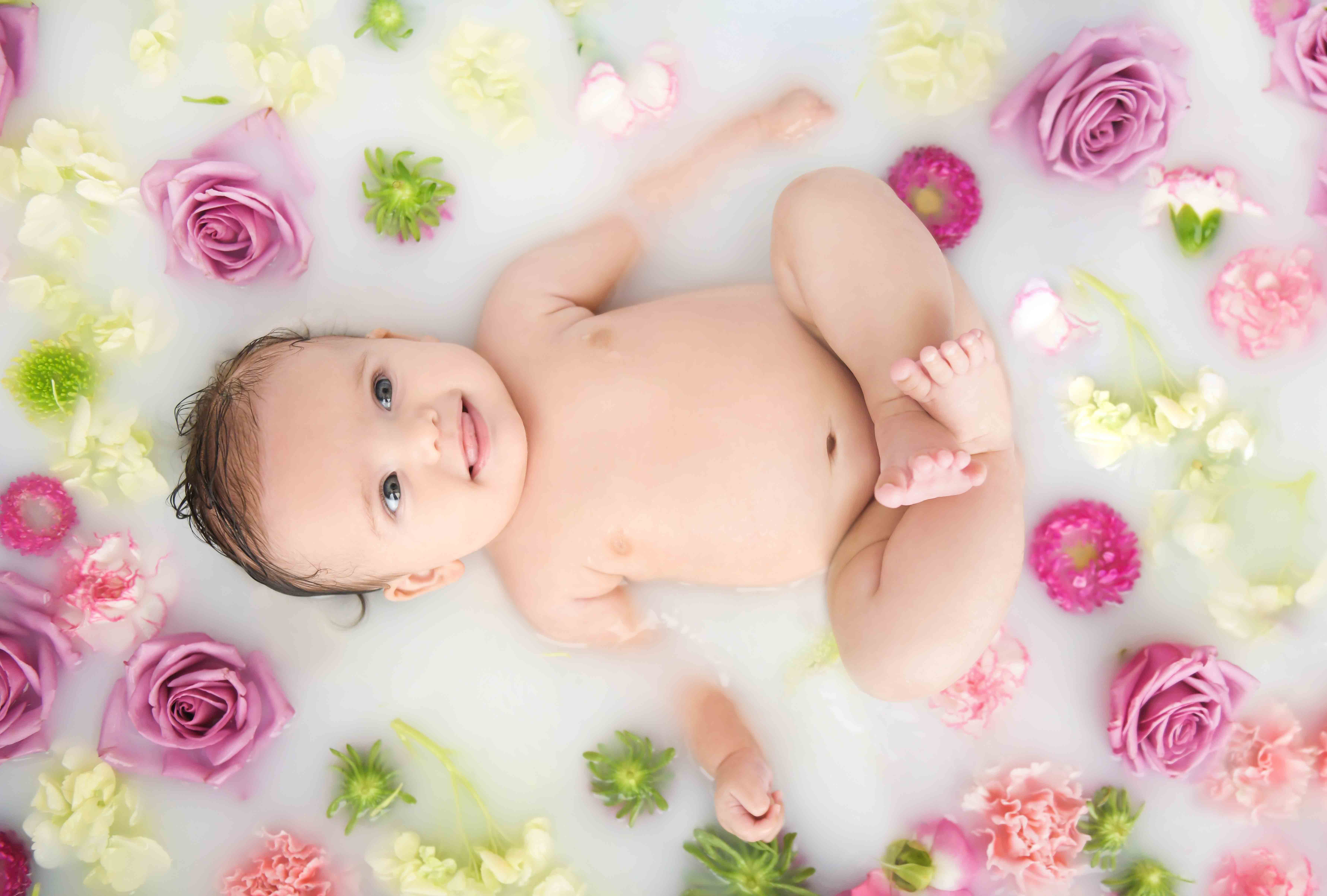
- Fill the tub with lukewarm water as you normally would for your baby.
- Add about 150–300 mL of breast milk — enough to make the water look cloudy or milky.
- Let your baby soak for 5–15 minutes, gently splashing the milky water over their body.
- Lift your baby out and pat them dry.
- Follow with a gentle massage using a moisturizer to seal in the hydration they’ve absorbed. And don’t forget to inhale that delightful scent.
If you’re curious, you can also explore a soothing milk bath routine and ideas to make bath time extra calming.
How often should milk baths be given?
For most babies, one to two milk baths per week is sufficient to keep skin soft, supple, and clear.
If you’re concerned about using too much stored milk, alternate milk baths with regular soap-and-water baths. And if you’re running low on breast milk, nursing more frequently can help boost supply.
Can you use frozen or slightly old breast milk?
You can pump and freeze extra milk ahead of time for these baths. Thaw it before adding to the tub so you can control water temperature. Using milk that’s been stored for a while is generally fine for bathing as long as it still smells normal.
Takeaway
of trying a milk bath? Run that warm water and enjoy. Bath time is already a special ritual — and now you can make it even more nourishing and enjoyable.




















Leave a Reply
You must be logged in to post a comment.