
In strength training, modified forms of familiar lifts are frequently used to support other aspects of training.
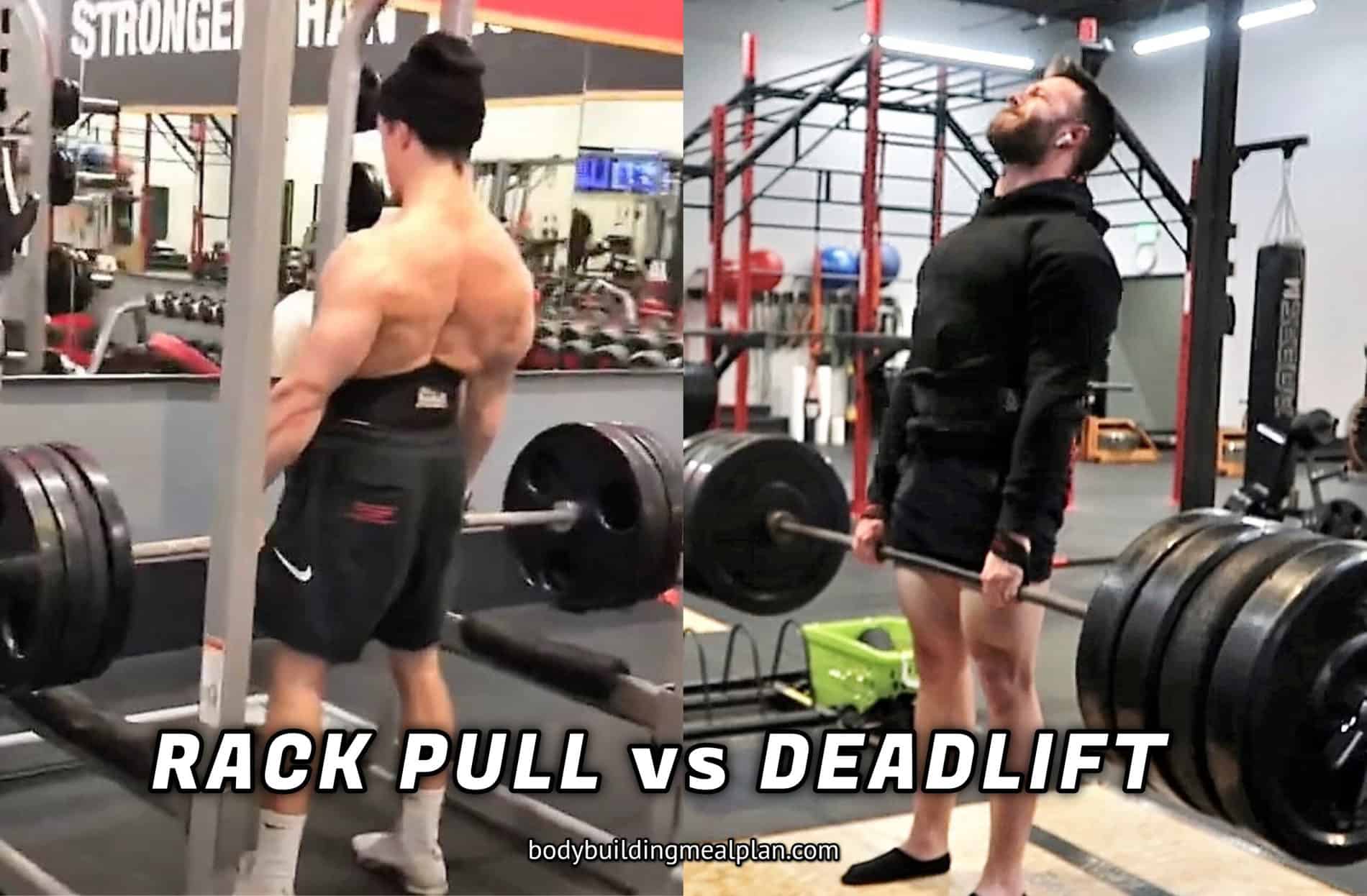
The rack pull is one such deadlift variant where a loaded barbell is positioned on the uprights of a power rack, typically just above or below the knees, and lifted by gripping the bar and extending the hips to full lockout.
This demanding deadlift alternative effectively develops pulling strength, which carries over to many sports and can help improve your conventional deadlift one-rep max.
This article covers the rack pull in detail — how to perform it, its advantages, the muscles it targets, and some safety considerations.
How to do the rack pull
The rack pull is straightforward to set up and execute, though it does need a few key pieces of gear.
Experienced deadlifters will find the movement familiar, as it follows the same basic pattern as the standard deadlift.
That said, rack pulls are also useful for novices who are learning deadlift mechanics.
Performing the exercise with sound technique and gradually adding load is essential to reduce the risk of injury.
Begin with lighter weights to refine your form, and progressively increase the load as your technique and strength advance.
Avoid jerking or slamming the bar to minimize injury risk and protect your equipment.
How to perform
Equipment required: power rack, Olympic barbell, weight plates, weightlifting belt (optional), straps (optional)
- Adjust the rack pins to the appropriate height, most commonly just below or above the knees.
- Place the barbell on the rack supports and add the desired weight to each side.
- Stand at the bar with a shoulder-width stance, bending the knees and hips slightly to set up.
- Grip the bar a bit wider than shoulder width, using a double overhand or mixed grip.
- Before lifting, remove slack by engaging your lats and preloading the hamstrings by pushing into the floor slightly.
- Lift the bar in a controlled manner until your hips are fully locked out, taking care not to hyperextend the lower back at the top.
- Maintain tension and lower the bar back to the starting position with control, avoiding dropping it onto the supports to prevent damage.
- Repeat for the prescribed sets and repetitions.
Many lifters opt to use lifting straps because grip strength can become the limiting factor as loads increase.
A belt can also be used, but healthy individuals shouldn’t rely on it as a substitute for building core strength.
A 2014 study suggested that for healthy workers, routinely wearing a back belt isn’t advised for preventing lower-back injuries and may reduce transverse abdominal strength (1).
Block pull variation
If a rack isn’t available, block pulls are a solid substitute.
Block pulls are less likely to harm your barbell or rack because only the plates contact the blocks.
You can perform this movement with purpose-built pulling blocks or by stacking bumper plates on their side to the desired height.
How to perform
Equipment required: Olympic barbell, weight plates, blocks or bumper plates, weightlifting belt (optional), straps (optional)
The block pull follows the same mechanics as the rack pull, except the bar is elevated using blocks or bumper plates instead of rack supports.
Follow the rack pull steps above, substituting blocks or stacked bumpers for the rack.
Summary: The rack pull involves setting a loaded barbell on power rack supports, usually around knee height, and lifting it by extending the hips to lockout. If no rack is available, blocks or bumper plates can be used.
How the rack pull compares with a traditional deadlift
The conventional deadlift starts with the bar on the floor and is lifted with a slightly wider-than-shoulder grip until the hips and knees are fully extended.
With a rack or block pull, the bar begins elevated, making the lift somewhat easier and allowing heavier loads to be handled.
This variation is ideal for addressing sticking points in the conventional deadlift, most commonly from just above the knee to lockout.
Overloading this segment of the lift carries over to other deadlift styles, such as conventional, sumo, and trap-bar deadlifts.
For lifters focused on increasing their deadlift numbers, the rack pull can be a valuable accessory to drive heavier loads at lockout.
Summary: Traditional deadlifts start from the floor and require more range of motion, while rack pulls elevate the start, making the lift easier and enabling overload of the lockout phase.
Benefits of the rack pull exercise
Regularly including rack pulls in your training offers several benefits. Below are the most noteworthy.
Can increase pulling and grip strength
Consistent rack-pull training can lead to meaningful gains in pulling strength.
These strength gains transfer well to other pulling exercises, particularly the conventional deadlift.
Moreover, greater muscular strength has been linked to improvements in athletic performance, especially in sports requiring explosive power and speed (2, 3).
Pulling movements like the rack pull also enhance grip strength, which has associations with lower disease risk and better quality of life in older adults (4, 5, 6).
Reduces your injury risk
Any heavy compound lift carries some degree of risk.
However, for those worried about injury or rehabbing, the rack pull can be a safer alternative to the full deadlift.
Because the start position is higher, it allows a more upright torso and less shear stress on the spine, which may lower the chance of injury or aggravation of existing issues.
Promotes muscle development
The rack pull is a compound movement that targets multiple major muscle groups.
Specifically, it engages the posterior chain — glutes, hamstrings, lats, and upper-back muscles like the traps (7, 8).
When done consistently, rack pulls can contribute to hypertrophy in these areas, although direct research on this effect is limited.
If your goal is to increase muscle mass in the posterior chain, adding rack pulls to your program can be effective.
Summary: Performing rack pulls regularly can bolster pulling strength, lower injury risk, and support posterior-chain muscle growth.
Muscles worked in the rack pull
The rack pull is a compound lift that activates several muscle groups at once.
The primary muscles targeted by the rack/block pull include (9):
- Glutes. The gluteus maximus, medius, and minimus drive hip extension and are essential for lifting the bar off the rack and stabilizing the hips during the lift.
- Hamstrings. Responsible for knee flexion and hip extension, the hamstrings assist the glutes during the initial phase of the lift.
- Erector spinae (lower back). The paraspinal muscles support spinal extension and are most active in the lower portion of the lift.
- Lats. The latissimus dorsi helps keep the back tight, aiding spinal protection throughout the movement.
- Traps and upper back. Upper-back muscles, including the trapezius, maintain shoulder position and an upright posture.
- Forearm and hand muscles. Several smaller muscles in the forearm and hand are crucial for gripping the bar.
- Quadriceps. The quads assist with knee extension and contribute during the lockout, though they are not primary movers in this variation.
Summary: The rack pull engages multiple muscle groups, including the glutes, hamstrings, erector spinae, lats, traps, quads, and forearm/hand muscles.
Precautions and considerations for the rack pull
Although rack pulls offer many benefits, there are several precautions to keep in mind when performing them.
Technique is important
Proper technique is crucial when performing rack pulls.
Keep the following cues and tips in mind:
- Maintain a neutral spine and avoid hyperextending at lockout.
- Do not jerk the bar off the rack.
- Grip the bar deep in the palm rather than in your fingers.
- Be careful not to bang your knees when returning the bar to the rack.
- Progress the weight gradually instead of making large jumps.
Adhering to these points will help lower your injury risk while performing the movement.
Avoid damaging your barbells and rack
Incorrect execution of rack pulls can damage barbells and racks.
To prevent equipment damage, avoid dropping the weight onto the supports.
Lower the bar back down in a controlled manner from the top of the lift.
It’s also useful to have a dedicated bar for rack pulls and similar exercises that may cause wear.
Summary: When doing rack pulls, prioritize sound technique to reduce injury risk and avoid slamming the bar onto the rack to prevent equipment damage.
Who should do the rack pull
Given its adjustable difficulty, the rack pull suits nearly all trainees — from beginners to advanced lifters.
Beginners
For newcomers, the conventional deadlift can be daunting due to the coordination and technique required.
The rack or block pull is a helpful stepping stone, offering the deadlift movement pattern with a reduced range of motion. Lifting from above the knees demands less strength and technical skill than pulling from the floor.
Once you’ve mastered the high rack pull (above the knees), you can lower the pins to just below the knees to increase difficulty, and eventually progress to a full floor deadlift.
Advanced
Experienced lifters often use rack pulls to further increase pulling strength and work the lockout phase specifically.
Because the range of motion is shorter, this segment can be overloaded so that returning to full deadlifts results in greater strength.
Those with certain injuries
When returning from musculoskeletal injuries, heavy compound lifts should be reintroduced gradually, especially with back concerns.
The adjustable start height of the rack pull can make it a suitable option for easing back into pulling movements by reducing stress on the lower back.
Always consult a physician or a licensed physical therapist before resuming exercise after an injury.
Summary: The rack pull is appropriate for lifters at various stages — beginners, experienced athletes, and those recovering from injuries — when used appropriately.
How to add it to your workout
Rack pulls can be programmed as a primary pulling exercise or as an accessory to the deadlift.
Beginners or those rehabbing may use rack pulls as their main pulling exercise for a period, while advanced lifters might pair rack pulls with conventional deadlifts on different training days to target different portions of the lift.
Common set and rep ranges are:
- Beginner: 2–3 sets of 4–6 reps
- Intermediate: 3–5 sets of 4–8 reps
- Advanced: 4–6 sets of 6–12 reps
Rep schemes can be adjusted depending on whether the goal is maximal strength (lower reps) or hypertrophy (higher reps) (10).
Summary: Rack pulls can be included as a main or accessory movement. Set and rep ranges should be chosen based on experience level and training goals.
The bottom line
The rack pull is a deadlift variant where a loaded barbell is set on power rack supports, usually around knee height, and lifted by extending the hips to full lockout.
This exercise transfers effectively to pulling strength, benefiting athletes and recreational lifters alike.
Key advantages include greater pulling strength, potentially lower injury risk, and development of the posterior chain.
Take care to use proper technique and avoid dropping the bar onto the rack.
The rack pull is appropriate for trainees at all levels, including novices, advanced lifters, and those easing back after injury.
Whether your deadlift has stalled, you’re learning to deadlift, or you’re returning from injury, the rack pull can be a valuable tool to build strength.






















Leave a Reply
You must be logged in to post a comment.