

Sternocleidomastoid (SCM) muscle discomfort in the neck most often stems from muscle tightness or repetitive movements. It may also arise alongside certain medical issues, such as asthma or pneumonia.

What is the SCM muscle?
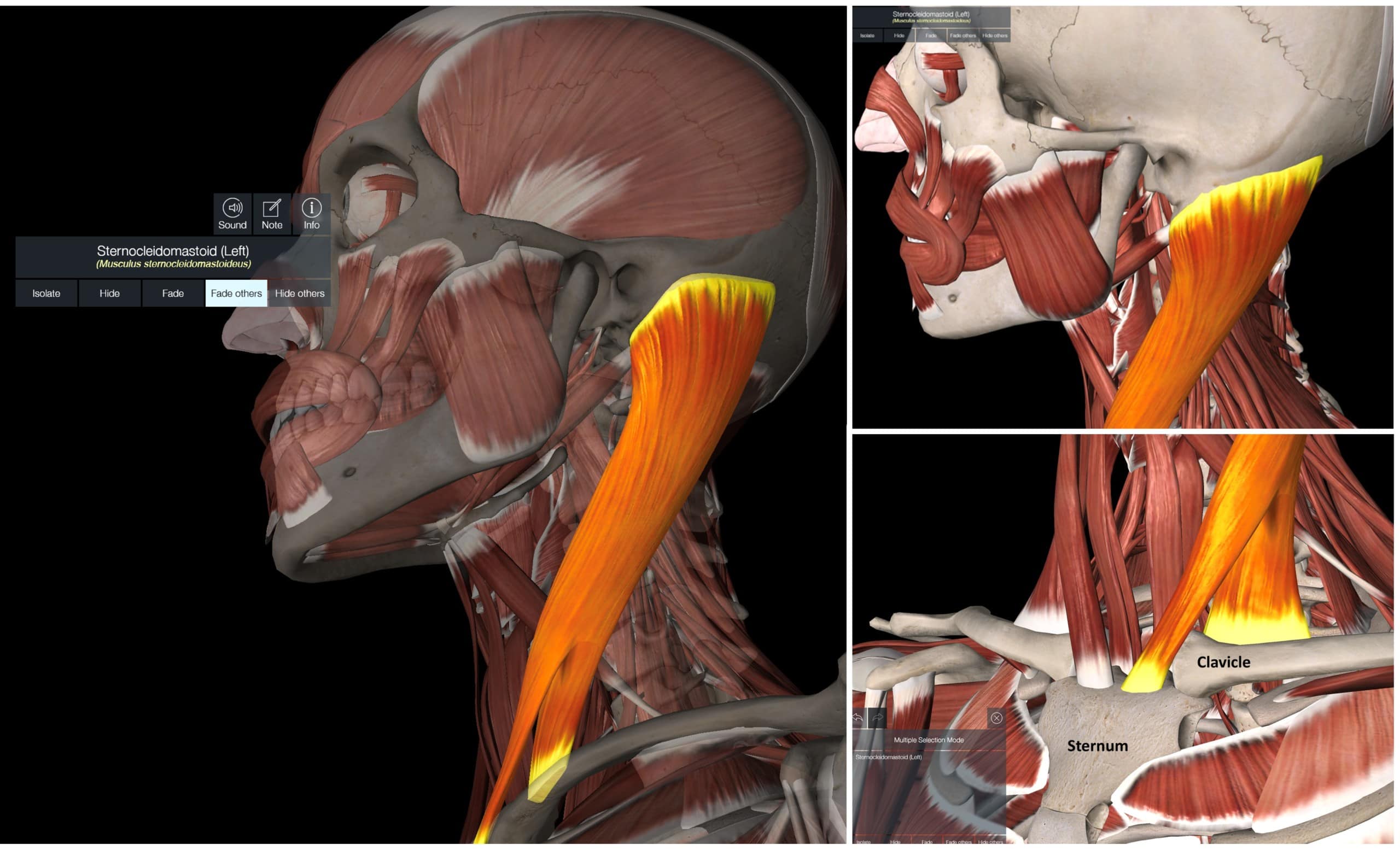
The sternocleidomastoid (SCM) is a paired muscle located at the base of the skull on each side of the neck, just behind the ears.
Each SCM runs down the front portion of the neck and divides to attach to the top of the breastbone (sternum) and the collarbone. This long, robust muscle helps with:
- turning your head from side to side
- bringing your ear toward your shoulder by rotating the neck
- assisting with breathing and respiration
It also contributes to chewing and swallowing and helps stabilize the head when tilting it backward.
Sternocleidomastoid pain causes
SCM pain can be caused by a variety of factors, many of which relate to muscle tension. Tightness elsewhere in the body can produce referred pain in the SCM. The muscle may also become shortened and tight from repetitive actions like:
- bending forward to type
- looking down at a smartphone
- turning the head away from center while at a computer
Some chronic and acute medical conditions can lead to SCM discomfort, including asthma and respiratory infections such as sinusitis, bronchitis, pneumonia, and influenza.
Other triggers of SCM pain include:
- trauma like whiplash or falls
- overhead tasks such as painting, carpentry, or hanging drapes
- poor posture, especially when the head juts forward or is held to one side
- shallow chest breathing
- sleeping on your stomach with your head turned to one side
- sudden jerky movements
- tight chest muscles
- constrictive clothing such as a tight shirt collar or necktie
Sternocleidomastoid pain symptoms
SCM discomfort can present in several ways. The neck, shoulders, or upper back might be tender to touch or pressure. You could also feel pain in the sinuses, forehead, or around the eyebrows.
A dull, aching sensation may be accompanied by tightness or pressure. Moving or tilting the head can provoke sharp pain. More significant injuries may cause swelling, redness, and bruising. Muscle spasms can also occur.
Possible symptoms include:
- difficulty supporting your head
- disorientation
- dizziness or imbalance
- muscle fatigue
- nausea
- pain in the jaw, neck, or back of the head
- pain in the ear, cheek, or molars
- ringing in the ears
- scalp tenderness
- stiffness
- tension headache or migraine
- unexpected tearing
- visual problems such as blurred vision or dimmed light perception
Sternocleidomastoid pain exercises and stretches
Set aside at least 15 minutes daily for gentle stretches or yoga. Below are a few simple routines to begin with:
Neck rotations
- Sit or stand with your torso facing forward.
- Exhale and slowly rotate your head to the right, keeping shoulders relaxed and down.
- Inhale and return to center.
- Exhale and turn to look over your left shoulder.
- Perform 10 rotations on each side.
Head tilts
- Sit or stand facing forward.
- Exhale as you slowly tilt your right ear toward your shoulder.
- Use your right hand to gently press your head to deepen the stretch.
- Hold for a few breaths, sensing the stretch from the side of your neck down to your collarbone.
- On an inhale, return to the starting position.
- Repeat on the other side.
- Do 10 tilts per side.
There are additional stretches you can perform while seated at a desk or relaxing in front of the TV.
Regular yoga can offer comprehensive stretching and relaxation benefits. Here are two poses of different difficulty levels that can gradually help the neck muscles:
Revolved Triangle
- Stand with your feet roughly 4 feet apart.
- Point your right toes forward and angle your left toes slightly outward.
- Square your hips and face forward in the same direction as your right toes.
- Raise your arms at your sides so they’re parallel to the floor.
- Slowly hinge at the hips to fold forward until your torso is parallel to the ground.
- Place your left hand on your leg, the floor, or a block—wherever you can comfortably reach.
- Reach your right arm straight up with your palm facing away from your body.
- Turn your gaze to look up toward your right thumb.
- Exhale and turn your neck to look down toward the floor.
- Inhale as you return your gaze upward.
- Keep the rest of your body steady and continue these neck rotations while holding the pose for up to 1 minute.
- Repeat the sequence on the other side.
Upward Plank
This posture allows the head to hang back slightly, releasing tension in the neck and shoulders and lengthening the SCM, chest, and shoulder muscles.
Ensure the back of your neck is relaxed to avoid compressing the spine. If letting your head drop back is uncomfortable, tuck your chin toward your chest and lengthen the back of the neck instead. Focus on engaging neck muscles without overstraining.
You can also support your head on a chair, wall, or stacked blocks if that’s more comfortable.
- Begin seated with legs extended in front of you.
- Place your palms on the floor beside your hips.
- Lift your hips and bring your feet beneath your knees.
- Intensify the pose by straightening your legs.
- Open your chest and allow your head to fall back.
- Hold for up to 30 seconds.
- Repeat this pose up to 3 times.
If you include these as part of a complete yoga routine, perform them after warming up.
There are other yoga positions specifically targeting neck pain you can explore.
Small adjustments to relieve sternocleidomastoid pain
Posture and ergonomics
Relief may be as straightforward as improving posture, particularly if your work or activities put you in positions that trigger pain. Adjust your chair or desk height and consider using a headset instead of cradling a phone between your ear and shoulder.
Clothing and sleep comfort
Ensure adequate room around the neck in shirts and ties. You might use a neck support while sleeping to maintain neutral alignment. A rolled towel placed under the neck can support the curve at the base of the skull.

Massage
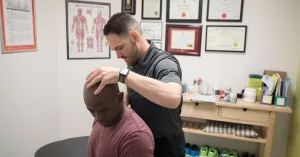
Getting regular massages—perhaps weekly—can help ease muscle tension and stress, though benefits may be temporary.
Self-massage of the head, neck, and shoulders for about 10 minutes a day can also be beneficial. Alternative approaches like chiropractic care or acupuncture may be useful for some people.
Heat or cold packs
Applying hot or cold packs is an easy home remedy for pain. These methods can help reduce swelling, relax tight muscles, and ease discomfort.
Place an ice pack or heating pad on the affected area for 20 minutes several times a day. If alternating between heat and cold, finish with cold.
For more daily mobility work, consider trying a short routine designed for neck health.
The takeaway
Multiple approaches can help manage SCM pain. Try a variety of treatments to discover which provides the most relief for you. Avoid activities that worsen pain. If symptoms persist or you’re unsure about what to try next, consult a healthcare provider about further options.



















Leave a Reply
You must be logged in to post a comment.