
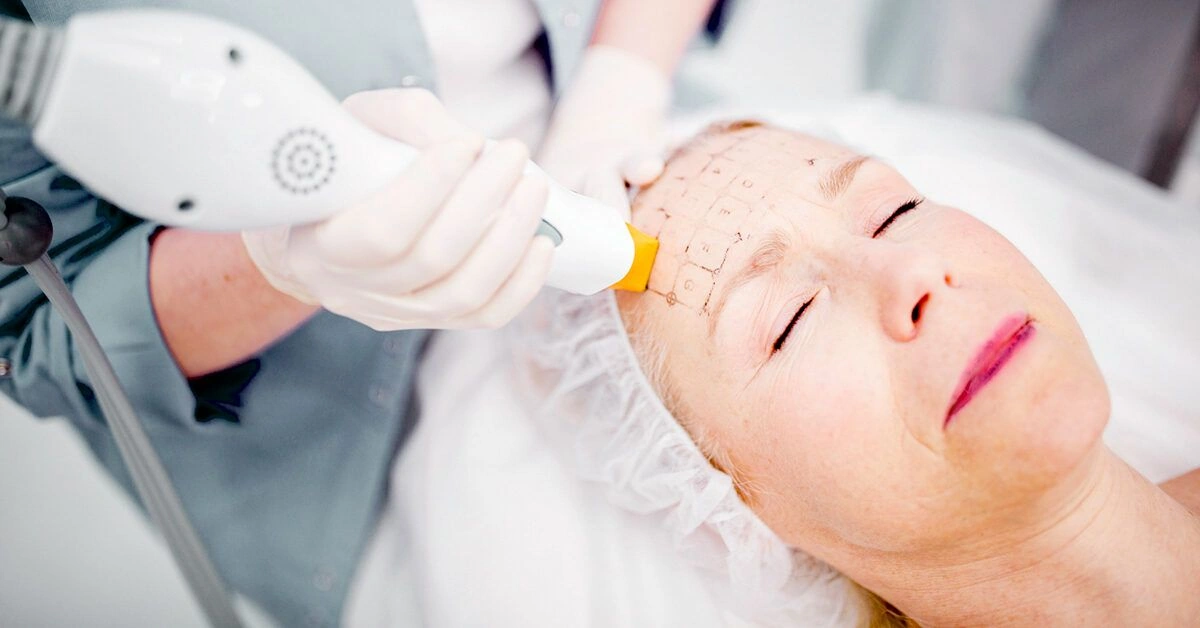
Treatment sessions for noninvasive approaches that address aging skin often take under 90 minutes and involve minimal to no downtime.
That’s why options like Thermage and Ultherapy are becoming more popular among people aiming to reduce wrinkles, firm loose skin, and look younger.
Both technologies tackle similar concerns, but there are important distinctions to consider when choosing the best approach for your goals.
Keep reading to learn about:
- how Thermage and Ultherapy function
- what to expect from the procedures and outcomes
- the primary differences between the two treatments
What is Thermage?
Thermage is a nonsurgical treatment that employs radiofrequency (RF) energy to tighten and smooth skin by stimulating new collagen formation. RF waves heat the skin’s surface layers and penetrate deeper into the tissue.
Thermage is commonly recommended for treatment areas such as:
- face
- eye region
- abdomen
- thighs
One benefit of Thermage is its capability to treat larger surfaces. A single session takes approximately 30 to 90 minutes depending on the area treated, and there is little or no recovery time required.
What is Ultherapy?
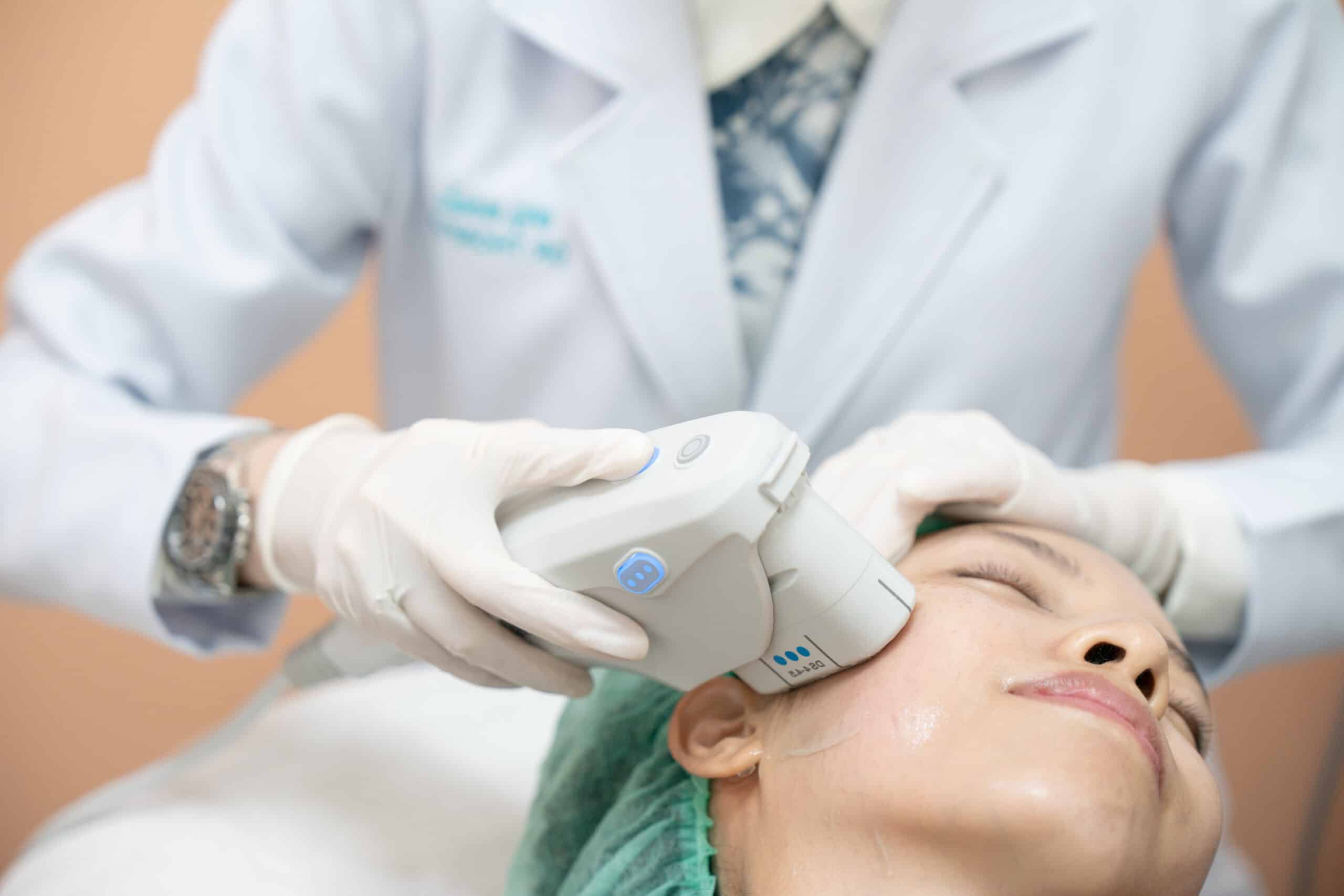
Ultherapy uses ultrasound imaging to bypass the skin’s outer layer and trigger collagen production in precise depths beneath the surface.
Ultrasound is particularly effective at reaching smaller, deeper layers of the dermis, which is why Ultherapy is often described as working from the inside out.
Ultherapy is the only FDA-cleared noninvasive procedure for lifting and tightening the:
- brow
- chin
- neck
- chest
The maker of Ultherapy established protocols that permit its application on the face, with specific approval for the lower face.
Treatments are performed in a medical setting and local anesthesia can be used to reduce discomfort. However, local numbing may not fully control pain during the session.
At present, PRO-NOX (nitrous oxide or “laughing gas”) is often employed for pain relief. It doesn’t replace the anesthetic but combined with other measures — for example, taking ibuprofen (Motrin) before the appointment — it helps manage discomfort.
Skin may look red or irritated immediately after treatment, though this usually subsides within a few hours. You can typically resume normal activities right away since no downtime is necessary.
How do Thermage and Ultherapy differ?
Thermage and Ultherapy share many similarities, but there are several key differences to understand when selecting the best treatment for you.
Type of energy
The primary distinction between Thermage and Ultherapy is the form of energy used to stimulate collagen. Thermage delivers radiofrequency energy, whereas Ultherapy uses focused ultrasound.
This matters because ultrasound generally penetrates deeper into the dermal layers compared with RF.
Treatment zones
Another significant difference is the range of areas that each treatment can address.
If your goal is to treat the neck and décolleté, Ultherapy is typically the preferred choice, as Thermage is not indicated for those zones. Ultherapy is particularly suited for mild to moderate skin laxity.
Thermage may be preferable when you want to treat areas beyond the face and neck.
Beyond the face, Thermage can also address sagging skin on the abdomen, thighs, arms, and buttocks—areas that are not approved for Ultherapy.

When results appear
Both treatments usually take a comparable amount of time to perform. In general, full results from Ultherapy emerge around 2 to 3 months after treatment.
Thermage outcomes can take up to 6 months to fully appear.
FDA clearance
Both Ultherapy and Thermage are FDA-cleared noninvasive procedures for addressing signs of aging.
Who is an appropriate candidate for each treatment?
Nonsurgical options are a great choice for people who either cannot undergo surgery or prefer a noninvasive route.
Per the American Board of Cosmetic Surgery, these treatments are best for those with mild to moderate skin laxity who don’t need the dramatic tightening that surgery provides.
Consult your physician
The most reliable way to determine which procedure is right for you is to consult with a board-certified dermatologist or plastic surgeon. They can evaluate whether Ultherapy or Thermage is a better match for your needs.
According to the American Academy of Dermatology, skin-tightening treatments aren’t suitable for everyone, including those who:
- have a skin infection
- are pregnant
- are taking certain medications
Candidates for Ultherapy
Typically, Ultherapy candidates have some loose skin beneath the neck or chin or wrinkles on the chest, and especially those wanting to treat the neck and décolleté region.
Candidates for Thermage
Thermage is often recommended for middle-aged patients who don’t require a surgical facelift or who prefer a noninvasive strategy. Ideal candidates have mild to moderate sagging in areas such as:
- neck
- jowls
- cheeks
- brows
- eyelids
Thermage is also a solid option if your goal is to address larger zones like the thighs and abdomen.
A 2019 study indicates that RF-based systems are suitable for all skin types.
For patients interested in complementary body-contouring technologies, consider reading about ultrasonic cavitation as an additional noninvasive option for reducing localized fat.
How should I prepare for these procedures?
Preparation is quite similar for both treatments. Since they are nonsurgical, there’s little required beforehand.
For either procedure, arrive with a clean face free of cosmetics or skin-care products. You may also want to avoid chemical peels and intensive facial treatments in the days leading up to your appointment.
What occurs during each session?
Both Thermage and Ultherapy are performed in-office and typically require little to no recovery time.
However, the methods differ in how they’re conducted.
Thermage
- Your clinician will use a handheld applicator to deliver radiofrequency energy into the dermal tissue of the targeted area. You’ll probably feel brief bursts of heat each time the device pulses.
- Overall treatment duration varies by site. Generally, Thermage lasts anywhere from 30 minutes up to 2 hours.
A 2020 review notes that a cooling spray is used to protect the skin surface and help minimize discomfort during the procedure.
Ultherapy
- The provider will thoroughly clean the treatment area and apply ultrasound gel.
- The Ultherapy device is placed on the target site while an ultrasound screen is used to set the correct depth and energy delivery for the brow, chin, neck, or chest.
- The session will continue for roughly 30 to 90 minutes depending on the area — about 30 minutes for the chest/décolleté and 60 to 90 minutes for the face and neck.
It’s common to notice intermittent heat or tingling sensations as the device delivers focused ultrasound energy into the skin.
What results can I expect from Thermage and Ultherapy?
Thermage outcomes vary based on the treatment location.
Generally, most people observe gradual improvements over 2 to 6 months after a single Thermage treatment. Depending on your skin and aging process, effects may last 1 to 2 years.
Ultherapy results usually develop over 2 to 3 months as new collagen lifts the neck and chin. Improvements may continue over 3 to 6 months and can persist for about a year, though some patients need repeat sessions.
A 2014 study found that 58.1 percent of 93 patients showed improved skin laxity three months after Ultherapy.
Overall improvement was observed in 63.6 percent of participants after 90 days.
While many patients achieve satisfactory results from a single session, others may require additional treatments. To maintain outcomes, an annual Ultherapy session may be recommended.
Should I consult a doctor first?
Generally, Thermage and Ultherapy are considered safe.
However, if you have existing medical or dermatologic conditions, consult a physician or a board-certified dermatologist before undergoing either procedure.
You should not undergo Thermage or Ultherapy if:
- you are pregnant or breastfeeding
- you have an implanted pacemaker
- you have an implanted cardioverter-defibrillator (ICD)
Because Thermage uses RF energy, some people may worry about exposure to low-level radiation. If this concerns you, discuss potential risks with your physician to understand how they apply to your situation.
How do I find a qualified provider?
When searching for a practitioner for Thermage or Ultherapy, use the Find a Cosmetic Surgeon tool on the American Board of Cosmetic Surgery website.
You can also ask your primary care doctor or a board-certified dermatologist for referrals. Many certified dermatologists perform these procedures themselves.
What are the possible side effects?
As with any medical intervention, Thermage and Ultherapy have potential side effects and complications.
Common, short-lived side effects from Thermage usually diminish within 24 hours and include:
- temporary redness
- mild swelling
- tingling
Small skin indentations can occur but are usually transient. Contact your provider if they persist beyond 24 hours.
Typical temporary effects from Ultherapy include:
- sensation of heat
- skin tingling
- redness
- swelling
- tenderness
Bruising is rare but can happen; bruises usually resolve within several days.
Summary
Thermage and Ultherapy are both widely used nonsurgical facelift options that are generally safe, require little recovery time, and have minimal adverse effects when performed correctly for aging skin.
If you have medical or skin-related issues, obtain clearance from a physician before undergoing either treatment.
It’s also wise to discuss your full range of options with a board-certified dermatologist or plastic surgeon to determine which procedure aligns best with your aesthetic goals.















Leave a Reply
You must be logged in to post a comment.