What Month Is Flu Season the Worst? Here’s When to Brace Yourself

- Let’s Set the Scene
- Why Does Winter Bring the Flu?
- How Bad Is Bad? (Spoiler: It’s the Worst in Winter)
- But Wait… How Early Does It Start?
- Why February Wins the “Worst Month” Award
- So, What Makes Flu Season So Unpredictable?
- Real Life: Who Gets Hit the Hardest?
- How Can You Actually Prep for the Worst Month?
- Everyday Moves to Stand a Fighting Chance
- One Family’s February Win
- Wrapping Up: Take Back Your February

Let’s Set the Scene
Picture this: it’s late January. School calls—your youngest is down with a fever. Two days later, everyone’s coughing, groaning, tissues everywhere. The soup supply is threatened. Work deadlines, school projects, holiday fun? Out the window. Ever wondered how some families always seem to dodge this madness? (Hint: It’s not luck—it’s knowing what month is flu season, the worst, and getting ahead of it.)
I’ve been there. One winter, it hit us so fast we resorted to eating “creative” freezer meals and napping in shifts. If you’re hoping to avoid that mess this year, hang tight—we’re about to dig into why the flu is so sneaky, and, most importantly, when it strikes hardest.
Why Does Winter Bring the Flu?
Have you ever noticed how actually nobody worries about flu in July? I used to think winter just “felt germy,” but it’s not your imagination. Science can back you up here. We’re talking perfect storm: chilly air, dry heat, being cooped up with everyone sneezing in close quarters… It’s basically a party invitation for viruses. The flu loves the cold, and we tend to love (or at least, tolerate) cramming more together inside, which means germs can bounce around like beach balls at a summer concert.
Want more nerdy reasonings? Cold air dries out your nose and throat, making it easier for those pesky flu viruses to grab hold. And lower sunlight means less vitamin D and less immune “muscle.” That’s why you’ll see most articles—like Why is flu season in the winter—explaining it’s not just the virus, but a whole winter recipe that makes us all more vulnerable.
How Bad Is Bad? (Spoiler: It’s the Worst in Winter)
Let’s cut to the chase. In the U.S., flu season starts poking its head up around October, sometimes as early as September, but it doesn’t blow the doors off until much later. If you’re curious when does flu season start, that’s your baseline—but knowing the “when” isn’t enough; it’s about the worst month.
Table: The Flu’s Favorite Months
| Month | Number of Peak Flu Seasons (Past 40 Years) |
|---|---|
| October | 1 |
| November | 1 |
| December | 9 |
| January | 6 |
| February | 18 |
| March | 6 |
| April | 1 |
| May | 0 |
So…what month is flu season, the worst? Hands down, it’s February—the clear winner (well, loser, depending on your point of view). According to the CDC, flu activity peaked in February in almost half the years they’ve tracked it (based on CDC’s 40-year trend analysis ).
But Wait… How Early Does It Start?
I get it: planning matters. You want to avoid being that family getting caught off guard when the neighbor kids are all suddenly out sick. Here’s the drill: flu season usually starts in October. Sometimes, people start seeing cases sooner, especially in the south or in crowded places. Yet mostly, the beast wakes up in full force as the holidays fade away, and—like clockwork—January and especially February are peak.
If you’ve ever wondered, “Is it too early for my flu shot?” the answer is, don’t risk it. Experts recommend getting vaccinated by late October—before the germs start their annual “Let’s make everyone cranky” parade. Internal link moment: If you want to know the nitty-gritty (when does flu season start by week, region, or city), check when does flu season start. The earlier you prep, the better.
Why February Wins the “Worst Month” Award
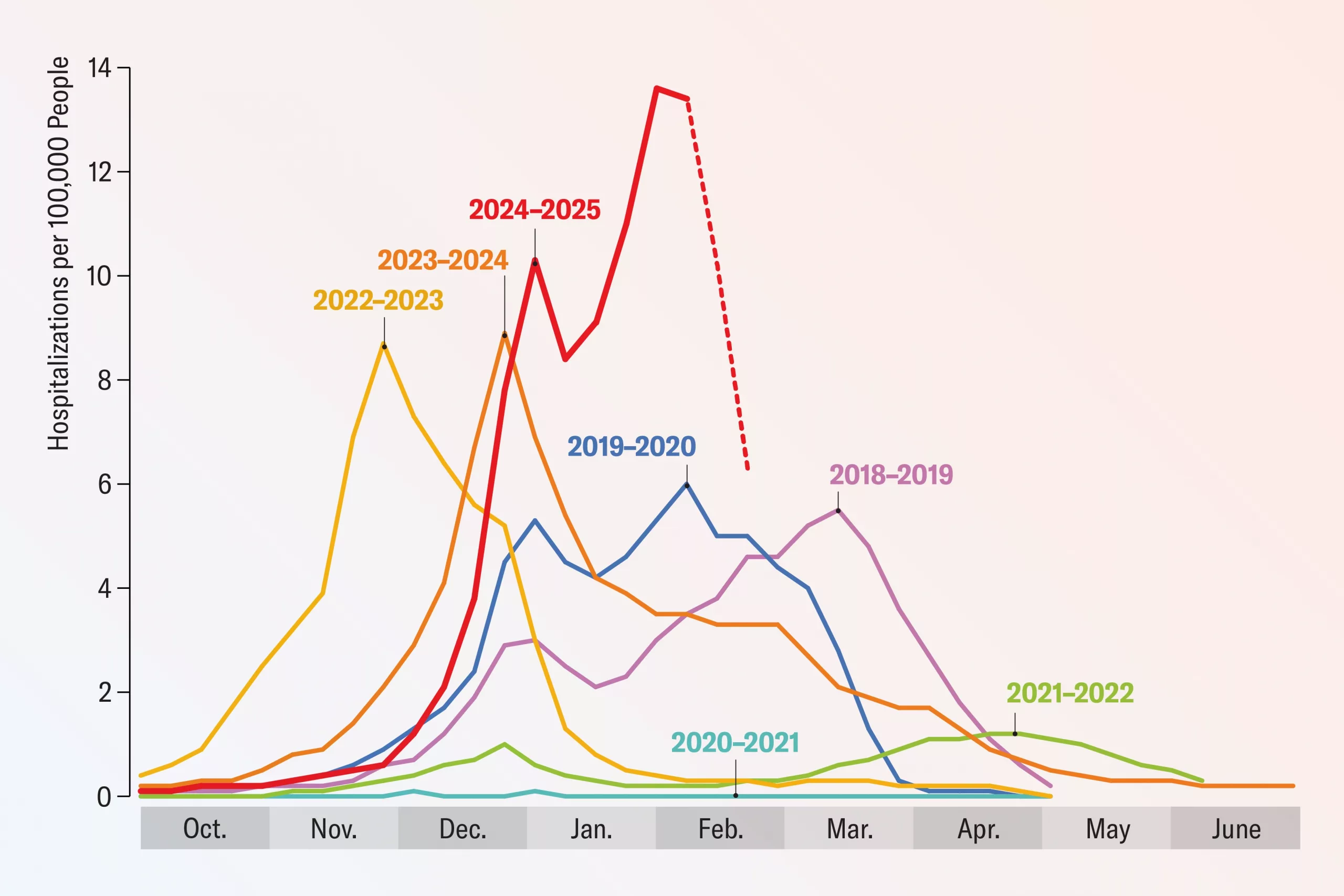
Okay, maybe “wins” is the wrong word. Think of February as a competition you don’t want to place in. Based on forty years of CDC flu tracking, February isn’t just “bad”—it’s the apex: most sick kids home from school, highest hospitalizations, whole communities limping to spring. In 2025, it felt even sharper: hospital admission rates for flu hit a 15-year high—think almost 39,000 hospitalizations (CDC’s hospital data ), and the scary part? That week in early February was the absolute worst (analysis by U.S. epidemiology centers).
Quick story to illustrate: In my friend’s house, February brought round after round of flu, like clockwork. First the kids, then their grandma, and finally, just as they thought they were free—mom and dad. Their dog probably would have caught it too if that were possible. It wasn’t pretty, but man, it was classic February flu season.
Quick Recap: How Does the “Worst Month” Play Out?
| Month | How Bad It Gets | Why |
|---|---|---|
| December | High | Holidays, travel, first big cold snaps |
| January | Worse | School back in session, weather keeps us indoors |
| February | Peak (Worst) | Flu has spread everywhere; winter at its bleakest |
After February, things usually start to settle—most years, anyway. But in 2025? March was still dicey in some places.
So, What Makes Flu Season So Unpredictable?
Honestly, the flu is a drama queen. Some years, it’s “meh.” Other years, like 2025? A total showstopper (not in a good way). Scientists think it’s all about how much immunity we have, how many people travel, and how friendly the weather is to airborne germs. Viruses also mutate, swapping out last year’s “look” for a new strain nobody has resistance to. Each season, different groups get hit harder—sometimes it’s little kids, sometimes older adults, sometimes pregnant people.
For the record, the CDC recently called the 2024-2025 season the “highest severity flu season in more than a decade.” Yikes. The main take-home? Don’t assume last year’s mild winter means you’re in the clear this year (epidemiologists keeping tabs).
Real Life: Who Gets Hit the Hardest?
So, you’re probably thinking, “Is it just little kids and grandparents?” Not even close—flu’s an equal-opportunity grinch, but yes, certain folks get more of the trouble. Those 65-plus, babies under two, pregnant folks, and anyone with heart, lung, or immune issues… well, the stakes are higher. In 2025, the highest hospital rates were in the 75-and-older crowd by far.
My own next-door neighbor, a marathon runner in her 60s, ended up pretty miserable for weeks—she said it was like being “steamrolled by a dozen toddlers.” It’s no joke. But here’s the climber: most of those hospitalized hadn’t gotten their flu shot this year.
Table: High-Risk Groups and Why It Matters
| Group | Why At Risk |
|---|---|
| Older adults (65+) | Weaker immune systems, often chronic health issues |
| Babies/toddlers <2 | Immature immune response |
| Pregnant people | Extra stress on body and immune shifts |
| Chronic conditions (heart, lung, diabetes, etc.) | Body already on defense mode; less “wiggle room” |
How Can You Actually Prep for the Worst Month?
Let’s make this practical. If you know February is the heavyweight champion of germiness, you can actually plan around it. Get your flu shot by late October (earlier if you can)… and honestly, make it a family outing. We’ve started treating it like a weird fall ritual—get shot, then do something fun (last year: ice cream shop stop, purely for the “medicine” of course).
You want to get vaccinated before things start streaming up. For a deeper dive, check out Why is flu season in the winter which breaks down the flu’s love affair with cold months.
Everyday Moves to Stand a Fighting Chance
- Wash hands often and well—count to 20 or sing “Happy Birthday” (twice, if needed—no judgment!)
- Get enough sleep. I know, easier said than done, but even a little bump-up helps.
- Wiping down doorknobs, remotes, and those mysterious sticky spots in kitchens and bathrooms… yes, it’s worth it.
- If you’re in crowded places or someone at home is sick, consider masking up—no shame, just smart.
- Hydrate, hydrate, hydrate! Your mucous membranes thank you for every glass.
Oh, and if you’re wondering, “Do I really need the shot each year?”—yep. The flu virus is a clever shapeshifter. Last year’s vaccine is as outdated as last year’s phone.
Quick Toolkit: Beat-the-Flu Essentials
| Tool | Why It Helps |
|---|---|
| Flu shot by October/November | Gives your immune system a head start |
| Antivirals on hand (if high risk) | Can shorten illness if taken early |
| Extra tissues, thermometers, and soup | Makes home recovery less miserable (trust me) |
| Backup childcare plans | If kids get sick, you have options |
One Family’s February Win
I have to share—last year, a friend of mine swears the only reason their household escaped February healthy was a combo of relentless handwashing and, miraculously, early vaccines. They dodged every bug while neighbors kept the local pharmacy in business. She even joked they should bake their doctor a cake for “services rendered.”
The point: tiny steps matter. And sometimes, they’re the difference between a minor sniffle and a week you’d rather forget.
Wrapping Up: Take Back Your February
So, let’s spell it out: what month is flu season, the worst? February, with January and December close behind. The 2025 season brought insane numbers—record hospitalizations, hard-hit families, and the kind of “ugh, not again!” that only raging flu waves can bring. But you’re not powerless. Getting your flu shot before Halloween, making backup soup, and dusting off the hand sanitizer actually works. It’s not about panicking… it’s about prepping. (Bonus: your future self will thank you when you coast through the worst without needing another week off work.)
Final nudge—talk with your doc, especially if you land in any high-risk group. Stock up before the shelves clear. Bookmark the CDC’s latest reports and keep an eye on local updates. And hey, if you ever want to nerd out about how flu seasons shift (or love a good winter weather complaint), check out when does flu season start and Why is flu season in the winter—those posts break it down even more.
So here’s your game plan: beat the rush, outsmart the germs, and make this February the chillest one yet (in all the right ways). You’ve got this. Stay healthy, stay happy, and let’s make it to spring—tissue-free.
Frequently Asked Questions
Based on CDC data from the past 40 years, February is the worst month for flu season, peaking in nearly half of those years with the highest rates of illnesses and hospitalizations.
Flu season usually starts in October in the US, though it can begin as early as September in some southern regions, building up through the winter months.
The flu thrives in winter due to cold, dry air that weakens nasal defenses, more indoor crowding, and reduced vitamin D from less sunlight, creating ideal conditions for virus spread.
High-risk groups include older adults over 65, children under 2, pregnant people, and those with chronic conditions like heart or lung disease, who face higher chances of severe complications.
Get your flu shot by late October, practice frequent handwashing, stay hydrated, avoid crowds when possible, and keep essentials like tissues and thermometers on hand for recovery.
Read Next




Related Posts

Can You Have Surgery with a Cold?
Aug 26, 2026 • 15 min read
Is It Serosanguinous or Another Type of Wound Drainage?
Sep 4, 2026 • 35 min read
What's the Difference Between Kosher and Halal Diets?
Aug 22, 2026 • 16 min read
What Is Cigna Express Scripts for Medicare?
Sep 5, 2026 • 23 min read
Entomophobia: Fear of Insects
Sep 7, 2026 • 10 min read