

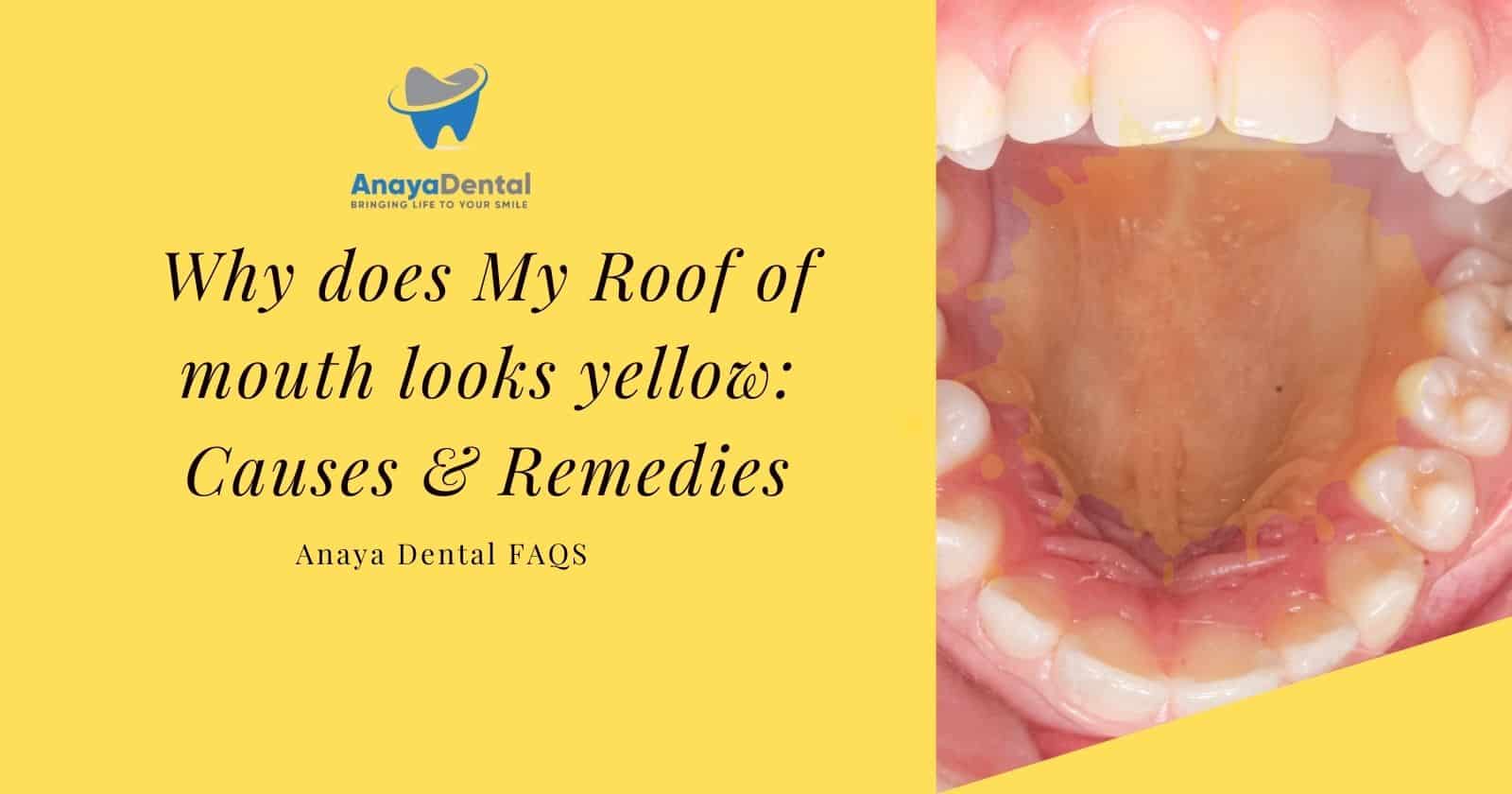
Several factors can make the roof of your mouth appear pale or yellowish, such as inadequate oral care and breathing through the mouth. Seek medical evaluation if the discoloration is accompanied by pain, bleeding, or difficulty swallowing.
There are multiple potential explanations for a yellow roof of the mouth, including poor dental hygiene, untreated infections, and other medical issues.
Most reasons for a yellow roof of the mouth are benign, but some causes warrant prompt medical attention — for example, jaundice, certain infections, and oral cancer.
Common causes of a yellow roof of the mouth
Much like a yellow tongue, the color of the roof of your mouth can be influenced by oral hygiene, bacterial growth, and infections.
Poor oral hygiene
Neglecting oral care allows bacteria to accumulate inside the mouth. As these bacteria flourish, they can change the coloration of oral tissues, leading to a yellow appearance on the roof of the mouth and the tongue.
Other signs of poor oral hygiene include bad breath, swollen or bleeding gums, and discomfort when chewing.
Dry mouth or mouth breathing
Xerostomia, or dry mouth, occurs when salivary glands produce insufficient saliva. This can result from medical conditions or from habitual mouth breathing.
One function of saliva is to guard the mouth against bacterial overgrowth. With reduced saliva, bacteria may proliferate and impart a yellow tint to the roof of the mouth.
Other symptoms of dry mouth include halitosis, sticky saliva, and a dry or rough feeling in the throat and on the tongue.
Oral thrush
Oral thrush represents an overgrowth of yeast in the mouth and can produce yellowish patches or bumps on the roof of the mouth. Additional symptoms include a burning sensation, cracked corners of the lips, and altered taste.
Though oral thrush is usually not life-threatening, it can lead to complications if it spreads to other body regions.
Canker sore
Canker sores are small, painful ulcers that may form inside the mouth, including on the palate. They can appear red or yellow, and when present on the roof of the mouth, they can give that area a yellowish look.
Canker sores are typically mild and resolve within a few weeks. If a sore does not heal within that timeframe, consult a dentist or physician.
Oral herpes
Oral herpes is caused by the HSV-1 virus and can produce sores inside or around the mouth. Herpetic lesions on the palate may appear yellowish if they contain pus.
According to the American Academy of Dermatology, a common warning sign before an outbreak is tingling or itching at the site where lesions will appear.
Jaundice
Jaundice is a serious condition driven by accumulation of the yellow pigment bilirubin, most often due to liver or gallbladder dysfunction. When bilirubin levels rise in the bloodstream, the roof of the mouth may take on a yellow hue.
The most frequent symptoms of jaundice include yellowing of the skin and the whites of the eyes, along with flu-like signs. If you notice these symptoms, seek medical help immediately.
Medications containing bismuth
Bismuth subsalicylate, an ingredient in upset-stomach remedies like Pepto-Bismol, can change the color of oral tissues. Research indicates bismuth-containing medications can discolor the tongue from yellow to black and may also cause the palate to appear yellow.
Mouthwashes with oxidizing agents
Certain mouthwashes contain oxidizing components such as hydrogen peroxide. Regular use of these products can lead to yellowing of the tongue and the roof of the mouth.
Tobacco smoke
Smoking contributes to poor oral health and increases the risk of conditions that alter oral coloration. It’s a factor in black hairy tongue, which can make the roof of the mouth look yellow. Smoking also increases the risk of oral thrush, whose patches can create a yellow appearance.
Yellow roof of the mouth with additional signs
If the yellowing of the palate is accompanied by other symptoms, it may indicate a specific underlying condition.
Roof of mouth is yellow and white
- Oral thrush can produce mixed yellow and white patches on the roof of the mouth.
- Leukoplakia can cause white patches in the mouth and is more concerning because it has the potential to progress to oral cancer.

Roof of mouth is yellow with red spots
- Herpes lesions may present as red blisters on the palate that can contain yellowish pus depending on the stage.
- Hand, foot, and mouth disease is a viral infection that can cause red spots on the roof of the mouth.
Roof of mouth is yellow with a sore throat
- Oral thrush can sometimes extend into the esophagus, causing esophageal thrush and throat pain.
- Pharyngitis, whether viral or bacterial, causes a sore or scratchy throat. Strep throat, caused by bacteria, can make eating and drinking painful, which may promote bacterial buildup and lead to yellowing of the palate.
Treating the root causes
Treatment varies based on what’s causing the discoloration. Some issues can be managed at home; others require professional medical care.
Seek immediate medical care
Jaundice is a serious finding that demands prompt medical evaluation. If you have signs of jaundice, go to an emergency department or contact your doctor right away.
Leukoplakia is another condition that requires assessment by a healthcare professional to determine diagnosis and treatment.
Improve oral hygiene
Poor oral care, smoking, and certain mouthwashes can all contribute to a yellow roof of the mouth. Enhancing your oral hygiene can reduce bacterial buildup. Recommended steps include:
- brushing, flossing, and seeing a dentist regularly
- avoiding tobacco products
- steering clear of mouthwashes that contain strong oxidizers
Medications for infections
Bacterial infections such as strep throat respond to antibiotics, while fungal infections like oral thrush need antifungal treatments. Viral infections, including herpes, cannot be cured by medication, but antiviral agents and symptomatic treatments can help manage symptoms.
If you are using Pepto-Bismol or other bismuth-containing products frequently, consider alternative approaches to support digestive health.
Other management approaches
Most canker sores resolve on their own, though topical analgesics and home rinses can alleviate pain.
Because dry mouth is often temporary, it can frequently be managed at home by boosting saliva production: drink plenty of water, chew sugar-free gum or suck on sugar-free lozenges, and avoid smoking, alcohol, excessive coffee, and too much salt.
When to consult a doctor
Contact a healthcare provider immediately if a yellow roof of the mouth occurs together with signs of jaundice. Also see a doctor if the roof of your mouth is painful, bleeding, or if swallowing becomes difficult.
Takeaway
Several conditions can lead to a yellow roof of the mouth. In many instances, improving oral hygiene will reduce the discoloration.
In some cases, the yellowing signals an infection or a more serious medical condition that needs treatment. If you suspect a significant problem, schedule an appointment with a healthcare professional.






















Leave a Reply
You must be logged in to post a comment.