
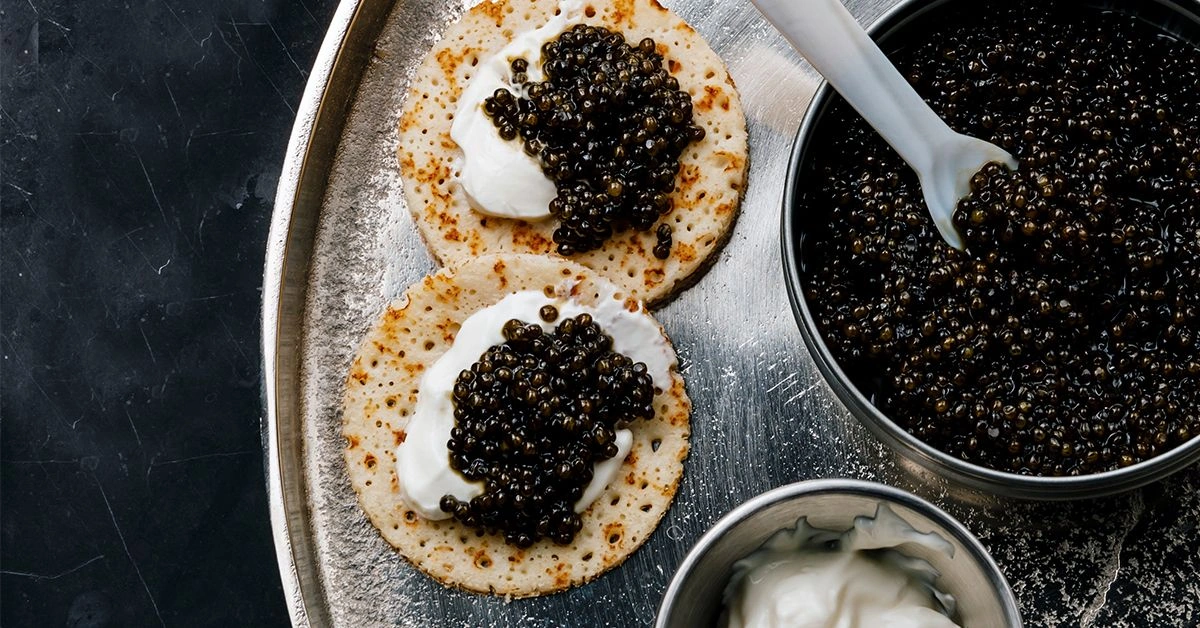
Renowned as an indulgent seafood luxury, caviar comprises the eggs — or roe — of various sturgeon species. Common types include osetra, beluga, kaluga, sevruga, sterlet, and hackleback.
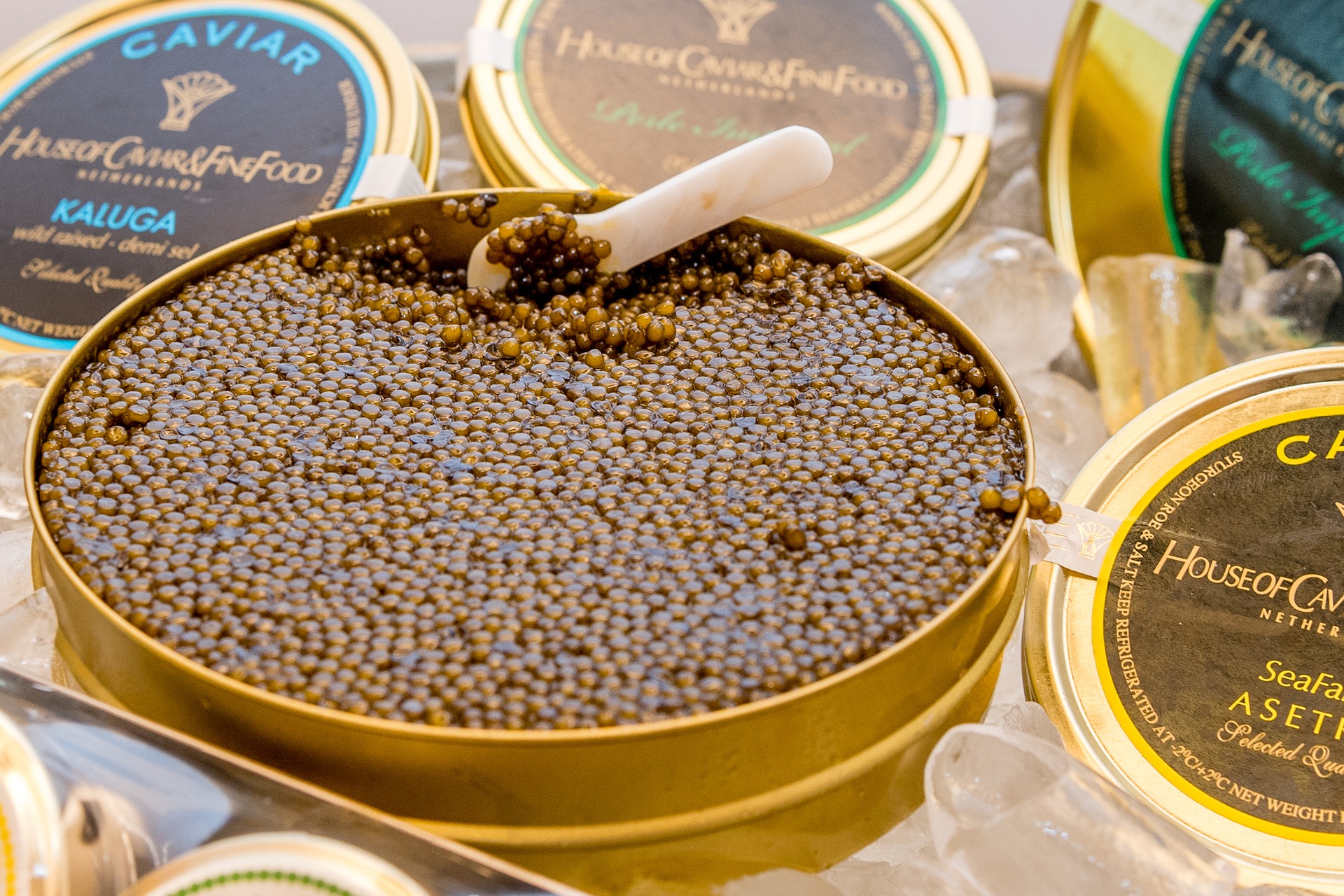
The hue and size of caviar differ by species. Generally, it resembles tiny pearls with colors ranging from light green to deep black.
Although salmon roe is frequently called red caviar, it isn’t classified as true caviar.
Caviar has a slightly slick texture, a salty, oceanic flavor, and a tendency to pop when eaten. It’s usually presented in modest portions by itself, as a garnish, or atop plain crackers, cucumber rounds, or toast that won’t mask its delicate marine taste.
Beyond culinary pleasure, consuming this delicacy may offer several health advantages.
Here are six health benefits of caviar supported by scientific evidence.
1. A nutrient-dense food
Even in small quantities, caviar delivers an impressive array of nutrients.
A 1-ounce (28-gram) portion of caviar supplies (1):
- Calories: 75
- Protein: 7 grams
- Fat: 5 grams
- Carbs: 1 gram
- Vitamin B12: 236% of the Daily Value (DV)
- Selenium: 34% of the DV
- Iron: 19% of the DV
- Sodium: 18% of the DV
As shown, a single serving supplies more than twice the daily requirement for vitamin B12. Vitamin B12 is vital for nervous system function as well as DNA and red blood cell production (2).
The same serving also delivers modest amounts of calcium and vitamins A, D, and E (1).
Importantly, caviar is an excellent source of omega-3 fatty acids, specifically eicosapentaenoic acid (EPA) and docosahexaenoic acid (DHA), which likely account for many of its health effects.
The 2015 Dietary Guidelines for Americans recommend about 250 mg each of EPA and DHA per day. Conveniently, a 1-ounce (28-gram) portion of caviar contains roughly 800 mg of EPA and 1,080 mg of DHA, exceeding these recommendations (1, 3).
Summary: Caviar is a rich source of vitamin B12 and the omega-3 fats DHA and EPA, and it also provides selenium, iron, and sodium, among other micronutrients.
2. May lessen visible skin aging
Thanks to its omega-3 content, caviar has been explored for possible skin-related benefits.
A recent laboratory study found that DHA from caviar extract might stimulate adipocytes (fat cells) to produce adiponectin (4).
Adiponectin is a molecule that enhances wound healing and anti-inflammatory processes in skin, encourages collagen production, and helps prevent collagen fiber breakdown (4).
Because collagen is crucial for skin structure, researchers propose that caviar extract could reduce markers of skin aging (4).
Additionally, a 12-week trial in 35 women with mild to moderate aging signs found that a serum containing caviar extract plus other components improved skin smoothness, firmness, dryness, and reduced fine lines and crow’s feet (5).
However, it remains unclear whether caviar extract used alone would yield similar results (5).
Overall, since current research is limited to lab studies or human trials using caviar extract in combination with other ingredients, more research is required to clarify the skin benefits of consuming fresh caviar.
Summary: The DHA in caviar might help reduce wrinkles and other age-related skin changes, though additional studies are necessary.
3. May support brain function and mental well-being
Maintaining cognitive health is important at every age. Evidence indicates EPA can help mood disorders and DHA supports brain structure, so the omega-3s in caviar may promote mental and brain health (6).
Omega-3 fatty acids are integral parts of neuronal cell membranes and help counteract inflammation. Lowering brain inflammation may slow cognitive decline associated with conditions like Alzheimer’s disease (6, 7).
Several studies have found that people with depression often have reduced omega-3 levels, implying that low intake could be a risk factor for depression (8, 9, 10).
Some research suggests that supplementing with 1–2 grams of omega-3s daily may have antidepressant effects without significant side effects or interactions with typical antidepressants (10, 11).
While some trials point to EPA being most helpful for depression, others report that a combination of EPA and DHA — the blend found in caviar — can be more beneficial (11, 12).
Note that not all studies confirm antidepressant effects from omega-3s, and there are no studies directly connecting caviar consumption with brain or mental health outcomes. Further research is needed.
Summary: The omega-3s EPA and DHA in caviar may lower the risk of depression and cognitive decline, though direct studies on caviar itself are lacking.
4. May benefit cardiovascular health
Omega-3 fatty acids are increasingly used to prevent and manage heart disease risk factors — heart disease being a leading cause of death in the United States (13, 14).
Research suggests omega-3s improve heart disease risk markers by (15, 16, 17):
- Lowering blood pressure. Omega-3s may reduce heart rate and relax blood vessels to lower blood pressure.
- Improving blood lipids. Omega-3s can reduce triglycerides and raise HDL (good) cholesterol.
- Preventing platelet clumping. Omega-3s help stop platelets from aggregating, which lowers clot risk linked to stroke.
As a marine source rich in omega-3s, caviar might offer these cardiovascular advantages without adversely interacting with standard medications (15, 16, 17, 18).
Still, clinical trials directly linking caviar consumption to improved heart outcomes in people are necessary.
Summary: Caviar supplies omega-3 fats that reduce cardiovascular risk factors, but human studies focused specifically on caviar are needed.
5. May enhance male fertility
Evidence indicates that omega-3 fatty acids are important for male reproductive health (19).
Sperm cells contain high levels of DHA, and low DHA concentrations have been linked with reduced sperm quality. DHA deficiency is common in men experiencing infertility (19, 20).
Conversely, fertile men often exhibit higher blood and sperm omega-3 levels (21).
Boosting intake of omega-3-rich foods may improve sperm structure, morphology, and membrane fluidity, potentially making sperm more capable of binding to an egg and improving fertility (19, 21, 22).
For instance, a rodent study examining a caviar-derived product reported significant increases in sperm count, motility, and survival (22).
Nevertheless, more human research is required to fully determine how omega-3s influence male fertility.
Summary: Given its omega-3 richness, caviar might improve male fertility, although direct human evidence is limited.
6. May bolster immune function
Both the omega-3 fats and selenium in caviar can contribute to immune health.
Omega-3s help reduce inflammation and restore barrier function in skin, gut, and lungs, which hinders entry of harmful microbes and supports overall health (23).
They also lower pro-inflammatory markers and may assist in repairing damaged white blood cells, which play a central role in defending against infections (23).
Meanwhile, selenium is essential for initiating and regulating immune responses (24).
Studies show selenium can boost antibody formation and enhance macrophage activity — macrophages are white blood cells that identify and remove harmful substances from the body (25).
Summary: Selenium and omega-3 fatty acids are both important for immune health, and caviar provides a good source of these nutrients.
The bottom line
Caviar consists of the roe harvested from certain sturgeon species.
Beyond its status as a gourmet treat, it’s nutritionally rich, offering substantial amounts of omega-3 fatty acids, vitamin B12, and selenium, along with other vitamins and minerals — even in small portions.
If you need an excuse to enjoy caviar occasionally, note that it may support skin, brain, heart, and immune health, and the omega-3s it contains could enhance male fertility.
However, remember that much of the evidence comes from lab or animal studies, often using extracts, and human trials involving fresh caviar are limited. More research is needed to clarify these effects.
That said, it’s still worth indulging now and then.
Just one thing
Try this today: For special gatherings, I like serving an easy caviar appetizer. Top blinis — homemade or store-bought small pancakes — with a spoon of crème fraîche, a slice of smoked salmon, a small scoop of caviar, and a sprig of dill. Delicious!





















Leave a Reply
You must be logged in to post a comment.