
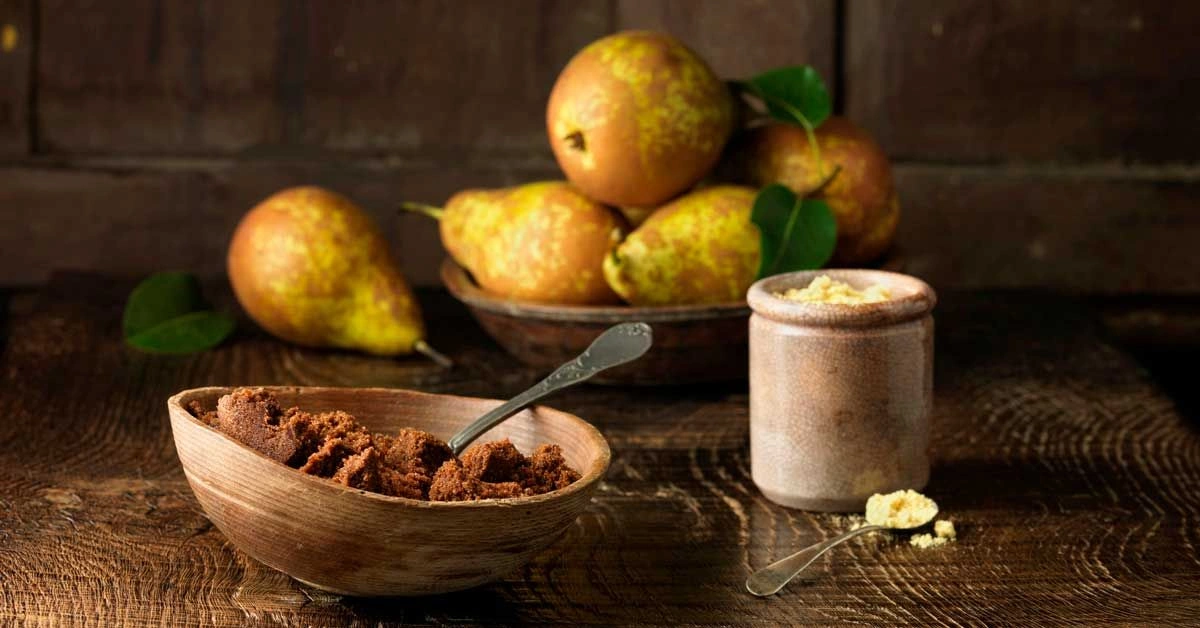
Muscovado sugar is an unrefined cane sugar that retains its natural molasses. It boasts a deep brown hue, a moist, sandy texture, and a toffee-like flavor profile.
It’s frequently used to deepen the flavor of sweets such as cookies, cakes, and confections, though it can also enhance savory recipes.
Often viewed as a craft sugar, muscovado is produced with more hands-on methods than highly processed white or brown sugars.
This piece examines muscovado sugar — how it differs from other sweeteners, ways to use it, and which sugars serve as the best replacements.
What is muscovado sugar?
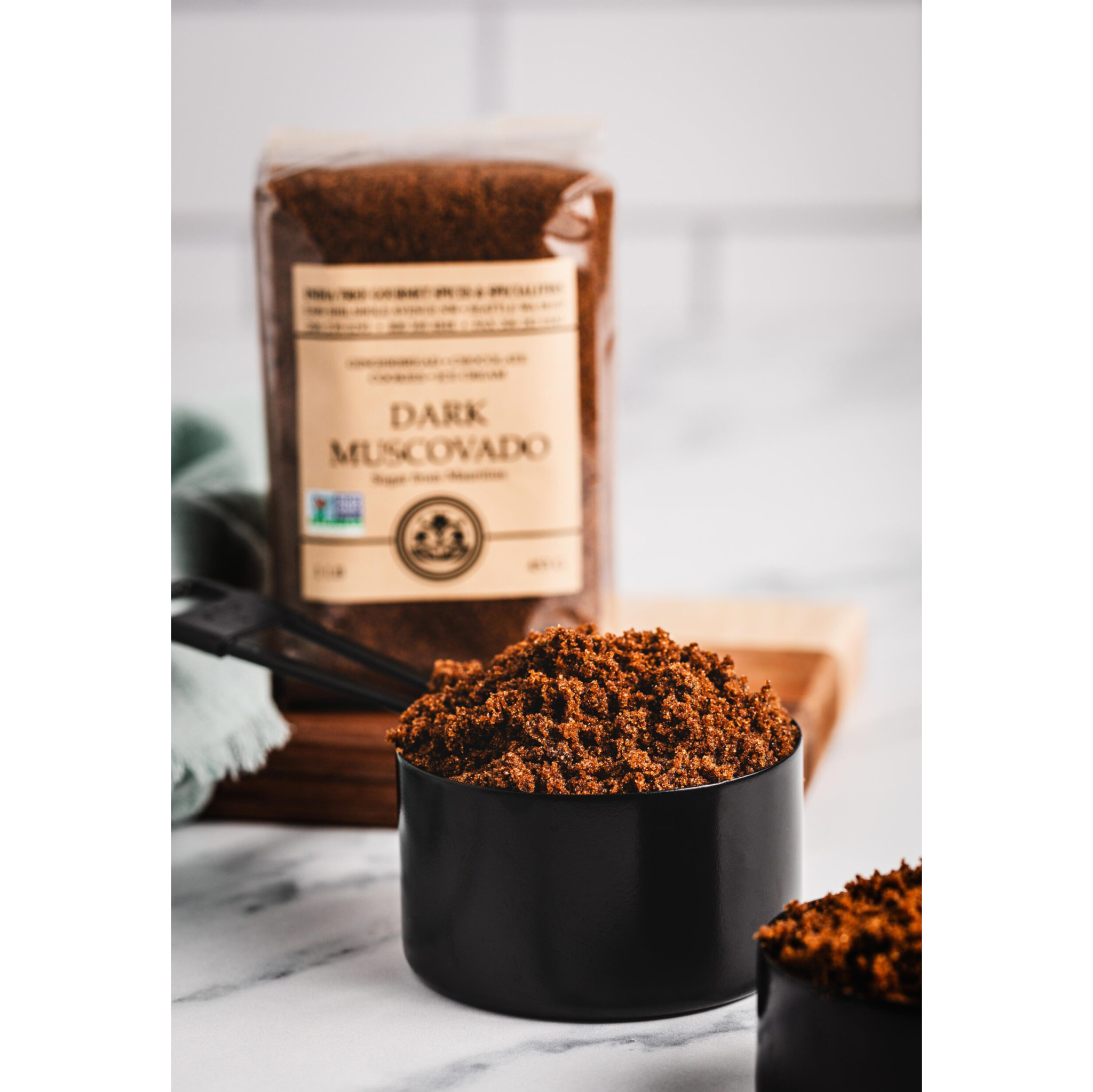
Muscovado sugar — sometimes referred to as Barbados sugar, khandsari, or khand — ranks among the least refined sugar varieties available.
It’s produced by extracting sugarcane juice, adding lime, boiling the mixture to evaporate water, and then allowing it to cool so crystals form.
The dark, syrupy byproduct (molasses) produced during cooking remains in the finished sugar, yielding a moist, dark-brown product with the feel of damp sand.
The elevated molasses level also gives muscovado a multifaceted taste — notes of toffee with a faintly bitter finish.
Some manufacturers partially remove molasses to create a lighter-colored variation.
Muscovado is frequently labeled an artisanal sugar because its production is relatively low-tech and labor-heavy. India is the leading producer of muscovado (1).
Nutritionally, muscovado contains roughly the same calories as standard sugar — about 4 calories per gram — but the molasses leaves trace minerals like magnesium, potassium, calcium, and iron (2).
The molasses also supplies some antioxidants, such as gallic acid and other polyphenols, which help protect cells from damage caused by free radicals (3).
Free-radical damage has been associated with chronic conditions like cardiovascular disease and diabetes, so consuming antioxidant-containing foods can be beneficial (4, 5).
Although these minerals and antioxidants make muscovado marginally more nutritious than refined white sugar, it is still sugar and should be used sparingly (1).
Excessive intake of added sugars is linked to heart disease and type 2 diabetes. The American Heart Association suggests limiting added sugar to no more than 25 grams per day for women and 37.5 grams per day for men (6, 7, 8, 9).
Some experts, however, argue that swapping heavily refined white sugar for a natural brown sugar like muscovado could modestly improve dietary nutrient intake (3, 10).
Summary: Muscovado is an unrefined cane sugar made by evaporating cane juice without removing the molasses. It’s dark brown and contains small amounts of minerals and antioxidants.
How it differs from other types of sugar
Below is a comparison of muscovado sugar with other commonly used sugars.
Granulated sugar
Granulated sugar — also called table or white sugar — is the common form most people picture when they think of “sugar.”
This variety is what you typically find in packets and use in baking.
White sugar is produced similarly to muscovado, but industrial machinery accelerates production and the molasses is fully removed via centrifugation (11).
The outcome is a free-flowing white sugar with a dry, sand-like texture.
Because it lacks molasses, granulated sugar tastes purely sweet with no coloration and contains no minerals, making it less nutrient-dense than muscovado (12).
Unlike muscovado, granulated sugar can be derived from either sugar cane or sugar beets; the ingredient list on packaging will indicate the source.
Brown sugar
Brown sugar is essentially white sugar with molasses reintroduced after refining.
Light brown sugar has a small molasses proportion, while dark brown sugar contains more. However, both typically have less molasses than muscovado.
Like muscovado, brown sugar feels like moist sand but offers a gentler caramel flavor.
Turbinado and demerara sugar
Turbinado and demerara sugars are also derived from evaporated cane juice but are centrifuged for shorter durations so some molasses remains (13).
They feature larger, light-brown crystals and a drier texture compared with muscovado.
These coarse sugars are often used to sweeten hot drinks like coffee or tea or sprinkled atop baked goods for added crunch and sweetness.
Jaggery, rapadura, panela, kokuto, and Sucanat
Jaggery, rapadura, panela, kokuto, and Sucanat are unrefined cane sugars that retain molasses and closely resemble muscovado (13, 14).
Sucanat is a brand name standing for “sugar cane natural” (15).
Production techniques differ between producers; for instance, panela is often sold as solid blocks, whereas rapadura may be sifted to yield a loose, grainy texture.
Of the sugars mentioned, these five are the closest in character to muscovado.
Summary: Muscovado most closely resembles other minimally refined cane sugars like jaggery, rapadura, panela, kokuto, and Sucanat.
Popular uses
The deep toffee notes and burnt undertones of muscovado make it a great match for darker baked goods and savory preparations.
Common applications include:
- Barbecue sauce. Swap muscovado for brown sugar to boost smoky depth.
- Chocolate baked goods. Use it in brownies or chocolate cookies for richer flavor.
- Coffee. Stir into hot coffee for a layered sweetness that complements bitterness.
- Gingerbread. Replace brown sugar with muscovado to intensify molasses character.
- Glazes. Muscovado lends a pleasing toffee note to meat glazes.
- Ice cream. Incorporate muscovado for a bittersweet, caramelized profile.
- Marinades. Combine with olive oil, acid, herbs, and spices to marinate meats before grilling or roasting.
- Oatmeal. Sprinkle on warm oatmeal with nuts and fruit for a rich flavor boost.
- Popcorn. Toss warm popcorn with butter or coconut oil and muscovado for a salty-sweet-smoky snack.
- Salad dressing. Add muscovado to dressings for a caramel-like sweetness.
- Toffee or caramel. Muscovado produces confections with a deep molasses note.
Store muscovado in an airtight container to prevent moisture loss. If it hardens, cover it with a damp paper towel overnight to re-soften.
Summary: With its high molasses content, muscovado imparts a toffee-like character to both sweet and savory recipes.
Suitable substitutes
Because muscovado is an unrefined brown sugar, the top substitutes are jaggery, panela, rapadura, kokuto, or Sucanat — all can be used in equal proportions.
The next best choice is dark brown sugar, though it’s finer, has less molasses, and a milder flavor.
In a pinch, mix 1 cup (200 grams) white sugar with 2 tablespoons (40 grams) molasses to approximate muscovado at home.
Granulated white sugar is the least suitable replacement since it lacks molasses.
Summary: Other unrefined cane sugars are the best muscovado substitutes. Brown sugar is the next-best option, either store-bought or homemade.
The bottom line
Muscovado sugar — also known as Barbados sugar, khandsari, or khand — is an unrefined cane sugar that retains molasses, giving it a deep brown color and a wet-sand texture.
It’s most akin to other unrefined cane sugars like jaggery and panela, though brown sugar can be used as an alternative.
Muscovado contributes a dark caramel note to baked goods, marinades, glazes, and beverages like coffee. Even though it’s less processed than white sugar, it should still be consumed in moderation to limit added sugar intake.



















Leave a Reply
You must be logged in to post a comment.