
You can achieve a whiter smile through various whitening products and procedures available for use at home or in a dental office. They differ in effectiveness (and cost), and none offer permanent whitening.
One approach is light-activated teeth whitening. This method can employ several kinds of lights, including:
- ultraviolet (UV) lights
- halogen lights
- light-emitting diode (LED) lights
Blue LED light treatments are gaining popularity, partly because they’re perceived as safer than UV options. You can find over-the-counter whitening systems with a blue light, or you can opt for an in-office procedure at your dentist’s clinic.
Many people are satisfied with the outcome, but you may want to understand what this treatment entails and what results to expect.
How does blue light teeth whitening work?
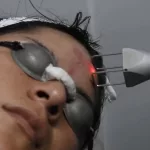
The dentist applies a whitening gel to your teeth, then directs a blue LED light at the gel. The light activates the hydrogen peroxide or carbamide peroxide in the gel, accelerating its breakdown. That chemical activity helps lift stains from the tooth surface.
The mechanism is the same whether you use an at-home kit or receive treatment at the dental office.
Does it work?
Evidence is mixed regarding whether a light source like an LED meaningfully enhances teeth whitening.
A 2014 review examined a decade of research on light-activated bleaching in dental practices and concluded that light activators did not appear to speed up whitening or improve results.
By contrast, a 2012 study indicated that combining a whitening gel with an LED light during in-office treatment seemed effective.
Blue light teeth whitening side effects
Overall, 2014 literature suggests methods using hydrogen or carbamide peroxide, including blue light protocols, are safe. This conclusion comes from both clinical trials and in vitro experiments (studies on extracted teeth).
Still, the procedure may carry some drawbacks. You might notice increased tooth sensitivity and some irritation in treated areas after receiving blue light whitening.
In a small 2012 trial, an in-office regimen used an LED light to activate whitening gel for three 10-minute cycles.
The investigators observed slightly greater irritation and sensitivity immediately following that first in-office treatment compared with a two-week at-home regimen carried out without LED light.
In-office blue light teeth whitening procedure
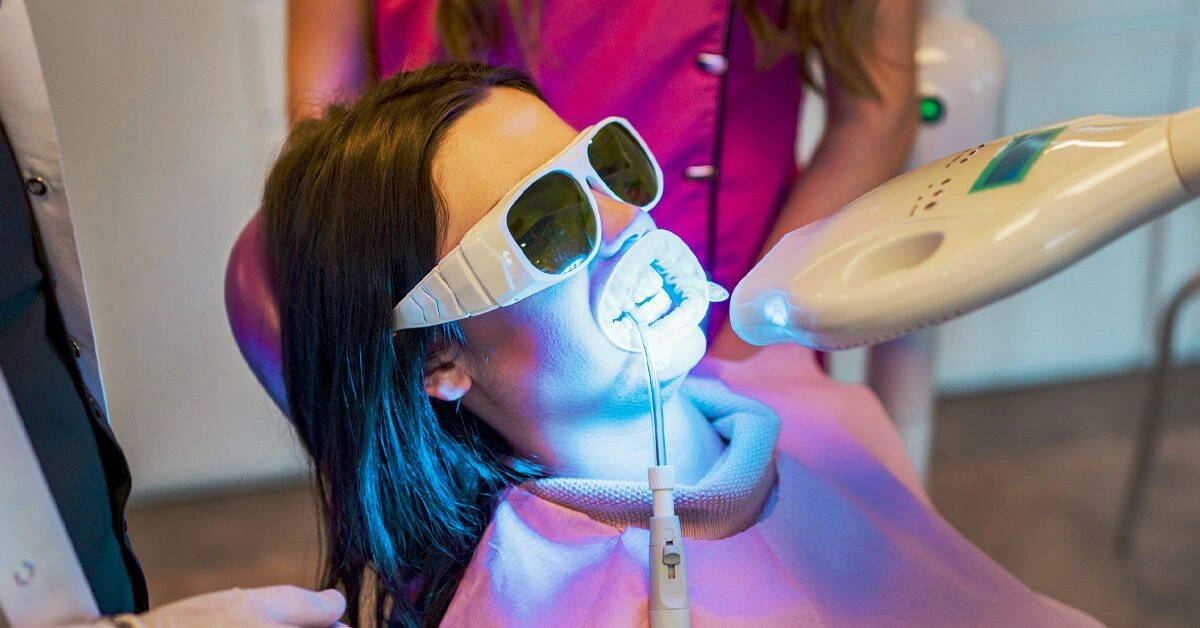
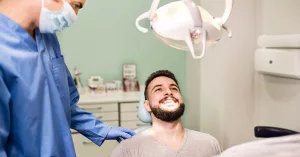
If you opt for a blue light whitening session at the dentist, here’s a typical sequence:
- Your dentist will clean your teeth thoroughly.
- They’ll measure the shade of your teeth to provide a baseline for comparison after whitening.
- Tools like a cheek retractor will be used to keep lips away from teeth, and a protective gel will be placed to shield the gums.
- A whitening gel is applied to the teeth.
- The blue light is positioned to shine on the treated teeth.
- Your mouth will be rinsed and the tooth color assessed after the session.
- The cycle may be repeated several times to enhance whitening results.
How to use blue light teeth whitening products at home
An at-home blue light whitening kit lets you whiten without visiting a dentist. Keep in mind that home kits usually contain milder formulations than professional in-office products.
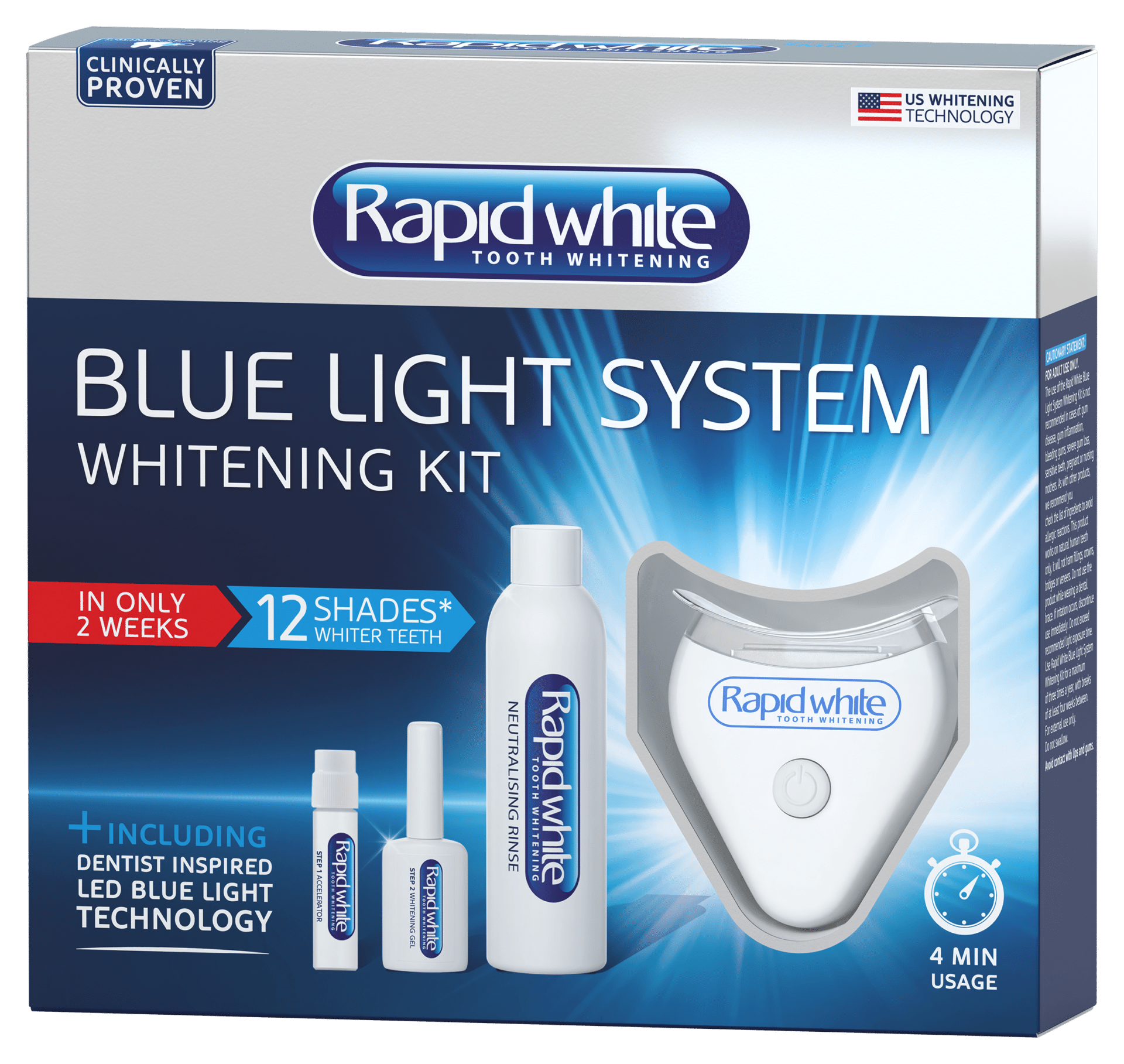
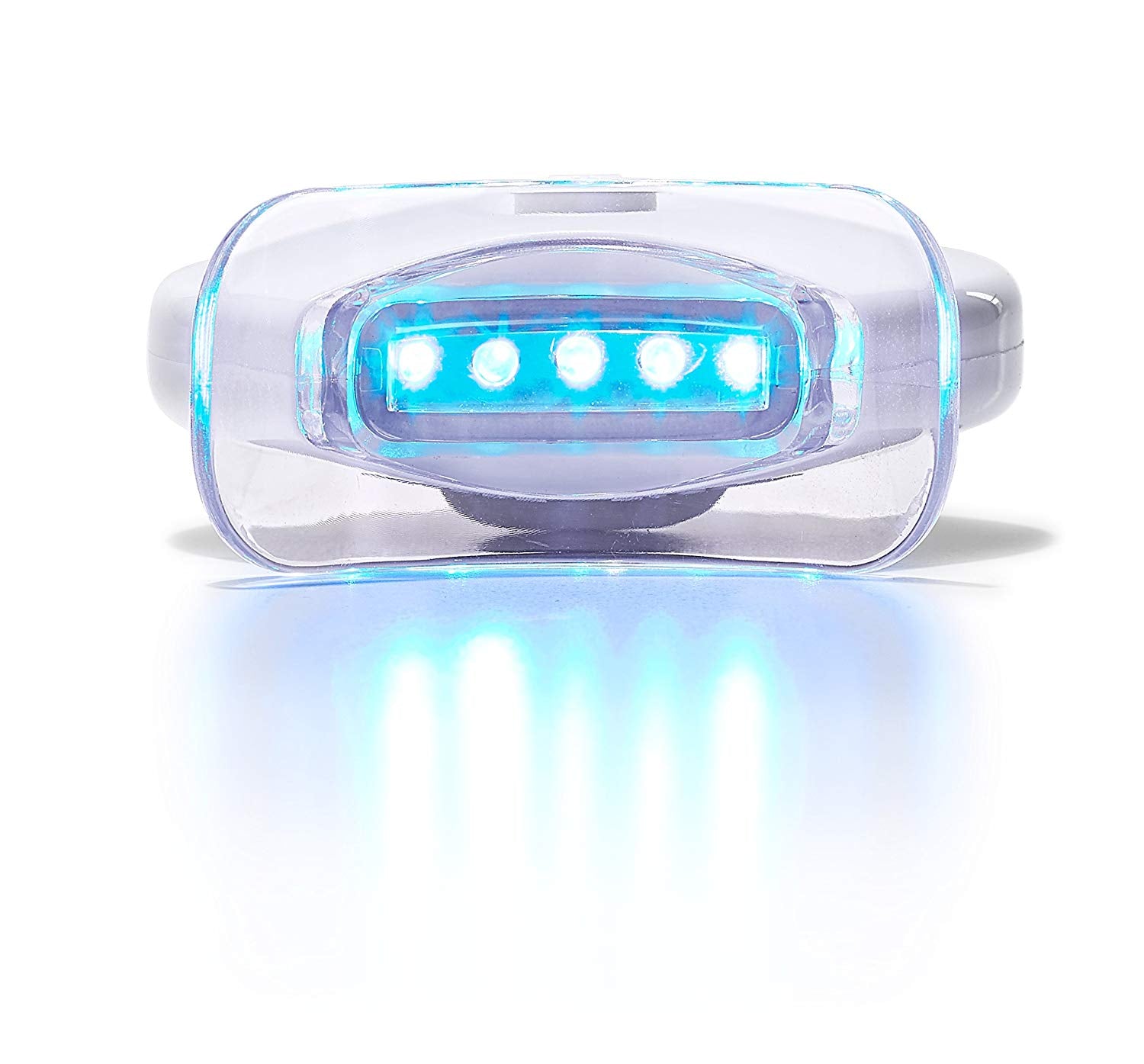
Kits often include whitening strips or plastic trays filled from a syringe of whitening gel, and a small battery-powered blue light device.
Home kits generally follow the same basic steps:
- Apply the whitening product to your teeth—either place strips onto the teeth or load gel into trays and seat them over your teeth.
- Allow the product to remain on your teeth for the recommended period before activating the light.
- Use the blue light to trigger the whitening agent. In some models the light is integrated with the mouthpiece so you don’t need to hold it; many units automatically shut off after a preset time.
Follow the instructions that come with the specific kit, as directions vary. Some manufacturers recommend multiple sessions for optimal results.
Where to get a blue light teeth whitening kit
Blue light whitening kits are available from specialty retailers, big-box stores, pharmacies, and many online sellers. You can also find vegan, gluten-free, and kosher options.
Shop for a blue light teeth whitening kit online.
Other types of light teeth whitening treatments
Blue LED is not the only light-assisted whitening option. Ask your dentist about other light-based methods they might offer.
Halogen light
Some findings indicate halogen lights can enhance whitening outcomes. For instance, a 2016 study reported that a halogen light used with 37.5% hydrogen peroxide yielded better whitening than no light.
However, that research was in vitro—performed on teeth outside the mouth—so real-world effects in patients may differ. If interested, you’ll likely need to visit a dental clinic to pursue this technique.
Ultraviolet light
Some dentists provide treatments that use FDA-cleared UV lights or lasers to assist whitening. Although the risk from UV exposure appears low, potential hazards exist. Discuss eye and gum protection with your dentist before proceeding.
Takeaway
Blue LED light whitening is one of several light-activated options for tooth bleaching. Research so far is mixed on whether LED light significantly improves whitening outcomes.
Talk with your dentist to learn more about using LED lights for teeth whitening and to determine the best option for you.

















Leave a Reply
You must be logged in to post a comment.