
Some new moms swear by it, yet medical professionals say there’s no evidence supporting the idea that it helps mothers who are struggling with breastfeeding.
“Breast is best.”
It’s a refrain every expectant and new mother hears repeatedly from nearly the moment she conceives.
The issue is that breastfeeding isn’t straightforward for every woman.
The surgeon general cites inadequate family and social backing, work and child care obstacles, and limited access to health care as impediments to breastfeeding — acknowledging that these factors all play a role in suboptimal breastfeeding rates.
For those who do overcome these hurdles, problems with milk production can lead to frustration and early weaning sooner than intended.
Indeed, a 2015 study reported that about 35 percent of women cite low milk supply as their reason for stopping breastfeeding early.
There’s debate within both the scientific and breastfeeding communities about how precise those figures are, but one fact is clear.
Many mothers want to breastfeed and look for methods to increase their milk output.
A quick online search turns up all sorts of recipes, herbal blends, and products aimed at women hoping to raise their supply.
Beth Rasmussen told HealthEH that lactation cookies helped her.
“The brewer’s yeast and oats in them really support production,” she said.
And Carla Wiking told HealthEH that tea was one of her favorite ways to try to boost supply.
Enter the “Pink Drink”
But lately, a newcomer has been getting attention for its alleged supply-enhancing effects.

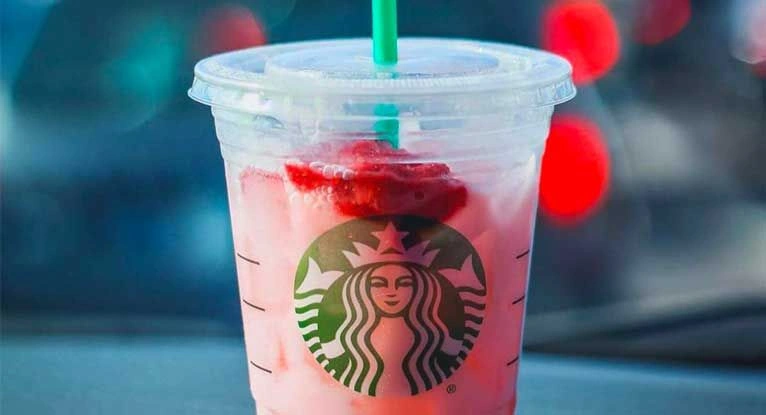
Coverage of Starbucks’ Pink Drink has popped up everywhere from Cosmopolitan to “Today,” with new mothers praising the milk-increasing properties of this sweet, caffeine-free beverage.
On Starbucks’ menu it’s listed as the Strawberry Acai Refresher, a mix of fruit juices and creamy coconut milk that some moms claim leads to an excess of breast milk.
But do those claims hold up?
Starbucks itself isn’t commenting.
HealthEH contacted representatives at the coffee giant and were told “no comment” when asked whether the Pink Drink could actually boost milk supply.
However, several nursing mothers had opinions to share.
Sarah Lindholm told HealthEH she’s enjoyed the drink for some time, even prior to its recent notoriety.
As the mother of a 3-month-old, she hasn’t observed any notable increase in her milk production after drinking it.
“I’ll still order it,” she said, “just because it tastes good. In fact, I was looking on Pinterest today for a copycat recipe I could make at home.”
She speculates that maybe its appeal encourages better hydration — and that could be why some believe it helps.
Debunking some of the theories
It’s an appealing notion, but lactation consultant Wendy Wisner dismissed that explanation.
“It’s a misconception that drinking extra fluids or eating more calories increases supply,” she told HealthEH. “You would need to be significantly dehydrated or undernourished for that to have an effect.”
Other moms have suggested coconut milk in the beverage could be the active ingredient, but Wisner rejected that idea too.
“There’s absolutely no research indicating coconut milk is a galactagogue. I haven’t even seen it referenced in breastfeeding forums,” she said. “The same goes for acai, another key component of the Starbucks drink.”
A galactagogue is a herb or medication believed to raise milk production. The American Pregnancy Association lists a number of galactagogues that may help.
So what does Wisner think explains the Pink Drink buzz?
“It’s most likely placebo or coincidence,” she said. “Sometimes when moms expect something to improve their supply, it relaxes them. That relaxation can aid ‘letdown’ so milk flows more readily. If these mothers feel it’s effective, go for it. But moms with real supply problems shouldn’t depend on this beverage.”
In other words: The Pink Drink isn’t likely to increase supply for women who are truly struggling. What might help?
“The most important way to raise supply is to nurse or pump more,” Wisner said. “Supply follows demand. If that doesn’t help, consult a lactation consultant or reach out to a breastfeeding counselor — for example, a La Leche League Leader — to find solutions.”
They’ll keep drinking it
Several women HealthEH interviewed admitted the Pink Drink’s promises sounded a bit too good to be true.
That didn’t stop them from enjoying it, though.
“My sister made me try one a couple of weeks ago and now I’m hooked,” Tania Whitfield said. “I’m totally using this as an excuse to get one every day. I have noticed my breasts feel fuller for a day or two after having one. So, there’s that.”




















Leave a Reply
You must be logged in to post a comment.