

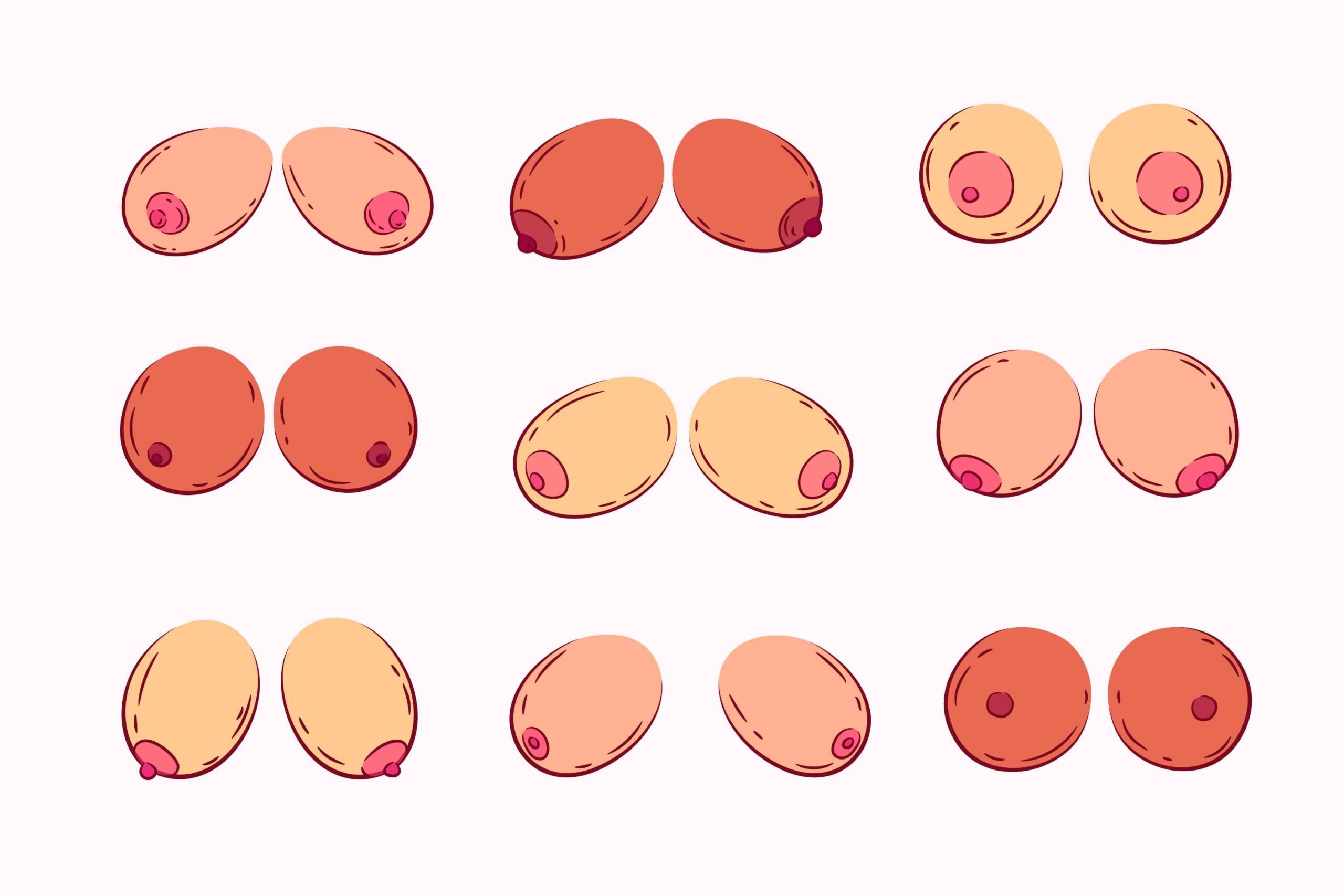
Inverted nipples retract inward more than they protrude. They can appear on one or both breasts. It’s estimated that 9 to 10 percent of women have at least one inverted nipple. Men may have them as well.
Some nipples invert intermittently and can pop out again with temperature changes or stimulation. Other nipples remain inverted permanently, meaning they will stay retracted unless you try to correct them using one of the approaches described below.
In most instances, inverted nipples are harmless. This natural variation doesn’t raise your risk for other health issues, nor should it reduce nipple sensitivity.
If you’d like to correct an inverted nipple for cosmetic reasons, continue reading.
Inverted nipple treatment at home
If you want a short-term fix, consider the following options:
Hoffman technique
The Hoffman technique for drawing out inverted nipples has been used since the 1950s. To attempt it:
- Put your thumbs on either side of the nipple, positioning them at the base of the nipple rather than on the outer areola.
- Press inward firmly into the breast tissue.
- While maintaining pressure, gently pull your thumbs apart.
- Move your thumbs around the nipple and repeat the steps.
You can perform this whenever you want the nipple to protrude, but it’s unclear how long the effect will persist. For the best chance of success, practice the method at least once daily. Regular stimulation might encourage the nipple to project more frequently.
No formal studies have confirmed its efficacy. Everyone’s breast anatomy differs, so don’t be discouraged if this approach isn’t effective for you.
Suction devices
There are suction-based products marketed to correct inverted nipples. Many are designed to be worn under clothing for prolonged periods.
These items go by various names, such as:
- nipple retractors
- nipple extractors
- shells
- cups
They typically operate by creating a small vacuum that pulls the nipple into a cup, stimulating it so that it protrudes.
Used over time, these devices may loosen the tissue around the nipple, potentially helping it remain erect longer.
Common examples include:
- Avent Niplette
- Pippetop Inverted Nipple Protractor
- Medela SoftShells for Inverted Nipples
- Supple cups
Research has not firmly established the success rate of suction devices. Some individuals notice protrusion while others do not. Many of these products are low-cost and might be worth trying.
Nipple piercings as treatment for inverted nipple?
Nipple piercings are sometimes used to help evert inverted nipples, because the jewelry can assist in holding the nipple outward.
If you’re considering piercing, investigate thoroughly. Make sure any piercer you pick is licensed and experienced with inverted nipples. It’s wise to call local studios and explain what you need.
What’s the procedure like?
At the appointment, tell your piercer you have inverted nipples. They may cool the room to encourage the nipple to protrude and might use clamps to help draw it out.
The nipple may redden or ache during this process, which usually reflects the mechanical effort to evert the tissue. This can also make the actual piercing more uncomfortable.
It’s essential that the nipple is fully everted before the piercing. If it isn’t, the nipple could retract even after jewelry is placed.
Once the nipple is adequately out, the piercer will use a gauged needle to pass jewelry through the tissue.
Stainless steel rings or barbells are commonly used. A barbell has screw-on balls on each end, helping to prevent the nipple from sinking back into the breast. Keep the initial jewelry in place for about four to six months before changing it.
Typical needle sizes are 14-gauge for men and 16-gauge for women, but this varies. Discuss the appropriate gauge with your piercer.
Piercing isn’t universally effective, so weigh the pros and cons. Talk with both your doctor and your chosen piercer about risks and potential benefits.
Bear in mind that removing the jewelry can allow the nipple to revert. To avoid this, don’t leave the jewelry out for long periods.
Surgery
If you want a permanent correction, surgery is the only definitive option.
There are two main surgical approaches: one that preserves at least some milk ducts and one that severs them.
Surgery with partial preservation of milk ducts
Also called the “parachute flap” approach, this technique generally allows for continued breastfeeding because portions of the ductal system remain intact. Nipple sensation typically remains unchanged.
The procedure is performed as follows:
- After local anesthesia, the surgeon makes an incision around the base of the nipple.
- Keeping blood supply intact, the nipple and areola are elevated from the breast and sutured into a projecting shape.
- The incision is closed and medicated dressings are applied.
Surgery with detached milk ducts
This method is more frequently used. Because the milk ducts are detached, breastfeeding isn’t possible afterward. Nipple sensation generally remains the same.
The steps include:
- Local anesthesia is applied and an incision is made at the nipple base.
- The milk ducts are cut, allowing the nipple to project outward.
- The incision is closed and medicated dressings are placed.
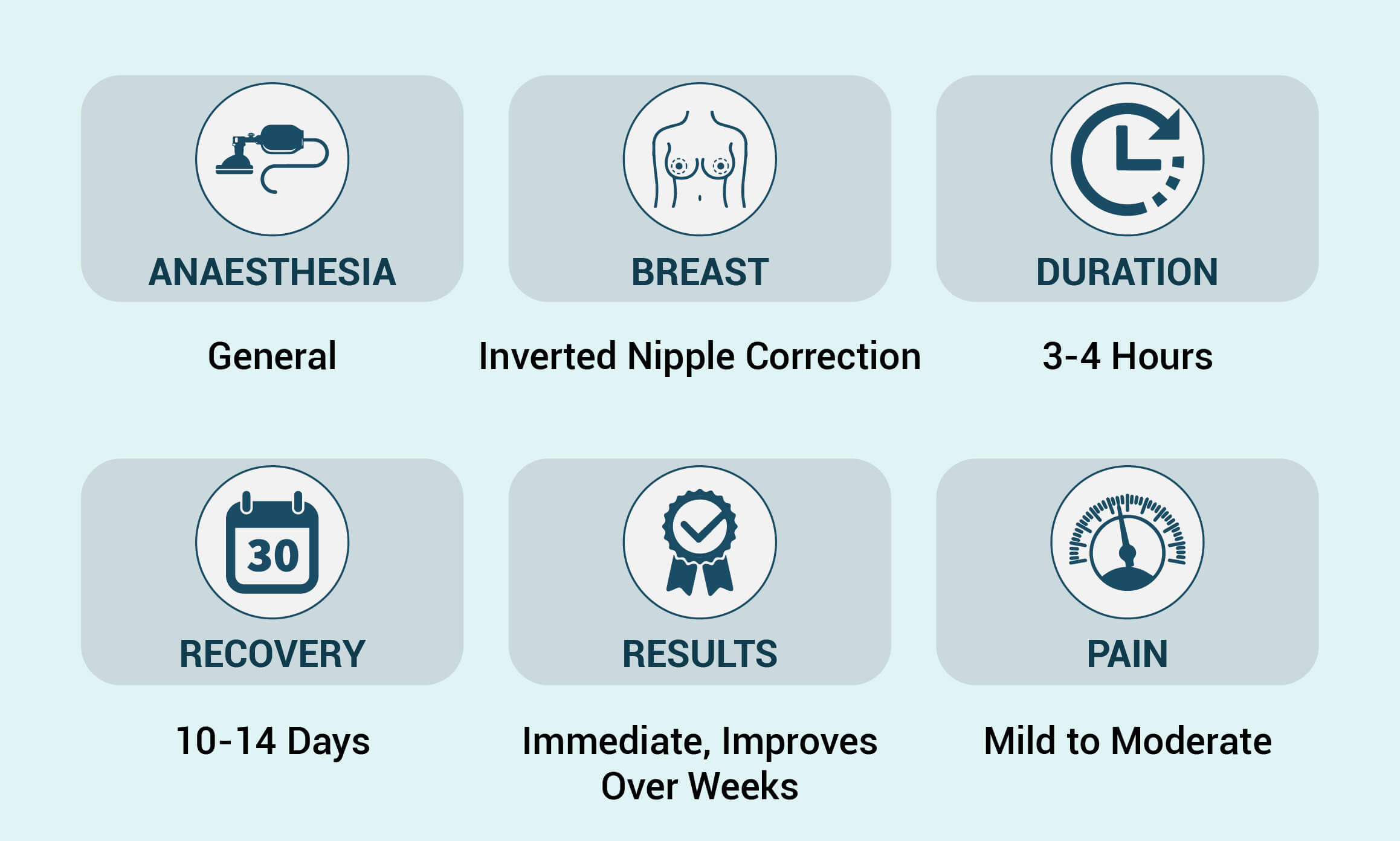
Each surgical option usually lasts one to two hours. You can typically go home a few hours after the procedure.
Discuss with your surgeon which technique is best for you.
Grades of nipple inversion
Inverted nipples are categorized into three grades that describe:
- the extent of inversion
- the probable impact on breastfeeding
- the most suitable corrective approach if desired
Grade 1: With gentle pressure from your thumb and forefinger on the areola, the nipple can be pulled out and often remains protruding for a while. Stimulation or nursing can also evert the nipple.
Grade 2: The nipple is harder to draw out than grade 1 and tends to retract inward once pressure is released.
Grade 3: It is very difficult or impossible to evert the nipple manually.
The Hoffman technique and suction cups may be more effective for grade 1 or 2 inversions. Surgery can address any grade of inversion.

How to determine your grade of nipple inversion
Many people know they have inverted nipples but aren’t sure how severe the inversion is.
To assess it:
- Remove your shirt and any undergarments.
- Stand before a mirror and hold the areola between thumb and forefinger on each breast.
- Press inward gently, applying firm pressure about an inch into the breast.
- Observe how the nipples respond and use that to determine their grade.
Inversion may occur in only one nipple, or you may have different grades of inversion on each side.
Can you breastfeed with inverted nipples?
For some women, inverted nipples can complicate breastfeeding because babies may have difficulty latching if the nipple doesn’t project.
If you plan to get pregnant or are already nursing, consult your doctor.
Several strategies can help bring the nipple out, including:
- nipple shields to aid the baby’s latch
- breast shields that put pressure on the nipple to help it evert
- manual stimulation with your hands
Using a breast pump may also improve milk flow.
Are inverted nipples less sensitive?
The difference between inverted and everted nipples lies in the contractile nerves, not the sensory nerves. Inverted nipples can have the same sensation as everted ones. Sensitivity varies among individuals.
You might notice increased or decreased sensation depending on the context — for example, manual stimulation can feel more intense than brief contact with clothing.
Are inverted nipples permanent?
Some people experience inversion only occasionally, while others have nipples that are always inverted. Some who once had seemingly permanent inversion may notice fluctuations between retracted and erect states.
Many women develop inverted nipples during pregnancy, even if they didn’t have them before — especially first-time mothers.
The bottom line
Nipple inversion is a common variation of breast anatomy and generally has no health implications.
Often the condition can be temporarily altered with manual techniques. For a long-term solution, consult your doctor about piercing or surgical options, and review the benefits and risks of each.
If you’re breastfeeding or planning to breastfeed, keep that in mind when considering piercing or surgery. Piercing may complicate breastfeeding and certain surgical procedures can prevent milk production.
When to see your doctor
Inverted nipples are usually not worrisome if they:
- have been present since childhood or puberty
- develop gradually over several years
- are related to pregnancy, breastfeeding, or surgery
If your nipples begin to invert for no apparent reason, consult your doctor. In rare instances, a newly inverted nipple can be a sign of breast cancer. Early detection improves treatment outcomes.




















Leave a Reply
You must be logged in to post a comment.