

What’s a T4 test?
Your thyroid gland makes a hormone known as thyroxine, commonly referred to as T4. This hormone is essential for regulating multiple bodily processes, particularly growth, energy production, and metabolism.
A portion of T4 in your bloodstream circulates as free T4, meaning it is not attached to proteins. This unbound form is biologically active and readily available for your body’s cells and tissues. However, the majority of circulating T4 is bonded to protein, which serves as a transport mechanism in the blood.
Since T4 exists in both bound and unbound states, there are two primary types of laboratory assessments: a total T4 test and a free T4 test.
A total T4 test evaluates both protein-bound T4 and free T4 combined. In contrast, a free T4 test measures only the unbound hormone. Because free T4 reflects the portion your body can actively use, many clinicians consider it more clinically meaningful and often favor it over the total T4 test, especially when assessing thyroid dysfunction or monitoring treatment.
In certain cases—such as pregnancy—thyroid evaluation may include additional testing strategies like the TSH w reflex to ft4 pregnancy test, which automatically measures free T4 if thyroid-stimulating hormone (TSH) levels are abnormal. This approach helps ensure accurate assessment of thyroid health during critical periods.

Why do doctors perform a T4 test?
Your healthcare provider may request a T4 test if a thyroid-stimulating hormone (TSH) test shows abnormal findings. Measuring T4 levels helps clarify whether the thyroid gland itself is overactive, underactive, or affected by another underlying issue.
In many clinical settings, especially during pregnancy, providers may rely on the tsh w/reflex to ft4 pregnancy protocol to streamline diagnosis. This method supports early detection of thyroid imbalance, which is particularly important for maternal and fetal well-being.
Conditions that can influence thyroid function include:
- hyperthyroidism, or overactive thyroid
- hypothyroidism, or underactive thyroid
- hypopituitarism, or underactive pituitary gland
Your doctor may suspect one of these disorders if you experience symptoms such as:
- eye concerns, including dryness, irritation, swelling, or bulging
- dry skin or facial puffiness
- hair thinning or hair loss
- hand tremors
- alterations in heart rate
- fluctuations in blood pressure
You might also notice broader, nonspecific symptoms, including:
- unexplained weight gain or loss
- sleep disturbances or insomnia
- anxiety or mood changes
- persistent fatigue and weakness
- cold intolerance
- light sensitivity
- irregular menstrual cycles
After reviewing T4 results, your doctor may order additional thyroid function tests, such as T3 or TSH, to gain a more comprehensive understanding of your thyroid status. TSH, produced by the pituitary gland, signals the thyroid to release both T3 and T4. Evaluating these hormones together provides a clearer picture of endocrine balance.
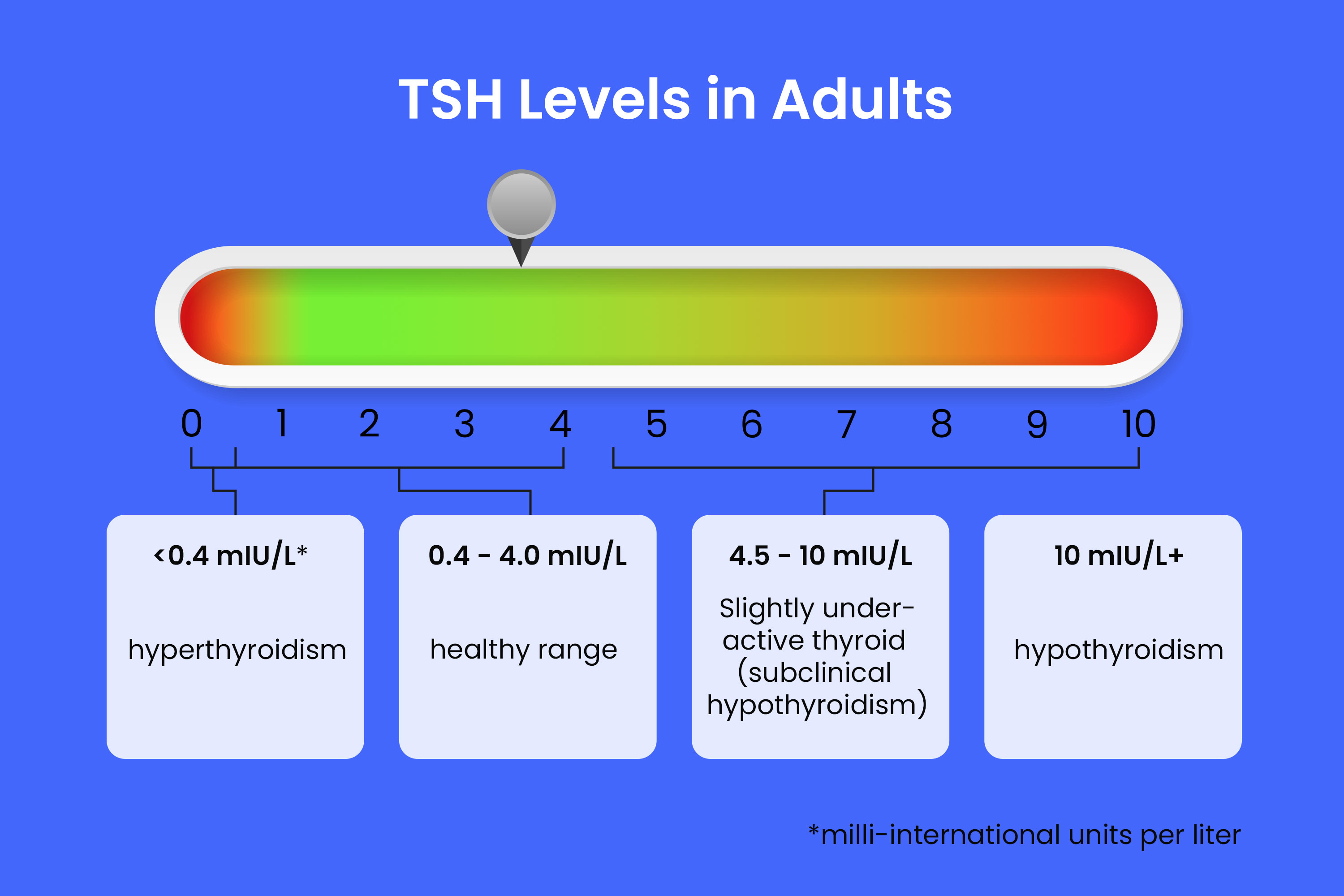
For individuals already diagnosed with a thyroid condition, repeat T4 testing can help determine whether current treatment is effective and whether medication adjustments are necessary.
How do you prepare for a T4 test?
Various medications can influence T4 levels—particularly total T4—so it is crucial to inform your doctor about everything you are taking. In some situations, you may be instructed to temporarily discontinue certain medications before testing to ensure the most accurate results.
You should also notify your healthcare provider if you are pregnant or planning pregnancy. Thyroid hormone requirements can shift during pregnancy, and interpretation may depend on the appropriate TSH W reflex to FT4 pregnancy reference range.
Medications known to potentially alter T4 levels include:
- drugs containing hormones, such as androgen, estrogen, and birth control pills
- medications intended to modify thyroid function or treat thyroid disease
- certain cancer therapies
- steroids
These examples do not represent all possible interactions. Be sure to disclose all prescription medications, over-the-counter products, and herbal supplements you use. Even nutritional supplements containing iodine can impact thyroid hormone measurements.
What’s the procedure for a T4 test?
A healthcare professional will draw a small blood sample, typically from a vein in your arm, and place it into a tube or vial. The specimen is then sent to a laboratory for analysis.

For adults, typical total T4 values generally fall between 5.0 to 12.0 micrograms per deciliter (μg/dL). Pediatric reference ranges differ by age, so consult your doctor regarding expected values for children. Laboratory standards may also vary slightly.
In adults, normal free T4 levels usually range from 0.8 to 1.8 nanograms per deciliter (ng/dL). As with total T4, normal values in children depend on age.
If your result falls outside the typical range, discuss the findings with your healthcare provider. Interpretation depends on your overall health, symptoms, medications, and other thyroid test results.
Because T4 is only one component of thyroid physiology, a normal T4 value does not always rule out thyroid disease. For instance, T4 may be within range while T3 is abnormal—particularly in cases of hyperthyroidism.
Some individuals opt for an at-home thyroid test to measure T4 levels. While convenient, these tests should be reviewed by a healthcare professional for proper interpretation and follow-up.
What do abnormal T4 test results mean?
An abnormal T4 level alone may not provide enough information for a definitive diagnosis. Doctors typically evaluate T3 and TSH levels alongside T4 to better understand thyroid function and identify the root cause.
Pregnancy can significantly influence thyroid hormone levels. If you are pregnant and your T4 result is abnormal, your doctor may recommend additional testing, such as the TSH w reflex to ft4 pregnancy test, to ensure accurate monitoring and appropriate management.
Abnormally high test results
Elevated T4 levels may suggest hyperthyroidism. They can also point to other thyroid-related disorders, including thyroiditis or toxic multinodular goiter.
Additional possible causes of high T4 results include:
- increased protein levels in the blood
- excess iodine intake
- overuse of thyroid replacement medication
- trophoblastic disease, a group of rare pregnancy related tumors
- germ cell tumors
Excessive iodine consumption can raise T4 concentrations. Since some X-ray contrast dyes contain iodine, undergoing a recent imaging study with contrast may temporarily elevate T4 test results.
Abnormally low test results
Lower-than-normal T4 levels may indicate:
- nutritional problems, such as fasting, malnutrition, or an iodine deficiency
- medications that alter protein levels
- hypothyroidism
- acute or chronic illness
- a pituitary gland disorder
Low T4 in combination with elevated TSH is commonly associated with hypothyroidism, whereas low T4 with low or normal TSH may suggest a pituitary issue.
Are there any risks associated with a T4 test?
A T4 test itself carries no unique risks. The potential complications are the same as those associated with any routine blood draw.
Although uncommon, possible complications include:
- an inflamed vein
- an infection at the puncture site
- excessive bleeding
More frequently, you may feel mild discomfort when the needle is inserted. Slight bleeding after needle removal is possible, and a small bruise may form around the site. These effects typically resolve on their own within a few days.
What’s the takeaway for people who receive a T4 test?
A T4 test is a straightforward blood test that assists your doctor in detecting and evaluating thyroid disorders. It is considered a low-risk procedure and is often performed alongside T3 and TSH testing for a more complete thyroid panel.
If you are scheduled for a T4 test, inform your doctor about all medications, supplements, known thyroid conditions, and whether you are pregnant. Providing complete information helps ensure the most precise interpretation of your results and supports optimal thyroid health management.






















Leave a Reply
You must be logged in to post a comment.