
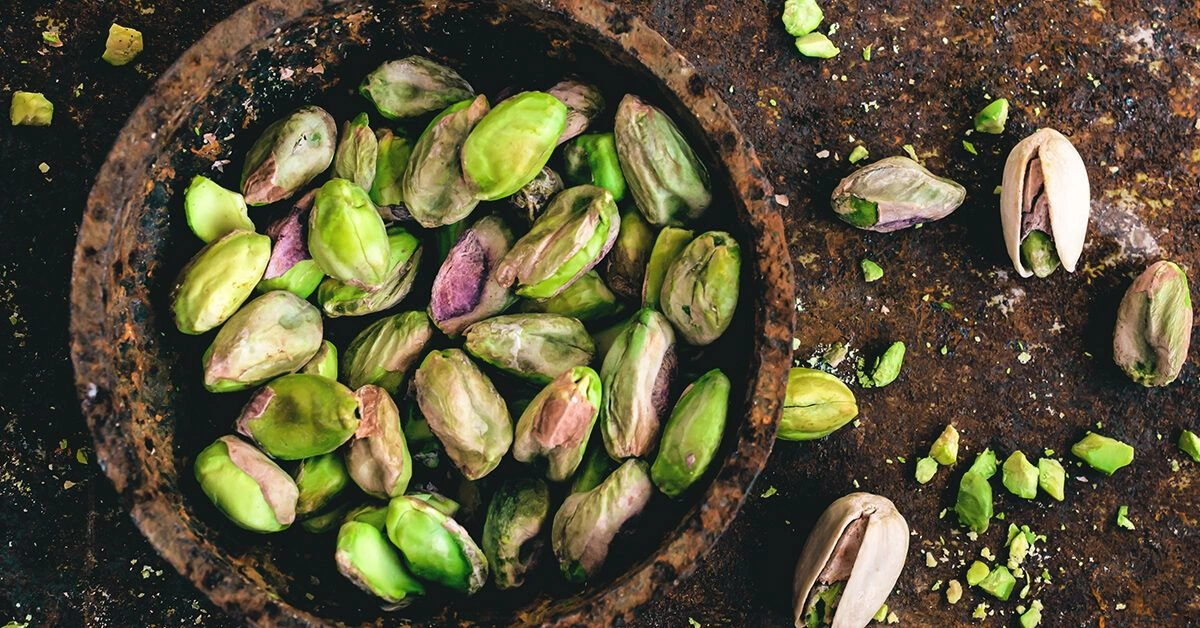
Pistachios pack a variety of nutrients and may support weight management, digestive health, blood sugar control, and cardiovascular wellness. They’re versatile and can be used in many recipes.
These nuts aren’t just flavorful and enjoyable to snack on — they’re also highly nourishing.
Actually, the edible seeds of the Pistacia vera tree provide healthy fats and serve as a notable source of protein, fiber, and antioxidants.
Evidence of pistachio consumption dates back almost 300,000 years. Today, they’re widely used in numerous dishes, from ice cream to confections.
Below are 9 research-backed health advantages of pistachios.

1. Packed with essential nutrients
Pistachios are highly nutrient-dense. A 1-ounce (oz) or 28-gram (g) portion — roughly 49 pistachios — supplies the following:
- Calories: 159
- Carbs: 8 g
- Fiber: 3 g
- Protein: 6 g
- Fat: 13 g
- Potassium: 6% of the Daily Value (DV)
- Phosphorus: 11% of the DV
- Vitamin B6: 28% of the DV
- Thiamine: 21% of the DV
- Copper: 41% of the DV
- Manganese: 15% of the DV
Importantly, pistachios rank among the top food sources of vitamin B6.
Vitamin B6 is vital for many body processes, including blood sugar regulation and producing hemoglobin, the molecule that carries oxygen in red blood cells.
Pistachios are also potassium-rich — one ounce delivers more potassium than half of a large banana.
2. Excellent source of antioxidants
Antioxidants are compounds that protect cells from damage and play a role in lowering the risk of certain diseases, such as cancer.
Pistachios are a notable source of antioxidants. Some earlier research suggests they may contain higher antioxidant levels than many other nuts and seeds.
They’re particularly rich in lutein and zeaxanthin, two antioxidants important for eye health. These nutrients help shield the eyes from blue light damage and age-related macular degeneration, a disease that impairs or destroys central vision.
Pistachios also supply polyphenols and tocopherols, antioxidants that may offer protection against cancer and heart disease.
3. Relatively low calorie while protein-rich
Although nuts generally provide many health benefits, they tend to be calorie-dense, which can make them harder to include when watching calories.
Pistachios, however, are among the lower-calorie nuts.
Each ounce (28 g) contains 159 calories, compared with 185 calories in walnuts and 196 calories in pecans.
Protein makes up about 14% of their calories, leaving pistachios second only to almonds among common nuts for protein proportion.
They’re also high in essential amino acids, which must be obtained from food because the body cannot synthesize them.
4. May support weight control
Despite their energy density, pistachios can be a weight-friendly choice.
They’re high in both fiber and protein, nutrients that promote fullness and can help reduce overall calorie intake.
A 2020 review of 11 trials reported that regular pistachio consumption was associated with reductions in body mass index (BMI), a rough estimate of body fat. However, the review didn’t find a significant effect on body weight or abdominal fat.
A separate 2020 study noted participants who consumed pistachios had lower blood pressure, ate fewer sugary foods, and increased their fiber intake — all behaviors that may support weight reduction.
Another explanation for pistachios’ potential weight benefits is that some of their fat may not be fully absorbed; portions of fat can remain locked in cell walls and pass through the gut undigested.
Finally, pistachios still in the shell can encourage mindful eating because shelling them slows consumption. A 2011 study found people who ate in-shell pistachios consumed 41% fewer calories than those eating shelled nuts.
5. Support beneficial gut bacteria
Pistachios contain substantial fiber — one serving provides 3 g.
Much of this fiber passes through the digestive tract largely undigested, and certain types act as prebiotics, feeding the beneficial microbes in your gut.
Gut bacteria then ferment the fiber, producing short-chain fatty acids that may confer various health perks, such as reduced risks of digestive disorders, cancer, and heart disease.
Butyrate is one of the most advantageous short-chain fatty acids.
In a 2014 trial, eating pistachios boosted butyrate-producing gut bacteria more than consuming almonds did.
6. May help reduce cholesterol and blood pressure
Pistachios may benefit heart health through several mechanisms.
For example, they might help lower blood cholesterol and improve blood pressure.
Many investigations replaced part of the diet’s calories with pistachios. Up to 67% of studies in a 2016 review observed decreases in total and LDL (bad) cholesterol and increases in HDL (good) cholesterol.
None of those studies found that pistachio intake had negative effects on blood lipid profiles.
Pistachios may also reduce blood pressure more than some other nuts.
A 2015 review covering 21 studies reported pistachio consumption lowered systolic blood pressure by 1.82 millimeters of mercury (mmHg) and decreased diastolic pressure by 0.8 mmHg.
7. May improve blood vessel function
The endothelium is the inner lining of blood vessels and must function correctly; endothelial dysfunction is a known risk factor for cardiovascular disease.
Vasodilation is the widening of blood vessels. Endothelial dysfunction is marked by reduced vasodilation, causing diminished blood flow and higher blood pressure.
Nitric oxide plays a crucial role in vasodilation, signaling the smooth muscle in vessel walls to relax.
Like many nuts, pistachios provide the amino acid L-arginine, which is converted into nitric oxide in the body. Thus, these small nuts may support vascular health.
A 2014 study with 42 participants who ate 1.5 oz (40 g) of pistachios daily for three months reported improvements in markers of endothelial function and vascular stiffness.
Healthy circulation is important for many bodily processes, including erectile function.
In a 2019 study, regular nut consumption, including pistachios, was linked to improved sexual desire and orgasmic performance in men.
8. May aid blood sugar control
Even though pistachios have more carbohydrates than many nuts, their glycemic index is low, so they don’t create large blood sugar surges.
Evidence indicates that pistachios may help with blood sugar regulation.
A 2020 review of six studies found pistachio intake significantly lowered fasting glucose and improved insulin resistance in people with type 2 diabetes, prediabetes, or metabolic syndrome.
A 2024 study reported that consuming 57 g of pistachios after dinner may be a useful bedtime snack for those with prediabetes, with effects on glycemic and lipid markers similar to standard care.
Pistachios are also abundant in antioxidants, carotenoids, and phenolic substances, all of which can benefit blood sugar regulation.
9. Tasty and enjoyable to eat
Pistachios can be consumed in many ways, including:
- straight from the shell as a handy, flavorful snack
- as a topping for pizzas, salads, fish, and sweets
- in baked goods, like cheesecakes
- in pestos or nut spreads
Frequently asked questions
How many pistachios should you eat each day?
There isn’t a single recommended daily amount for pistachios since needs vary by individual goals and diet. A serving of about 49 pistachios provides roughly 159 calories, making them a relatively low-calorie snack option.
What benefits do pistachios offer the body?
Pistachios appear to have antioxidant and anti-inflammatory effects that can support brain and gut health while improving blood lipid profiles and glycemic control. These effects may lower the risk of chronic conditions such as obesity, diabetes, and cardiovascular disease.
Can pistachios burn belly fat?
Some evidence indicates pistachios may help reduce BMI, an estimate of overall body fat. Nevertheless, additional research is needed to determine their direct impact on fat loss.
The bottom line
Pistachios are an excellent source of healthy fats, fiber, protein, antioxidants, and several vitamins and minerals, including vitamin B6 and thiamine.
Their potential health benefits include aiding weight management, improving cholesterol and blood sugar levels, and supporting gut, eye, and vascular health.
Plus, they’re delicious, adaptable, and fun to eat.





















Leave a Reply
You must be logged in to post a comment.