
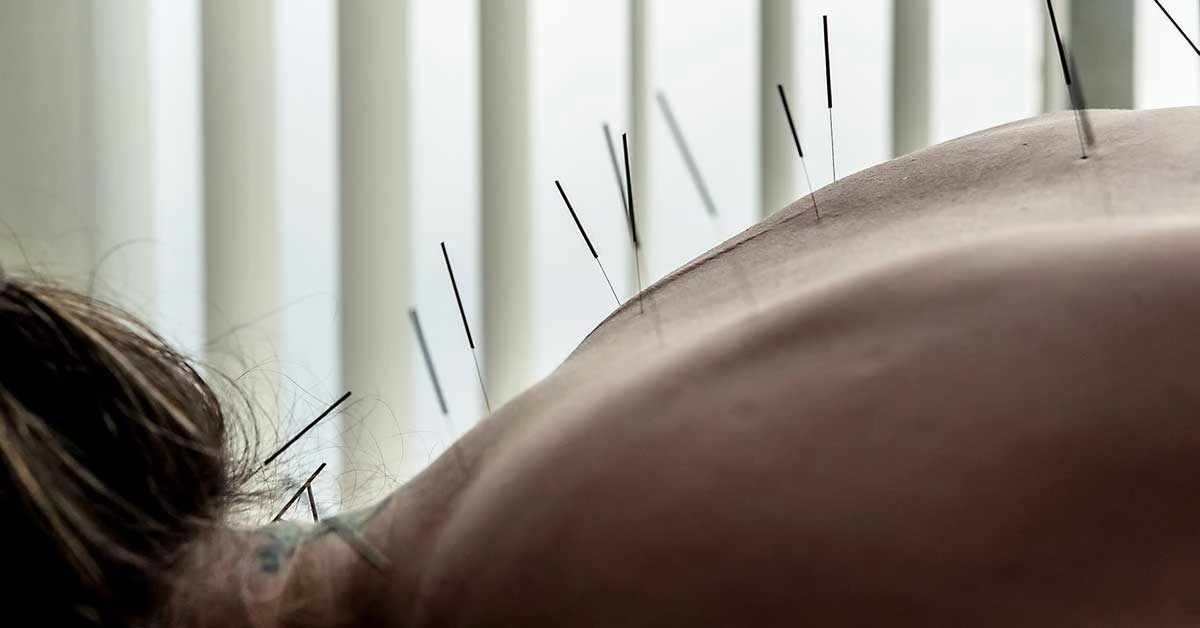
Acupuncture, the practice of addressing health conditions by stimulating specific points on the skin with thin needles, may provide relief for allergies, migraines, or insomnia. When exploring the Long-term benefits of acupuncture, many people are surprised to learn that acupuncture is an evidence based medicine supported by literally thousands of studies.

If you’re unfamiliar with holistic healing approaches, acupuncture might feel a little intimidating at first. How can inserting fine needles into your skin possibly help you feel better? And doesn’t that hurt?
In reality, it’s far less painful than most people imagine. Considering it has been practiced and researched for more than 2,500 years, acupuncture clearly has lasting appeal. Ongoing scientific investigation into the Long-term benefits of acupuncture continues to support what many patients have experienced firsthand for centuries.
Some individuals describe acupuncture as life-changing, crediting it with improving their overall well-being. It’s frequently used for concerns ranging from depression and allergies to morning sickness and menstrual cramps, and many people also seek it out after learning about the Top 10 benefits of acupuncture as part of a broader integrative health plan.
What is acupuncture?
Acupuncture is a therapy rooted in ancient Chinese medicine that aims to treat a wide range of conditions by activating precise points on the skin with very thin needles.
Paul Kempisty, licensed acupuncturist with a MS in traditional Oriental medicine, describes it as “a minimally invasive method to stimulate nerve-rich areas of the skin surface in order to influence tissues, gland, organs, and various functions of the body.”
“Each acupuncture needle produces a tiny injury at the insertion site, and although it’s slight enough to cause little to no discomfort, it’s enough of a signal to let the body know it needs to respond,” Kempisty explains.
According to him, this response can involve activation of the immune system, improved blood flow to the targeted area, enhanced wound healing, and pain modulation. Much of the contemporary research examining the long-term therapeutic effects of acupuncture is based on this physiologic model.
What’s the philosophy behind acupuncture?
The traditional Chinese philosophy underlying acupuncture is more complex, as it developed outside the framework of modern Western science and medicine.
“They believed that the human body was filled with and animated by an invisible life-giving force which they called ‘qi’ (pronounced ‘chee’) and when the qi was flowing well and going to all the right places, then a person would experience good mental and physical health. When the qi was flowing incorrectly (blocked or deficient) that would result in illness,” says Kempisty.
The idea of qi can be viewed as a metaphor for the body’s internal balance and regulatory systems. For instance, when you’re overwhelmed by stress or anxiety, you may notice you get sick more easily. Conversely, when you feel calm and well-rested, your body often mirrors that stability.
Acupuncture seeks to restore this balance of qi, which may explain the Long-term benefits of acupuncture reported by many patients. By promoting harmony within the body, the therapy aims to ease symptoms and support overall wellness.
What does acupuncture do?
People pursue acupuncture for many different reasons. For example, I initially sought treatment for persistent headaches and ongoing sinus pressure that hadn’t responded well to other therapies.
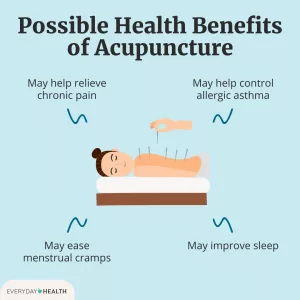
A growing body of research suggests acupuncture may help with numerous conditions and symptoms, including:
- allergies
- anxiety and depression
- osteoarthritis
- chronic pain, often in the neck, back, knees, and head
- hypertension
- insomnia
- menstrual cramps and PMS
- migraines
- morning sickness
- multiple sclerosis
- sprains
- strokes

Research also indicates that acupuncture may be supportive during cancer treatment. In fact, many cancer centers now include acupuncture as part of their integrative care programs to help manage symptoms such as nausea, fatigue, and pain.
Limited evidence for
- acne
- abdominal pain
- cancer pain
- obesity
- insomnia
- infertility
- diabetes
- schizophrenia
- stiff neck
- alcohol dependence
Although acupuncture is not a miracle cure, current evidence suggests it can be a valuable complementary treatment for individuals managing multiple chronic conditions. As interest grows in the Long-term benefits of acupuncture, ongoing studies are helping clarify which symptoms respond best and how sustained relief may occur over time.
Its continued use for more than 2,500 years underscores its staying power. As scientific research expands, our understanding of its mechanisms, clinical applications, and optimal treatment frequency will likely continue to evolve.
Incorporating acupuncture into real life
An acupuncture appointment typically lasts between 60 and 90 minutes. A significant portion of that time is often devoted to discussing your symptoms, health history, and treatment goals with your practitioner before any needles are inserted.
The needle placement itself generally takes about 30 to 40 minutes. Some patients prefer longer sessions. Research shows that dopamine is released during acupuncture, and individuals who find the experience deeply relaxing may opt for extended needle retention because of this calming effect.
Outcomes vary widely from person to person, making it difficult to predict exactly how you’ll feel afterward.
“There is no universal response to acupuncture. Some people feel relaxed and may be a little tired, others feel energized and ready for anything,” Kempisty explains. “Some people experience an improvement right away and for others it can take several treatments before noticing a positive change.”
The most common reaction?
“People feel happy and content,” Kempisty says. “It’s hard to put into words but there’s a distinct balanced and harmonious feeling that acupuncture gives most people and it just feels good.”
You might also notice temporary fatigue, shifts in appetite, changes in sleep quality, or differences in bowel habits. Some people observe immediate symptom relief, while others experience more gradual improvements over several sessions.
How do I find an acupuncturist?
“If you know someone who has had a positive experience with an acupuncturist, ask that person for a personal referral or introduction. That’s usually the best way, as like-minded people often keep each other’s company,” Kempisty says.
Always verify that you’re seeing a licensed acupuncturist (LAc should appear after their name).
A licensed acupuncturist must pass the National Certification Commission for Acupuncture and Oriental Medicine (NCCAOM) exam or complete the NCCAOM program in the foundations of East Asian medicine, acupuncture and biomedicine.
Certification standards can vary slightly by state. For instance, California administers its own licensing exam. You can also search online for certified acupuncturists in your area.
How much does an acupuncturist cost?
The price of an acupuncture session depends on your location and whether the practitioner accepts insurance. For example, The UC San Diego Center for Integrative Medicine charges $85 per session without insurance coverage.
As of 2023, the average fee for an acupuncturist in San Francisco, California is $150 per session. In Seattle, Washington, the average cost is $135 per session, while in Saint Louis, Missouri it is approximately $60 per session.
What to do if there’s no acupuncturist in your town
You should neverattempt to perform acupuncture on yourself. It must be carried out by a licensed provider, as improper technique can worsen symptoms or lead to adverse effects.
If professional acupuncture isn’t accessible, Kempisty suggests considering practices such as Tai Chi, yoga, and meditation. Learning simple self-massage strategies may also help encourage the flow of energy throughout your body. Applying pressure to specific points is known as acupressure.
Lisa Chan, LAc and certified reflexologist, shared guidance on several points that individuals can gently massage on their own.
For menstrual cramps, she advises holding the hollow of your inner ankle with your thumb, using minimal pressure. This area corresponds to points K 3, 4, and 5.
If insomnia is an issue, try gently rubbing in circular motions at the “Yintang” point, located between the eyebrows, alternating clockwise and counter-clockwise directions. To relieve lower back discomfort, Chan recommends pressing “Du 26,” found between the middle of your nose and your upper lip.
One of the most widely used pressure points is “LI 4” (large intestine 4). Applying firm pressure to the muscle between your thumb and index finger is thought to ease headaches, toothaches, stress, and facial and neck pain.
Avoid pressing LI 4 if you’re pregnant unless you are ready for labor, as it may help stimulate contractions.
Acupressure points
- For menstrual cramps, massage the hollow of your inner ankle with gentle pressure.
- For insomnia, rub clockwise and counter-clockwise circles between your eyebrows.
- For lower back pain, press the space between the middle of your nose and upper lip.
- For general headaches, apply pressure to the muscle between your thumb and index finger.
If you’re uncertain about proper technique or location, consult a certified reflexologist or licensed acupuncturist. A trained professional can show you how to apply pressure safely and effectively.
Acupuncture is widely regarded as safe and beneficial for many health concerns, though it is not a universal cure. You should continue taking prescribed medications and following your healthcare provider’s recommendations. Even if it doesn’t completely eliminate your symptoms, it may still reduce their severity — especially in cases of chronic pain.
If you remain unsure, speak with your doctor about whether acupuncture is appropriate for you. They can review your symptoms, medical history, and overall health status to help determine if this complementary therapy fits into your treatment plan.




















Leave a Reply
You must be logged in to post a comment.