

Aloe vera is a succulent plant that has been used for centuries as a natural treatment for sunburns and minor burns. The transparent gel inside its long, fleshy leaves contains a jelly-like substance rich in enzymes, vitamins, minerals, and amino acids.
Apart from its cooling and soothing effects on inflamed skin, aloe vera’s hydrating qualities have made it a common ingredient in beauty and skincare formulations. Today it appears in everything from face masks and cleansers to body scrubs and lotions.

Are there specific advantages to applying aloe vera around the eyes, and is it safe? In short — yes. This article examines those advantages and explains how to use aloe vera safely in that delicate area.
What are the benefits of using aloe vera around your eyes?
People often use aloe vera around the eye area to:
- support healing or repair of damaged skin
- reduce swelling or puffiness
- hydrate dry or flaky skin
- soothe sunburned skin
- ease redness or irritation
But does aloe vera really deliver on these uses? Let’s explore the evidence.
Skin repair benefits
Studies on aloe vera’s properties confirm that the plant contains an array of nutrients.
Minerals in aloe vera include zinc, magnesium, potassium, and selenium — with zinc and selenium offering antioxidant support.
Antioxidants are compounds that help repair damaged cells. Alongside these minerals, aloe vera provides vitamins A, C, and E, which also act as antioxidants.
Additional vitamins present include folic acid, vitamin B12, and choline. These nutrients may contribute to stronger skin and improved repair.
Inflammation benefits
The fatty acids and enzymes in aloe vera can help reduce inflammation when applied topically.
Amino acids found in aloe vera, including salicylic acid, exhibit anti-inflammatory and antibacterial effects that may help heal acne and minor skin wounds. These actions can also lessen the pain and redness associated with sunburn.
Moisturizing benefits
The water and enzymes in aloe vera help hydrate the skin, reducing flakiness and itchiness. Aloe vera may help prevent dryness in cold conditions.
Aloe vera can also serve as a gentle cleanser to help manage oily skin.
Antifungal benefits
Research indicates aloe vera has some antifungal activity that might be beneficial for certain skin complaints.
If you experience dry, itchy skin on your face or around the eyes, aloe vera could help calm the irritation.
Can aloe vera help with dry eyes?
A 2012 study examining filtered aloe vera extract on human corneal cells found signs that aloe vera may contain components that reduce eye inflammation and dryness.
The study also noted that at low concentrations, aloe vera did not appear harmful to eye cells. Earlier animal studies support these observations.
It’s crucial to avoid placing aloe vera gel directly into your eyes. Doing so can lead to burning, irritation, redness, and other adverse effects.
More research is needed before aloe vera–based eye drops can be deemed safe. Until then, use aloe vera on the skin only and avoid direct application inside the eye.
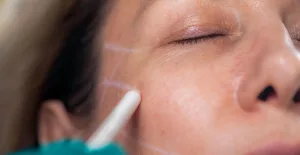
Applying aloe vera gel to the external eyelids can be safe for addressing redness or swelling. Take care not to let the gel get into your eyes, and don’t apply it too close to the eyelid margin. Avoid rubbing your eyes after application and use only a small amount.
How to use
If you have a fresh aloe vera leaf, cut away the outer skin by trimming the edges and peeling back the top layer. Allow the yellow sap to drain, then scoop out the clear gel.
You may find it simpler to slice the leaf into segments before removing the outer layer. There isn’t a single correct method, so choose a safe approach that suits you.
The Food and Drug Administration (FDA) does not regulate aloe vera use. Because of this, medical professionals haven’t established uniform instructions for using aloe vera, and guidance may vary.
To treat sunburn, inflammation, redness, or dryness around your eyes:
- Gently cleanse your face with water and a mild cleanser.
- Pat the skin dry, then lightly dab a small amount of aloe vera gel onto the affected area in a thin layer.
- Do not rub the aloe vera into the skin like a lotion, and avoid placing the gel too close to your eyes.
- Rinse the gel off after 10 to 15 minutes.
- You may apply aloe vera up to three times daily to address sunburned, inflamed, or dry skin.
- Overuse can dry the skin, so reduce frequency if you notice increased dryness.
To use as a moisturizer:
- Wash your face with water and a gentle cleanser.
- After your skin is dry, put a thin layer of aloe vera around the eyes. You can concentrate on dry or wrinkled areas or apply it to the whole face.
- When used as a moisturizer, allow the gel to absorb into your skin.
- If you’re unsure how your skin will respond, start slowly: substitute your regular moisturizer with aloe vera once a week, then increase use if it agrees with your skin.
Where to find aloe vera
In warm, dry climates you may grow aloe vera at home or know someone who does. Some natural food stores also sell aloe vera leaves.
Extracting the gel from fresh leaves yourself is the best way to ensure purity. If fresh leaves aren’t available or you don’t have time to harvest gel, you can buy aloe vera gel online or at pharmacies.
When purchasing ready-made aloe vera, check the product’s ingredient list carefully.
Look for products that:
- name aloe vera as the primary ingredient
- have minimal added ingredients
- avoid thickeners, medications, and unnecessary chemicals
Safety tips
Although aloe vera is generally safe topically, take care not to get it in your eyes.
While aloe vera moisturizes, excessive use can dry the skin because some of its enzymes act like mild exfoliants. Over-exfoliating may lead to dryness or increased oiliness depending on your skin type.
If you’ve never applied aloe vera before, perform a patch test—especially if you’re allergic to garlic or onions.
For a patch test, apply a small amount of gel to the inside of your wrist or elbow. Any sensitivity—itching, swelling, redness, or burning—will usually show within a few hours. If you have no reaction, it’s likely safe to use.
If you’re using topical steroid creams, including hydrocortisone, on the same area, aloe vera may increase steroid absorption. Consult your healthcare provider before combining aloe vera with steroid creams in the same area.
The bottom line
Although research is somewhat limited for every claimed use, available evidence suggests that for most people, aloe vera is safe to use topically, including on the face and around the eyes.
With its mix of vitamins, minerals, enzymes, and fatty acids, aloe vera is a time-honored natural option for healing, repairing, and hydrating damaged, dry, and sunburnt skin.
If you have concerns about applying aloe vera near your eyes, consult your healthcare provider before use.




















Leave a Reply
You must be logged in to post a comment.