
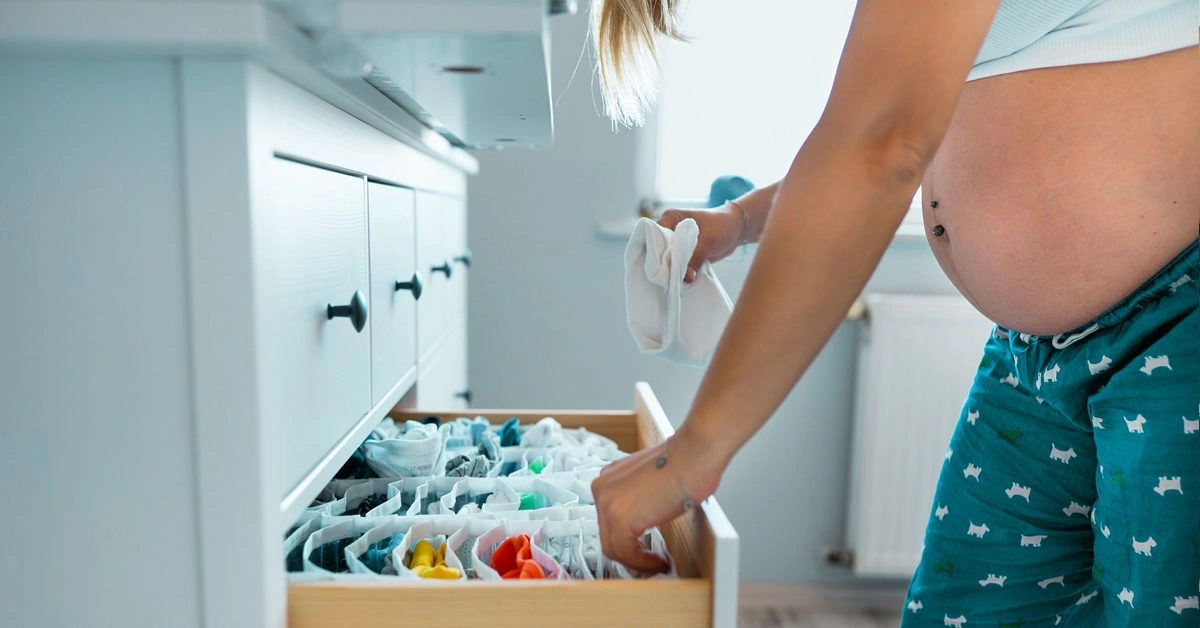
Belly button piercings are a popular way to express individuality. While piercings are generally safe when performed in a sterile setting, they carry potential risks. So if you’re pregnant or planning to become pregnant, you may have some questions.
Is it safe to keep a navel piercing during pregnancy? Will it become painful or bothersome as your bump expands? Is it alright to get a piercing while you’re pregnant?
Whether you’re considering a navel piercing or already have one, here’s what to expect throughout pregnancy.

Is it safe to keep a belly button piercing when pregnant?
If you’ve just discovered you’re pregnant, you might feel inclined to immediately remove your navel jewelry. That isn’t always necessary.
In short, yes — a fully healed belly button piercing is typically safe to keep during pregnancy. That said, there are circumstances where removing it makes sense.
Every person’s body responds differently. As your abdomen enlarges, your experience with a navel piercing may not match someone else’s.
Potential issues as your bump grows
Keeping a belly button piercing during pregnancy can lead to some discomfort as your skin stretches to accommodate the baby. As your bump expands and the skin tightens, the jewelry may tug on the surrounding tissue.
This pulling can cause soreness, redness, and small tears around the navel. If the area is torn or injured, bacteria can enter and increase the chance of infection.
Your piercing may also rub against clothing as your belly grows, which can be irritating as well.
Considerations during delivery
Some people opt to leave their belly ring in place for the duration of pregnancy and even give birth with it still on. If you have a vaginal birth, a navel piercing generally poses no problem.
However, it could interfere with a cesarean section.
Remember, birth plans can change quickly; an unexpected C-section can become necessary. For that reason, some expectant parents remove the navel jewelry before going to the hospital as a precaution.
Guidance for keeping a belly button piercing while pregnant
Maintain cleanliness
If you decide to keep your belly button piercing during pregnancy, make an effort to keep the surrounding skin clean and to reduce friction-related discomfort.
That said, if your navel piercing is fully healed, it usually doesn’t require special care during pregnancy. A typical belly button piercing can take around nine months to a year to heal completely.
Be alert for infection
If stretching causes minor tearing or irritation to the navel, gently washing the area with warm water and an antibacterial soap can help lower infection risk. Applying a topical antibacterial ointment may also be beneficial.
Signs of infection include redness, warmth to the touch, and discharge from the navel. Contact your healthcare provider if you notice these symptoms.
To prevent infection, cleanse the navel area daily when showering or bathing. Remove the jewelry at least weekly to thoroughly clean the site with warm soap and water, and let the area air dry before reinserting the ring.
Swap to pregnancy-friendly jewelry
For added comfort, consider replacing your usual navel jewelry with a maternity or pregnancy belly ring.
These are often made from polytetrafluoroethylene (PTFE), a flexible, nickel-free material designed to accommodate body changes and growing bellies. Such rings can help reduce skin stretching and injury.
Wear comfortable clothing
If you keep a belly button piercing, wearing loose clothes can help. Choose shirts that don’t rub the navel and maternity bottoms with a lower waistband to avoid irritating the area.
Advice for removing a belly button piercing while pregnant
Take out unhealed piercings
If you discover you’re pregnant before your navel piercing has fully healed, it’s recommended to remove the piercing until after delivery.
Your body will undergo many changes over the coming weeks and months that can interfere with healing. Leaving an unhealed piercing in place may result in the opening enlarging as the bump grows. A larger wound coupled with slower healing increases infection risk.
If you remove a piercing before it has healed, keep the area clean to prevent infection. Gently wash daily with warm water and antibacterial soap, and seek medical attention for any signs of infection.
Reinsert periodically to preserve the hole
If your piercing is fully healed but you choose to take out the jewelry, the hole can close. To keep it from closing, periodically reinsert the jewelry and move it slightly a few times per week. This helps maintain the opening.
If that doesn’t work, you may need to have the navel re-pierced after childbirth.
Avoid getting pierced while pregnant
You should not get new piercings during pregnancy. If you become pregnant with a recent navel piercing, remove it; likewise, avoid getting any fresh piercings while pregnant.
Pregnancy can affect your immune system, making infections more likely. Unsterile piercing tools have been linked to hepatitis B and C, and there’s also a risk of allergic reactions to metals like gold or nickel.
Takeaway
Naval piercings are a popular form of self-expression, and a fully healed navel piercing is generally safe to keep during pregnancy.
However, remove any piercing that causes pain or discomfort, and your clinician may advise removing jewelry before hospital admission in case a C-section becomes necessary.
These temporary measures are intended to protect the health of you and your baby.

















Leave a Reply
You must be logged in to post a comment.