
Your body contains thousands of ligaments and tendons. Both consist of connective tissue and can be torn or overstretched, yet they serve distinct roles and are crucial for normal movement and stability.
While ligaments and tendons are composed of fibrous connective tissue, their similarities largely end there.
Ligaments present as interlaced bands that link bone to bone and contribute to joint stability. For example, the anterior cruciate ligament (ACL) connects the thigh bone to the shin bone and helps keep the knee joint steady.
Tendons, positioned at the ends of muscles, fasten muscle to bone. Tendons exist throughout the body — from the head and neck down to the feet. The Achilles tendon is the largest, joining the calf muscle to the heel bone. The rotator cuff tendons enable your shoulder to move forward and backward.
Continue reading to find out more about how ligaments and tendons function and how they can be injured.
How ligaments and tendons function
Picture ligaments like sturdy ropes composed of tightly woven strands that bind bones together. They include some elastic fibers that permit joint movement, but not so much that the joint moves beyond safe limits.
The knee, for instance, contains four primary ligaments: one on each side and two that cross the front and back. These ligaments stabilize the knee and prevent excessive side-to-side or front-to-back motion.
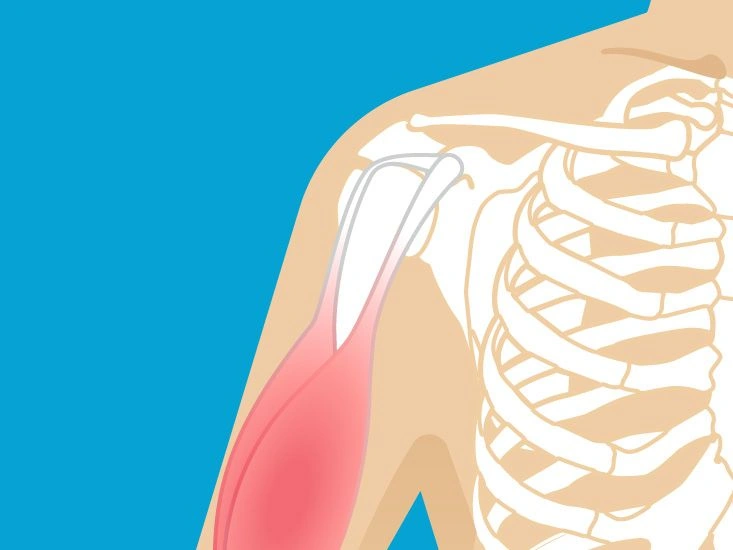
Tendons are also strong cords but have a bit more flexibility than ligaments. When a muscle contracts, its tendon pulls on the bone to produce movement. Consider what your biceps do when you flex your elbow. Tendons also help absorb some of the forces muscles generate when they activate.
Illustration of ligament vs. tendon

Common injuries affecting ligaments and tendons
Ligament
When a ligament is stretched beyond its limit or ripped, the injury is called a sprain. Many sprains occur suddenly, often due to a fall, awkward twist, or a direct blow.
Sprains frequently affect the ankle, knee, or wrist. For instance, a misstep can twist your ankle into an abnormal position, tearing a ligament and leaving the ankle feeling unstable. You may hear a pop or sense a ripping at the moment of injury. The wrist often suffers a sprain when you extend your hand to break a fall and the wrist bends backward, overstretching the ligament.
Signs of a sprain typically include pain, swelling, and bruising around the injured site. The joint can feel weak or loose and may not tolerate bearing weight. Symptom severity depends on whether the ligament is simply overstretched or fully torn.
Physicians grade sprains from grade 1 (mild stretching with minimal tearing) to grade 3 (a complete ligament rupture that results in joint instability).
Tendon
An overstretched or torn tendon is termed a strain. Strains commonly occur in the leg, foot, and back.
Strains often develop from repetitive motions and athletic activities. Athletes who train excessively without allowing time for recovery and muscle repair are at higher risk.
Like sprains, strains present with pain and swelling. Muscle cramping and weakness are also common.
What is tendonitis?
Tendonitis is inflammation of a tendon and represents another type of tendon injury. It can arise as part of the aging process — tendons become less resilient over time and are more susceptible to stress and injury.
Overuse is another common cause. For example, golfers and baseball pitchers frequently develop tendonitis in the shoulder.
Symptoms include pain with movement of the muscle and swelling. The affected area may feel warm to the touch.
Treatment for tendon and ligament injuries
Telling whether an injury involves a ligament or tendon by yourself can be difficult. If you have pain and swelling, consult your physician for an accurate diagnosis and appropriate treatment plan.
Meanwhile, whether the problem is a strain or a sprain, first-line care is usually similar. Medical guidance often includes:
- Rest. Try to keep the injured area immobilized while it begins to heal. Immobilization braces or crutches can help if necessary.
- Ice. Protect the skin with a towel and apply ice to the injured spot for about 20 minutes at a time, several times daily during recovery.
- Compression. Apply a compression wrap to reduce swelling. The bandage should be snug but not overly tight.
- Elevation. Elevating the injured limb above heart level can decrease swelling and support healing.
- Medication. Over-the-counter anti-inflammatory drugs and pain relievers may help control pain and swelling when used as directed.
Preventing sprains and strains
Some injuries — like stumbling unexpectedly or hitting your knee on the dashboard in a car crash — are hard to avoid. Others can be prevented. Try these measures to safeguard your tendons and ligaments:
- Warm up before exercise. Do light aerobic movements for about 10 minutes to prepare your body. For example, walk a lap or two before running.
- Start gradually and increase intensity slowly. This also helps warm up your muscles.
- Wear properly fitted shoes designed for your sport.
- Maintain a healthy body weight.
- Mix up your workouts. Balance cardiovascular activities with strength training.
- Allow recovery time after strenuous sessions or switch activities. Resting or cross-training minimizes repetitive stress on the same structures.
- Listen to your body. Rest if you feel pain or excessive fatigue; many injuries occur when the body is already overworked.
- Stretch. Most experts suggest stretching after exercise when muscles are warm and pliable. Hold each stretch for no more than 10 to 20 seconds and perform each stretch once. Avoid bouncing or stretching into pain.
Prognosis
There are thousands of ligaments and tendons across the body. Both are composed of connective tissue and can be torn or overstretched, but they perform different functions.
Ligaments connect bone to bone, while tendons link muscle to bone. Both are vital for efficient body mechanics. Identifying ligament and tendon problems early helps prevent more serious injuries and supports a more active, pain-free lifestyle.



















Leave a Reply
You must be logged in to post a comment.