
Hemorrhoids and cancer
Noticing blood in your stool can be frightening. Many people immediately fear the worst, including cancer, especially if it happens for the first time. Concerns such as black stool: causes death often surface during online searches, adding to the anxiety. While colorectal cancer can indeed lead to rectal bleeding and dark stools, hemorrhoids are a much more common explanation.
Although hemorrhoids can be painful and distressing, they are typically manageable and do not cause cancer. Understanding the differences between hemorrhoids and colorectal cancer can help you recognize warning signs early and know When should you worry about black stool or visible bleeding.
Below, we’ll review the overlapping signs and symptoms of hemorrhoids and colorectal cancer, highlight key differences, and explain when medical evaluation is necessary.
Similar symptoms
Hemorrhoids and colorectal cancer are distinct medical conditions, yet they can share certain symptoms. Because of this overlap, it can sometimes be difficult to tell them apart without a proper medical assessment.
Rectal bleeding
Rectal bleeding can appear in several forms. You might see blood on toilet paper, notice it in the toilet bowl, or observe it mixed with your stool after a bowel movement.
Hemorrhoids are the leading cause of rectal bleeding. However, cancers such as colorectal cancer and anal cancer may also result in bleeding from the rectum. The appearance and color of the blood often provide clues about its origin.
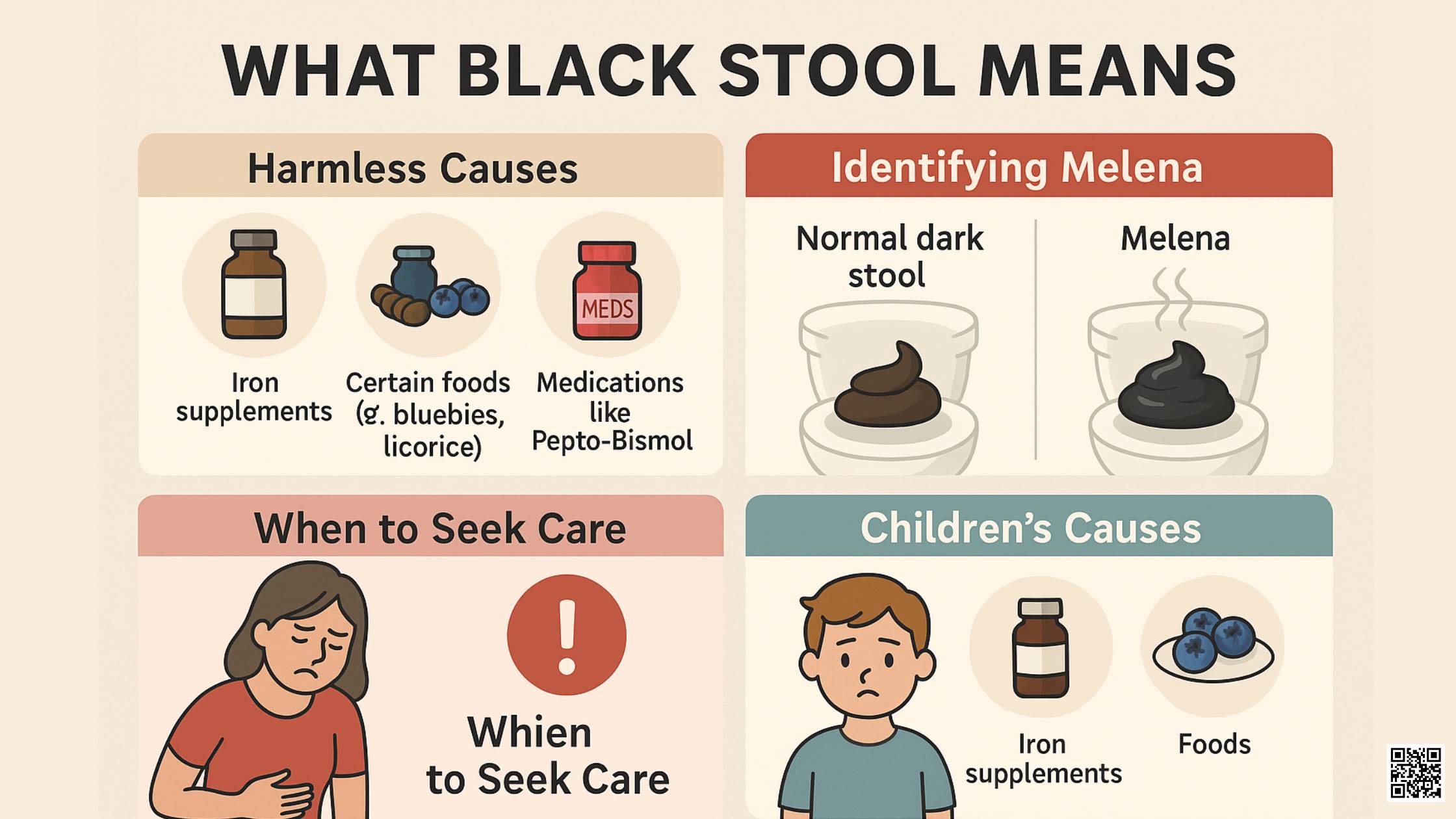
Bright red blood generally suggests a source in the lower digestive tract, such as the rectum or colon. Dark red blood may indicate bleeding higher up, such as in the small intestine. Black, tarry stools frequently result from bleeding in the stomach or upper small intestine. Many people searching about black stool: causes death are concerned about severe internal bleeding, but while black stool can signal a serious issue, it does not automatically mean a fatal condition. In some cases, Black stool without blood may be linked to diet, supplements like iron, or certain medications rather than active bleeding.

If you experience black, tarry stools along with weakness, dizziness, or fainting, immediate medical attention is critical, as these may be signs of significant gastrointestinal bleeding.
Rectal and anal itching
Both hemorrhoids and colorectal or anal cancer can lead to itching in the rectal or anal area. Irritation may occur when mucus or small amounts of stool remain on the sensitive skin inside the rectum or around the anus. This itching often becomes more noticeable after bowel movements and may intensify at night.
Persistent itching that does not improve with hygiene measures or over-the-counter treatments warrants medical evaluation to rule out underlying conditions.
A lump at the anal opening
Feeling a lump near the anal opening can understandably cause alarm. While such a lump can be associated with colorectal or anal cancer, hemorrhoids are a far more common cause.
External hemorrhoids and prolapsed hemorrhoids may create a soft or firm swelling beneath the skin around the anus. If blood collects within an external hemorrhoid, it can form a thrombosed hemorrhoid, which typically presents as a hard, tender lump that may cause significant discomfort.
Any new or changing lump should be examined by a healthcare professional to determine its exact cause.
Different symptoms
Despite some shared features, hemorrhoids and colorectal cancer also produce distinct symptoms. Recognizing these differences can help guide timely medical care.
Change in bowel habits
A persistent change in bowel habits is a well-known warning sign of colorectal cancer. Since normal bowel patterns vary from person to person, a concerning change refers to what is unusual for you. This may involve alterations in frequency, stool consistency, or the overall pattern of bowel movements.
Examples include:
- diarrhea
- constipation, including dry or hard stool
- narrow stools
- blood or mucus in stool
While hemorrhoids can cause discomfort during bowel movements, they do not typically lead to long-term changes in stool shape or bowel frequency.
Persistent abdominal discomfort
Colorectal cancer may cause ongoing abdominal pain or discomfort, such as bloating, cramping, or excessive gas. These symptoms are usually persistent and unrelated to temporary dietary factors. Hemorrhoids, in contrast, do not cause abdominal pain or digestive discomfort beyond the anal area.
Unexplained weight loss
Unintentional weight loss is a common symptom of colorectal cancer and is not associated with hemorrhoids. Approximately 38 to 51 percent of individuals with colorectal cancer experience unexplained weight loss, depending on the cancer’s stage and location. Any significant weight loss without changes in diet or exercise should prompt medical evaluation.
Feeling that your bowel doesn’t empty
The sensation of incomplete evacuation after a bowel movement is known as tenesmus. You may feel an ongoing urge to pass stool, even when your bowels are empty, and this can be accompanied by straining, discomfort, or cramping. Tenesmus is a symptom of colorectal cancer, although inflammatory bowel disease (IBD) is a more frequent cause.
Weakness or fatigue
Fatigue is a common symptom in many forms of cancer. Chronic bleeding within the intestinal tract can lead to anemia, which may result in weakness, tiredness, and reduced stamina. Hemorrhoids can cause mild bleeding, but significant anemia is more often linked to other gastrointestinal conditions, including colorectal cancer.
Rectal pain
Colorectal cancer is often painless in its early stages and does not usually cause rectal pain. In contrast, internal hemorrhoids can produce discomfort, especially if they become swollen or prolapsed. Sudden, severe anal pain is more commonly associated with a thrombosed hemorrhoid.
Treatment for hemorrhoids
If a healthcare provider diagnoses hemorrhoids, conservative management is usually sufficient to relieve symptoms. Many cases improve with home-based measures and over-the-counter (OTC) products. However, certain cases, such as a thrombosed hemorrhoid, may require medical intervention.
At-home treatment
The following strategies may help reduce pain, swelling, and itching:
- use OTC hemorrhoid treatments, such as creams, ointments, suppositories, and pads
- soak in a sitz bath for 10 to 15 minutes, two or three times a day
- take OTC pain relievers, such as ibuprofen or acetaminophen
- keep the area clean
- eat high fiber foods to help make bowel movements easier to pass
- apply a cold compress on the anus to relieve swelling
Increasing fiber intake, drinking adequate fluids, and avoiding prolonged straining during bowel movements can significantly reduce the risk of recurring hemorrhoids. Regular physical activity may also support healthy digestion and bowel function.
Medical treatment
Depending on the severity and type of hemorrhoids, a doctor may recommend minimally invasive procedures. Many hemorrhoid treatments can be performed in a clinical setting without anesthesia.
Medical procedures may involve draining a thrombosed hemorrhoid, removing hemorrhoids responsible for persistent bleeding or pain, or cutting off the blood supply to a hemorrhoid so that it shrinks and eventually falls off.
When to see a doctor
Any instance of rectal bleeding should be evaluated by a healthcare professional. Although hemorrhoids are the most frequent cause, bleeding can also indicate colorectal cancer or other gastrointestinal conditions. People often search for black stool: causes death when they notice dark stools, but the only way to determine the cause is through proper medical assessment.
A doctor may perform a physical examination, including a digital rectal exam, to confirm the presence of hemorrhoids and exclude more serious conditions. Additional tests, such as colonoscopy or imaging studies, may be recommended based on your age, risk factors, and symptoms.
Schedule a medical appointment if you experience bleeding during bowel movements or have rectal pain or itching that persists longer than a few days despite home treatment.
Seek prompt medical care if rectal bleeding occurs for the first time, especially if you are over age 40 or if the bleeding is accompanied by a change in bowel habits, unexplained weight loss, or persistent abdominal discomfort.
Emergency care is necessary if you experience:
- significant rectal bleeding
- dizziness
- lightheadedness
- fainting
Takeaway
It’s understandable to worry about cancer when you notice blood in your stool or discover a lump near the anus. However, hemorrhoids are much more common than colorectal cancer and are the most likely explanation for rectal bleeding in many cases.
A healthcare provider can typically diagnose hemorrhoids with a straightforward examination and, if needed, conduct further testing to rule out colorectal cancer or other serious conditions. If you observe blood in your stool, black or tarry stools, or develop new or worsening symptoms, do not ignore them. Early evaluation provides clarity, appropriate treatment, and peace of mind.




















Leave a Reply
You must be logged in to post a comment.