What Is a Calculus Bridge?


A calculus bridge is a hardened layer that develops when tartar accumulates across several teeth. Daily brushing and flossing can stop calculus bridges from forming, but once they’re present, only a dental professional can remove them.
Do you brush immediately after meals? If not, you might notice a thin, sticky coating starting to form on your teeth. That coating is plaque, and if it isn’t eliminated with brushing and flossing, it can mineralize into tartar — also known as dental calculus.
Tartar can cover multiple teeth and create a calculus bridge. You’ll need to see your dentist to have that hardened buildup cleaned away so it doesn’t compromise the health of your gums and teeth.
How plaque turns into a calculus bridge
Plaque easily accumulates on teeth. This adhesive film begins to form shortly after eating or drinking, especially after consuming sugary or starchy foods.
Food residue mixes with the bacteria in your mouth, producing acids that break down carbohydrates in what you’ve eaten or drunk. That mix of carbohydrates, acids, and bacteria forms a nearly invisible layer on your teeth — plaque.
If left alone, plaque won’t disappear on its own. Without timely brushing and flossing to remove this sticky film, it can harden into tartar.
This calcified dental plaque is also called dental calculus. The mineralization can happen fairly quickly; studies indicate it can occur within 1 to 14 days after plaque forms, though timing varies between individuals.
Tartar is problematic because it doesn’t stay confined to the tooth surface. It can extend and advance beneath the gumline. The calculus, which often appears tan or brown and can stain teeth, can damage the tissue under the gums and contribute to gum disease and decay.
Optum Now is operated by RVO Health. By clicking on this link, we may receive a commission. Learn more.
Photo of calculus bridge
The amount of tartar accumulation differs from one person to another, so a calculus bridge can appear in various ways.
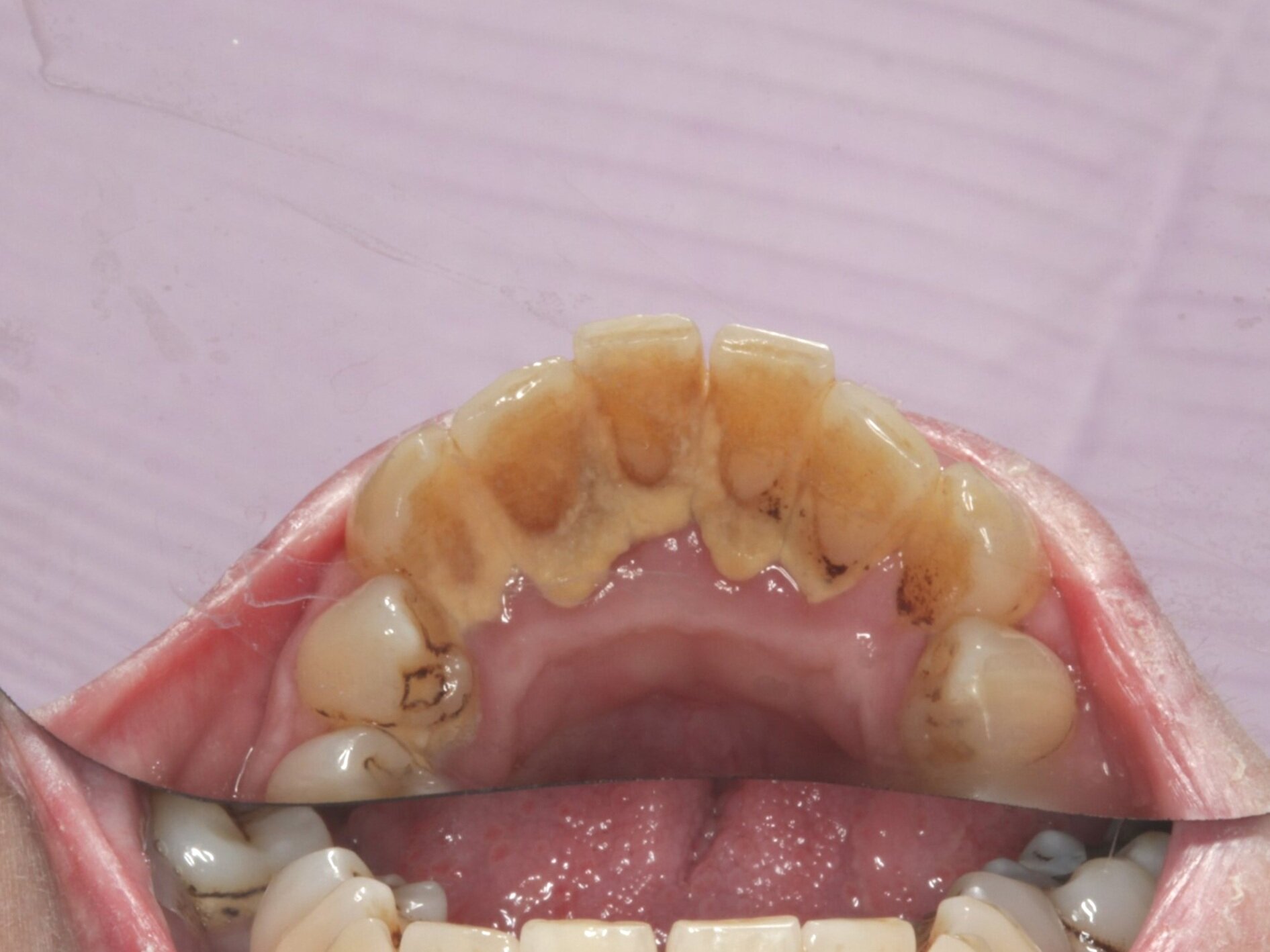
Typically, a calculus bridge looks like a brown or tan band along the edge of the teeth near the gumline. In more advanced cases, it may extend further down into the gumline or cover a larger portion of the tooth surfaces.
Consequences of a calculus bridge
A firm layer of calculus on your teeth is often visible. A dental calculus bridge can also lead to several oral health problems:
Bad breath
A buildup of plaque and tartar can cause unpleasant breath, a condition known as halitosis.
Gingivitis
Your gums may become inflamed or reddened. You might first notice bleeding when you brush or floss. If not treated, this can progress to a more severe form of periodontal disease called periodontitis.
Gum recession
Receding gums are another manifestation of periodontal disease. Your gums may pull away from the teeth, exposing more tooth surface and allowing bacteria to enter the pockets between teeth and gums.
Dental cavities
Tartar buildup can protect bacteria from being brushed away. The bacteria in plaque and tartar produce acids that erode tooth enamel, forming small holes that become cavities as the decay advances into the tooth.
Tooth loss
If dental calculus remains untreated, the resulting gum disease can ultimately lead to the loss of one or more teeth.
How a calculus bridge is removed
Once calcified plaque has formed a bridge on your teeth, you can’t remove it with a toothbrush. A dentist or dental hygienist must take it off. A professional cleaning can often eliminate most or all of the buildup.
If the calculus has traveled into or below the gumline, a routine cleaning may not be sufficient.
In those cases, a dental hygienist or dentist may use a handheld instrument called a dental scaler — a small hooked tool — to scrape and carefully remove the hardened plaque and tartar from around the gumline.
After scaling, the clinician may smooth rough spots on the root surfaces in a procedure called root planing. Ultrasonic devices are also available to remove tartar deposits.
When calculus is widespread, treatment may require more than one appointment. Your gums might be sore following extensive cleaning.
Preventing a calculus bridge
Good oral hygiene is the key to stopping tartar buildup and preventing a calculus bridge.
Because dental calculus can begin forming within days of plaque development, it’s important to remove plaque before it mineralizes.
The American Dental Association (ADA) advises these measures to maintain oral health and reduce tartar formation:
- Brush your teeth thoroughly twice daily with a fluoride toothpaste. Spend a full 2 minutes brushing each time.
- Clean between your teeth every day. Interdental cleaning, such as flossing or using interdental tools, helps clear debris tucked between teeth.
- Cut back on sugary beverages and snacks. Reducing sugar intake decreases opportunities for oral bacteria to mix with leftover sugars and form plaque on teeth.
- Visit your dentist regularly for checkups. Dentists can monitor your teeth and gums for early signs of gum disease, like gingivitis or receding gums, and tooth decay. They can also advise on habits and strategies to help you maintain a consistent oral care routine.
Some studies, including a 2008 double-blind clinical trial and a 2013 review of more than 30 studies , indicate that using a tartar-control toothpaste can help curb the buildup that leads to a calculus bridge.
Look for a toothpaste that contains both fluoride and triclosan, as research suggests these ingredients may combat plaque bacteria. For restorative concerns related to missing teeth or restorations affected by tartar, ask your dentist about options like a dental bridge or the differences between implant vs bridge to determine the best course for your oral health.
Bottom line
The most effective approach to protect your teeth is to prevent tartar or calculus buildup in the first place.
With consistent brushing and flossing, you can stop plaque from accumulating and reduce the chance of ever developing a calculus bridge that requires professional removal.
Frequently Asked Questions
A calculus bridge is a hardened band of tartar that forms when plaque mineralizes across multiple teeth, creating a continuous deposit along the gumline.
Plaque is a sticky film of bacteria and food residue; if not removed by brushing and flossing, it can mineralize within days into tartar (dental calculus), which may spread and form a bridge.
No. Once plaque has calcified into a calculus bridge, it can’t be removed with routine brushing; a dental professional must perform scaling or ultrasonic cleaning to remove it.
Calculus bridges can lead to bad breath, gingivitis, gum recession, cavities, and ultimately tooth loss if left untreated because they harbor bacteria and irritate gum tissue.
Preventive measures include brushing twice daily with fluoride toothpaste for two minutes, daily interdental cleaning (flossing), reducing sugary foods and drinks, using tartar-control toothpaste, and regular dental checkups.
Read Next

What Is the Webster Method?

Fatty Upper Pubic Area (FUPA) Weight Loss and Medical Treatment

How Rear Lateral Raises Can Benefit Your Workout Routine

10 Tasty Wild Berries to Try (and 8 Poisonous Ones to Avoid)

Peeing with an Erection Isn’t ‘More Difficult Than Childbirth,’ But It Can Be Challenging

Everything You Need to Know About Mini Dental Implants
Related Posts

What Does a Continuous Passive Motion (CPM) Machine Do?
Aug 28, 2026 • 31 min read
Is It Possible to Be ‘Too Wet’? Is This Really a Turn-Off?
Sep 16, 2026 • 25 min read
What Are the Purported Benefits and Uses of PanAway Essential Oil?
Aug 12, 2026 • 34 min read
Rexulti (Brexpiprazole) Overview
Aug 15, 2026 • 18 min read
Everything You Need to Know About Robotripping
Aug 8, 2026 • 35 min read