
Making flavorful, nutritious meals becomes much simpler when you have a few go-to ingredients. One of my favorites is pesto — a kitchen staple that instantly brings a taste of summer to many dishes.
Its aroma and fresh-herb flavor can elevate simple meals, but glancing at the Nutrition Facts on a jar of pesto might make you wonder if it’s truly a healthy choice.
Here’s a breakdown of what pesto is and whether it fits into a healthy eating plan.
What is pesto?
“Pesto” is a broad term for any uncooked sauce created by crushing or grinding ingredients into a paste.
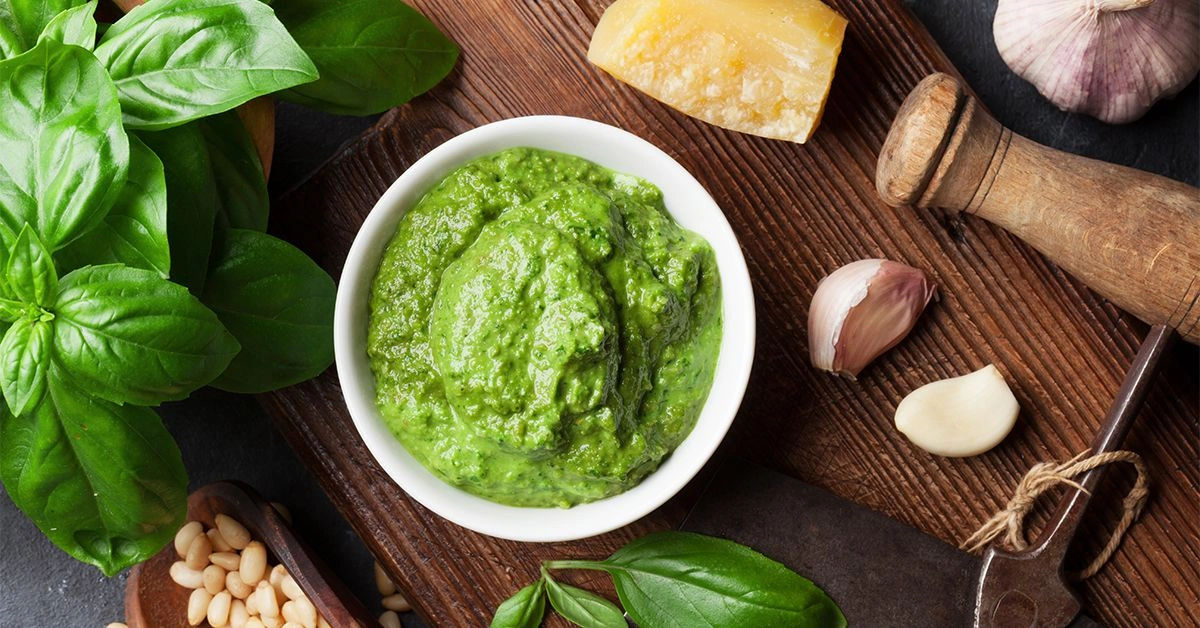
Originating in Genoa, Italy, the name “pesto” comes from the Italian verb meaning “to pound or crush.” Traditionally, people used a mortar and pestle to mash fresh basil with extra-virgin olive oil, Parmigiano-Reggiano, and other components.
While you can still use a mortar and pestle, most home cooks now opt for a food processor or blender for convenience.
Classic pesto, often called pesto Genovese, usually includes:
- fresh basil
- fresh garlic
- salt
- extra-virgin olive oil
- aged Parmesan and/or Pecorino cheese
- pine nuts
It’s commonly tossed with pasta, but pesto is a versatile condiment. The herbs and garlic lend bold flavor, and the cheese melts into warm preparations.
Some popular uses include:
- stirring a spoonful into vegetable or bean soups like minestrone to lift the flavor
- tossing with roasted vegetables
- brushing onto chicken or fish before grilling
- spreading in sandwiches or wraps
- mixing into hot or cold pasta salads
- using as a pizza sauce
- drizzling over salads
Summary: Pesto is a straightforward uncooked sauce from Italy made by blending raw ingredients like basil, olive oil, aged cheese, garlic, and nuts. It’s used as a sauce or flavoring for pasta, meats, fish, vegetables, and soups.
Types of pesto
Traditionalists might insist that pesto must be basil-based, but you can easily make pesto using other fresh herbs or leafy greens if basil isn’t your favorite or isn’t available.
Other greens that work well in pesto include:
- spinach
- arugula
- baby kale
- oregano
- parsley
- cilantro
You can also get creative with sun-dried tomatoes, olives, or roasted red peppers as the base for a different style of pesto.
Most variations still include garlic, salt, and aged cheese for flavor; quality olive oil for texture; and nuts for crunch.
If you make pesto at home, you can tweak these components — omit the cheese or use nutritional yeast for a vegan version, swap nuts for seeds if you have a nut allergy, or try different nut varieties for unique flavors.
Playing with ingredients opens many culinary possibilities for this versatile sauce.
Summary: Traditional pesto is made with basil, but you can use other leafy herbs, greens, roasted peppers, or sun-dried tomatoes. Garlic, olive oil, cheese, and nuts are common, though they can be substituted.
Nutrients
Because pesto is made with olive oil, nuts, and cheese, it can be relatively high in fat and calories. A 1/4-cup (63-gram) portion contains (1):
- Calories: 263
- Protein: 6 grams
- Fat: 24 grams
- Carbs: 6 grams
Although pesto is calorie-dense, much of its fat comes from unsaturated sources. Mono- and polyunsaturated fats from plant oils and nuts are associated with heart-protective effects (1, 2).
A standard serving delivers only modest amounts of vitamins and minerals, but it’s a good source of antioxidants from basil, olive oil, and nuts. Antioxidants help protect cells and DNA from oxidative harm (3, 4).
Remember that nutrient values change based on the ingredients you use and how you incorporate the pesto into a meal. Most people add pesto to other foods rather than eating it alone.
Summary: Pesto contains olive oil, nuts, and cheese, making it relatively high in calories and fat, but the fats are mostly unsaturated and may benefit heart health. It’s also rich in antioxidants that help shield cells from damage.
Benefits
With its vivid flavor, color, and scent, pesto offers many culinary advantages. A small amount can transform a dish, introduce new flavors, and entice picky eaters to try different foods.
:max_bytes(150000):strip_icc()/pesto-crop-6145c7d1a0b64f9bb05a0e359db261cf.jpg)
Pesto’s ingredients are aligned with the Mediterranean diet, which emphasizes fresh herbs, olive oil, and nuts — elements linked to a reduced risk of numerous chronic diseases, including (5):
- heart disease, heart attack, and stroke
- type 2 diabetes
- several cancers, such as breast, stomach, pancreatic, and liver
- Alzheimer’s and dementia
Research indicates the individual components of pesto may offer health perks (6, 7).
Healthy fats, antioxidants, and other compounds in olive oil and pine nuts can reduce production of inflammation-promoting substances in the body, and consuming these foods may help improve blood pressure, blood sugar, and cholesterol (6, 7).
Laboratory studies on olive oil also suggest it can inhibit certain bacteria and other microbes and may even have activity against some tumor cells (6).
Garlic contains plant compounds that can lower blood pressure and cholesterol, and it also has antimicrobial effects (8).
Some laboratory and animal research suggests garlic compounds might slow or stop cancer cell growth (8).
Fresh basil also contributes potential health advantages — test-tube and animal studies show basil’s antioxidants and essential oils may lower blood sugar and inhibit foodborne pathogens (9).
Summary: Beyond its flavor, pesto offers health benefits. Its components are staples of the Mediterranean diet, and certain compounds in these ingredients may help lower the risk of heart disease, diabetes, and cancer.
Downsides
Tree nuts are commonly used in pesto, so anyone with a nut allergy should check labels carefully. Consuming pesto that contains nuts can trigger a severe, potentially life-threatening anaphylactic reaction in people with tree nut allergies (7).
Another issue is the risk of foodborne illness. Fresh pesto — homemade or from the refrigerated section — can spoil if not stored properly or kept too long.
Store pesto in an airtight container in the refrigerator. If you won’t use it within about a week, freeze it. Freezing pesto in ice cube trays creates convenient single-serving portions.
Commercial, shelf-stable pesto has usually been pasteurized or contains preservatives, so it can sit in the pantry until opened. After opening, refrigerate and use within roughly two weeks.
Summary: If you have a nut allergy, be aware that pesto commonly contains nuts, so read ingredient lists. Keep pesto refrigerated, and freeze portions if you won’t consume it within a week or two.
The bottom line
Pesto is a flavorful sauce that complements many dishes.
Traditionally made from fresh basil, olive oil, and a few other components, it’s easy to prepare at home and adapt to your tastes.
Unless you have allergies, pesto’s ingredients are generally healthful and may help lower blood sugar, cholesterol, blood pressure, and certain cancer risks.
Make a batch of homemade pesto and freeze portions for a quick hit of summer flavor year-round.
Just one thing
Try this today: I make classic basil pesto every summer — it’s a perfect use for an abundant basil plant. Feel free to adjust ingredient amounts or swap items to suit your preferences.
To yield about 1 1/2 cups, gather:
- 3 cups fresh basil leaves, stems removed
- 1/2 cup walnuts or pine nuts
- 1/2 cup freshly grated Parmesan cheese
- 3 large garlic cloves, peeled
- 1/2–3/4 cup good-quality olive oil, depending on desired consistency
- 1/4 teaspoon salt, or to taste
Combine the basil, nuts, cheese, and garlic in a food processor and pulse until mixed. With the processor running, slowly stream in the oil until smooth. Season with salt to taste.
Keep it in an airtight container in the refrigerator for up to a week, or freeze small portions in an ice cube tray for convenient future use.


















Leave a Reply
You must be logged in to post a comment.