
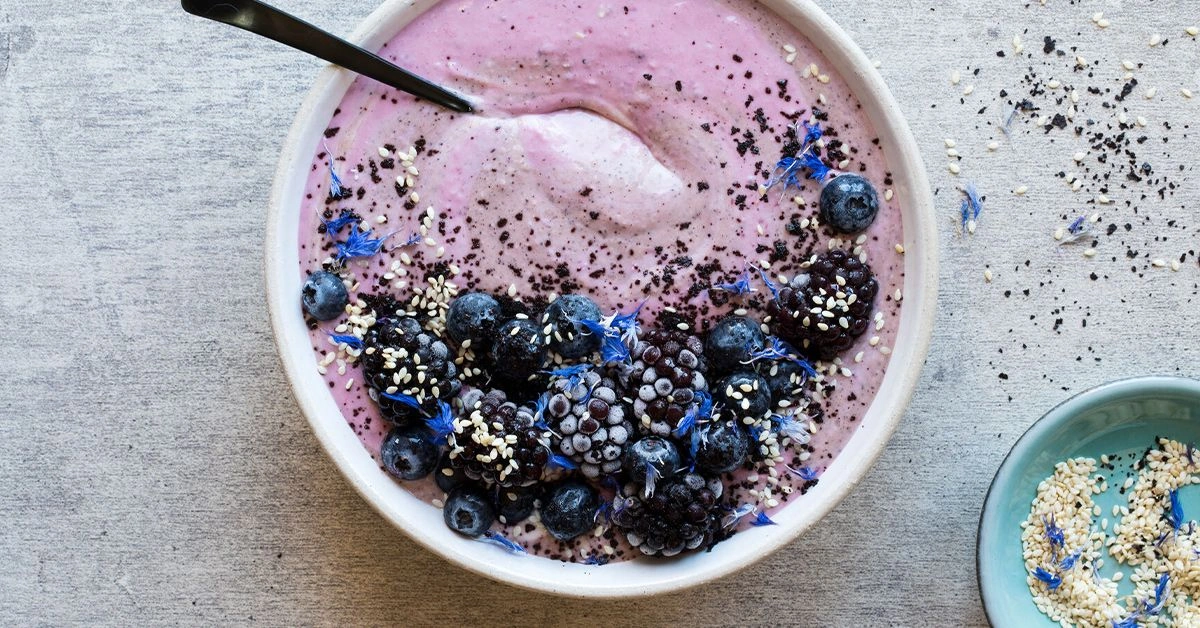
The nutritional value of an acai bowl depends largely on what you include in it. Many versions are rich in fiber and other valuable nutrients, but some bowls may represent more than a single serving.
In recent years, acai bowls have risen to fame as one of the trendiest health foods available.
They’re made from blended acai berries — fruits native to Central and South America — and served as a thick smoothie in a bowl or glass, often finished with fruit, nuts, seeds, or granola.
Famous for their deep color, silky feel, and adaptability, acai bowls are promoted as antioxidant-packed superfoods. Yet, they can also be calorie-dense and contain significant amounts of added sugar, leading some to suggest they may sometimes be more harmful than helpful for your diet.
Below we examine the advantages and disadvantages of acai bowls to evaluate whether they’re a healthy choice.

Acai bowls can be nutrient-rich
The nutrient make-up of your acai bowl will vary based on the ingredients you choose.
Generally, most bowls supply ample fiber, antioxidants, and micronutrients such as vitamin C, manganese, and potassium.
For comparison, a 6-ounce (170-gram) acai bowl might provide roughly:
- calories:211
- fat:6 grams
- protein: 3 grams
- carbs:35 grams
- addedsugar:11 grams
- fiber:7 grams
That said, store-bought bowls are frequently much larger and can contain up to 600 calories and 75 grams of sugar per serving, depending on the toppings you pick.
Besides acai, bowls commonly include other fruits like strawberries, blueberries, and bananas.
These additions are good sources of vitamin C and manganese, both acting as antioxidants that shield cells from oxidative harm caused by free radicals.
They’re also rich in potassium, an essential nutrient that helps manage blood pressure and guards against issues such as age-related bone loss and kidney stones.
Acai bowls are loaded with antioxidants
Acai berries contain high levels of antioxidants that combat free radicals and help prevent cellular damage.
Research indicates acai is particularly abundant in plant compounds called anthocyanins, including specific carotenoids like lutein, alpha-carotene, 13-cis-beta-carotene, and 9-cis-beta-carotene.
In a 2020 trial, consuming acai juice raised antioxidant levels in the blood of 30 healthy adults. That and other studies also observed an increase in a particular kind of HDL cholesterol (the “good” cholesterol), known as high-density lipoprotein, which helps remove harmful cholesterol forms and may lower heart disease risk.
Laboratory and animal research additionally suggests acai may be connected with enhanced cognitive function and reduced cell proliferation in certain cancers, likely due to its antioxidant compounds. Human studies are still needed to confirm these effects.
Acai bowls can be high in sugar and calories
Acai bowls are typically finished with toppings such as fruit, nuts, seeds, and granola.
Although these items are healthy individually, it’s easy to overload on toppings and convert a nutritious snack into a calorie-heavy treat.
Moreover, acai bowls bought at shops and cafes are commonly served in large portions, sometimes representing two to three servings in one bowl.
Consuming more calories than you burn each day can lead to gradual weight gain.
Additionally, many commercial acai bowls contain high amounts of sugar. Beyond contributing to excess calories, too much added sugar may encourage the onset of liver disease, cardiovascular disease, and type 2 diabetes.
The 2020-2025 Dietary Guidelines for Americans suggest keeping daily added sugars to no more than 12 teaspoons on a 2,000-calorie diet, roughly 48 grams of sugar.
A single 6-ounce (170-gram) acai bowl contains about 11 grams of added sugar, equating to approximately 23% of that daily limit.
How to prepare acai bowls
One of the simplest ways to enjoy the potential health perks of acai bowls is to make them yourself.
Begin by blending unsweetened frozen acai purée or acai powder with a splash of water or milk to form the base of your bowl.
Then top with your selections, such as sliced fruit, cacao nibs, or coconut flakes. You might also add nuts, seeds, or nut butter to increase protein, helping you stay satiated longer.
That said, keep an eye on portion sizes for toppings and limit high-calorie additions if your goal is weight loss.
For extra nutrients, try blending leafy greens like kale or spinach into the acai base.
Finally, monitor portion sizes to manage your intake of sugar, carbohydrates, and calories.
Bottom line
Acai bowls feature acai berries and often additional fruit, finished with items like fruit, nuts, seeds, and granola.
While they can be nutrient-dense and rich in antioxidants, commercially prepared versions are frequently large and may contain substantial added sugar and calories.
Making acai bowls at home lets you control portion sizes and choose healthier toppings, giving you more say over what goes into your meal.
If you want to make your own, acai powder is available in specialty stores and online.





















Leave a Reply
You must be logged in to post a comment.