
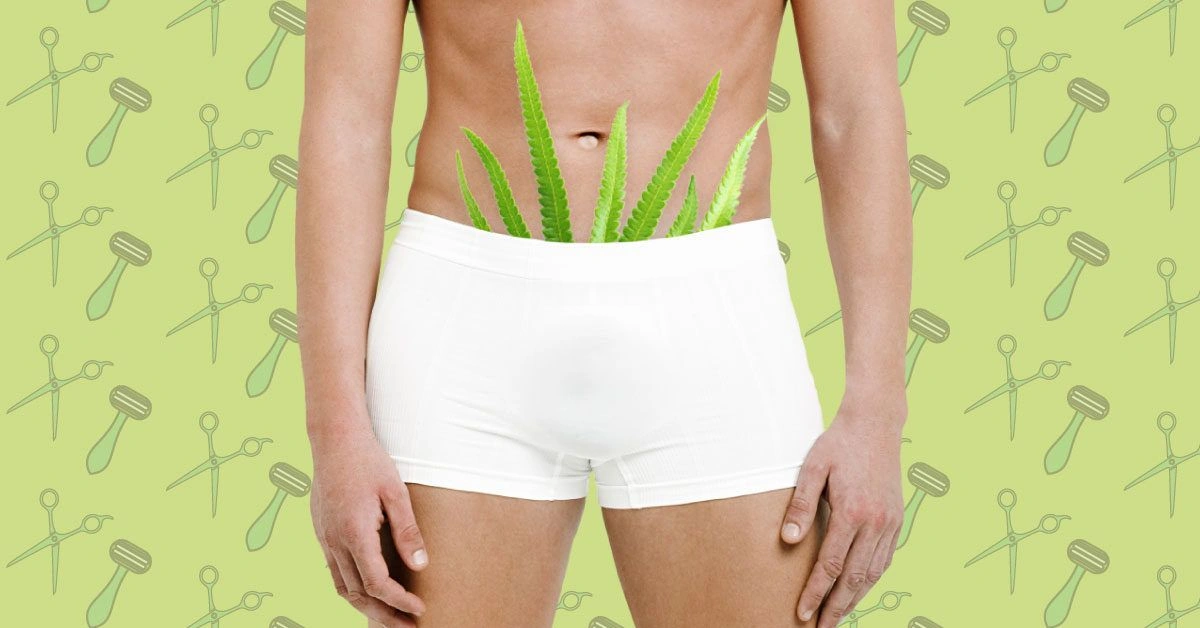
You can shave, wax, trim, or style your pubic hair to the shape and length you prefer — or simply leave it alone. The decision is yours.

Manscaping below the belt is popular
If you’re considering tidying things up, you’re not the only one.
A U.S. survey found that slightly more than half of men — 50.5 percent, to be precise — reported routinely grooming their pubic hair.
You don’t need to feel embarrassed about your reasons: men groom their pubic area for a variety of motives, from preparing for sex to keeping hair from emerging out of clothing.
That said, grooming isn’t mandatory. How you manage pubic hair is completely your call. Just make sure you understand safe practices, upkeep, and post-care before you begin.
Which pubic hair styles for men exist?
The style you choose depends on personal taste and how much upkeep you’re willing to do. Here are three common, go-to looks:
Briefs
The male counterpart to a bikini cut. Remove any hair that peeks out of your underwear.
Lion’s mane
Clear the hair from the scrotum and the base of the penis, leaving the hair just above the shaft. This approach can create the illusion of a larger penis.
Trimmed
Trim the hair to a short length so you retain coverage but have much shorter strands. This is a good compromise if you don’t want to go fully bare but want a neater look.
Other manscaping patterns:
- Minimalist: Remove hair above the penis while leaving hair on the scrotum and base of the penis. This saves time trimming around the delicate scrotal skin.
- Horizontal landing strip: Shave the hair above the pubic region (but not directly around the penis) and shorten scrotal hair to create a horizontal “landing strip” just above the penis.
- Shapes: First clip all hair short to make the design visible, then shape it as you like. Popular motifs include arrows, hearts, initials, and straight landing strips.
You can also opt to be completely smooth if that’s your preference. The style you settle on often depends on how much time and upkeep you want to invest.
How do you safely groom hair down there?
Before you begin, wash your hands and sanitize any tools. Consider taking a warm bath or shower first to soften the hairs — this helps reduce skin irritation, especially if you plan to go bare.
Do hair removal in the shower or over the toilet for easier cleanup. When finished, clean your tools and store them in a closed, hygienic case.
1. Shaving
Shaving is a frequent choice among men who manscape, but it’s also one of the riskiest when done carelessly.
With shaving, it’s easy to nick skin, exposing you to bacteria or irritants. Shaving can also clog follicles — the sheaths around each hair — which may lead to folliculitis or ingrown hairs.
How to: Shave with the direction of hair growth to lessen irritation. Pull the skin taut to reach all hairs safely.
Shaving tips
- Always sanitize your razor before using it.
- Wet your pubic hair to soften it and make cutting easier.
- Apply shaving cream, gel, or lotion with natural ingredients to reduce irritation. Look for less harsh options from brands like Dr. Bronner’s, Alaffia, Alba Botanica, Herban Cowboy, or Jāsön.
- Use cortisone cream if you need to calm post-shave irritation.
- Avoid getting gel or cream on the penis.
- Change blades regularly.
2. Waxing and threading
Waxing involves spreading warm wax on the area and pulling hairs from the follicle. It’s an alternative to shaving that often results in less itchiness as hair regrows.
Threading removes hairs by wrapping a thin thread around them and pulling them out from the root.
These techniques are safe when performed by trained professionals, but if done incorrectly they can cause redness, irritation, or ingrown hairs.
Waxing and threading tips
- Pick a salon that follows safe procedures. Read reviews and check any health-related ratings.
- The technician should be certified or trained and should wear gloves.
- Reputable salons won’t double-dip a waxing stick and will use disposable covers on the treatment table.
3. Chemical depilatories
Cream depilatories break down keratin in hair so it loosens from follicles and can be wiped away with a towel or gentle exfoliating sponge.
These products are commonly sold at drugstores, but they may contain chemicals that trigger allergic reactions or breakouts. People with sensitive skin should be cautious or avoid this method.
Hair removal cream tips
- Consult your doctor before using a depilatory to determine if it’s suitable for you. Consider having it administered by a medical professional.
- If you tend to have allergies, consider a skin or prick test to identify problematic ingredients.
- Always perform a patch test on another part of your body before applying it to your pubic area.
4. Laser hair removal and electrolysis
Laser and electrolysis are regarded as more permanent solutions because they target follicles to reduce or stop regrowth.
Laser uses focused light beams, while electrolysis transmits energy via heat or chemical reactions into the follicle to prevent new hair growth. Some hair may return after multiple sessions, but it’s typically finer and less noticeable.
Professionals will usually ask you to shave beforehand. Many clinics prefer about two weeks of growth, though some allow you to shave at the start of your appointment for privacy.
Laser hair removal tips
- Have these treatments performed by a qualified medical professional. Avoid over-the-counter products that claim similar results.
- Research treatment centers carefully. Look at reviews and health credentials before committing.
Both procedures should be done at established clinics by experienced practitioners. Consult your physician before choosing either method, especially if you have a history of keloid scarring.
If incorrectly performed, these treatments can alter skin pigmentation.
5. Trimming and upkeep
If you prefer not to remove hair completely, trimming is a fine option.
Unlike scalp hair, pubic hair stops after a certain length. So leaving it alone won’t result in Rapunzel-like growth below. If you decide to trim, cut away from your body.
Avoid cutting hair too close to the skin to prevent accidental nicks. Be particularly cautious around the scrotum and penis, where skin is much thinner.
Trimming tips
- Sanitize any scissors you’ll use on your pubic hair.
- Keep scissors in a dry, secure case.
- Don’t use the same scissors for other purposes or share them — this raises the risk of infections or infestations, such as lice or crabs.
- Keep the area dry so hairs don’t clump together, making precise trimming harder.
How should you handle rashes, bumps, or ingrown hairs?
Even with care, rashes, bumps, and ingrown hairs are common in the pubic area, particularly after shaving.
It’s best to stop shaving until symptoms subside. See a doctor if they don’t improve after about a week of avoiding shaving or if they worsen.
Here’s recommended care for each issue:
Rash
- Avoid scratching, which can worsen irritation or cause infection.
- Use hydrocortisone cream to ease itching.
Bumps
- Apply a gentle, natural lotion or cream to soothe irritation. (You can also make a homemade balm with shea butter, olive oil, baking soda, and a few drops of essential oil.)
- Allow hair to grow back until bumps clear.
- If bumps flare up every time you shave, consider shaving less often.
- Try an electric razor as an alternative.
Ingrown hairs
- Avoid shaving again for a few weeks to allow hairs to regrow.
- Use a warm, moist washcloth to gently massage the area daily until symptoms improve.
- Do not use tweezers to pick them out — this can raise the chance of infection.
Your choice matters — it’s up to you
There’s no single correct way to manage your pubic hair. Surveys suggest men are evenly split about grooming, so it ultimately comes down to what you prefer.
Some men choose to be completely smooth, others keep it trimmed, and some simply focus on hygiene — all are acceptable choices.
Keep in mind that pubic hair varies from person to person. Your growth pattern will differ from images you see online or in communal changing areas — genetic factors and overall health influence hair thickness and growth.
If a partner or someone else pressures you to alter your pubic hair in ways you’re uncomfortable with, speak up. Your body is yours to decide about, and only a medical professional (when health necessitates) should dictate changes.
Wear them proudly, trim them how you like — it’s your call!




















Leave a Reply
You must be logged in to post a comment.