
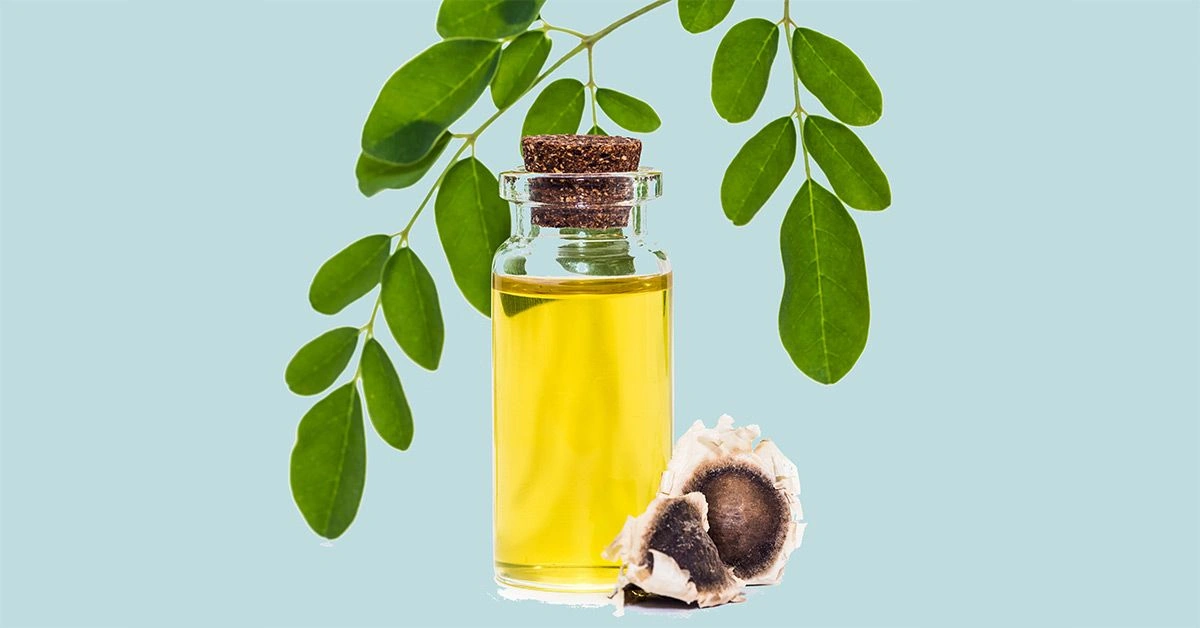
Moringa oil is extracted from the seeds of Moringa oleifera, a modest tree originating in the Himalayan region. Nearly every component of the moringa plant — seeds, roots, bark, blossoms, and leaves — is utilized for nutritional, industrial, or therapeutic applications.

Because of its wide range of uses, it’s often labeled “the miracle tree.” It’s also known as the drumstick tree, a name inspired by the shape of its seed pods.
Moringa seeds are rich in oil and contain several nourishing constituents, including monounsaturated fats, protein, sterols, and tocopherols. Moringa oil is produced through different industrial methods, such as solvent extraction and cold-pressing.
It’s sold both as an essential oil and as an edible cooking oil, and it’s commonly incorporated into hair and skincare formulations.
Moringa oil uses and benefits
Moringa oil has a long history as a folk remedy and as an ingredient in topical cosmetics. Today, it’s produced for a diverse set of personal and industrial purposes.
- Cooking oil. Moringa oil is rich in protein and oleic acid, a heart-healthy monounsaturated fat. When used in the kitchen, it’s an affordable, nutritious alternative to pricier oils. It’s becoming an important dietary oil in regions facing food scarcity where moringa trees are cultivated.
- Topical cleanser and moisturizer. The oleic acid in moringa oil makes it useful as a cleansing agent and as a moisturizer for both skin and hair.
- Cholesterol management. Edible moringa oil contains sterols, which have been shown to reduce LDL, the “bad” cholesterol.
- Antioxidant. Beta-sitosterol, a plant sterol present in moringa oil, might offer antioxidant and antidiabetic advantages, though additional research is required to confirm these effects.
- Anti-inflammatory. Moringa oil holds multiple bioactive compounds with antioxidant and anti-inflammatory qualities, effective both when consumed and when applied topically. This may make moringa oil useful for treating acne. These compounds include tocopherols, catechins, quercetin, ferulic acid, and zeatin.
Moringa oil products
Moringa oil appears in several forms:
- Cooking oil suitable for frying and baking.
- Essential oil for topical use on skin and hair. Always dilute essential oils with a carrier oil before applying.
- An ingredient in hair and skin care items like soap, liquid cleansers, hydrating toners, massage oils, shampoos, and conditioners.
Tips on choosing moringa oil
Moringa oil is sometimes called behen oil or ben oil, a nod to its behenic acid content.
- Determine if it’s a carrier oil or an essential oil. Check whether the product is a carrier oil or an essential oil. Like all essential oils, moringa essential oil should be blended with a carrier oil before topical use. Moringa essential oil may not be intended for ingestion and shouldn’t be taken internally.
- Choose cold-pressed, food-grade oil for cooking. Some moringa oils are produced at scale using solvent extraction for non-edible purposes like fuel or lubricants. If you intend to cook with it or apply it to your skin, opt for cold-pressed, organic oil labeled for culinary or cosmetic use.
- Check how it’s manufactured. Prefer brands that are open about sourcing and production practices.
- Look at the oil’s color and clarity. Seek an oil that is pale yellow and has a faint peanut-like aroma. Some bottled products may contain little or no genuine moringa oil.
Moringa oil for hair and skin
There are commercially available options, such as Herbal Essences Golden Moringa Oil for hair, that offer convenient benefits.
You can also craft your own skin or hair oil treatment using moringa essential oil.
For hair
Ingredients
- 2 cups of a carrier oil with moisturizing properties, such as almond oil
- 5 to 10 drops of moringa oil
- 5 to 10 drops of a helpful essential oil, for example lavender or tea tree
Shop for moringa oil online.
Directions
- Combine the oils in a glass bowl or bottle.
- Apply to the hair, massaging into the scalp and roots.
- Cover your hair and leave the treatment on overnight.
- Shampoo and condition as normal the next morning.
- You can briefly warm the blend in the microwave before application; some people prefer the intensified aroma that heating produces.
For skin
Directions
- Use the same ingredients as the hair treatment. Try different carrier and essential oils to change the scent.
- Gently massage into facial or body skin.
- Blot away any surplus with a tissue.
Moringa oil has a relatively long shelf life, typically up to about one year. Store any oil blend in a glass container at room temperature, kept in a dark place, to slow rancidity.
Moringa leaves vs. oil
The whole moringa plant is used in various ways. Note that moringa oil is derived exclusively from the seeds, not the leaves or flowers.
Some claimed benefits of moringa come from other preparations, like leaf powder, rather than from the oil.
For instance, some research indicates moringa leaves may help with blood sugar management. The leaves may also possess antibacterial qualities.
Consumption of the bark, leaves, and flowers has been associated with uterine contractions that could cause miscarriage. Moringa oil has not been linked to this danger. Still, it’s wise to consult your physician about using moringa oil, especially when trying to conceive or during pregnancy.
The takeaway
Food-grade moringa oil is a nutritious monounsaturated fat rich in protein and other valuable compounds. As an essential oil, moringa serves as a moisturizing and cleansing agent for the skin. It may also help with acne and function as a hydrating treatment for hair.


















Leave a Reply
You must be logged in to post a comment.