
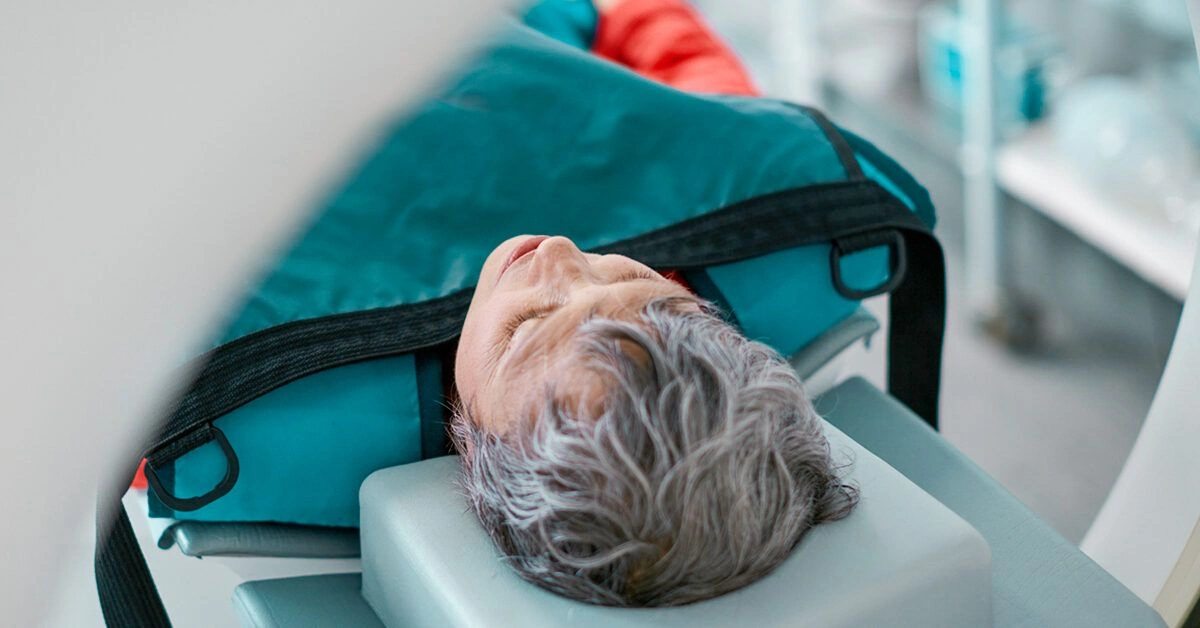
Healthcare providers can employ an MRI to assess both the structure and function of your liver. MRIs are highly precise and do not involve ionizing radiation. That said, they can be costly and aren’t suitable for everyone.
This piece will outline which symptoms and conditions might prompt a liver MRI, what findings these scans can reveal, and what to anticipate if you have an upcoming liver MRI.
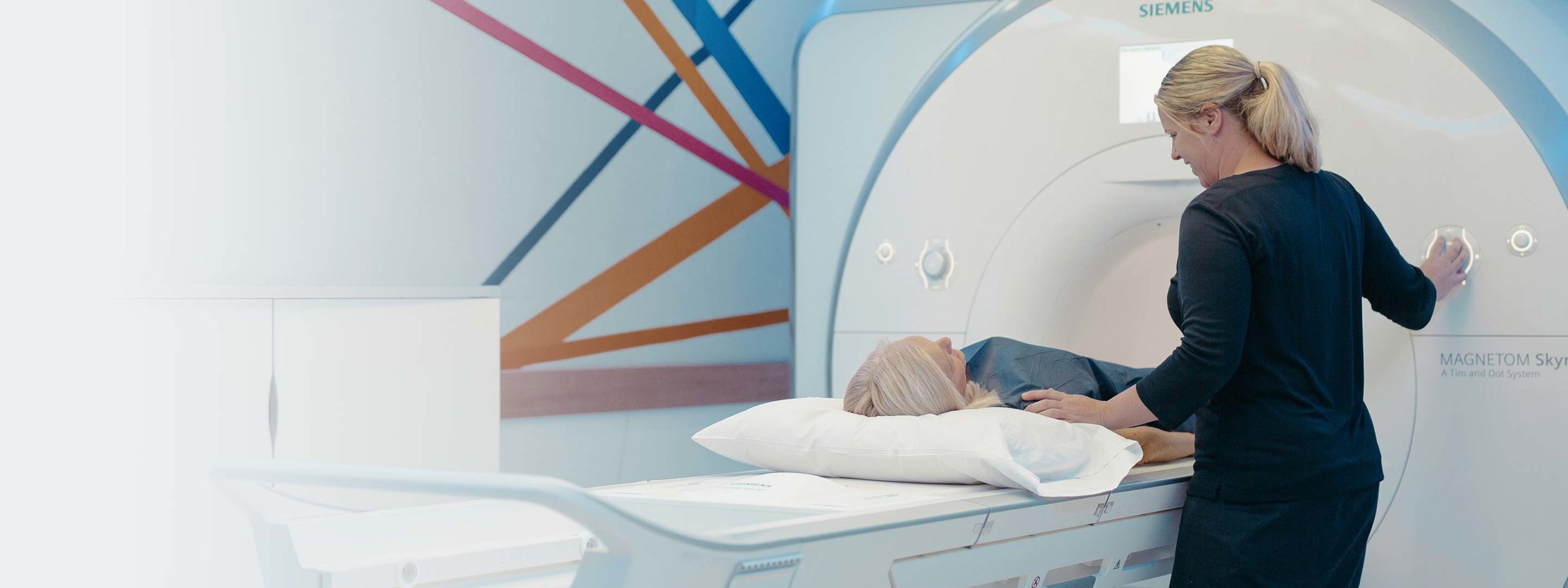
What is an MRI?
An MRI scan is a noninvasive diagnostic exam clinicians use to visualize the structure and activity of internal organs. MRI machines use a powerful magnet to realign protons in the body, then apply radiofrequency pulses to convert the energy emitted by those protons into detailed images.
Contrast agents — often based on metallic compounds such as gadolinium — may be injected to influence proton movement. This results in sharper, brighter images that can provide physicians with a clearer view of the area being studied.
MRI is especially effective for imaging soft tissues and non-bony structures. It can differentiate various tissue types within a single region.
In contrast to X-rays or CT scans, MRI does not rely on radiation. For that reason, clinicians often favor MRI when repeated imaging is necessary.
What can a liver MRI reveal?
A liver MRI can depict the organ’s anatomy and detect abnormal masses. It also shows blood flow patterns within the liver, offering useful insights into vascular conditions that may affect the organ.
Liver MRIs may be performed with or without contrast. Scans using contrast generally yield clearer and more conspicuous images than those without.
Because MRI provides highly detailed imagery, it offers clinicians a high degree of accuracy when diagnosing multiple liver diseases.
For instance, in two separate studies from 2019 and 2018, MRIs enabled physicians to correctly identify fatty liver conditions and liver cancers in over 75% of scanned participants.
An MRI is often regarded as the preferred test for distinguishing between malignant and benign liver lesions.
MRIs are frequently chosen over CT scans because they avoid radiation exposure and their image quality is less dependent on the operator’s technique. Additionally, MRI can precisely localize the best site for a biopsy if tissue sampling is required.
When is a liver MRI indicated?
Your clinician may request a liver MRI for various reasons. It can be used to track disease progression and response to therapy, or to help identify conditions such as:
- liver cancer
- benign liver tumors or growths
- cirrhosis
- fatty liver disease
- hepatitis
If you have risk factors — for example family history, heavy alcohol use, or diabetes — for liver disease and you’re experiencing symptoms, your provider may select MRI as a sensitive, minimally invasive diagnostic option. For guidance on dietary measures that can influence liver size and health, consider exploring a liver shrinking diet.
Symptoms that could suggest a liver problem include:
- abdominal bloating or swelling
- leg swelling
- easy bruising
- changes in urine or stool color
- jaundice (yellowing of skin or eyes)
- decreased appetite
- fatigue
- nausea
What to expect during a liver MRI
Below is an overview of what typically happens before, during, and after a liver MRI.
Before the scan
Prior to the MRI, your clinician will review your medical history and any allergies, particularly reactions to contrast agents. You may be ineligible for MRI if you have implants or devices that could be affected by the magnet.
If cleared for imaging, you’ll schedule the procedure. MRI exams are available in hospitals, imaging centers, and outpatient clinics.
Often, you’ll be asked to refrain from eating or drinking for about 4 hours before the test, though taking necessary medications with small sips of water is usually permitted.
On arrival, you’ll change into a gown and remove any metal-containing jewelry or accessories.
During the scan
When it’s time for imaging, you’ll lie on the motorized table that slides into the MRI bore. Many centers provide headphones and music because the scanner makes loud noises.
You shouldn’t feel anything during the scan aside from motion as the table moves in and out. If you’re prone to claustrophobia or anxiety, inform the technologist. Remaining very still is important for obtaining clear images.
The full appointment may last around one hour, though time in the scanner depends on:
- your size and body habitus
- the regions your doctor wants imaged
- whether contrast is given
- how still you remain
Are MRIs uncomfortable?
MRI exams are generally painless. If contrast is used, you’ll likely have a peripheral IV placed to administer the agent. Some people feel a warming sensation from the dye, and contrast may be avoided in those with known kidney problems.
You might have soreness at the IV site afterward, and there is a small risk of experiencing side effects from contrast.
After the scan
Once the MRI is finished, you can dress and leave unless other procedures are planned. If an IV was used, it will be removed.
Minor bleeding or tenderness at the IV insertion site can occur. If contrast was administered, you may receive instructions to drink extra fluids to help flush the agent from your system and reduce any kidney strain.
The time it takes to receive results varies based on the reason for the scan and who interprets the images.
Other tests for liver disease
While MRI is often the most accurate imaging option, other tests can help diagnose liver conditions. Alternatives include ultrasound or CT imaging, along with blood tests and liver biopsy.
Blood work that assesses liver function or indicates disease can include:
- serum bilirubin
- serum albumin
- international normalized ratio (INR) or prothrombin time (PT)
- serum alkaline phosphatase
- alanine transaminase (ALT)
- aspartate transaminase (AST)
- gamma-glutamyl transpeptidase
- lactic dehydrogenase
- 5′-nucleotidase
- alpha-fetoprotein
- mitochondrial antibodies
- serum alpha-1 antitrypsin
Your clinician may request one or several of these tests based on your symptoms and your personal and family medical history.
Frequently asked questions about liver MRIs
Can someone with a hip replacement or implant have an MRI?
Having an MRI after a joint replacement may be possible if the implant material is MRI-compatible.
Consult the surgeon who placed your hip or joint prosthesis if you’re uncertain whether your implant is safe for MRI.
Which is superior for detecting liver disease: MRI or CT?
MRI generally provides greater detail than CT and avoids radiation exposure. However, MRIs are pricier and some people with implanted devices cannot undergo MRI safely. Discuss the most suitable option with your doctor.
Should I undergo routine scans if I’m at risk for liver disease?
Regular imaging isn’t typically recommended unless your physician is monitoring a specific condition.
If you have personal or family risk factors for liver disease, your provider will advise on the appropriate surveillance and testing schedule.
Takeaway
An MRI is a noninvasive method for evaluating the liver for disease and structural changes.
The exam itself is not painful, though scans that use contrast require IV access. Individuals who are claustrophobic or who have certain implanted devices may not be suitable candidates for liver MRI.
Discuss your personal risks and health history with your provider to determine whether a liver MRI is appropriate for you.





















Leave a Reply
You must be logged in to post a comment.