

Although both multiple sclerosis (MS) and fibromyalgia can produce long-lasting pain and exhaustion, they are distinct disorders. Obtaining an accurate diagnosis is essential to ensure appropriate treatment.
Multiple sclerosis (MS) is an autoimmune disorder of the nervous system in which the protective sheath (myelin) surrounding nerves is damaged. This myelin loss eventually impairs normal nerve function.
Fibromyalgia involves widespread musculoskeletal pain across the body. In addition to persistent pain, fibromyalgia commonly causes excessive tiredness, sleepiness, and problems with mood and memory.
While they are different illnesses, they can present with overlapping symptoms.
Both ailments require a range of medical evaluations to reach a diagnosis. Before undergoing testing, you may be able to recognize patterns in your symptoms that point toward one condition or the other. Your physician can help interpret what you’re experiencing.
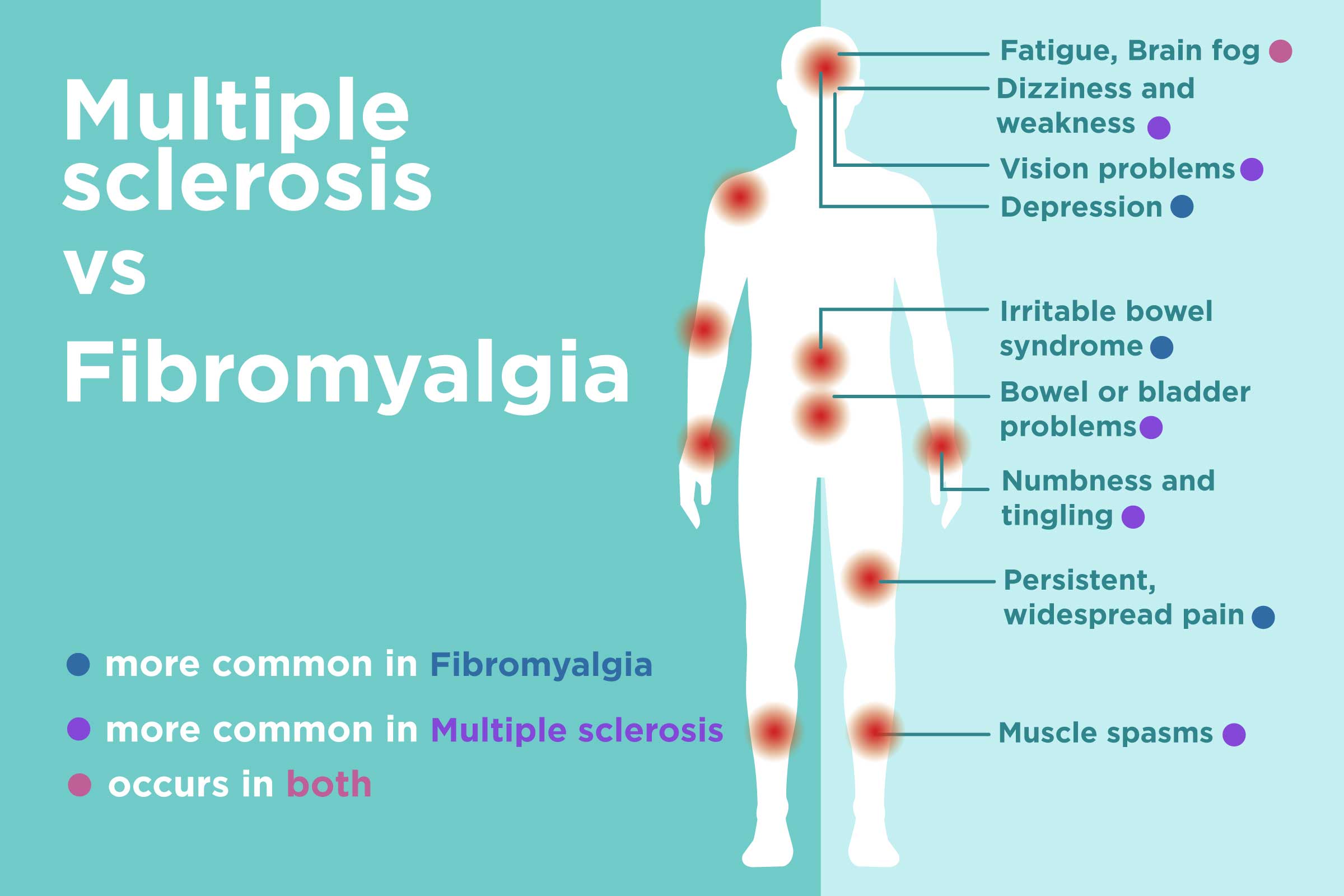
What are the symptoms?
These two conditions share certain symptoms but also have features unique to each. Examples include:
| Symptom | Fibromyalgia | MS |
|---|---|---|
| chronic pain | ✔ | ✔ |
| fatigue | ✔ | ✔ |
| memory issues | ✔ | ✔ |
| difficulty walking | ✔ | |
| slurred speech | ✔ | |
| vision problems | ✔ | |
| numbness and tingling | ✔ | ✔ |
| trouble concentrating | ✔ | ✔ |
| depression | ✔ | ✔ |
Fibromyalgia symptoms
The pain seen in fibromyalgia is persistent and widespread, often described as a constant, dull ache. To meet criteria for fibromyalgia, this pain generally must persist for a minimum of three months and be present on both sides of the body, above and below the waist.
Other common features of fibromyalgia include:
- Memory problems: “Fibro fog” refers to the confusion, reduced focus, and memory disturbances many with fibromyalgia report.
- Mood fluctuations: Depression is fairly common among those with fibromyalgia, and abrupt mood shifts may occur.
- Chronic fatigue: Fibromyalgia often causes profound tiredness. Individuals may spend extended periods sleeping or resting, yet many also have coexisting sleep disorders such as sleep apnea or restless legs syndrome.
MS symptoms
MS erodes the insulating layer around nerves and ultimately can harm the nerves themselves. Damaged nerves may lose the ability to sense or transmit sensations normally.
Symptoms of MS depend on how extensive the nerve injury is and which nerves are involved. People with MS commonly experience considerable long-term pain, and may develop numbness and weakness in affected regions. Tingling sensations and mild pain are also frequent.
Other MS-related signs include:
- Difficulty walking: You may develop an uneven gait and encounter problems ambulating. Balance and coordination can be impaired.
- Slurred speech: As myelin deteriorates, neural signals slow, which can make speaking clearly more challenging.
- Vision disturbances: Problems such as double vision or partial/complete vision loss can occur. Eye discomfort is also common.
Diagnosing fibromyalgia and MS
Identifying either condition can be challenging for clinicians. Frequently, a physician arrives at a diagnosis after ruling out other potential causes of your symptoms.
Diagnosing fibromyalgia
Fibromyalgia is considered when no other explanation accounts for the widespread pain. The pain typically must have persisted for at least three months.
There is no definitive laboratory test for fibromyalgia. Instead, clinicians rely on a cluster of symptoms, with widespread pain being a central criterion.
Doctors may also assess “tender points.” People with fibromyalgia often report increased pain when firm pressure is applied to specific sensitive areas.
Diagnosing MS
MS is not identified by a single definitive test. After excluding other possibilities, an MRI can reveal lesions on the brain and spinal cord. A lumbar puncture (spinal tap) may also be performed.
During a spinal tap, a small amount of cerebrospinal fluid is collected and examined for antibodies associated with MS.
The differences in treatments
After confirming a diagnosis of fibromyalgia or MS, your clinician will recommend treatments tailored to manage symptoms and enhance quality of life. Because the disorders differ, their treatment strategies do as well.
Fibromyalgia treatment
Fibromyalgia can be managed with a mix of approaches, including over-the-counter (OTC) drugs, prescription medicines, and complementary therapies.
Common OTC options include:
- acetaminophen (Tylenol)
- ibuprofen (Advil)
- naproxen sodium (Aleve)
Prescription options include:
- antidepressants such as duloxetine (Cymbalta)
- antiseizure drugs like pregabalin (Lyrica)
Complementary therapies include:
- acupuncture
- massage
- yoga
- tai chi
Lifestyle measures include:
- ensuring adequate sleep
- regular physical activity
- reducing caffeine
- managing stress
- dietary modifications
- physical therapy
MS treatment
Like fibromyalgia, MS has a variety of treatment options. Prescription therapies can diminish inflammation and slow or alter disease progression.
Other measures address symptom control and quality of life, including OTC remedies, complementary practices, and lifestyle adjustments.
OTC pain relievers used for musculoskeletal pain include:
- aspirin
- acetaminophen (Tylenol)
- ibuprofen (Advil, Motrin)
Prescription treatments and interventions include:
- injectables such as Avonex or Extavia
- oral agents like Aubagio and Tecfidera
- infused therapies such as Lemtrada
- high-dose Solu-Medrol (a steroid) for managing relapses
- physical therapy for rehabilitation
- speech-language therapy
Complementary approaches include:
- acupuncture
- stress reduction techniques
- cognitive behavioral therapy
Lifestyle recommendations include:
- following a nutrient-rich, balanced diet that includes omega-3s, is high in fiber, and low in saturated fat
- regular exercise, including stretching
Before starting any new treatment—whether prescription, over-the-counter, or labeled “natural”—talk with your doctor. Some approaches can interact with your current medications or therapies.
Outlook for each condition
Currently, both MS and fibromyalgia are chronic conditions without a cure. While treatments can ease symptoms and improve daily functioning, neither condition has a definitive cure and both may progress over time.
Fibromyalgia
Fibromyalgia is not life-threatening. Given the limited pharmaceutical options, lifestyle and complementary strategies play a key role in management.
Many people with fibromyalgia who adopt necessary lifestyle adjustments and use medications when appropriate see meaningful symptom improvement.
MS
Most individuals with MS have a life expectancy similar to that of people without the condition, though rare severe cases can have a different prognosis.
Those with MS can also develop other conditions like cancer or heart disease, just as anyone else might.
MS symptoms can be unpredictable, and most people experience some disease progression with time. Individuals who have longer intervals between relapses generally fare better and tend to have less severe symptoms.
Takeaway
Although MS and fibromyalgia can present with overlapping signs, they are distinct disorders. Knowing the differences can help you and your doctor pursue the appropriate tests earlier.
If you have unexplained symptoms that resemble either condition, schedule an appointment with your healthcare provider. They can investigate the cause and arrange the treatments you need.
Both conditions can significantly affect daily life. As with many illnesses, initiating treatment promptly can improve comfort and quality of life and may slow symptom progression.






















Leave a Reply
You must be logged in to post a comment.