

Olive oil is widely treasured in cooking for its healthful properties. Its usefulness, however, isn’t limited to the kitchen. For millennia, olive oil has been applied to hair as a moisturizer and nutrient source.
While rigorous scientific study on olive oil for hair care is sparse, existing research indicates it can act as a conditioner and help retain moisture.
One practical way to harness olive oil’s hydrating qualities is by creating a hair mask.
A hair mask is an intensive conditioning treatment left on the hair for an extended period — typically from about 30 minutes up to 2 hours — depending on the mask’s components, your hair texture, and how deep a treatment you need.
This article explores the advantages of an olive oil hair mask, offers recipes, and explains the application process.
What are the benefits of an olive oil hair mask?
Direct scientific evidence on olive oil’s effects on hair is limited, so claims rely partly on broader studies of oils and on anecdotal experience.
That said, a review of evidence indicates that mineral and vegetable oils can protect hair against harm and breakage and provide moisturization (source).
Although this review didn’t single out olive oil, it noted that monounsaturated and saturated oils may penetrate the hair shaft more effectively than polyunsaturated oils.
Put simply, applying an oil like olive oil may offer advantages compared with more polyunsaturated oils such as sunflower or safflower oil.
A 2017 review of olive oil’s health effects mentions squalene — present in virgin olive oil — as an ingredient that functions as a moisturizer in cosmetic products.
Virgin olive oil also supplies vitamin E and additional antioxidants. A 2010 study suggests that nutrients within the vitamin E family may support hair growth.
Summary
Although formal research remains limited, many people — including professionals — commonly use olive oil for hair care. Anecdotal benefits attributed to olive oil include:
- reduced breakage and damage
- improved moisture retention
- enhanced shine
- softer texture
- potential for increased hair growth
- stronger hair shaft
- fewer split ends
- reduced dandruff
Does it work for all types of hair?
Users commonly report that olive oil masks perform best on the following hair types:
- coarse
- thick
- dry
- chemically processed, treated, or otherwise damaged
If your hair is naturally fine, thin, or you have an oily scalp, use olive oil treatments sparingly:
- thin hair
- fine hair
- oily hair or scalp
How to make an olive oil hair mask
You can easily prepare an olive oil hair mask at home. Start with extra virgin olive oil and test how it affects your hair before adding any other components.
Follow these steps for a simple olive oil mask:
- Choose high-quality extra virgin olive oil. Check the label to ensure it isn’t blended with other oils.
- Measure between 2 tablespoons and 1/4 cup of olive oil. This amount should cover most head lengths; a tablespoon may suffice for treating split ends only. Longer or thicker hair may require more.
- Warm the oil if desired. Heat gently in the microwave in 10-second bursts. Stir and test the temperature with a spoon — the spoon should feel warm but the oil not scalding. Typically 10–30 seconds is enough depending on volume. Stir well and ensure the oil is not too hot before applying.
How to apply an olive oil hair mask
Once your mask is ready, follow these steps to apply it with minimal mess. An applicator bottle and gloves, available at beauty stores or pharmacies, can help.

- Pour the mixture into an applicator bottle if you’re using one.
- Wear an old shirt or drape a towel over your shoulders to protect clothing.
- Work on dry hair in sections. Rub the oil through from roots to ends, massaging gently. If your scalp tends to be oily, concentrate on the ends. Clip treated sections as you go.
- Cover hair with a shower cap.
- Leave the mask on for at least 15 minutes. If this is your first time, rinse after 15 minutes. If you’re familiar with olive oil treatments and your hair doesn’t stay greasy, leave it for 30 minutes or longer. Going beyond about an hour generally won’t add benefits.
- Run a wide-tooth comb through your hair.
- Shampoo and rinse thoroughly.
People with very dry or damaged hair can use an olive oil mask up to twice weekly. For oilier hair types, once every few weeks is usually enough. Ask your stylist if you want a personalized schedule.
If you’re prone to acne, be sure to remove excess oil from the hairline and wash your face after treatment to avoid breakouts.
Recipe variations
You can mix olive oil with other ingredients to create different masks. While many of these additions are popular anecdotally, scientific backing is limited.
Common mix-ins include:
- coconut oil
- egg white, yolk, or whole egg
- honey
- apple cider vinegar
- lemon juice
- banana
- avocado or avocado oil
- yogurt
- essential oils
Because essential oils are not regulated for purity by the FDA, consult a healthcare professional before use and choose reputable brands. Always patch-test and dilute properly.
If you’re undecided, try one of these straightforward combinations. You might also be interested in an olive oil and lemon juice blend for added freshness or pairing olive oil masks with an aloe vera hair mask in your routine.
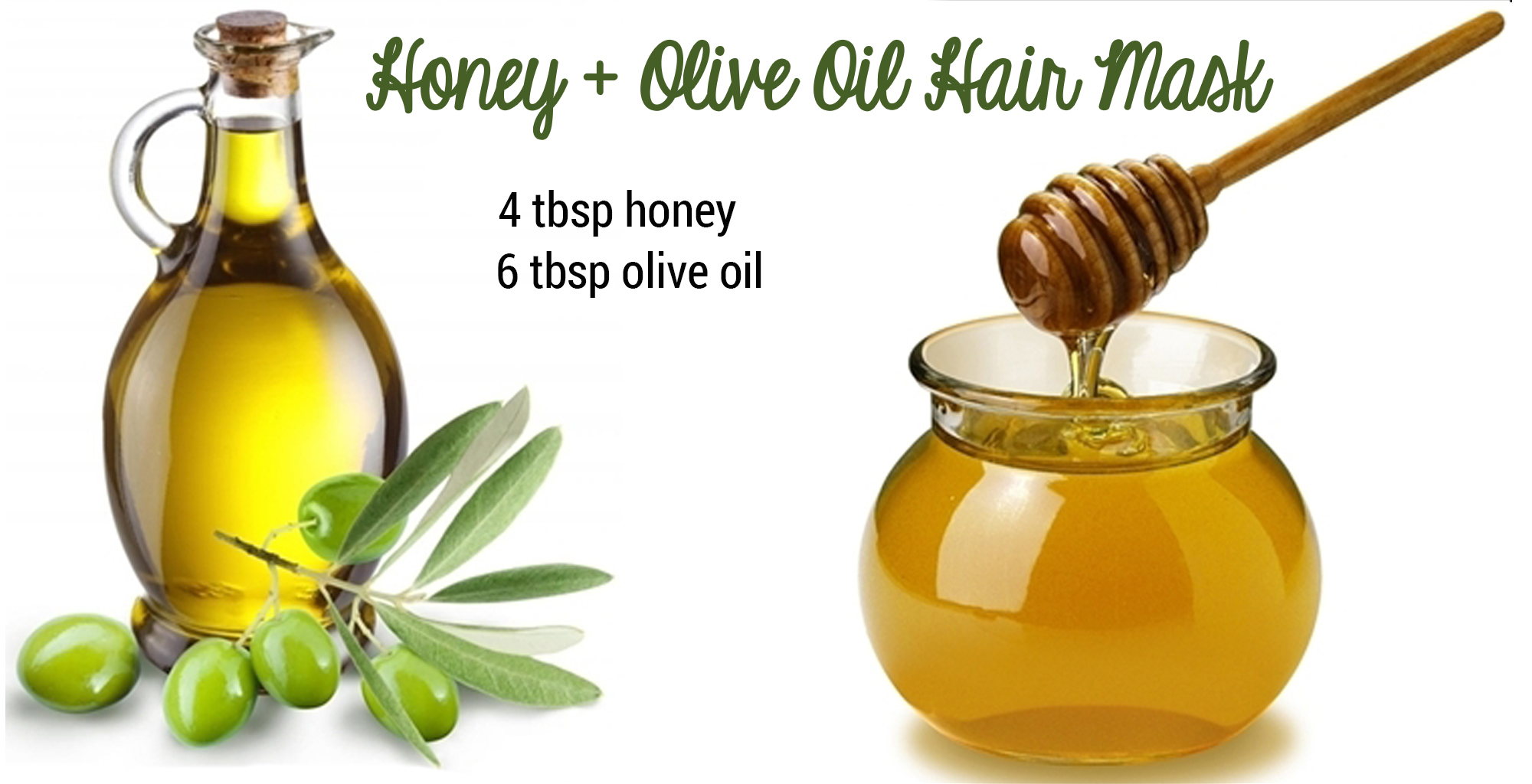
Egg, honey, and olive oil hair mask
Using both egg yolk and white can lend proteins and nutrients to help with hair strength and repair.
Research links vitamins A and E, biotin, and folate — nutrients found in eggs — to hair health, although much of the evidence concerns dietary intake rather than topical use (source).
Honey is commonly added for its humectant properties, helping hair retain moisture.
Ingredients
- 1 egg
- 2 tsp honey
- 2 tbsp olive oil
To make the mask:
- Crack the egg into a bowl and whisk well.
- Add honey and olive oil. Gently warm if you prefer a smoother texture.
- Whisk until fully combined.
Alternatively, blend all ingredients until smooth.
Avocado and olive oil hair mask
Avocado contains fats, vitamins, and minerals that may help nourish and moisturize hair. Some research suggests minerals like those in avocado can help seal the cuticle and reduce breakage (source).
Ingredients
- 1/2 ripe avocado, peeled and pitted
- 2 tbsp olive oil
To prepare:
- Chop and add avocado to a blender.
- Pour in the olive oil.
- Blend until smooth.
If you don’t have a blender, mash the avocado with a fork until creamy, then stir in the oil.
Tea tree and olive oil hair mask
If dandruff or an irritated scalp is a concern, tea tree oil may help. A 2002 study found evidence that tea tree oil can reduce dandruff symptoms.
Ingredients
- 2–4 tbsp olive oil, depending on hair length
- 2–4 drops tea tree oil
To make this mask, mix the olive oil and tea tree oil until blended.
Safety tips
Unless you’re allergic to olives, an olive oil hair mask carries minimal risk.
It can leave hair feeling greasy, particularly for fine or oily hair; you’ll usually notice this quickly. A thorough shampoo and conditioner should remove extra oil.
If you warm the oil, avoid overheating. Don’t test oil temperature with your bare finger; instead, use a spoon or warm the jar in a bowl of hot water as an alternative to microwaving.
The takeaway
Many people use olive oil to boost hair strength, shine, and general condition.
If your hair is coarse, dry, or damaged, an olive oil hair mask may be especially beneficial. Adding ingredients like egg, avocado, or honey can further enhance the treatment’s effects.
















Leave a Reply
You must be logged in to post a comment.